
Camping with pets comes down to a few habits: keep your dog leashed and within reach, give them shade and water, never leave them alone at the site, and pick a campground whose pet rules you can actually live with. Do those four things and most of the stress disappears. The rest of this guide covers what to do before you leave, what to pack, how to handle Michigan-specific hazards like heat, ticks and lake water, and how to choose a dog-friendly campground, using Walnut Hills Family Campground in Durand, Michigan, as the working example.
What should you do before camping with your dog?
- Vet check and vaccines. Make sure rabies and core vaccines are current and that flea, tick and heartworm prevention is active before you arrive, not the morning of. Bring a photo of the vaccine record on your phone.
- Two forms of ID. A collar tag with your cell number plus a microchip with up-to-date registry contact info. If your dog slips a collar at a campground, the chip is what gets them home.
- Read the campground’s pet rules. Every park is different. At Walnut Hills, dogs stay leashed or in the RV everywhere except the fenced dog park, are picked up after, aren’t left unattended, and stay out of the buildings, off the beach and out of the swim lake (the river is theirs to swim in). You can read the full list on the Walnut Hills rules page.
- A practice night. If your dog has never slept in a tent or camper, set it up in the yard first. A dog that already knows the space settles much faster in a new campground.

What to pack for a dog on a camping trip
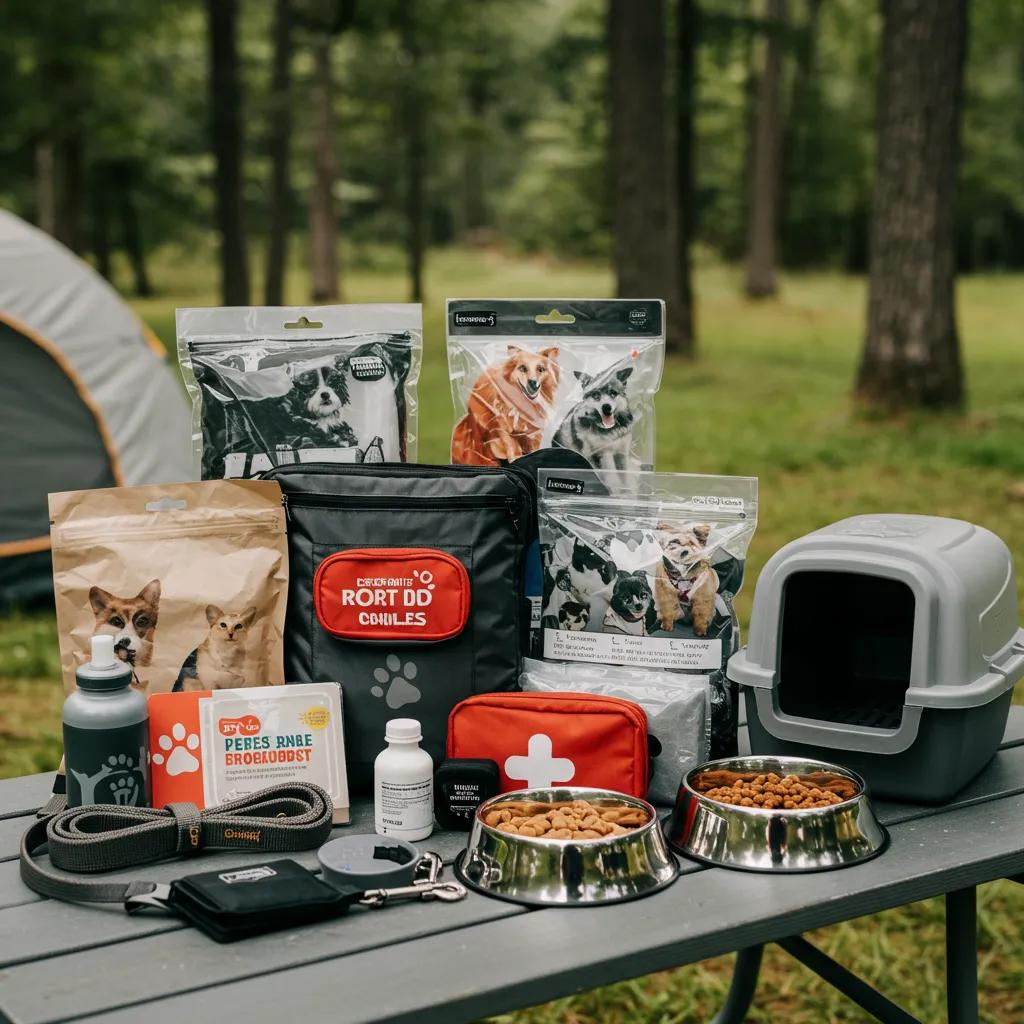
- Food in a sealed container, plus a collapsible water bowl and more water than you think you need
- A sturdy leash and a well-fitted harness; a long line or stake-out is fine only while you’re sitting right there
- Bedding or a crate so your dog has a familiar spot at the site
- Waste bags (our dog park has bag stations, but keep some on you for walks)
- A towel, because river dogs come back wet
- A basic pet first-aid kit: tweezers or a tick tool, gauze, vet wrap, antiseptic wipes, any medications, and your vet’s number
- Something reflective or a clip-on light for the walk back at dusk
How do you keep a dog safe at the campground?
Leash and control
Campgrounds are busy places: golf carts, bikes, kids running to the beach, other dogs. A leashed dog can’t bolt after a deer or wander onto a neighbor’s site. At Walnut Hills, dogs are leashed everywhere except inside the fenced dog park, and that rule is what lets everyone, including nervous dogs, relax.
Heat
Michigan summers get hot and humid, and a campsite in full sun is hotter than your backyard. Set up shade, keep water down at all times, and walk in the morning and evening. Never leave a dog in a closed camper without working air conditioning. Heavy panting, drooling, stumbling or bright red gums are signs of heatstroke; move the dog to shade, wet them down with cool (not ice) water and call a vet.
Campfires and food
Keep the leash short around the fire ring, and don’t leave cooked food, grease or trash where a dog can reach it overnight. Our rules also ask that no garbage be left out, which keeps raccoons and skunks from visiting your site.
Wildlife
Deer, raccoons, turkeys and the occasional skunk are the usual visitors at a southern Michigan campground. A leashed dog and a clean site are the whole solution.
Ticks
Ticks are common in Michigan grass and woods. Check your dog’s ears, armpits, belly and between the toes every evening, pull any ticks with a tick tool, and keep tick prevention current.
Water
Let your dog swim only where the campground allows it, and rinse them off afterward. Skip any water with a thick green or blue-green scum on it; algae blooms can make dogs sick. Don’t let a dog drink from stagnant ponds.
Where can dogs swim at Walnut Hills?
Dogs can’t go on the beach or in the swimming lake at Walnut Hills, for the same sanitary reasons they’re kept out of the store and the cabins. They can swim in the Shiawassee River, and most owners take them down to the boat launch area at the front of the park to do it. Our team says the ability to let a dog swim is one of the things pet owners mention most, right behind the dog park itself.
At our sister park, The Oaks Campground in Munith, dogs can swim in the fishing lake, which sits downstream of the swim lake (not at the swim beach), and can go off leash on the trails at the back of the 155-acre property and in the dog run. Everywhere else at The Oaks they’re leashed.
How to choose a campground for dogs
If you’re comparing dog-friendly campgrounds, these are the things that actually change your trip:
| What to look for | Why it matters | At Walnut Hills |
|---|---|---|
| A fenced dog park | The only place a dog can run and play fetch off leash | Fenced park just over a quarter acre, with open and shaded areas |
| Somewhere to swim | Cools a dog down on hot days and burns energy | The Shiawassee River at the boat launch |
| Breed policy | Some parks ban breeds outright | No breed restrictions; the park looks at behavior, not breed |
| Waste stations | Keeps the park clean and makes walks easier | Bag stations in the dog park |
| Pet-friendly lodging | Matters if you’re not in a tent or RV | No pets in the two camping cabins; dogs welcome on RV and tent sites |
| Quiet hours | Fewer late-night triggers for barking, and a full night’s sleep for everyone | Quiet hours 11 PM to 8 AM, with a license-plate gate for registered guests only |
On breed rules, a campground employee put it this way: “A breed that’s considered aggressive often has very calm dogs in it, and a breed everyone thinks of as docile can have an aggressive dog depending on its background.” So the park looks at behavior, not breed, and asks that every dog be a good neighbor.
The Walnut Hills dog park
The dog park went in a couple of years ago and gets used just about every hour of the day, often by several dogs at once. It’s a little over a quarter acre inside premium fencing, with picnic tables for the owners, waste bag stations, tunnels, a real fire hydrant and a dog selfie frame that was added this year. There’s enough room to throw a frisbee. It sits in the main entertainment zone next to Pavilion 2, the Kangaroo Jumper, the gaga ball pit, the newer playground and the ball field, so the dog can run while the kids do the same thing a few yards away. Dogs even get their own events: there are dog costume contests on the Halloween weekends, and a past family Campground Olympics included a dog event in the dog park.
Campground pet etiquette
- Pick up every time, in the dog park and on your site. It’s the rule everywhere at our parks.
- Don’t leave your dog alone. A dog tied at an empty site or shut in a camper barks, and quiet hours (11 PM to 8 AM) are when everyone, dogs included, gets to sleep. Take them with you to the pavilion or beach lawn, or have one person stay back.
- Keep off other sites. Walk on the roads and in the dog park, not through your neighbors’ campsites.
- Ask before greeting. Not every camper or dog wants company.
- Know the no-go zones: buildings, the store, the cabins, the beach and the swim lake.
Camping with cats
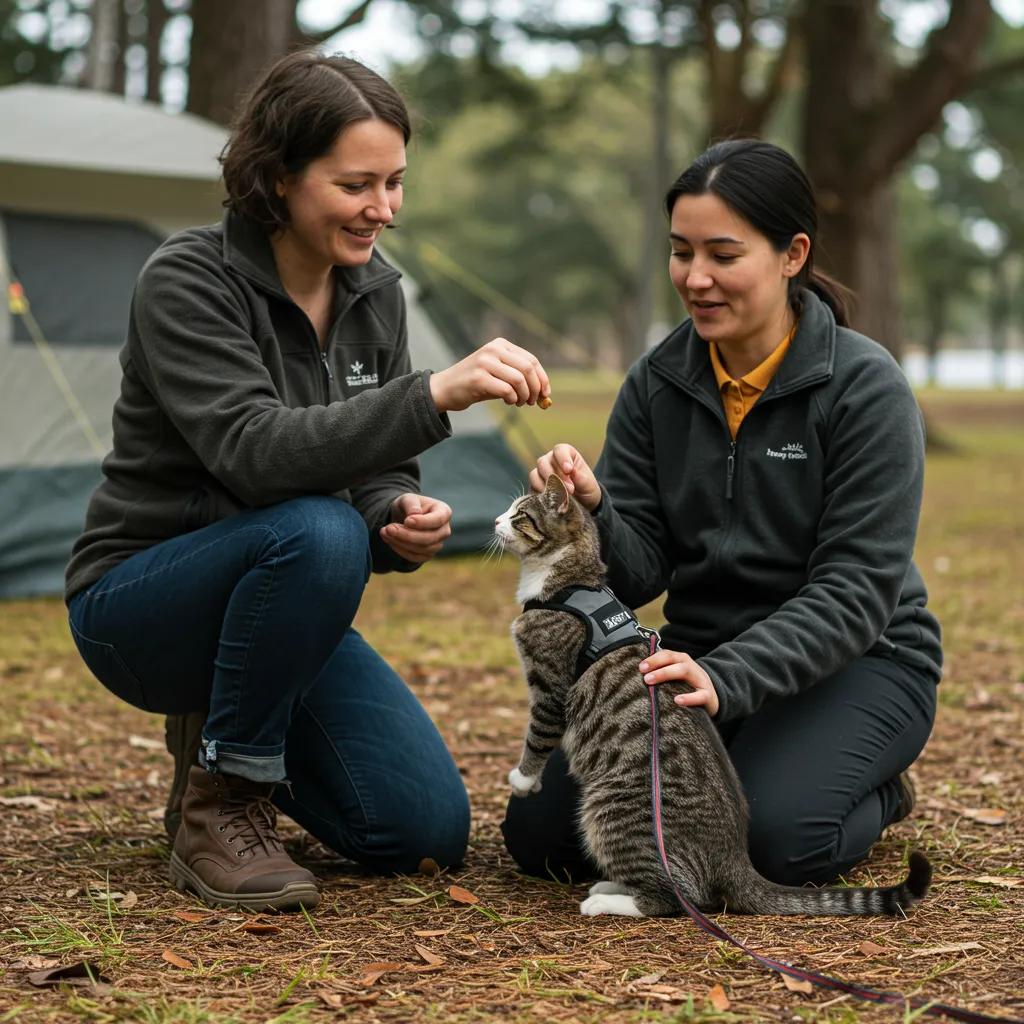
Cats can camp, but only on their terms. Use a harness and leash your cat already knows from home, keep them in the camper or a secured tent rather than loose at the site, and bring a small litter box. Give them a covered hiding spot so they can retreat from noise. Treat the same rules as dogs: leashed outside, never unattended, not in buildings or on the beach. If your cat has never worn a harness, a campground isn’t the place to start.
What if your pet gets lost at the campground?
- Tell the camp store right away with a description and your site number. Staff see every corner of the park and campers report loose dogs quickly.
- Walk your own loop first. Most dogs circle back toward familiar smells within an hour.
- Check the dog park, the bathhouse and food-truck areas, where the smells are strongest.
- Call your microchip registry and the nearest animal shelter with your contact info.
- Leave a worn piece of clothing at your site. It helps a frightened dog find its way back.
At Walnut Hills, the license-plate gate also helps: a dog that wanders toward the entrance is inside a park limited to registered guests, not on an open road.
Camping with pets FAQ
Are dogs allowed at Walnut Hills Family Campground?
Yes. Dogs are welcome on RV and tent sites, leashed except in the fenced dog park, and never unattended. They aren’t allowed in the camping cabins, the store, on the beach or in the swim lake. There’s a fenced dog park and river swimming at the boat launch.
Is there a pet fee?
Walnut Hills doesn’t list a separate pet fee on its rates page. Check the rates page for current fees.
Do Michigan state parks allow dogs?
Yes. Michigan state parks require pets to be on a 6-foot leash and under immediate control at all times, keep them off designated swim beaches and out of buildings, and ask that dogs not be left unattended. Our guide to pet policies near state parks compares the rules.
How do I help my dog settle in at a new campground?
Walk the loop on a leash as soon as you arrive, set up their bed in the same spot they’d have at home, and keep the first evening quiet. Most dogs are at ease by the second morning.
Are there breed restrictions at Walnut Hills?
No. Walnut Hills looks at how a dog behaves, not its breed, and welcomes calm, friendly dogs of every kind.
Where can my dog swim at Walnut Hills?
In the Shiawassee River; owners usually take dogs down to the boat launch area by the store. Dogs aren’t allowed on the beach or in the swim lake, which keeps the water clean for swimmers.
Can I leave my dog in the RV while we’re at the Wibit?
Yes, if your dog is comfortable inside and the camper is cool and quiet so neighbors aren’t disturbed. Dogs can’t be left unattended outside, and they aren’t allowed in the cabins, store or other buildings.