


What Factors Influence Campground Valuation? A Comprehensive Guide to Understanding RV Park Appraisal and Profitability
Determining a campground or RV park’s market value involves a deep dive into its financial performance, physical assets, and the market dynamics that drive buyer interest. This guide unpacks why valuation is critical, especially when considering retirement or a change in ownership. We’ll explore how key metrics like Net Operating Income (NOI) and capitalization rate (cap rate) directly translate into a sale price, and which property and market features most significantly sway buyer offers. Many owners find it challenging to translate operational success into a precise asking price; this article offers clear steps, formulas, and documentation priorities to bridge that gap. We begin with financial fundamentals, then examine property-specific drivers like site mix and amenities, survey current market trends through 2024–2025, and provide actionable steps for sellers to boost value before listing. If you’re exploring sale options, GatherGrounds Resorts is an active buyer, bringing a family-owned approach and a campground acquisition service dedicated to preserving legacies and ensuring smooth transitions for sellers.
What Are the Key Financial Factors Affecting Campground Valuation?

Campground valuation hinges on a few core financial metrics that buyers use to compare properties and formulate offers: Net Operating Income (NOI), capitalization rate (cap rate), recurring revenue streams, operating expenses, and adjustments for deferred maintenance or owner perks. These metrics transform day-to-day operations into an investment appraisal by quantifying sustainable cash flow and the risk-adjusted return a buyer anticipates. A solid grasp of each factor empowers sellers to position their campground for a competitive price and supports confident negotiation. Below, an EAV-style comparison illustrates how each financial element maps to valuation outcomes and typical buyer considerations.
This comparison highlights the causal chain: stronger NOI and predictable revenue streams reduce perceived risk and lower cap rates, which together elevate valuation. Understanding these connections is the first step toward preparing your financials and prioritizing improvements that will maximize your sale proceeds.
What Is Net Operating Income and Why Is It Crucial for Valuation?
Net Operating Income (NOI) represents the annual cash flow a campground generates from its operations after deducting operating expenses but before accounting for debt service, taxes, and owner distributions. It’s the key measure of a property’s recurring profitability. NOI is crucial because buyers use it as the base income figure to determine valuation via the cap rate formula: Value = NOI ÷ Cap Rate. For instance, a campground with $200,000 NOI sold at a 10% cap rate suggests a value of $2,000,000, demonstrating how even modest NOI growth or cap rate compression can significantly shift the price. Sellers should be mindful of common pitfalls like unreported ancillary income, owner perks (free stays or related-party charges), and inconsistent bookkeeping, which can understate or overstate true NOI during due diligence. Presenting a normalized NOI with supporting documentation leads to more reliable offers and fewer adjustment requests from buyers.
How Does the Capitalization Rate Impact Campground Value?
The capitalization rate (cap rate) reflects the expected return on a property based on its NOI; it encapsulates market risk, financing availability, and investor appetite. The cap rate is calculated as NOI divided by the property value, and conversely, value equals NOI divided by cap rate. Consequently, minor changes in the cap rate can lead to substantial swings in value. Market dynamics such as interest rates, buyer competition, and perceived operational risk influence cap rates, pushing them higher (resulting in lower values) or lower (resulting in higher values). For example, a campground with a $150,000 NOI valued at an 8% cap rate implies a value of $1,875,000, while at a 10% cap rate, it drops to $1,500,000—a 20% difference driven solely by the cap rate. Sellers who understand local cap-rate benchmarks and can demonstrate stable NOI and operational efficiencies are better positioned to negotiate for lower cap rates.
The capitalization rate is a crucial element in real estate valuation, serving as a benchmark for assessing investment opportunities.
Factors Affecting Capitalization Rates in Real Estate Valuation
The capitalization rate is a crucial element in real estate valuation, serving as a benchmark for assessing investment opportunities. It reflects the relationship between a property’s income-generating potential and its market value. Various factors, including economic conditions, location, and property-specific characteristics, can influence the capitalization rate, thereby impacting the overall valuation of a property.
Factors affecting capitalization rates in Hong Kong, 2004
Which Revenue Streams and Operating Expenses Influence Profitability?
Revenue diversity and expense control both shape NOI and, consequently, valuation. Predictable, recurring income sources and manageable operating costs enhance a buyer’s confidence in future cash flow. Typical revenue streams include nightly site fees, seasonal or annual leases, cabin or yurt rentals, and ancillary sales like food, firewood, and equipment rental. Ancillary revenues often carry higher margins and can significantly boost NOI. Common operating expenses include payroll, utilities, maintenance, insurance, marketing, and property taxes, each of which should be tracked and benchmarked against industry norms. Sellers should prepare clear income ledgers and expense breakdowns to showcase seasonality-adjusted revenue and normalized expenses, helping buyers model realistic future NOI and reducing negotiation friction.
How Do Deferred Maintenance and Owner Benefits Adjust Valuation?
Deferred maintenance and owner benefit items are common adjustment points in campground transactions. Buyers typically discount the value or require escrows to address uncompleted capital projects and to normalize perks that artificially inflate NOI. Deferred issues, such as failing septic systems, worn roadways, or outdated electrical pedestals, are quantified by buyers and often lead to reduced offers or escrowed repair allowances. Owner benefits—like free personal use of sites or related-party service contracts—are normalized by adding imputed income or removing non-market expenses from NOI. Sellers who meticulously document maintenance histories, provide bids for necessary repairs, or transparently disclose owner benefits can narrow valuation adjustments and present a clearer, higher-quality cash flow profile.
How Do Property-Specific Features Influence Campground and RV Park Value?
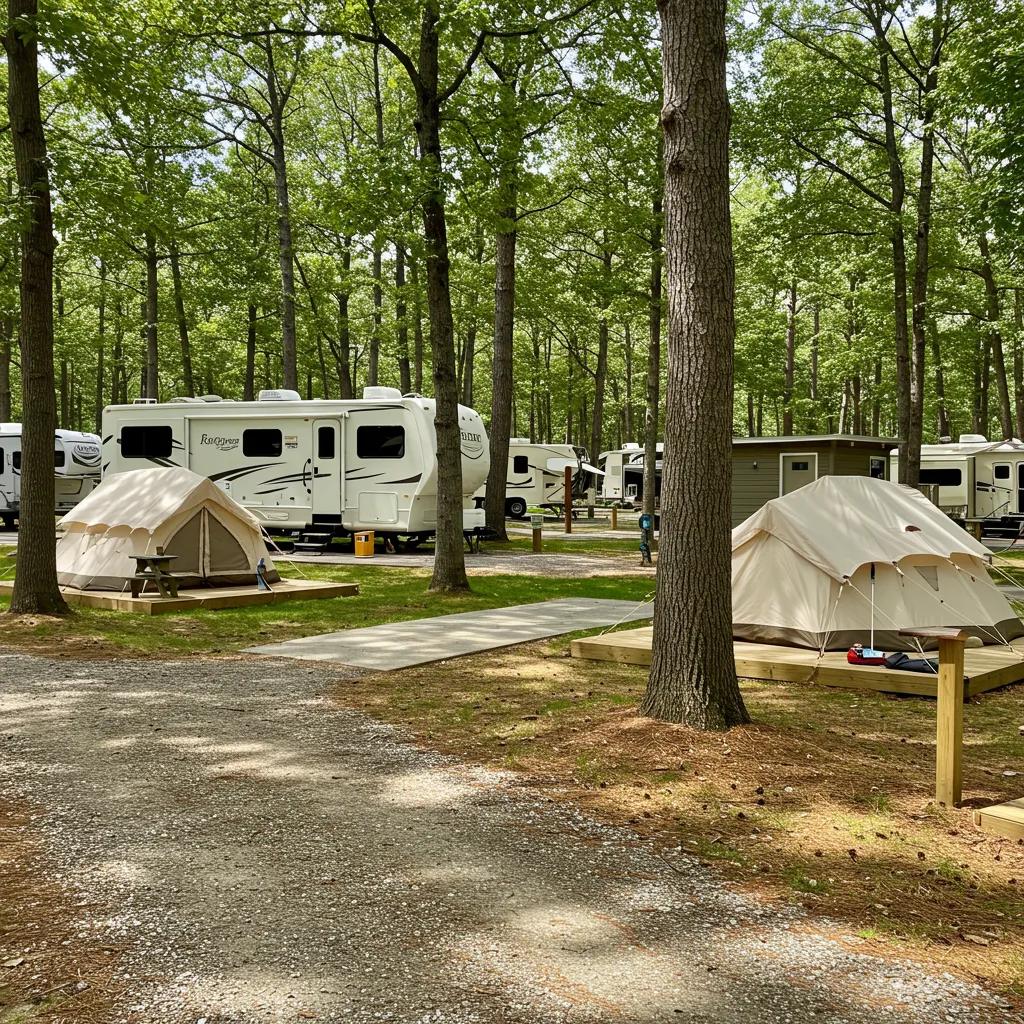
Property-specific attributes—location, amenities, site count and mix, and overall condition—directly translate into revenue potential and buyer demand, thereby influencing valuation multiples and financing options. Location dictates market catchment, seasonality, and achievable nightly rates. Amenities support higher average daily rates (ADR) and longer guest stays, while site mix and expansion potential scale revenue and appeal to various buyer types. Below, an EAV-style table compares common site types and amenities with their typical value or revenue multipliers to help sellers prioritize investments.
This table illustrates how improvements to infrastructure and amenity mix often have outsized impacts on revenue per available site and buyer perception. Buyers evaluate these features alongside operational metrics, so sellers should present clear utilization and revenue figures broken down by site type.
Why Is Location a Critical Factor in Campground Valuation?
Location determines demand drivers such as proximity to outdoor recreation, population centers, and accessibility via major highways, which in turn establish occupancy potential and ADR. Campgrounds situated near lakes, trails, or regional attractions typically sustain higher seasonal demand and can command premium pricing. Remote properties, conversely, may rely on destination appeal or niche markets to fill sites. Seasonality, linked to climate and regional visitor patterns, affects annualized revenue. Owners in highly seasonal markets must demonstrate off-season strategies or diversified revenue to stabilize NOI. Highlighting drive-time maps, nearby attractions, and demographic catchment in your sales package helps buyers quantify the demand advantage and justify higher valuation multiples.
Which Amenities and Infrastructure Add the Most Value?
Certain amenities consistently deliver higher returns by enabling premium rates, longer stays, and additional ancillary sales. These include full hookups, modern bathhouses, reliable high-speed Wi-Fi, and glamping units. Amenities should be evaluated based on their cost-to-benefit ratio. For many properties, upgrading utilities or adding a modern bathhouse yields immediate occupancy and rate improvements compared with more cosmetic investments. Maintenance and operational cost implications should be disclosed so buyers can assess the net uplift to NOI, not just gross revenue increases. Presenting amenity-driven revenue separately in your financials clarifies their contribution to NOI and strengthens the case for higher offers.
How Does Site Count, Types, and Expansion Potential Affect Price?
Site count directly scales revenue: incremental sites add marginal revenue and, when demand supports them, increase property value more than proportionally to cost due to fixed-cost leverage. The mix of site types is also important. A shift toward more full-hookup RV or glamping units typically raises ADR and ARPU (average revenue per user), while primitive tent sites add volume with lower operating costs. Expansion potential—unused developable acreage or permissive zoning—creates upside that buyers value as optionality and often pay a premium for, particularly when expansion can be executed quickly. Sellers should document permitting status, available utilities, and realistic build cost estimates to quantify expansion value.
What Role Does Property Condition and Deferred Maintenance Play?
Physical condition influences buyer due diligence outcomes, financing eligibility, insurance costs, and immediate capital needs, all of which can reduce net proceeds if unmanaged. Common deferred items—septic upgrades, electrical distribution, road resurfacing, and roof replacements—are often quantified by buyers and can lead to reduced offers or escrow/repair holdbacks. Good documentation of capital improvements, maintenance schedules, and recent capital expenditures reassures buyers and can limit valuation downward adjustments. Sellers should carefully weigh remediation versus price concession decisions: targeted repairs that unlock higher occupancy or allow for higher rates typically provide better seller economics than broad, expensive overhauls.
What Market Trends and External Factors Affect Campground Valuation?
Macro and industry trends, including interest rates, occupancy patterns, demographic demand, and investor sentiment, shape cap-rate movement and buyer appetite for campground assets. Recent years have shown volatility, with a 2024 softening followed by 2025 optimism in many regions. Buyers are sensitive to financing costs and the predictability of leisure travel demand. Understanding how these external indicators interact with local market dynamics helps sellers time their listings and set realistic expectations for offers. The table below summarizes market indicators for 2023–2025 and their directional impacts on valuations.
This snapshot illustrates how external factors interact: improving macro conditions combined with strong local performance reduce perceived risk and support higher valuations, while rising rates and soft demand widen cap rates and suppress prices.
How Has the Campground Market Landscape Changed Recently?
The campground market experienced a noticeable softening in 2024, driven by higher borrowing costs and some downshift in travel frequency, which compressed transaction volume and heightened cap-rate sensitivity. In 2025, improving rate expectations and continued demand for outdoor experiences have brought renewed buyer interest and more confident pricing in many submarkets. Sellers should consider the current timing: properties with stable or growing NOI, documented demand metrics, and unique experiences fare best in this recovering environment. Translating these macro observations into local comps and NOI trends is critical for accurate pricing and negotiation strategy.
What Are the Future Projections and Buyer Demand Drivers?
Longer-term projections indicate steady growth in outdoor hospitality, fueled by demographic shifts—Millennials and Gen Z prioritizing experience-based travel—and continued interest in domestic leisure options. Projections often cite moderate CAGR growth for outdoor hospitality bookings, and investors value properties that capture repeat visitation and ancillary spend. For sellers, this means amenities that enhance guest experience and recurring revenue (e.g., reservations, memberships) are likely to increase buyer appetite. Emphasizing sustained demand metrics and potential for revenue enhancement positions a campground favorably in the eyes of investors.
How Do Interest Rates and Occupancy Rates Influence Value?
Interest rates influence buyer financing costs, which translate into cap rate expectations and, consequently, valuation. As rates rise, buyers often require higher cap rates to maintain their target returns, reducing the price. Occupancy rate changes directly affect revenue and NOI—even small occupancy shifts during peak seasons can materially alter annualized cash flow. Sensitivity examples help quantify the impact: a 5% drop in occupancy on a property heavily reliant on its high season can lower NOI substantially and therefore reduce value when applied to the buyer’s cap rate. Sellers who can demonstrate resilient occupancy patterns or diversified off-season income are better insulated from rate-driven valuation pressure.
What Competitive Advantages Can Increase Campground Value?
Competitive advantages include unique natural assets, a strong brand reputation, repeat customer programs, and operational efficiencies that drive margin expansion. These differentiators reduce investment risk and encourage tighter cap-rate multiples. Operational strengths—consistent reservation systems, strong online reviews, and reliable staff—improve guest retention and lower marketing expense per booking, thereby increasing NOI. A documented legacy or community brand that aligns with a buyer’s mission, such as preserving the campground’s character, can also drive premium offers from family-owned acquirers prioritizing continuity. Highlighting these advantages with concrete metrics (repeat visit rate, ADR premium versus comps) helps buyers see measurable upside.
How Does GatherGrounds Resorts’ Family-Owned Acquisition Approach Affect Valuation?
GatherGrounds Resorts offers a family-owned, non-corporate acquisition approach that can influence valuation dynamics for sellers seeking legacy preservation and a less transactional sale process. Their campground acquisition service emphasizes direct communication with owners and operators, minimizing corporate layers during negotiation and transition. This buyer profile often values community continuity and long-term stewardship, which can translate into different negotiation levers compared with institutional buyers. Sellers may accept terms prioritizing legacy preservation in exchange for expedited closings or collaborative transition plans. Below are specific elements of their approach and how they map to valuation considerations.
What Makes GatherGrounds’ Acquisition Process Unique?
GatherGrounds’ acquisition process centers on hands-on family decision-making, prioritizing the campground’s existing character, and seeking properties that align with their strategic criteria, such as larger site counts in targeted regions. Key distinguishing points include direct owner dialogue, a preference for campgrounds with substantial site counts, and an emphasis on preserving community values rather than flipping properties quickly. These attributes matter to valuation because they signal a buyer willing to consider non-financial terms—such as phased transitions or seller involvement—that can influence deal structure and perceived net proceeds. Sellers who value legacy and smooth handovers may find alignment with this acquisition style.
How Does GatherGrounds Ensure a Smooth Transition for Sellers?
GatherGrounds prioritizes collaborative transition mechanisms that reduce operational disruption and preserve staff and community relationships during ownership change. Their approach may include phased handovers, opportunities for seller advisory roles during initial operations, and direct communications with the campground community to maintain goodwill. These practices reduce post-closing operational risk and may increase a buyer’s willingness to offer favorable terms, such as a quicker closing or limited contingencies, which can effectively enhance net value for sellers. For owners concerned about legacy and community continuity, such transition assurances are often as important as the headline price.
Why Partner with GatherGrounds Resorts When Selling Your Campground?
Partnering with a family-owned buyer like GatherGrounds can deliver seller-centered benefits beyond price—namely legacy preservation, simpler negotiation with fewer corporate layers, and a collaborative handover that honors established community ties. Sellers who prioritize preserving the character and relationships built around their campground may prefer a buyer that explicitly values those attributes and communicates directly with owners and operators. For those evaluating sale options, a no-pressure conversation with GatherGrounds about timing and valuation can be a practical way to assess fit. The company’s campground acquisition service is positioned to offer attentive, legacy-focused transactions that differ from brokered or institutional sale processes.
How Can Campground Owners Maximize Their Property’s Valuation Before Selling?
Owners can materially improve valuation by focusing on high-ROI capital improvements, clean and normalized financial records, and a clear sale process that reduces buyer uncertainty. Preparing accurate financial statements, documenting occupancy trends, and addressing deferred maintenance where cost-effective all support stronger offers. Below is a prioritized, actionable list of improvements and preparatory steps sellers should consider to maximize proceeds and expedite due diligence.
- Upgrade Utility Infrastructure: Modernizing electrical, water, and sewer systems supports higher ADR and reduces future capex risk.
- Improve Guest Amenities: Adding or renovating bathhouses, Wi-Fi, and communal spaces increases occupancy and length-of-stay.
- Develop Ancillary Revenue: Introduce F&B, rentals, or packaged experiences to diversify revenue and boost NOI.
These targeted actions tend to yield measurable revenue or risk-reduction benefits that buyers value, and presenting cost estimates and projected uplift strengthens the seller’s negotiating position.
What Property Improvements Have the Highest Return on Investment?
Certain capital improvements consistently deliver above-average returns by enabling higher rates and improving guest satisfaction, including modern bathhouses, reliable utility upgrades, and improved site surfacing and drainage. Glamping or cabin units can produce outsized ARPU relative to per-unit capex when demand supports premium pricing, while straightforward infrastructure projects often reduce maintenance liabilities that depress offers. Sellers should prioritize improvements that address operational bottlenecks or visibly elevate guest experience and provide before-and-after revenue projections when possible. Presenting conservative payback estimates helps buyers see realistic ROI and narrows valuation discounting.
How Should Financial Records and Legal Documentation Be Prepared?
Buyers request comprehensive documentation during due diligence, typically including multiyear profit & loss statements, tax returns, occupancy reports, site maps, permits, and lease agreements. Organizing these materials in advance accelerates the process and increases buyer confidence. Normalize owner perks and related-party transactions by documenting fair-market imputed income or expenses so NOI reflects market operations. Clear summaries, reconciliations, and a binder of key licenses and recent capital invoices reduce uncertainty and limit post-offer adjustments. A well-organized data room often shortens contingency windows and supports firmer offers.
What Steps Ensure a Smooth and Profitable Sale Process?
A structured timeline—prepare financials and repairs, market selectively, negotiate terms, and plan transition—helps sellers achieve efficient closings and optimal value. Negotiation considerations include contingencies for financing, acceptable escrow amounts for deferred maintenance, and specifying transition roles if desired. Clarity up front reduces surprises. Sellers may choose a no-obligation conversation with a buyer that matches their values and criteria, such as GatherGrounds Resorts’ campground acquisition service, to evaluate options and timing without immediate commitment. Transparent expectations and documentation throughout the sale pathway preserve value and reduce post-offer concessions.
What Are Common Questions About Campground Valuation and RV Park Appraisal Methods?
Campground valuation questions often center on NOI calculation, appraisal importance, investor evaluation criteria, and the effect of market cycles on sale prices. Concise, practical answers help owners understand the appraisal process and prepare accordingly. Below are direct responses to common questions owners and prospective sellers frequently ask.
How Do You Calculate Net Operating Income for a Campground?
NOI is calculated as Gross Operating Income minus Operating Expenses for a defined period (typically 12 months), excluding debt service, income taxes, and capital expenditures. For example, if a campground generates $500,000 in gross income and $275,000 in operating expenses, the NOI equals $225,000. Normalize the figure by adjusting for owner benefits (free stays, related-party charges) and non-recurring items to reflect sustainable cash flow. Accurate NOI documentation helps buyers apply cap rates reliably and reduces renegotiation risk.
The capitalization rate is a key metric used in real estate valuation to determine the potential return on an investment property.
Assessing Spatial Variability of Capitalization Rates for Property Valuation
The capitalization rate is a key metric used in real estate valuation to determine the potential return on an investment property. It is calculated by dividing the Net Operating Income (NOI) by the property’s market value. A higher capitalization rate generally indicates a higher potential return, but also a higher risk. Factors such as market conditions, property type, and location can influence the capitalization rate.
Assessing the Spatial Variability of Capitalization Rates., 2023
Why Is an Appraisal Important When Selling a Campground?
An appraisal provides an independent estimate of fair market value using income, sales comparison, and cost approaches. It supports financing for buyers and helps sellers set realistic asking prices. Appraisals synthesize NOI, cap rate benchmarks, comps, and replacement costs into a defensible value conclusion that buyers and lenders trust. Sellers should order an appraisal when preparing to list to validate their pricing strategy and to identify value-enhancing or risk items that might affect offers.
What Factors Should Investors Consider When Evaluating Campground Opportunities?
Investors evaluate NOI sustainability, cap rate expectations, occupancy trends, operational efficiency, upside potential (amenities, expansion), and market quality (location, demographics). They also watch for red flags such as poor record-keeping, environmental liabilities, restrictive zoning, or unreliable utilities. A succinct investment memo that highlights upside levers and mitigations for key risks accelerates investor confidence and can improve deal terms.
How Do Market Trends Affect Campground Sale Prices?
Market trends like interest-rate shifts, occupancy volatility, and buyer competition directly alter cap rates and demand, thereby influencing sale prices. Rising rates tend to depress prices, while improving demand and scarce supply compress cap rates and lift values. Sellers should monitor local occupancy and rate trends and align timing and improvements with market inflection points to maximize proceeds. Strategic timing combined with strong operational metrics often yields the best sale outcomes.
How Do Financial Performance and Profitability Analysis Influence Campground Value?
Financial performance and profitability are the bedrock of valuation. Buyers convert revenue streams into NOI, apply cap-rate expectations, and run sensitivity analyses on occupancy and ADR to model value under various scenarios. Robust, clearly presented profitability metrics simplify buyer underwriting and reduce perceived risk, which can narrow cap-rate spreads and improve sale prices. The section below breaks down revenue sources, expense impacts, and how profitability metrics are used in practical valuation steps.
What Are the Main Revenue Sources for Campgrounds and RV Parks?
Primary revenue stems from nightly or seasonal site fees and cabin or glamping rentals, while ancillary income includes food and beverage sales, retail, activity fees, and equipment rental. These sources vary by season and property type. Seasonality affects annualized revenue, so buyers focus on average daily rate (ADR), occupancy percentage, and ancillary revenue per occupied unit when forecasting NOI. Presenting revenue by source and season helps buyers model realistic cash flows and identify growth opportunities.
How Do Operating Expenses Impact Net Operating Income?
Operating expenses—payroll, utilities, repair and maintenance, marketing, insurance, and property taxes—directly reduce NOI and therefore valuation. Managing controllable expenses improves margins and increases attractiveness to buyers. Expense benchmarking against comparable properties can reveal efficiencies or issues that buyers will probe during due diligence. Sellers who implement documented cost-control measures and show historical stability in expense ratios tend to attract firmer offers.
How Is Profitability Measured and Used in Valuation?
Profitability metrics like NOI margin and EBITDA, along with occupancy and ADR sensitivity, feed into valuation via cap-rate application and comparative investment analysis. Buyers typically run sensitivity tables showing how a 5% change in occupancy or ADR affects NOI and value, which informs bid strategy and contingency sizing. Providing sensitivity analyses and conservative upside cases to buyers demonstrates transparency and helps align expectations, often resulting in fewer post-offer adjustments and a smoother closing process.
Frequently Asked Questions
What are the most common mistakes sellers make when valuing their campground?
Common mistakes include underreporting income, failing to normalize financial records, and neglecting deferred maintenance. Sellers often overlook ancillary revenue streams, such as rentals or food sales, which can significantly impact Net Operating Income (NOI). Additionally, not addressing owner benefits, like free stays, can misrepresent the true profitability of the campground. Accurate documentation and a clear understanding of all revenue sources are crucial for presenting a reliable valuation to potential buyers.
How can campground owners prepare for a successful sale?
To prepare for a successful sale, owners should focus on enhancing property appeal and ensuring financial transparency. This includes upgrading amenities, addressing deferred maintenance, and organizing financial records. Owners should also document occupancy trends and revenue sources to present a clear picture of profitability. Engaging a professional appraiser can help validate the asking price and identify areas for improvement, ultimately leading to a smoother transaction process and better offers from buyers.
What role does marketing play in campground valuation?
Marketing plays a significant role in campground valuation by influencing occupancy rates and brand perception. Effective marketing strategies can enhance visibility, attract diverse customer segments, and increase repeat business, all of which contribute to higher revenue. A strong online presence, positive reviews, and targeted promotions can elevate a campground’s appeal, leading to improved financial performance. Buyers often consider a campground’s marketing effectiveness when assessing its potential value and future profitability.
How do seasonal fluctuations affect campground valuation?
Seasonal fluctuations can significantly impact campground valuation by influencing occupancy rates and revenue consistency. Campgrounds in high-demand areas may experience peak seasons with elevated rates, while off-peak periods can lead to lower occupancy and income. Buyers will assess how well a campground manages these fluctuations, including strategies for off-season revenue generation. Properties that demonstrate resilience through diversified income streams or year-round appeal are often valued more favorably than those reliant solely on peak season traffic.
What are the benefits of working with a family-owned buyer like GatherGrounds Resorts?
Working with a family-owned buyer like GatherGrounds Resorts offers several benefits, including a focus on legacy preservation and a personalized approach to negotiations. Such buyers often prioritize community ties and long-term stewardship over quick profits, which can lead to smoother transitions and favorable terms for sellers. Their commitment to maintaining the campground’s character and operational continuity can provide peace of mind for sellers concerned about the future of their property.
How can campground owners assess the impact of local market trends on their property value?
Campground owners can assess the impact of local market trends by analyzing occupancy rates, demographic shifts, and competitor performance. Monitoring local economic indicators, such as tourism growth and infrastructure developments, can provide insights into future demand. Engaging with local real estate professionals and utilizing market reports can help owners understand how these trends influence buyer expectations and valuation. This knowledge allows owners to position their campgrounds strategically in the market.
What are the key factors that differentiate high-value campgrounds from lower-value ones?
High-value campgrounds typically feature prime locations, diverse amenities, and strong financial performance. Factors such as a well-maintained property, a mix of site types (like glamping and full-hookup RV sites), and a solid reputation for customer service contribute to higher valuations. Additionally, properties with documented growth potential, such as expansion opportunities or unique experiences, attract more competitive offers. In contrast, lower-value campgrounds may struggle with deferred maintenance, limited amenities, or poor financial documentation.
Conclusion
Understanding the factors that influence campground valuation is essential for owners looking to maximize their property’s worth. By focusing on key financial metrics, property-specific features, and market trends, sellers can position their campgrounds for optimal offers. Engaging with a family-owned buyer like GatherGrounds Resorts can provide a unique advantage, ensuring a smooth transition while preserving the campground’s legacy. For personalized guidance on enhancing your campground’s value, reach out to us today.