
RV Park Valuation Secrets You Need to Know: How to Accurately Value and Sell Your Campground
Owning a campground is more than just a financial asset; it’s often tied to deep personal meaning and community connection. To truly understand its worth, you need a blend of solid financial analysis and practical insight. This guide will walk you through how to value your campground using proven financial frameworks—specifically, adjusted net operating income (Adjusted NOI) and capitalization rate (cap rate)—and then translate that valuation into concrete steps for a successful sale. You’ll discover effective valuation techniques, a checklist of crucial documents for due diligence, operational and property improvements that boost your sale price, and current market dynamics shaping buyer expectations for 2025. We’ll also compare selling directly versus using a broker, explain how buyers view Adjusted NOI, and outline how to initiate a confidential, no-pressure conversation with a family-owned buyer. Throughout, you’ll find practical examples, EAV tables to illustrate the math, and sample lists to help you prepare your books and property.
What Are the Most Effective RV Park Valuation Methods?

The primary ways to value campgrounds are through Adjusted NOI with cap-rate application, EBITDA or seller-discretionary earnings adjustments, gross sales multipliers, and comparable sales analysis. Each method offers a unique perspective and suits different sale scenarios. Adjusted NOI converts your campground’s consistent cash flow into a normalized figure that buyers use to apply a market cap rate. EBITDA-style measures and gross multipliers provide alternative viewpoints when owner benefits or varied income streams make pure NOI analysis tricky. Comparing these methods helps you pinpoint fair market value and anticipate what different buyers might offer. Understanding the strengths and weaknesses of each approach will help you avoid negotiation surprises. Below is a quick comparison table to clarify inputs, typical uses, and example outcomes for easy reference.
Different valuation methods serve different seller objectives and data availability.
This comparison shows how choosing a different method can change the results, highlighting why using multiple approaches builds valuation confidence. Experienced sellers often reconcile multiplier indications with NOI-based valuations to establish a solid asking price and negotiation strategy.
How Does the Adjusted Net Operating Income Approach Determine Campground Value?
Adjusted Net Operating Income determines campground value by starting with standard NOI (Revenue minus Operating Expenses) and then removing owner discretionary expenses and one-time items to reflect normalized, transferable cash flow that a new operator could expect. The mechanism is straightforward: adjust reported profits for non-recurring repairs, owner personal expenses run through the business, and discretionary perks, then apply a market cap rate to that adjusted figure to estimate value. Sellers who document these adjustments with invoices, tax return notes, and clear P&L line items materially improve buyer trust and reduce valuation discounts. Below is a short EAV-style table illustrating how adjustments change the valuation math for a sample property.
Documenting each adjustment and its supporting record helps buyers verify adjusted NOI quickly and reduces friction in due diligence. After illustrating adjusted NOI, many owners find that presenting a clean, adjusted P&L shortens the period between offer and close.
What Is a Capitalization Rate and How Is It Used in RV Park Valuation?
A capitalization rate, or cap rate, is the market-derived percentage that converts a campground’s normalized annual cash flow (Adjusted NOI) into an estimated market value using the formula Value = Adjusted NOI / Cap Rate. The mechanism reflects buyer required return, market risk, growth expectations, and asset liquidity; lower cap rates imply higher valuations and vice versa. For 2025, a practical benchmark cap rate range for many RV parks is approximately 8%–10%, with prime locations and growth prospects pushing toward the low end and riskier or less-demanded properties at the high end. For example, an Adjusted NOI of $300,000 at an 8% cap yields an implied value of $3,750,000, while at a 10% cap it yields $3,000,000, showing how a 2% cap swing alters value materially.
Understanding cap rate drivers—location quality, operational stability, growth potential, and comparable market activity—helps sellers position their asking price and anticipate buyer adjustments. Buyers will often cite local cap rate evidence and comparable trades when justifying their offer.
How Do EBITDA and Gross Sales Multipliers Influence Campground Appraisals?
EBITDA and gross sales multipliers provide alternate valuation lenses when owner-specific expenses or mixed revenue sources complicate NOI-based assessments, and each has unique pros and cons in campground appraisals. EBITDA-style valuation normalizes earnings by adding back owner perks and non-operational costs, making comparisons more consistent for buyers focused on operational earnings. Gross sales multipliers offer a quick, market-based rule of thumb that is useful when NOI data is incomplete, but multipliers can mislead when parks have widely varying expense structures or ancillary revenue mixes. Reconciling multiplier indications with NOI-derived values—by converting an expected multiplier into an implied NOI and comparing to adjusted NOI—yields a triangulated, more defensible valuation.
When presenting EBITDA or multiplier data, sellers should supply supporting schedules that align revenue categories and expense adjustments with buyer expectations. Clear reconciliation reduces perceived risk and speeds negotiations by highlighting where different methods converge.
Why Should You Consider Location, Amenities, and Growth Potential Beyond Financials?
Qualitative attributes—such as proximity to attractions, road access, zoning flexibility, amenity quality, and unused development potential—shift buyer assumptions about future revenue growth and risk, and therefore materially affect cap-rate selection and valuation adjustments. These attributes work through buyer expectations: parks with strong growth potential or rare amenity mixes command lower cap rates because buyers expect higher future cash flows or easier operational upside. To translate qualitative strengths into valuation lift, sellers should assemble documentation like zoning maps, local occupancy studies, and amenity condition reports that quantify growth levers, which buyers can incorporate into pro forma revenue scenarios. Presenting a short growth case with supporting evidence often results in more aggressive offers or reduced contingency demands.
Tying qualitative factors to financial projections creates a persuasive narrative where documented potential becomes a measurable adjustment rather than a speculative talking point. This linkage helps buyers justify premium offers and accelerates decision-making.
After explaining valuation methods, GatherGrounds Resorts applies adjusted-NOI and cap-rate approaches in its assessments and offers confidential conversations for owners who want a valuation aligned with stewardship values. GatherGrounds evaluates technical metrics alongside site history and community impact to present offers that reflect both financial reality and legacy considerations, and their acquisition work includes both Campground Acquisition and RV Park Acquisition inquiries.
How Can You Prepare Your Campground for a Successful Sale?
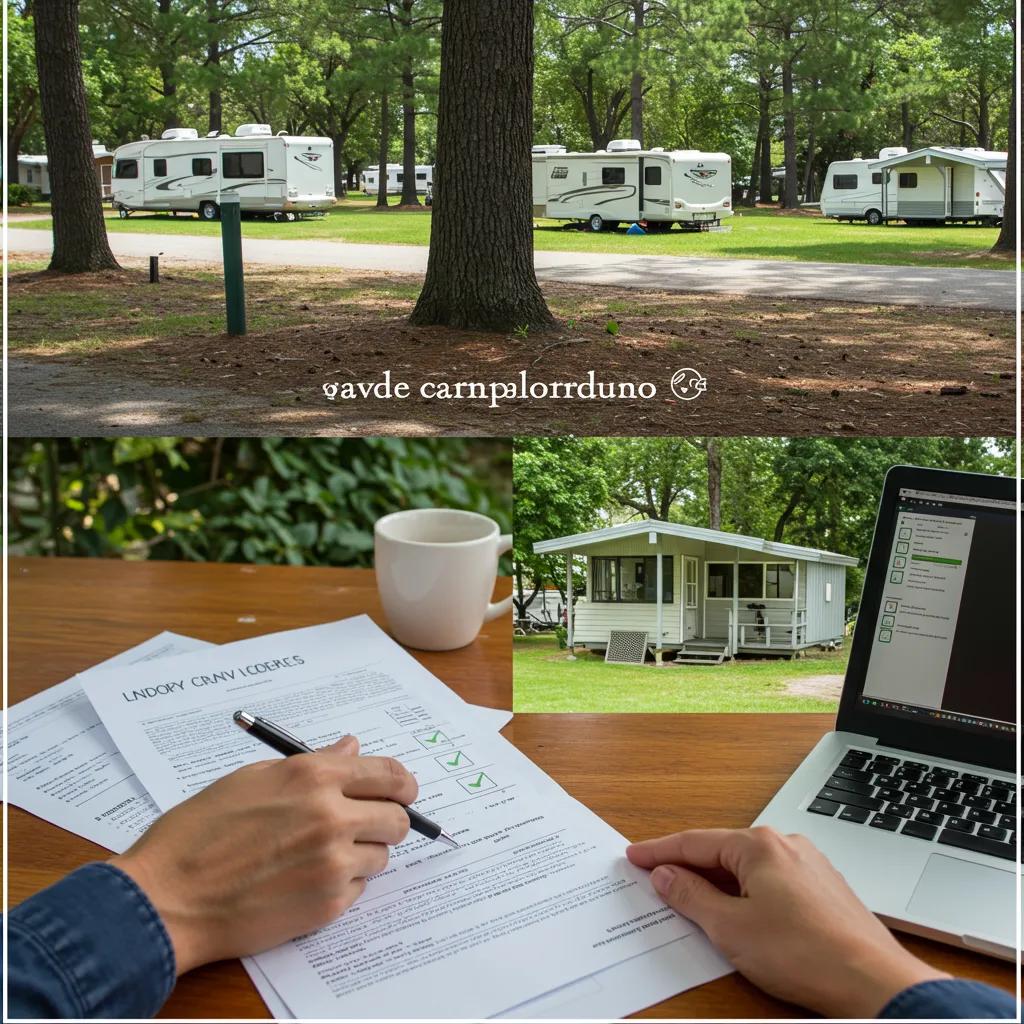
Preparing your campground for sale means organizing financial records, improving operational performance to boost NOI, and making targeted property enhancements that yield visible buyer confidence and higher offers. The mechanism is to reduce perceived risk and increase verifiable cash flow by cleaning books, documenting recurring revenue, and repairing or upgrading high-impact elements that buyers scrutinize first. Sellers who follow a prioritized checklist shorten due diligence timelines, reduce negotiated discounts, and increase closing certainty. The checklist below lays out essential documents and preparatory steps buyers expect, followed by practical operational and upgrade priorities.
Organizing these materials ahead of a sale reduces time on market and increases negotiation leverage.
What Essential Financial Documents Do You Need to Organize Before Selling?
Buyers will request a consistent set of documents that verify revenue streams, expense stability, site condition, and contractual obligations, and assembling these files in an orderly package speeds verification and builds trust. Key items include several years of profit and loss statements, federal tax returns, occupancy reports, reservation records, vendor and utility contracts, site maps, and capital expenditure history; each supports a specific valuation input such as normalized revenue, typical expenses, or future capital needs. When preparing documents, clearly annotate owner discretionary expenses and provide reconciling schedules that separate owner benefits from operating costs. GatherGrounds provides a checklist owners can request for a no-pressure review of documents to understand adjusted NOI and sale readiness, helping owners see how records translate into a valuation.
- Essential documents sellers should prepare before initial buyer review:
Three years of P&L statements with monthly detail and reconciliation notes.
Federal income tax returns corresponding to the P&Ls for verification.
Occupancy and reservation reports showing daily or monthly site usage.
Vendor and utility contracts, site maps, and recent capital expenditures.
Licenses, zoning documentation, and any environmental reports.
Preparing these documents in a single, organized packet reduces negotiation delays and increases buyer confidence. Clear annotations on discretionary items help buyers accept adjustments and avoid lengthy back-and-forth during diligence.
This checklist mapping helps sellers understand why each item influences valuation and how GatherGrounds evaluates files during preliminary reviews. Owners who present a clean, annotated packet typically see quicker preliminary indications of interest.
How Can Optimizing Operations Maximize Your RV Park’s Market Value?
Operational optimization increases verified NOI and buyer perceptions of low execution risk by improving occupancy, streamlining maintenance, and capturing ancillary revenue. Practical levers include dynamic pricing tied to seasonal demand, targeted marketing to repeat and direct-booking guests, consistent maintenance schedules that reduce surprise capital needs, and ancillary services like on-site retail or equipment rentals that improve per-guest revenue. Tracking KPIs—occupancy rate, average daily rate equivalent, and ancillary revenue per site—creates a data-driven narrative buyers use to project future cash flow. Small operational changes, when sustained and documented, can translate into meaningful valuation uplifts because buyers capitalize recurring incremental NOI at prevailing cap rates.
A focus on repeatable systems and documented metrics signals to buyers that results are transferable and not solely based on owner skill. That transferability reduces buyer discounting and speeds deal execution.
- Operational improvements with measurable impact:
Implement a seasonal pricing strategy to capture peak demand.
Establish routine preventive maintenance to lower long-term capex.
Develop direct-marketing channels to increase repeat bookings.
Sellers who prioritize these steps can often demonstrate recent NOI improvement, which yields a stronger negotiating position. A concise KPI dashboard presented to buyers simplifies valuation discussions and highlights operational upside.
What Property Enhancements Increase Appeal to Buyers?
Targeted property improvements that address infrastructure reliability and guest experience typically deliver the highest near-term ROI and reduce buyer-perceived risk during inspections. High-impact items include road and drainage repairs, septic and utility upgrades, refreshed bathhouse facilities, site-level improvements like concrete pads or stabilized pull-throughs, and reliable high-speed internet for modern campers. Amenity additions—communal fire pits, playground updates, and improved signage—can justify rate increases and broaden the park’s market appeal. Documenting recent improvements, costs, and permits shows buyers that capital was spent prudently and reduces contingency requests tied to deferred maintenance.
Presenting a prioritized list of improvements and recent contractor invoices allows buyers to treat upgrades as already-completed value rather than speculative future capex. This documentation often preserves sale price during final negotiations.
Documenting recent enhancements and expected lifespan of key systems reassures buyers and converts investments into tangible, valuation-supporting evidence. Buyers often treat well-documented, recent capex differently than deferred or unexplained repairs.
What Makes Selling Directly to GatherGrounds Resorts a Thoughtful Transition?
Selling directly to a family-owned operator like GatherGrounds Resorts emphasizes stewardship-driven transition planning, confidentiality, and reduced transactional complexity compared with larger corporations or commission-based brokered sales. As a family-owned company specializing in campground and RV park acquisition, GatherGrounds positions itself to preserve the property’s heart and community traditions while offering a streamlined sale process. The core acquisition goals focus on Campground Acquisition and RV Park Acquisition opportunities where operational continuity and guest experience matter. For owners prioritizing legacy preservation alongside fair financial terms, a direct sale to a family buyer can provide tailored transition agreements, continuity for staff and guests, and a no-commission path that often means less net cost than brokered alternatives.
Direct sales to stewardship-minded buyers tend to emphasize relational terms and practical transition support rather than just the highest headline price. That orientation can produce smoother post-closing operations and sustained community value.
How Does GatherGrounds’ Family-Owned Approach Benefit Campground Sellers?
A family-owned buyer emphasizes continuity, stewardship, and a personal approach to transition that often includes staff retention, preservation of traditions, and community-oriented operations, and these non-financial benefits matter greatly to many sellers. This approach can reduce seller anxiety about the park’s future, enable phased transition arrangements where prior owners consult post-closing, and often results in stewardship clauses that protect legacy practices. Financially, buyers emphasizing stewardship may present offers that reflect both monetary value and operational continuity, reducing the need for seller-imposed covenants to protect guest experiences. Sellers who value how their park operates after sale can find family-owned buyers present an attractive balance between price and legacy outcomes.
Communicating legacy priorities early in discussions helps family-owned buyers align transaction terms with the seller’s wishes. This alignment often simplifies negotiations around post-closing transition responsibilities.
What Are the Advantages of Selling Directly Versus Using a Campground Broker?
Selling directly to a buyer typically lowers transaction fees, shortens timelines, and limits exposure, while a brokered sale provides wider market exposure and often yields higher final prices at the cost of commission and longer listing periods. Direct sale advantages include potential commission savings, more confidential discussions, fewer showings, and simpler negotiation structures; broker advantages include broader buyer pools and professional marketing that can drive competitive bidding. The right path depends on seller priorities: immediate liquidity and confidentiality often favor direct buyers, while maximizing sale price and market competition can favor brokerage listings. A balanced decision weighs net proceeds after commissions, expected timeline, confidentiality needs, and desired legacy outcomes.
Sellers should quantify commission costs and expected price uplift from a brokered process versus the time and certainty advantages of a direct sale when choosing their route. That calculation clarifies which approach meets personal and financial goals.
What Acquisition Criteria Does GatherGrounds Use When Evaluating Campgrounds?
GatherGrounds focuses on properties that fit operational and stewardship criteria—sites typically above a practical scale threshold, stable occupancy history, amenity mixes that support community recreation, and clear title and regulatory standing—and evaluates each criterion for its valuation implications. Explicitly, properties with site counts at or above the company’s operational threshold, predictable revenue streams, reasonable deferred maintenance, and strong location attributes attract the most interest. Owners can improve offer strength by preparing documentation that demonstrates these criteria, such as recent occupancy reports, site maps, and records of recent capital improvements. Presenting a concise package that addresses these points helps GatherGrounds efficiently assess Campground Acquisition or RV Park Acquisition opportunities.
Aligning your presentation to these evaluation points simplifies initial screening and often shortens the period between first contact and a preliminary offer. Clear documentation of criteria-relevant items signals readiness and reduces early-stage friction.
What Are the Latest RV Park Market Trends and How Do They Affect Valuation?
Market trends in 2025—growing RV ownership among younger demographics, sustained demand for outdoor and socially-distanced travel, and increased expectations for digital connectivity and sustainability—are reshaping buyer assumptions and cap-rate selection. Rising demand and constrained supply in desirable markets tend to compress cap rates, while parks needing significant capital to meet modern guest expectations may face wider cap-rate spreads. Buyers increasingly price in tech and sustainability upgrades, and parks that demonstrate digital booking capabilities, reliable internet, and eco-friendly infrastructure often command stronger offers. Understanding these trends helps sellers prioritize investments and frame their growth narrative when presenting valuation cases.
Framing recent operational improvements in the context of these trends makes future revenue projections more credible and can reduce perceived execution risk. Buyers respond to documented alignment with market shifts.
How Is the 2025 RV Industry Growth Impacting Campground Market Values?
Growth in the RV industry increases implied demand for sites, which can produce higher occupancy, rate growth, and therefore higher NOI projections that compress cap rates and raise valuations. As RV ownership broadens and experience-oriented travel remains popular, buyers expect sustained demand and may accept lower cap rates for parks demonstrating reliable historical occupancy and upward rate momentum. Conversely, parks with high capital needs to meet modern guest expectations may see less aggressive cap-rate compression. Sellers who can show occupancy and rate improvements tied to broader industry trends often convert market tailwinds into better offers.
Linking your park’s historical performance to macro demand trends provides evidence that revenue gains are durable rather than cyclical. This linkage is persuasive in negotiations and valuation discussions.
What Key Trends Should Campground Owners Know About for Increasing Value?
Owners should act on digital booking, resilient infrastructure, diversified ancillary services, and sustainability measures to capture the demand premium buyers now expect; each trend translates into measurable revenue or risk reduction when documented and executed. Digital integration—online reservations, dynamic pricing, and guest communication platforms—improves occupancy and reduces friction, while infrastructure resilience (upgraded utilities and roads) lowers buyer capex expectations. Ancillary revenue streams, like retail or rental services, increase revenue per guest and improve NOI. Sustainability efforts, such as energy-efficient systems or conservation programs, appeal to certain guest segments and institutional buyers focusing on long-term operating costs.
Prioritizing these trends with clear investment plans and ROI estimates converts contemporary market preferences into valuation drivers. Buyers reward demonstrable alignment with guest expectations.
What Do Recent Campground Sales Statistics Reveal About Market Activity?
Recent transactions indicate active buyer interest and rising turnover in markets with constrained supply and strong demand, with transaction velocity varying by region and property quality; these patterns influence negotiation leverage and comparable selection. Sale statistics show that parks demonstrating consistent NOI growth and documented infrastructure receive higher valuation multiples, while those with operational instability or deferred maintenance sell with steeper discounts. Sellers should interpret comps carefully, adjusting for site count, amenity mix, and local demand differences rather than relying on headline sale prices. Using nuanced comp adjustments ensures more accurate market-based pricing and reduces the likelihood of unrealistic expectations.
Interpreting sales stats with adjustment logic helps sellers set realistic asking prices and anticipate buyer counteroffers. Properly adjusted comps often form the backbone of a defensible listing price.
How Do You Calculate and Interpret Key Financial Metrics for Your RV Park?
Key metrics—NOI, Adjusted NOI, cap rate, and EBITDA—provide a quantitative foundation for valuation decisions and buyer negotiations; calculating and interpreting them accurately requires precise revenue categorization and transparent expense reconciliation. The mechanism is to start with gross revenue broken into site fees and ancillary streams, subtract recurring operating expenses to arrive at NOI, then normalize that NOI for owner-specific adjustments to estimate transferable cash flow. Cap rate application converts that figure into market value, while EBITDA-style adjustments help when owner perks distort profitability. Below we walk through NOI calculation, state the 2025 cap rate benchmark, and clarify adjusted-NOI differences with examples.
Clear, documented calculations reduce buyer skepticism and speed due diligence.
How Do You Calculate Net Operating Income for Your Campground?
Net Operating Income equals total operating revenue minus operating expenses, excluding financing costs, income taxes, and owner discretionary expenses; this figure represents the property’s recurring operating profit before normalization. Practically, include site fees, rental income, and ancillary charges in revenue, and record recurring line items—payroll, utilities, maintenance, insurance—as operating expenses. For example, a park with $1,200,000 gross revenue and $700,000 operating expenses has NOI of $500,000; to prepare for sale, create a reconciliation schedule that separates owner-specific items such as personal vehicle expenses or family payroll add-backs. Verifying each line with supporting contracts, invoices, and bank records helps buyers accept the NOI figure and reduces requests for large contingencies.
A clear NOI schedule with supporting documents forms the backbone of valuation and the first step toward an adjusted-NOI discussion. Buyers will replicate this calculation during diligence.
What Is a Good Cap Rate for an RV Park in 2025?
A practical, PAA-ready one-line answer: a typical cap rate range for RV parks in 2025 is approximately 8%–10%, with variation based on location, growth prospects, and asset condition. The drivers of cap-rate variation include local demand dynamics, park scale and amenity quality, documented NOI growth, and perceived execution risk; prime parks in growth markets trend toward the low end of the range while smaller or higher-risk parks sit at the high end. For example, an adjusted NOI of $400,000 at an 8% cap implies a value of $5,000,000, while the same NOI at a 10% cap implies $4,000,000, illustrating how cap-rate selection materially affects valuation.
Sellers should present evidence supporting a lower cap-rate expectation—such as strong occupancy trends, upgrade documentation, and pro forma upside—when seeking premium pricing. Buyers will counter with local cap-rate evidence and comps.
How Does Adjusted NOI Differ From Standard NOI in Valuation?
Adjusted NOI differs from standard NOI by removing owner discretionary expenses, non-recurring costs, and personal benefits run through the business to arrive at a normalized, transferable cash flow figure that a new operator could reasonably expect to realize. Common adjustments include owner’s personal vehicle expenses, one-off legal fees, family payroll not needed post-sale, and large, non-recurring repairs; each adjustment increases the credibility of projected earnings when properly documented. Impact on valuation is direct: higher adjusted NOI increases implied value when divided by the cap rate, and buyers will require clear supporting schedules and third-party documentation to accept add-backs. Providing detailed reconciliations and backup documentation reduces lender and buyer pushback and shortens due diligence timelines.
Sellers who proactively produce an adjusted-NOI workbook save time and often preserve more of their asking price because they reduce perceived accounting risk. That transparency helps buyers move from exploratory calls to firm offers.
What Are the Common Questions About RV Park Valuation and Selling Process?
Owners commonly ask about timeline expectations, primary value drivers, and how to maximize sale proceeds, and succinct, realistic answers reduce uncertainty and enable better planning. Typical timelines vary by sale path—direct sale versus brokered listing—while primary value drivers revolve around normalized cash flow, site count and condition, location, and documented growth potential. Maximizing sale price focuses on cleaning books, targeted capex, operational improvements, and choosing the sale path that aligns with seller priorities. The following concise Q&A entries provide practical guidance useful for People Also Ask and FAQ capture.
Clear expectations around timeline, documentation, and price drivers empowers owners to make informed choices and prepares them for buyer scrutiny.
How Long Does It Typically Take to Sell a Campground?
Typical selling timelines depend on the chosen route: a direct sale to a qualified buyer can close in several months once documents are assembled and inspections complete, while a brokered sale that seeks market exposure may take six months to over a year depending on marketing reach and buyer competition. Key factors that shorten time to close include complete financial documentation, resolved title and environmental issues, and a clear transition plan; conversely, deferred maintenance, missing records, or complex tenant situations lengthen the process. Sellers who prepare a diligence packet and are transparent about owner adjustments often see faster preliminary offers and a smoother progression to closing.
Setting realistic timeline expectations early prevents frustration and aligns seller decisions about whether to pursue a quick, confidential direct sale or a potentially higher-yield, longer brokered sale. Preparedness is the most reliable accelerator.
What Factors Most Affect the Market Value of an RV Park?
Primary value drivers are normalized recurring cash flow (Adjusted NOI), site count and usable site ratio, occupancy trends, amenity offerings, location demand, and required near-term capital expenditures—each factor influences both cap-rate selection and buyer willingness to pay a premium. Secondary factors include regulatory environment, zoning flexibility, and documented growth opportunities such as site expansions or higher-yield amenity additions. Buyers evaluate these factors both quantitatively and qualitatively, and sellers who can translate qualitative strengths into quantifiable revenue or cost projections improve their negotiating position. Addressing high-impact weaknesses—like deferred septic work—before marketing limits valuation discounts.
Prioritizing actions that demonstrably improve NOI or reduce near-term capex needs is typically the most efficient way to increase market value. Buyers will reward clear evidence of improved operating performance.
How Can You Maximize Your Campground’s Sale Price?
Maximizing sale price focuses on five high-impact actions: tidy financials with adjusted-NOI reconciliations, complete critical infrastructure repairs, document occupancy and revenue trends, implement low-cost operational improvements that lift NOI, and choose a sale route aligned with your priorities on price versus speed and confidentiality. Each action produces either higher verifiable earnings or reduced buyer contingency risk, and together they can materially increase net proceeds when capitalized by market cap rates. Timing these improvements to align with the selling window and documenting ROI enhances credibility. Presenting a concise, annotated package that bundles these items and quantifies expected upside helps buyers quickly see the property’s value.
Sellers who take these steps and present the results in a clear, numerical format reduce negotiation friction and often secure higher net proceeds. Preparation beats improvisation during buyer diligence.
How Can You Start the Selling Process with GatherGrounds Resorts?
Initiating a sale conversation with GatherGrounds Resorts is designed to be confidential, low-pressure, and efficient: owners provide a basic property summary, GatherGrounds reviews documents to produce a preliminary assessment, and qualified properties move to site visit and offer stages. The process emphasizes stewardship alignment and a realistic assessment of value based on adjusted NOI and market cap-rate considerations. Sellers can prepare a one-page summary and supporting documents to accelerate preliminary review. The steps below outline a short, HowTo-style process owners can follow to begin a conversation with GatherGrounds while maintaining confidentiality.
A clear initial process reduces uncertainty and sets expectations for both parties, enabling efficient screening and meaningful next steps.
What Should You Expect During a No-Pressure Conversation With GatherGrounds?
During an initial, no-pressure conversation GatherGrounds will typically ask about seller motivation, property basics (site count, typical occupancy, and revenue snapshot), timing expectations, and any immediate concerns or legacy wishes; this helps prioritize next steps without committing either party. Sellers should expect the buyer to request core documents for a preliminary assessment—P&Ls, tax returns, occupancy reports, and site maps—and to discuss confidentiality protections. The conversation aims to align on high-level valuation expectations and a reasonable timeline while offering the seller options for a discreet review. Sellers who prepare a concise information package are more likely to receive a timely initial indication of interest.
This structured, low-pressure approach gives owners control while allowing GatherGrounds to evaluate fit quickly. If both parties see potential, the process advances to document review and a site visit.
How Do You Contact GatherGrounds to Begin Your Campground Sale?
To begin, prepare a concise submission with the property name, approximate location, number of sites, recent annual gross revenue, and a short note on seller priorities, and reference that you are interested in a confidential review for Campground Acquisition or RV Park Acquisition; this information helps prioritize your inquiry for review. GatherGrounds invites owners to submit basic details and a diligence packet for an initial, confidential assessment, after which they typically request supporting documents and discuss potential next steps including a site visit. Expect an initial screening that focuses on operational health and alignment with stewardship values rather than immediate hard offers. Providing clear, accurate summary data speeds up review and helps GatherGrounds respond with relevant next steps.
A concise submission with the key metrics above enables an efficient preliminary evaluation and maintains seller confidentiality throughout the early stages of the process.
Exploratory Analysis of Hotel Other Revenue Impact on NOI
Hotel ‘Other Revenue’ category is often overlooked as a means to improve NOI through heightened profit margin contribution. This study investigated the impact of ‘Other Revenue’ on NOI profit margin in 3,271 full and limited service U.S. hotels. A decision tree analysis was conducted to gain insight of various departmental expense ratios (independent variables) to NOI (dependent variable). Results indicated room and undistributed expense ratios had a greater impact on NOI than ‘Other Revenue’ in limited-service hotels, while food and beverage, undistributed, and room expense ratios had a greater impact on NOI profit margin than ‘Other Revenue’ in full-service hotels.
Exploratory Analysis of” Other Revenue” Impact on Full and Limited Service Hotel NOI, TA Maier, 2018
Frequently Asked Questions
What are the key factors to consider when choosing a valuation method for my RV park?
When selecting a valuation method for your RV park, consider factors such as the park’s income stability, operational history, and the complexity of revenue streams. Methods like Adjusted NOI are ideal for income-producing parks with consistent cash flow, while EBITDA adjustments may be more suitable for family-run parks where owner perks distort profits. Additionally, assess the availability of comparable sales data in your area, as this can enhance the accuracy of your valuation. Ultimately, using multiple methods can provide a more comprehensive view of your park’s worth.
How can I effectively communicate my campground’s value to potential buyers?
To effectively communicate your campground’s value, prepare a clear and organized presentation of financial documents, including profit and loss statements, occupancy reports, and details of recent improvements. Highlight key metrics such as Adjusted NOI and cap rate, and provide context around your park’s unique features, location advantages, and growth potential. Use visual aids like charts or graphs to illustrate trends in revenue and occupancy. A well-documented narrative that connects financial performance with qualitative strengths can significantly enhance buyer confidence and interest.
What role does market demand play in RV park valuations?
Market demand plays a crucial role in RV park valuations, as it directly influences occupancy rates, pricing strategies, and overall revenue potential. In areas with high demand for outdoor recreation and RV travel, parks may command higher valuations due to increased competition and limited supply. Conversely, parks in less desirable locations may face downward pressure on valuations. Understanding local market trends, including demographic shifts and tourism patterns, can help sellers position their parks more effectively and justify their asking prices to potential buyers.
How can I prepare my campground for a successful sale?
Preparing your campground for a successful sale involves several key steps. Start by organizing financial records, ensuring they are accurate and up-to-date. Enhance operational performance by addressing maintenance issues and optimizing guest experiences. Consider making targeted property improvements that increase appeal, such as upgrading amenities or enhancing infrastructure. Additionally, create a comprehensive checklist of essential documents that buyers will expect, including occupancy reports and vendor contracts. A well-prepared campground not only attracts serious buyers but also facilitates a smoother due diligence process.
What are the benefits of selling directly to a family-owned operator like GatherGrounds Resorts?
Selling directly to a family-owned operator like GatherGrounds Resorts offers several benefits, including a focus on stewardship and continuity. This approach often results in a smoother transition for staff and guests, as family-owned buyers prioritize maintaining the park’s legacy and community ties. Additionally, direct sales typically involve lower transaction costs and reduced complexity compared to brokered sales. Sellers can expect a more personalized experience, with tailored transition agreements that align with their values and priorities, ultimately leading to a more satisfying sale process.
How do I assess the impact of recent market trends on my campground’s value?
To assess the impact of recent market trends on your campground’s value, start by analyzing industry reports and local market data that highlight shifts in RV ownership, travel preferences, and guest expectations. Consider how these trends affect demand for your park’s amenities and location. For instance, if there is a growing preference for digital booking and eco-friendly practices, evaluate how your campground aligns with these expectations. Documenting improvements and aligning your park’s offerings with market trends can enhance perceived value and attract more competitive offers from buyers.
Conclusion
Accurately valuing and selling your campground can significantly enhance your financial outcomes and preserve your legacy. By understanding key valuation methods and preparing essential documentation, you can streamline the selling process and attract serious buyers. Engaging with a family-owned operator like GatherGrounds Resorts ensures a thoughtful transition that respects your property’s history and community ties. Start your journey towards a successful sale by reaching out for a confidential assessment today.