Michigan Campground Rules and Regulations You Need to Know for Walnut Hills Family Campground
Camping regulations are key to ensuring safe, family-friendly stays and minimizing conflicts between visitors, wildlife, and our natural surroundings. This guide breaks down local campground rules and Michigan-specific regulations, so your family can plan a compliant and enjoyable visit to Walnut Hills Family Campground and other private sites. You’ll get the scoop on core campground rules, our pet policy, campfire and firewood requirements, quiet hours and generator expectations, plus waste disposal and Leave No Trace practices that help protect waterways like the Shiawassee River. We’ve included practical checklists, quick-reference tables, and concise steps to make following the rules easy, both before you arrive and at check-in. Dive in for clear, actionable guidance on check-in/out, occupancy limits, leash rules, the “Buy It Where You Burn It” firewood principle, noise policies, and RV dump-station etiquette. By following these guidelines, you help us create a safer, cleaner, and more welcoming campground for everyone.
What Are the General Campground Rules at Walnut Hills Family Campground?
General campground rules set the stage for expected behavior, safety limits, and site responsibilities, all designed to protect both people and our precious natural resources. These rules are in place to reduce hazards, manage capacity effectively, and ensure fair use of shared amenities like our Wibit water park and swimming lake. Clear guidelines also help align our private campground practices with Michigan regulations and public health expectations, minimizing our environmental impact. Here are the most important rules to keep in mind for a smooth stay and a safe visit to Walnut Hills Family Campground.
Walnut Hills Family Campground emphasizes site-specific policies that align with these general rules. We encourage all guests to review these guidelines before reserving your campsite with GatherGrounds Resorts at our Durand location. Our campground map and reservation pages detail site types and amenities, helping you choose a compliant site and plan your arrival with ease.
Here are the top quick answers for your reference:
- Check-in and check-out times are strictly enforced; please follow host instructions upon arrival.
- Quiet hours and vehicle limits are in place to protect families and children on site.
- Campsites must be left clean; improper conditions may result in additional fees or removal.
- Pets must adhere to leash and waste rules and are not permitted in restricted areas.
This brief list covers our primary expectations and prepares you for the detailed check-in, vehicle, and site-maintenance rules that follow.
What Are the Check-in and Check-out Procedures?
Check-in is when we confirm who is responsible for a site and how to report your arrival to the campground host or front office. Standard procedure requires all guests to register upon arrival, present reservation details, and follow site assignment instructions to prevent conflicts. Check-out means your site should be cleared of all personal items and trash, with equipment stowed and fire rings cold, ensuring a great experience for our next guests. Knowing the check-in process beforehand will reduce delays and help our staff manage safe turnover and site readiness.
What Are the Speed Limits and Vehicle Restrictions on Site?
Low vehicle speed limits are crucial for protecting pedestrians, children, and wildlife within the campground and reducing noise near campsites. Drivers must always obey posted speed signs, park only in designated spaces, and limit the number of vehicles per site to prevent congestion and preserve the turf. Certain vehicle types, like off-road ATVs, may be restricted to protect trails and quiet zones; please follow all posted rules and host guidance. Respectful driving and correct parking practices enhance safety for everyone using our shared campground roads and pathways.
How Is Campsite Maintenance and Cleanliness Enforced?
Campsite maintenance standards are vital for keeping the campground sanitary and preventing pest issues that can affect other guests and natural areas. We expect guests to remove all trash to designated receptacles, store food securely, and leave their site in the same condition they found it. Enforcement typically follows a progressive approach: verbal warnings, corrective actions, and potential removal for repeated or severe violations, all to protect our community. Maintaining cleanliness helps prevent fines, protects local waterways, and ensures a positive experience for all families.
Before you book, please confirm occupancy and vehicle limits with Walnut Hills Family Campground to avoid booking errors and ensure your assigned site meets your group’s needs.
What Is the Michigan Camping Pet Policy at Walnut Hills?

Our clear pet policy is designed to protect both guests and wildlife by defining allowed areas, supervision standards, and waste responsibilities. Effective pet rules require leashing, immediate waste cleanup, and restricted access to sensitive areas like swimming beaches and water play zones. These measures help reduce disease risk, limit conflicts between animals and people, and preserve shared amenities such as the Wibit water park and swimming lake. Understanding our pet rules before you arrive ensures a safe and enjoyable visit for both pet owners and other campers.
Walnut Hills Family Campground is pleased to offer pet-friendly amenities, including an on-site dog park. We kindly ask all pet owners to register their pets and follow posted pet rules when booking or checking in. Campers should review our campground’s pet guidance to ensure compliance and plan their activities accordingly.
Here are the pet rules at a glance:
- Leashes: Pets must be on a leash and under control at all times when outside enclosed areas.
- Waste: Owners are responsible for picking up and disposing of pet waste in designated receptacles immediately.
- Restricted areas: Pets are not allowed in water park zones, pools, or inside shared indoor facilities.
This brief list covers the essentials; the table below summarizes leash lengths, allowed areas, and fee expectations for your quick reference.
What Are the Leash and Pet Waste Cleanup Requirements?
Leashing pets ensures predictable behavior and helps reduce wildlife disturbance and guest complaints. Owners must keep animals on a short leash when outside the dog park and supervise them at all times to prevent any nuisance behavior. Prompt removal and proper disposal of pet waste are essential for protecting water quality and reducing disease vectors around shared picnic and play areas. Having bags readily available and utilizing pet-waste stations simplifies compliance and demonstrates respect for your fellow campers.
Where Are Pets Allowed and Restricted on the Campground?
Pets are generally permitted in campsites and designated off-leash dog park areas but are restricted from health-sensitive zones for safety and hygiene reasons. Water-based play structures like the Wibit water park and public pool areas are typically off-limits to animals to protect users and meet health standards. Rules for cabins or rental units may vary, so pet owners should confirm lodging-specific restrictions when making a reservation. Respecting these area-based rules helps keep both pets and people safe and comfortable.
Are There Any Pet Fees or Registration Procedures?
Many private campgrounds implement simple registration processes and sometimes nominal pet fees to help cover extra cleaning and amenity upkeep. If fees or a registration process apply, campers usually declare their pets at check-in and follow a short acceptance procedure outlined by the host. Where fee details are not published, guests should review reservation notes or contact the campground ahead of arrival to confirm expectations. Clear registration fosters transparency and assists staff in planning for pet-friendly site assignments.
What Are the Campfire Safety Guidelines and Firewood Regulations in Michigan?
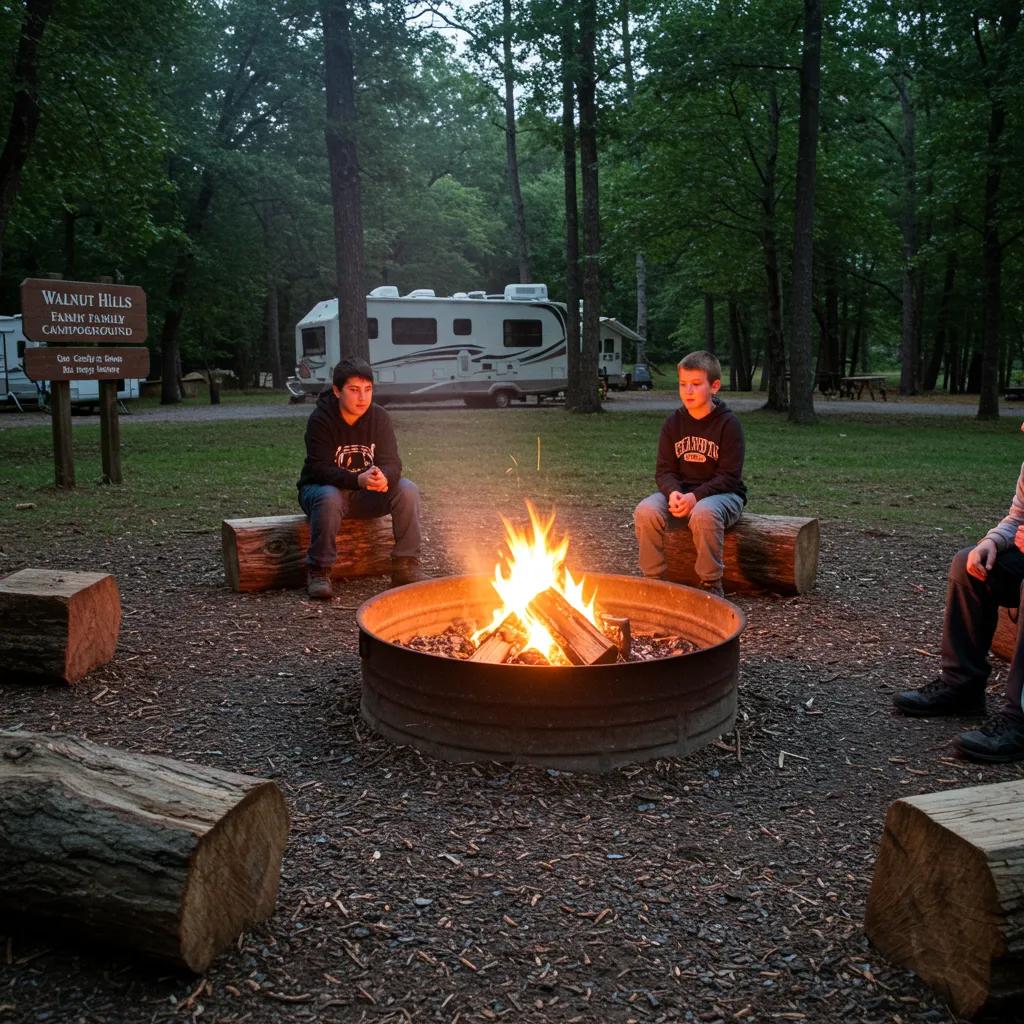
Campfire rules and firewood regulations are crucial for reducing wildfire risk and preventing the spread of invasive pests that harm our forests and local ecosystems. The “Buy It Where You Burn It” principle is key to minimizing the transport of wood-boring insects and diseases by encouraging the purchase of locally sourced firewood. Using designated fire rings and following safe-tending practices prevents uncontrolled fires and protects nearby amenities like the river, lake, and water park. These measures work together to safeguard both visitor safety and long-term forest health.
Campgrounds like Walnut Hills often sell local firewood and provide designated fire pits. Guests should check on-site wood availability and local burn conditions before bringing external wood. Purchasing local firewood and following posted campfire rules helps protect Michigan’s forests and the Shiawassee River watershed.
The safety checklist below outlines core campfire practices to reduce risk and meet Michigan regulations.
- Always use designated fire rings or pits for campfires.
- Keep fires small and attended at all times; have water and tools readily available.
- Fully extinguish fires until they are cold before leaving your site or going to sleep.
- Purchase and burn local firewood to prevent the spread of invasive pests.
These four steps summarize essential behaviors; the EAV table below clarifies firewood rules and the reasons behind them.
Why Must You Follow the “Buy It Where You Burn It” Firewood Rule?
The “Buy It Where You Burn It” approach is vital for preventing the movement of invasive species and protecting local forests from pests like wood-boring beetles and tree diseases. Moving untreated firewood across regions can inadvertently transport larvae or pathogens that devastate native trees and disrupt ecosystems. Purchasing locally sourced or campground-sold firewood minimizes these risks and aligns with Michigan DNR and EGLE guidance. Following this rule supports healthy forests and reduces long-term management costs for both public and private land managers.
Michigan Firewood Transport Regulations: Emerald Ash Borer Prevention
Transporting firewood can spread plant pests such as the emerald ash borer,Agrilus planipennisFairmaire (Coleoptera: Buprestidae), which was discovered in Lower Michigan, United States of America in 2002. In 2005, Michigan banned the transport of hardwood firewood northwards across the Mackinac Bridge, which connects Lower and Upper Michigan. In 2005–2011, 479 drivers of 11 commercial vehicles and 468 private vehicles were interviewed. Firewood was collected in every month of the year, with most firewood collected in June–September. Of the 468 private vehicles surveyed, 400 carried firewood originating from Michigan, 64 carried it from 19 other American states, and four carried it from three Canadian provinces. Most vehicles (93%) were bound for Upper Michigan, 4% were bound for eight other American states, and 3% were bound for four Canadian provinces. Drivers transported 1–275 pieces of firewood, with 33% of drivers having 1–10 pieces and 87% having up to 50 pieces. Surrender
Public transport of firewood across the Mackinac Bridge in Michigan, United States of America: origin, destination, woody taxa, and reasons for transporting firewood, RA Haack, 2021
How Should Campfires Be Built and Maintained Safely?
Campfires should always be built in designated rings, kept modest in size, and attended at all times to prevent embers from spreading. Maintain a clear area around the fire, keep water and a shovel nearby, and never leave a fire unattended, even briefly. Completely extinguish fires by dousing them with water and stirring the coals until the site is cold to the touch to prevent any midnight flare-ups. Practicing these steps protects campers, adjacent sites, and nearby habitats like riverbanks and wooded areas.
What Are the Restrictions on Firewood and Campfires at Walnut Hills?
Walnut Hills Family Campground follows local best practices by encouraging the use of on-site firewood and limiting open burning to designated rings to protect our guests and surroundings. Seasonal or weather-based burn bans may apply, and our staff will post notices if restrictions change for safety reasons. Prohibited fuels such as construction lumber or treated wood should never be burned, as they release toxic fumes and can damage fire rings. Checking with campground staff about wood availability and current restrictions helps campers plan safe, compliant campfires.
What Are the Quiet Hours and Generator Use Policies at Walnut Hills?
Quiet hours are essential for protecting sleep, reducing disturbances, and preserving the family-friendly atmosphere that so many campers seek. A defined time window limits amplified noise, loud gatherings, and motorized equipment to ensure respect for neighbors and children enjoying the campground. Generator rules balance the need for power with the community’s expectation for peace by restricting loud operation during overnight hours. Clear, enforced quiet-hours policies significantly improve overall satisfaction and reduce conflict among visitors.
Quiet hours at many family campgrounds are enforced during the late evening and early morning to protect rest and maintain a relaxed environment. Walnut Hills Family Campground specifies quiet hours and restricts generator use during these times to minimize noise and disruption. Campers should plan alternative power strategies for overnight needs and follow staff guidance to avoid any enforcement actions.
Here are some examples of acceptable behavior:
- Keep conversations and music at a low volume during quiet hours.
- Use headphones for amplified audio after the designated quiet start time.
- Move louder activities to daytime hours to respect sleeping guests.
When Are Quiet Hours Enforced and What Are the Noise Limits?
Quiet hours represent a fixed timeframe when amplified sound and loud activity must cease to allow for restful sleep and minimize disturbance. During quiet hours, disruptive noise such as loud music, shouting, or engine idling is prohibited and may prompt staff intervention. Enforcing these limits is crucial for protecting families with young children and guests seeking a peaceful outdoor experience. Understanding the specific quiet-hour times before your arrival prevents surprises and helps campers schedule their activities appropriately.
What Are the Generator Use Restrictions During Quiet Hours?
Generators produce steady mechanical noise that can carry across campsites, so many campgrounds restrict generator operation during quiet hours to preserve peaceful conditions. Permitted generator windows allow for daytime running for necessary power, but overnight operation is typically prohibited or heavily limited. Campers who rely on power for sensitive medical equipment should notify staff in advance so accommodations or exceptions can be arranged. Choosing quieter inverter generators or battery systems can significantly reduce noise impacts and increase compatibility with quiet-hour policies.
How Are Music and Other Noise Sources Regulated?
Music and amplified sound are subject to volume and time limits to prevent disruption and uphold the campground’s family-friendly character. Hosts generally ask guests to use portable speakers at a low volume, prefer headphones after quiet hours begin, and move louder gatherings to communal daytime areas. Enforcement follows a progressive approach—friendly reminders, formal warnings, and potential removal for repeated violations—to keep our community safe and welcoming. Adhering to sound guidelines preserves the experience for all visitors.
How Do Waste Disposal and Environmental Guidelines Protect Walnut Hills Campground?
Waste and environmental rules are essential for keeping the campground sanitary, protecting water bodies like the Shiawassee River, and reducing wildlife conflicts by limiting attractants. Proper separation of recyclables, disposal of hazardous items, and correct use of RV dump stations help reduce pollution and public-health risks. Leave No Trace principles guide campers to minimize their footprint and promote long-term stewardship of the natural areas families enjoy. Understanding our disposal processes improves site hygiene and supports a healthy outdoor environment.
Campground maps clearly indicate trash, recycling, and RV dump-station locations, so guests can plan their deposits and sanitary servicing. Walnut Hills staff are also available to confirm these details upon reservation and arrival. Booking a site with hookups is advisable for campers who require frequent grey- or black-water disposal to reduce unsanitary practices and ensure proper treatment.
The practical steps below outline how to handle RV waste and keep the campground clean for everyone.
- Use designated trash and recycling stations and follow all sorting rules.
- Operate RV dump stations following posted procedures and etiquette.
- Pack out any non-accepted items and dispose of hazardous waste per staff instructions.
This concise action list helps campers meet disposal expectations and protect the campground environment.
Where Are Trash and Recycling Stations Located?
Trash and recycling stations are strategically positioned for convenient access while keeping collection points away from sensitive habitats and water edges. Guests should follow posted signs indicating acceptable materials and hours for bulk-drop items to prevent contamination. Hazardous items such as batteries, propane tanks, or chemicals require special handling and should not be placed in regular bins. Observing station rules and asking staff for clarification ensures efficient and safe disposal.
How Should RV Waste Be Properly Disposed of at Walnut Hills?
Proper RV waste disposal is critical for protecting public health and preventing contamination of soils and water. Campers should use the on-site RV dump station, close tank valves carefully, and follow the posted step-by-step procedures for connecting, flushing, and sanitizing fittings. Rinse procedures and courteous timing help reduce odors and keep the station functional for everyone; booking a site with full hookups can reduce the frequency of dump trips. Following campground etiquette at the dump station helps maintain sanitary conditions and minimizes operational issues.
What Are the Leave No Trace Principles Campers Must Follow?
Leave No Trace principles are centered on minimizing human impact by packing out trash, respecting wildlife, and using durable surfaces for camping to reduce erosion. Campers should keep food secured, limit campfire impact, and avoid disturbing natural vegetation or wildlife. Teaching children these practices promotes long-term stewardship and ensures future generations can enjoy natural areas. Adhering to Leave No Trace principles helps maintain the scenic and ecological quality of our family campgrounds.
Frequently Asked Questions
What Should I Know About Campground Reservations?
When making a reservation at Walnut Hills Family Campground, it’s essential to review the specific site type and its amenities. Reservations can typically be made online, and we highly recommend booking in advance, especially during peak seasons. Please be sure to confirm the maximum occupancy and vehicle limits for your chosen site to avoid any issues upon arrival. Additionally, familiarize yourself with our campground’s cancellation policy in case your plans change.
Are There Any Special Activities or Amenities for Families?
Walnut Hills Family Campground offers a variety of family-friendly activities and amenities, including our Wibit water park, swimming lake, and organized events throughout the camping season. Families can enjoy outdoor games, explore nature trails, and gather around communal fire pits for evening get-togethers. It’s a great idea to check our campground’s event calendar before your visit to see if you can participate in any special activities or programs designed for children and families.
What Are the Guidelines for Cooking and Food Storage?
Cooking and food storage guidelines at Walnut Hills Family Campground are designed to minimize wildlife encounters and maintain cleanliness. Campers should use designated cooking areas and keep food securely stored in animal-proof containers. It’s important to clean up cooking areas promptly and dispose of food scraps in designated trash receptacles. Following these guidelines helps protect both our campers and the local wildlife, ensuring a safe and enjoyable experience for everyone.
Can I Bring My Own Firewood, and What Are the Restrictions?
While you might be tempted to bring your own firewood, it’s crucial to adhere to the “Buy It Where You Burn It” rule to prevent the spread of invasive pests. Outside firewood is often prohibited, and campers are strongly encouraged to purchase firewood from local sources or directly from the campground. This practice is vital for protecting Michigan’s forests and ecosystems. Always check with campground staff for any specific firewood policies or restrictions before your arrival.
What Should I Do in Case of an Emergency While Camping?
In the event of an emergency at Walnut Hills Family Campground, it’s vital to know the location of the nearest emergency services and how to contact them. Our campground staff are trained to assist in emergencies, so please don’t hesitate to reach out to them for help. Familiarize yourself with the campground layout, including emergency exits and first aid stations. Having a basic first aid kit on hand and knowing how to use it can also be incredibly beneficial during your stay.
Are There Any Age Restrictions for Campers?
Walnut Hills Family Campground is designed to be family-friendly, welcoming guests of all ages. However, certain activities or amenities may have age restrictions for safety reasons. For instance, children may require adult supervision in areas like the water park or during specific events. It’s advisable to check with campground staff regarding any age-related policies or guidelines to ensure a safe and enjoyable experience for everyone in your group.
Conclusion
Understanding the rules and regulations at Walnut Hills Family Campground is key to ensuring a safe and enjoyable experience for all visitors. By adhering to guidelines on check-in procedures, pet policies, and waste disposal, families can contribute to a cleaner and more welcoming environment. Embrace the opportunity to connect with nature while respecting the campground’s standards. Plan your visit today and make the most of your family camping adventure!