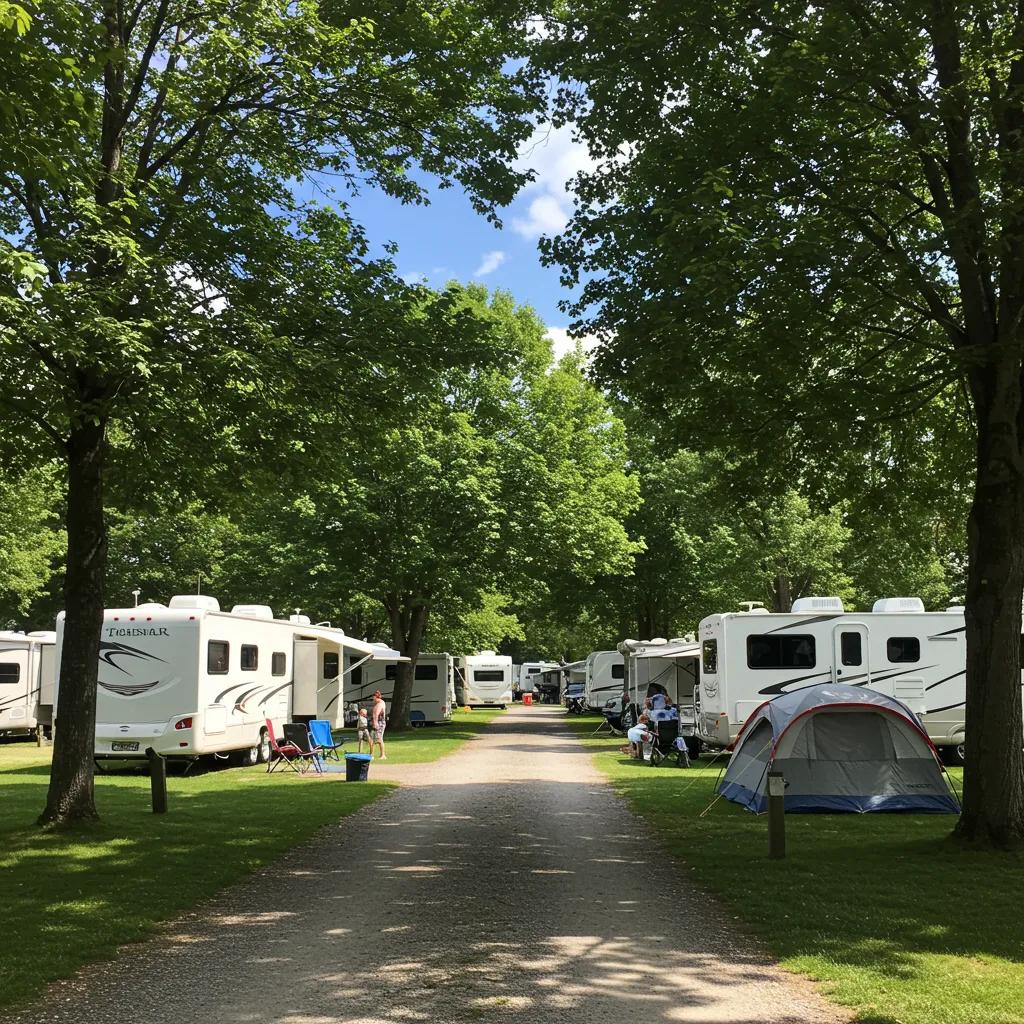
Selling Your Campground or RV Park: A Step-by-Step Guide to Success
Selling a campground or RV park is a significant undertaking, requiring meticulous preparation, a solid valuation, and a thoughtful transition plan to safeguard its value and enduring legacy. This guide is designed to walk campground owners through the essential steps of selling, from organizing your financials and assessing your property’s condition to understanding valuation methods like Net Operating Income (NOI) and cap rates, and deciding whether to work with a broker or a direct buyer. Many owners worry that incomplete documentation or unclear valuations might diminish their sale proceeds or disrupt cherished community relationships. This article offers practical strategies to mitigate those risks and prepare your property for a successful sale. You’ll find actionable steps to kickstart the selling process, a transparent approach to determining your campground’s value, a comparison of selling with a broker versus directly, and an overview of the buyer’s acquisition workflow, including timelines and due diligence. We’ve included checklists, EAV tables for estimating value ranges, and real-world seller considerations to empower you to confidently sell your campground, plan for retirement, and ensure its legacy continues.
Ready to Sell Your Campground? Here’s How to Start the Process
Kicking off the campground selling process involves organizing your financial records, inspecting your property’s systems, and establishing a preliminary valuation to guide your timing and strategy. Having accurate financials ready demonstrates your professionalism to potential buyers, while an early assessment of your property’s condition highlights any necessary repairs that can protect your asking price and expedite the sale. The immediate benefit is a smoother buyer due diligence process and stronger negotiation leverage when reviewing offers. Start with these concrete tasks to bring clarity to both your buyers and your own planning.
What follows is a straightforward, action-oriented checklist for owners to take charge of their sale, followed by a breakdown of the key supporting tasks buyers will expect.
What Financial Records Should Campground Owners Get Ready?

Campground owners should gather at least three years of Profit & Loss statements and tax returns, along with monthly occupancy and revenue details, and vendor contracts. This comprehensive package paints a clear picture of your income and expenses. Accurate NOI calculations depend on detailed expense categorization—including payroll, utilities, repairs, and management fees—so buyers can accurately model your park’s sustainable earnings. Organize your files with clear naming conventions and a simple folder structure (e.g., Financials > Year > P&L). This speeds up buyer review and signals your professional management. Preparing these records early minimizes negotiation friction and supports a well-justified valuation during offer and due diligence stages.
How Do You Assess Your Campground’s Property Condition Before Listing?

A focused property condition assessment should cover essential systems like septic, water, electrical, and roads, identifying high-impact repairs that preserve value and reduce buyer contingencies. Prioritize fixes that offer a strong return on investment, such as road grading, septic system maintenance, and safety upgrades. Be sure to document all recent work with invoices and warranties. Cosmetic improvements to common areas and signage can also boost buyer perception without significant capital expenditure, enhancing the perceived value per site. A clear condition report helps sellers set realistic expectations and frames negotiations around documented findings and proposed solutions.
Why is Knowing Your Campground’s Market Value So Important?
Understanding your campground’s market value empowers you in pricing decisions, tax planning, and retirement timing by translating your operating performance into a sale price that aligns with market expectations. An accurate valuation informs whether a broker listing, a direct sale, or a phased transition will yield the best returns and help maintain community relationships. Mispricing can lead to a prolonged sale process or attract lowball offers, whereas a data-driven valuation anchors negotiations and aligns buyer and seller expectations. With a clear valuation in hand, you can confidently choose the sales route that best balances proceeds, speed, and the preservation of your property’s legacy.
How Do We Value a Campground or RV Park?
Campground and RV park valuations typically hinge on Net Operating Income (NOI) translated into value using a market capitalization rate (cap rate), often supplemented by per-site benchmarks and adjustments for property condition. NOI represents your stabilized revenue minus operating expenses, providing a standardized income metric that buyers use to compare hospitality assets. Applying an appropriate cap rate converts that income into a price, while per-site comparisons and site count economics help refine the valuation range for different property types. These combined methods provide sellers with a well-supported value estimate for negotiation and planning.
Below is a practical EAV-style table that compares valuation inputs for various campground profiles, helping owners visualize how NOI and cap rate influence value.
This table illustrates how different NOI levels interact with cap-rate benchmarks to generate valuation ranges, underscoring the importance of site count and income diversification.
A simple calculation example clarifies the core formula: Value = NOI / Cap Rate. For instance, a campground with an NOI of $350,000 and a cap rate of 8.75% would have an estimated value near $4,000,000. This straightforward calculation helps owners see how even small improvements in NOI or slight shifts in cap rates can significantly impact the sale price. Understanding this relationship naturally leads to exploring the components that build NOI and how buyers adjust these figures during due diligence.
What Exactly Is Net Operating Income and How Does It Impact Valuation?
Net Operating Income (NOI) is your campground’s stabilized revenue minus its recurring operating expenses, notably excluding debt service and owner-specific discretionary costs. It forms the fundamental income base for valuation. NOI is crucial because it isolates the asset-level earnings a market buyer can realistically expect to receive, ensuring consistent comparisons across different parks. Buyers often adjust NOI to account for non-recurring expenses, owner perks, or one-time capital expenditures to reflect true operating performance. Presenting a clear, adjusted NOI with supporting documentation minimizes buyer adjustments and enhances the perceived fairness of your asking price.
How Do Capitalization Rates Influence Your Campground’s Value?
Capitalization rates are used to convert NOI into an estimated market value using the formula: Value = NOI / Cap Rate. Consequently, a lower cap rate increases value, while a higher cap rate reduces it. Cap rates reflect market risk, the prevailing interest rate environment, and the quality of the asset. It’s important to consider the current cap-rate environment when setting expectations for transactions in the near future. A modest compression of the cap rate by just one percentage point can meaningfully boost a park’s value, while widening cap rates have the opposite effect. Understanding the drivers of cap rates empowers sellers to time their sales or implement operational changes that favorably reduce perceived risk and compress cap rates.
What Factors Affect Your Campground’s Valuation?
A campground’s valuation is influenced by its location, accessibility, the number and mix of sites, the quality of amenities, occupancy trends, revenue diversity, and its permit and regulatory standing. Each of these factors impacts risk and future earnings potential. Properties with stable, year-round revenue streams and diverse site types (seasonal, transient, long-term) typically command a premium. Conversely, reliance on a single season or unresolved permitting issues can pressure cap rates. The property’s condition and recent capital investments can reduce buyer contingencies and support higher per-site valuations. Owners should conduct a self-audit across these factors to identify priority actions that can enhance valuation before marketing the property.
How Does GatherGrounds Resorts Approach Campground Valuation?
GatherGrounds Resorts evaluates campgrounds by meticulously reviewing historical financials, site economics, and physical condition, with a strong emphasis on transparent, buyer-side valuation that prioritizes preserving legacy and community continuity. Our approach focuses on establishing a defensible NOI, benchmarking per-site performance, and applying cap-rate reasoning tailored to the park’s specific regional dynamics. Owners considering a direct sale are welcome to request a no-obligation valuation conversation to see how a buyer-side review would assess their campground. This buyer-centered valuation process helps sellers compare offers and understand the trade-offs between a direct sale and other selling routes.
Selling Directly to GatherGrounds Resorts vs. Using a Campground Broker: What’s the Difference?
Selling directly to a buyer like GatherGrounds Resorts can significantly simplify the transaction and eliminate traditional brokerage commissions. We offer a buyer with a family-owned approach that prioritizes continuity and legacy preservation. The direct route streamlines negotiations, shortens timelines, and avoids the extended sales processes often associated with listing exposure. Sellers benefit from a single point of negotiation and a buyer committed to upholding campground traditions, which is particularly valuable for family-run properties. Below is an EAV-style comparison table outlining the outcomes of selling directly versus listing with a broker.
This comparison highlights the key trade-offs: selling direct reduces fees and can expedite closing, while brokers may offer broader buyer exposure at a cost. Understanding these outcomes helps owners select the strategy that best aligns with their priorities, whether that’s maximizing net proceeds or reaching the widest possible buyer pool.
We encourage sellers to consider these points carefully and evaluate whether a family-owned buyer’s priorities align with your goals for legacy and staff transition.
How Does Selling Directly Eliminate Brokerage Fees and Commissions?
Selling directly removes the broker commission line item from your sale, potentially increasing your net proceeds by the percentage typically paid to listing brokers, which commonly ranges depending on deal size and terms. By eliminating brokerage fees, sellers can either accept a slightly lower gross offer and net the same amount, or retain more of the sale proceeds when offers are comparable. The trade-off is that direct sales may involve a narrower buyer pool and require sellers to manage certain aspects of the transaction themselves or rely on the buyer for coordination. A clear numerical example can help sellers quantify potential savings and weigh them against the value of broker marketing reach.
What Role Does a Campground Real Estate Agent Play in the Selling Process?
A campground real estate agent offers marketing reach, buyer vetting, negotiation support, and closing coordination—services that can accelerate a sale to a broader audience and potentially generate higher competitive offers. Agents build market exposure through their networks and listings, assist in structuring contingencies, and manage escrow and closing logistics that sellers might find time-consuming. For owners who prioritize maximizing price and broad marketing reach, a broker often adds significant value. However, for owners seeking speed, discretion, and potentially lower transaction costs, a direct buyer may be a more suitable option. Assessing your priorities will clarify whether broker services are worth the commission cost.
Why Choose a Family-Owned Buyer Like GatherGrounds Resorts?
Choosing a family-owned buyer like GatherGrounds Resorts can help preserve community ties, maintain operational continuity, and provide personalized transition planning that honors the campground’s legacy. Family-owned acquirers often place a high value on staff retention, community messaging, and upholding traditions that long-time guests cherish, which can ease owner concerns about abrupt cultural changes. Sellers who value these non-financial outcomes may prioritize offers that include thoughtful transition elements, even if the headline price is slightly different. When evaluating potential buyers, be sure to inquire about their post-sale plans for staff, communication strategies, and commitments to the campground’s traditions.
What Are the Key Steps in GatherGrounds Resorts’ Direct Acquisition Process?
GatherGrounds Resorts’ direct acquisition process follows a clear, sequential path: initial consultation and preliminary offer, focused due diligence, negotiation and term finalization, and finally, closing and post-sale transition planning to ensure operations and legacy are preserved. This process is designed to shorten timelines and reduce friction for sellers by concentrating on essential documentation and practical transition support. Clear expectations regarding timing and document requests help sellers prepare effectively and avoid surprises. The following subsections detail each phase, including typical timelines and seller actions.
How Does the Initial Consultation and Offer Process Work?
The initial consultation begins with a seller-provided snapshot of financial and operational data—including P&L statements, occupancy data, and site count—allowing the buyer to present a preliminary offer within a short review window, typically within 7–14 days. Sellers should prepare a concise package of their key financial documents to streamline this review and receive a transparent preliminary valuation. The preliminary offer will outline the proposed price range and key contingencies, enabling sellers to decide whether to proceed to formal due diligence. This early clarity supports efficient decision-making and sets the stage for a structured diligence process.
What Does Due Diligence Involve for Campground Sellers?
Due diligence encompasses a thorough financial review, checks of legal title and permits, environmental assessments where required, and physical inspections of critical systems to confirm the property’s condition as reflected in the valuation. Sellers can expedite this phase by pre-organizing documents such as tax returns, P&Ls, permits, and vendor contracts, and by proactively addressing common red flags like undocumented repairs or missing permits. Clear communication about past capital projects and maintenance practices can reduce buyer adjustments and shorten the diligence timeline. Addressing known issues early improves buyer confidence and minimizes contingencies during negotiation.
How Are Terms Negotiated and Finalized?
Negotiations typically focus on price, closing date, contingencies, and transition support, such as staff retention or temporary management assistance. Common structures involve earnest money deposits and defined contingency periods. Sellers should prioritize negotiable levers—balancing price against transition support—based on their retirement timeline and legacy goals. Escrow and earnest-money mechanisms protect both parties while contingencies, such as environmental or title clearance, are resolved. A well-structured term sheet narrows down remaining issues and efficiently moves the parties toward closing.
What Happens During Closing and Post-Sale Transition?
During closing, standard closing documents and title transfer are completed. Concurrently, the buyer organizes operational transition activities, including staff introductions, vendor reassignments, and community communications, to ensure continuity. Sellers should prepare handover documents, such as operating manuals, vendor contacts, and staff lists, to support a smooth first 90 days. Post-sale transition plans that incorporate overlap staffing or phased operational handoffs are crucial for preserving the guest experience and minimizing revenue disruption. Thoughtful transition execution ensures the campground continues to serve its guests while honoring its legacy commitments.
How Can Campground Owners Prepare Their Property for a Successful Sale?
Preparing a campground for sale involves organizing financial documents, prioritizing essential maintenance and strategic upgrades, and verifying legal permits and title status so buyers can conduct efficient due diligence. Proper preparation boosts buyer confidence, reduces contingencies, and often shortens the time to close. Below is a practical EAV-style checklist outlining the required documents and actions sellers should gather before marketing their asset.
What Financial Documents Are Essential for Sale Preparation?
Essential financial documents include three years of P&L statements, tax returns, monthly occupancy reports, vendor contracts, and a reconciled operating ledger that supports your reported NOI. Buyers use these records to validate revenue streams and expenses, so completeness and clarity significantly reduce post-offer adjustments. Providing categorized expense schedules and occupancy trends by site type helps buyers model future earnings with confidence. A well-organized financial package signals disciplined management and strengthens your negotiating leverage.
How Should You Maintain and Upgrade Your Campground Before Selling?
Focus maintenance and upgrades on high-impact systems—septic, roads, potable water, and safety infrastructure—along with cost-effective amenity refreshes that enhance guest experience and per-site value. Prioritize repairs that minimize operational risk and are well-documented with invoices, which buyers view favorably during inspections. Cosmetic improvements to shared facilities and signage can elevate perceived value without substantial capital outlays, while major capital projects should be evaluated for their ROI versus including them as seller concessions. A prioritized action plan ensures your spending aligns with the expected uplift in valuation.
Which Legal Documents and Permits Are Needed to Sell a Campground?
Sellers must assemble title and deed documentation, any lease or owner agreements for subleased land, current operational permits, zoning confirmations, and any required regional environmental reports or assessments. Verifying permit status and resolving outstanding zoning or compliance issues before marketing your property can prevent delays during buyer due diligence. If leases or third-party contracts are in place, ensure clear assignment terms are established to facilitate transfer. Addressing legal items proactively reduces negotiation friction and supports a smooth closing.
What Are Common Questions Campground Sellers Ask?
Campground sellers frequently inquire about valuation methods, the necessity of a broker, typical sale timelines, and the documents required for closing. Providing clear answers to these questions reduces uncertainty and helps owners plan effectively. Addressing these common queries with concise steps and checklists equips sellers to act with confidence and choose the path that best aligns with their financial and legacy objectives. The following Q&A provides direct answers and decision criteria designed to address featured snippets and common search queries.
How Do You Value a Campground or RV Park Accurately?
Accurate valuation combines a thorough NOI calculation, the selection of an appropriate cap rate, and per-site benchmarking to produce a defensible price estimate that both buyers and lenders will accept. Sellers should prepare a reconciled NOI, document any non-recurring items, and compare per-site revenues against regional benchmarks as a sanity check. A three-step approach—assembling financials, calculating adjusted NOI, and applying a market cap rate—yields a practical valuation estimate for negotiation. Presenting this evidence effectively reduces buyer-side adjustments during diligence.
Do I Need a Broker to Sell My Campground?
There isn’t a single answer that fits every seller. A broker is beneficial when maximizing market exposure and attracting competitive bids is your top priority. Conversely, a direct sale can be preferable for owners seeking speed, discretion, and lower transaction fees. Brokers bring valuable marketing reach and negotiation expertise but charge commissions that reduce net proceeds. Direct buyers, on the other hand, offer simplicity and potential fee savings. Evaluate your priorities—whether it’s price maximization versus speed and legacy continuity—to determine the right path for your situation.
How Long Does the Campground Selling Process Usually Take?
Timelines can vary significantly depending on the chosen route. Brokered listings can range from 90–180+ days from listing to closing, depending on market interest and contingencies. Direct sales, however, often complete within 60–120 days, provided documentation and financing align smoothly. Key timeline drivers include the completeness of financial records, the condition of critical systems, environmental or permit requirements, and buyer financing arrangements. Proactive preparation regarding documents and repairs can shorten any path to closing and make timelines more predictable.
What Documents Are Required to Complete a Campground Sale?
A concise closing document checklist typically includes title/deed documentation, three years of P&L and tax returns, occupancy and revenue reports, current permits and environmental assessments (if applicable), and vendor or lease contracts that impact operations. Common issues that can arise include title defects, missing permits, or undocumented capital work—resolving these early can significantly reduce closing delays. Presenting a complete document set enhances buyer confidence and often leads to smoother negotiations.
What Success Stories Demonstrate a Smooth Campground Selling Experience with GatherGrounds Resorts?
Sellers who opted for a thoughtful direct sale process have reported efficient closings, coordinated transitions that maintained staff and community continuity, and valuation outcomes that aligned with their retirement goals, illustrating how effective process design impacts overall results. GatherGrounds Resorts places a strong emphasis on preserving legacy and operational continuity as integral parts of its direct acquisition approach, which many sellers find resonates well with their family-owned property values. The following anonymized summaries highlight typical seller benefits and transition supports that often accompany a direct acquisition.
How Have Previous Sellers Benefited from GatherGrounds’ Thoughtful Transition?
In anonymized examples, sellers experienced timely closings combined with carefully planned staff introductions and operational handovers that effectively protected guest experience and minimized revenue disruption. Sellers particularly valued structured overlap periods where outgoing owners could train new operators on local vendor relationships and site-specific nuances. These outcomes helped preserve community goodwill and maintain staff continuity during the critical weeks following the sale. Such transition planning demonstrates how administrative preparation and clear communication lead to smoother handoffs.
What Do Campground Owners Say About Selling Directly to GatherGrounds?
Owners who pursued direct offers from us consistently reported appreciation for straightforward negotiations, reduced complexity compared to public listings, and offers framed with legacy-preservation commitments that closely matched their personal priorities. Feedback often centers on the clarity provided during valuation discussions and the practical support offered during the handover phase, which significantly reduced emotional stress and operational uncertainty. These seller perspectives underscore that the design of the transaction—encompassing speed, clarity, and transition care—is as important as the headline price.
How Does GatherGrounds Preserve Campground Legacy and Family Values?
GatherGrounds’ approach includes firm commitments to operational continuity, staff retention wherever feasible, and communication strategies that honor the campground’s established traditions and relationships with its regular guests. These practices are designed to maintain the customer experience and community identity that owners have worked diligently to build, thereby minimizing disruption for both guests and staff. For sellers who prioritize legacy preservation alongside a fair transaction, a buyer that commits to these practices can be a compelling choice when considering how to sell their campground.
Frequently Asked Questions
What are the key considerations when choosing between a broker and a direct buyer?
When deciding between a broker and a direct buyer, consider factors such as transaction speed, cost, and the importance of legacy preservation. Brokers can provide wider market exposure and potentially higher offers, but they charge commissions that reduce net proceeds. In contrast, direct buyers like GatherGrounds Resorts may offer a faster, more straightforward process without brokerage fees, focusing on continuity and community ties. Evaluate your priorities—whether maximizing sale price or ensuring a smooth transition—to make the best choice for your situation.
How can I enhance my campground’s appeal to potential buyers?
Enhancing your campground’s appeal involves strategic maintenance and upgrades that improve guest experience and operational efficiency. Focus on high-impact areas such as safety infrastructure, amenities, and aesthetic improvements to common areas. Documenting recent repairs and upgrades can also reassure buyers about the property’s condition. Additionally, maintaining clear financial records and showcasing occupancy trends can help buyers visualize the campground’s potential, making it more attractive during negotiations.
What role does community feedback play in the selling process?
Community feedback can significantly influence the selling process, especially for family-owned campgrounds. Positive relationships with guests and local stakeholders can enhance the perceived value of the property. Sellers should consider gathering testimonials or endorsements from regular guests to present a strong case for the campground’s reputation. This feedback can also help potential buyers understand the community’s attachment to the campground, which may be a deciding factor in their purchase decision.
What are the common pitfalls to avoid when selling a campground?
Common pitfalls when selling a campground include inadequate financial documentation, neglecting property maintenance, and failing to understand market conditions. Sellers should avoid presenting incomplete or disorganized financial records, as this can erode buyer confidence. Additionally, overlooking necessary repairs or upgrades can lead to lower offers or extended negotiation periods. Understanding the local market and setting a realistic price based on thorough valuation methods is crucial to avoid prolonged sales processes.
How can I prepare for buyer due diligence effectively?
Preparing for buyer due diligence involves organizing all relevant documents and addressing potential red flags in advance. Sellers should compile financial records, legal permits, and property condition reports to present a comprehensive overview of the campground. Proactively resolving issues such as title defects or outstanding permits can streamline the due diligence process. Clear communication about the property’s history and maintenance can also enhance buyer confidence and facilitate smoother negotiations.
What should I expect during the closing process of a campground sale?
During the closing process, expect to finalize all necessary documentation, including title transfers and financial agreements. Both parties will review and sign closing documents, and the buyer will typically arrange for operational transition activities. Sellers should prepare handover documents, such as operating manuals and vendor contacts, to ensure a smooth transition. Clear communication and planning during this phase are essential to minimize disruptions and maintain continuity for guests and staff.
How can I ensure a smooth transition for staff and guests after the sale?
To ensure a smooth transition for staff and guests after the sale, develop a comprehensive post-sale transition plan that includes staff introductions, operational handovers, and community communications. Consider overlapping staffing periods where outgoing owners can train new operators on local practices and vendor relationships. Maintaining open lines of communication with guests about the changes can also help preserve community ties and ensure a seamless experience for everyone involved.
Conclusion
Successfully selling a campground or RV park involves careful preparation, accurate valuation, and a clear transition plan that preserves both value and legacy. By understanding financial documentation, property condition, and market valuation, sellers can navigate the complexities of the selling process with confidence. Choosing a direct buyer like GatherGrounds Resorts can streamline the transaction while ensuring continuity and community ties. Start your journey towards a successful sale by exploring our resources and connecting with us today.