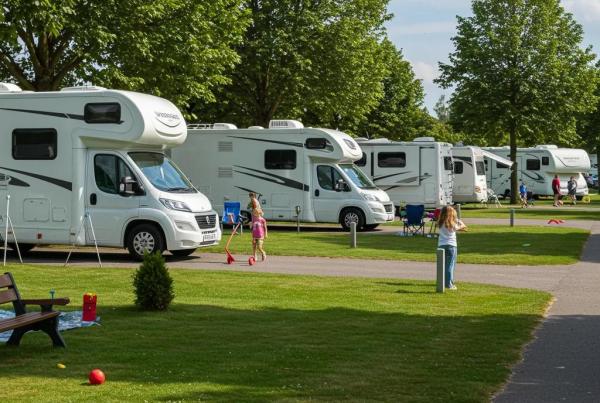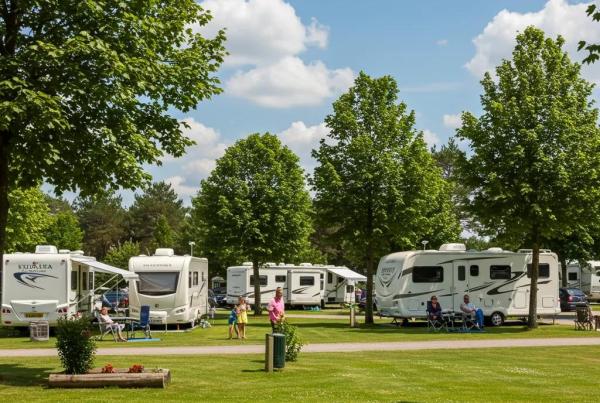

This calculator estimates a value range for a campground or RV park the way most buyers, lenders and appraisers start: net operating income (NOI) divided by a cap rate. The division is easy. The hard part is the cap rate, because it changes with risk. Two parks with the same income can be worth very different amounts, so the calculator starts from a published industry cap rate and adjusts it for the things a buyer would price in: your records, your infrastructure, your revenue mix, how much the park depends on you, and the repairs it needs.
Campground & RV park valuation calculator
Value = net operating income (NOI) ÷ cap rate. The cap rate starts at a published industry figure and moves up or down with the risks a buyer would price in.
Try an example (illustrative):
Enter revenue and expenses (or NOI) to see a value range.
How do you calculate the value of an RV park?
Most campgrounds and RV parks are valued on income. The basic formula is:
Value = NOI ÷ cap rate
NOI is a full year of revenue minus the normal costs of running the park. The cap rate is the yearly return a buyer expects on the purchase price. Dividing by the cap rate is the same as multiplying NOI by 1 ÷ cap rate, so an 8% cap rate means the park sells for about 12.5 times NOI, and a 10% cap rate means about 10 times NOI.
What counts as revenue
Use the last 12 months, or an average of two or three years if one season was unusual. Include nightly, seasonal and monthly site rent, cabin rentals, store sales, storage, golf cart rentals, firewood, events and other park income. Enter only income a buyer can verify. Buyers and lenders generally underwrite what shows on the books and the tax returns, not what an owner says was collected in cash.
What counts as an operating expense
- Payroll, plus a fair wage for any work you or your family do without pay (the calculator has a separate box for this)
- Utilities: electric, water, sewer or septic pumping, trash, internet
- Repairs and routine maintenance
- Insurance and property taxes
- Reservation software, card fees and marketing
- Supplies, store cost of goods, licenses and permits
- A replacement reserve for big items that wear out. Newmark’s 2026 survey, as reported by BVWire in March 2026, assumes about $75 per pad per year.
Leave out mortgage payments, depreciation, income taxes and personal expenses run through the business. As a reasonableness check, MMCG Invest’s August 2026 outlook cites a Newmark analysis of 62 parks with operating expenses averaging 53.7% of revenue. If your expenses are far below that, a buyer will likely look for costs that are missing.
What cap rate do campgrounds sell at?
Published figures are mostly for RV parks, and they are ranges, not rules. These are the most recent ones we could find with a named source and date:
| Type of park | Cap rate | Source |
|---|---|---|
| Class A and B RV parks | About 8.0% (going-in) | Newmark, 2026 North American Market Survey, as reported by BVWire, Mar. 11, 2026 |
| Class C RV parks | About 9.0% | Same |
| Stabilized 115-site resort (one sale, Dec. 2025) | About 7.75% | MMCG Invest, US RV Park and Campground Market Outlook 2026, Aug. 1, 2026 |
| Value-add RV parks | 11% to 12% | Same |
The calculator starts at 8.0%, the Class A and B figure, and adds or subtracts from there. A park with average answers lands close to the 9.0% Class C figure, and a park with many problems lands in the value-add range. Seasonal northern campgrounds, small parks and parks with mostly tent sites are not well covered by these surveys and often trade at higher cap rates than stabilized RV resorts, which is one more reason to treat any calculator result as a starting point.
Why do two parks with the same income sell for different prices?
Because the cap rate is a price for risk. A buyer is paying today for income they expect to collect for years. The less certain that income is, or the more money it will take to keep it coming, the higher the return the buyer needs, and the higher the cap rate. A higher cap rate means a lower multiple, so the same NOI buys less value.
Here is an example using the calculator’s own assumptions. It is illustrative only, not an offer and not a market quote. Both parks earn $300,000 of NOI.
| Turnkey park | Turnaround park | |
|---|---|---|
| Profile | CPA statements, mostly seasonal sites, rising occupancy, 50-amp service, runs on staff, strong location | Partly cash records, declining occupancy, 30-amp service, aging septic, poor roads, owner does most of the work |
| NOI | $300,000 | $300,000 |
| Risk-adjusted cap rate | 7.25% | 11.75% |
| Multiple of NOI | 13.8× | 8.5× |
| Value before repairs | $4,138,000 | $2,553,000 |
| Deferred maintenance | $0 | −$350,000 |
| Likely value | $4,138,000 | $2,203,000 |
Same income, about $1.9 million apart. You can load either example into the calculator above with the example buttons and change one answer at a time to see which factors matter most for your park.
What raises or lowers a campground cap rate?
These are the factors the calculator uses. The adjustments are our simplified assumptions, chosen so that the results stay within the published ranges above. They are meant to show direction and rough size, not to replace market data.
- Quality of records (0 to +1.25 points). Statements that tie to tax returns let a buyer and a lender trust the NOI. Cash income that is not on the returns usually does not count at all, and gaps in the records make buyers assume the worst about the rest.
- Revenue mix (−0.25 to +0.50). Seasonal and monthly campers tend to renew year after year, which makes income predictable. A park that is mostly nightly has to sell its sites again every weekend, and its income swings with weather, gas prices and competition.
- Occupancy trend (−0.15 to +0.50). Rising occupancy suggests room to grow. Declining occupancy makes a buyer ask whether this year’s NOI will hold.
- Electrical service (0 to +0.60). Many newer RVs need 50-amp service. Parks on 30-amp pedestals or an undersized main service face a costly upgrade before they can serve those campers.
- Water and sewer or septic (0 to +1.00). Wells, lagoons and septic fields are expensive to replace and can carry permit or capacity limits. Known compliance problems are among the biggest risks a buyer can take on.
- Roads, buildings and bathhouses (0 to +0.50). Condition affects both the guest experience and how much capital a buyer must spend early.
- Owner dependence (0 to +0.75). If the owner books the sites, fixes the pumps and knows every seasonal camper, much of the value walks out the door at closing. Staff, a manager and written procedures make the income transferable.
- Market and location (−0.25 to +0.50). Parks near a destination or a large drive-to population have deeper demand than remote parks.
- Amenities (−0.10 to +0.25). Pools, water features and activities support rates and occupancy. A bare-bones park competes mostly on price.
How does deferred maintenance affect value?
Deferred maintenance hits value twice. First, it usually shows up in the risk answers, because worn-out infrastructure raises the cap rate. Second, a buyer will subtract the cost of repairs they must make soon after closing, roughly dollar for dollar. The calculator does both: it adjusts the cap rate for condition and then subtracts your deferred maintenance estimate from the result. In practice, many buyers also add a cushion for repair costs that turn out higher than expected, so a good repair estimate from a contractor helps your number.
When should you get an appraisal or a broker opinion?
A calculator cannot see your park. It does not know whether your permits match your site count, what similar parks nearby have sold for, or how loyal your seasonal campers are. Value is also not the same as price: terms, timing and the buyer pool all affect the final number.
- Get an appraisal when a lender, an estate, a partner buyout or a tax question needs a formal, defensible value.
- Ask an experienced campground broker for an opinion of value when you are thinking about selling. Brokers know recent sales and how buyers are bidding. For large parks, portfolios, unique properties, or owners who want the widest exposure and competitive bidding, a broker is often the best route.
- Talk with operators who buy parks. GatherGrounds owns and operates three campgrounds in Michigan and Ohio and welcomes parks that need work, including those with deferred maintenance or dated infrastructure. A conversation can show how a buyer reads your numbers, with no obligation to list or sell.
Campground valuation calculator FAQ
How accurate is a campground valuation calculator?
It gives a reasonable range if your NOI is accurate and your answers are honest, but it is an illustrative estimate, not an appraisal or an offer. The cap rate adjustments are simplified assumptions. Real sales depend on comparable sales, the condition of the property, financing and the buyer.
What cap rate should I use for a seasonal campground?
Published surveys mostly cover RV parks: about 8.0% for Class A and B and about 9.0% for Class C (Newmark 2026, via BVWire, March 2026), with value-add parks around 11% to 12% (MMCG Invest, August 2026). Seasonal northern campgrounds often trade toward the higher end because their income comes from a short season. Keep the 8.0% starting point and let the risk answers move it, or enter your own figure if you have local sales data.
Should I include my mortgage payment as an expense?
No. NOI is measured before debt payments, depreciation and income taxes, so the value does not depend on how the current owner financed the park. Include a fair wage for any work you or your family do without pay, because a buyer will have to pay someone to do it.
Does cash income count toward value?
Usually not. Buyers and lenders generally underwrite income that appears on the books and the tax returns. Undocumented income tends to be excluded from NOI, and weak records also raise the cap rate, which is why the calculator asks about both.
How much does deferred maintenance reduce value?
Roughly the cost of the repairs, plus the effect on the cap rate. The calculator subtracts your estimate dollar for dollar and raises the cap rate for poor infrastructure. Buyers often add a margin for repair costs that run over, so a written contractor estimate is worth having.
Does this calculator store my numbers?
No. The math runs in your browser and nothing you type is sent or saved.