Why Choose Campgrounds With Mountain Biking Trails in Michigan: Your Ultimate Guide to Adventure and Family Fun

Pairing camping with adjacent mountain biking trails delivers a practical, family-oriented outdoor strategy. It increases ride time and reduces logistical complexity for multi-generational groups. This guide outlines why Michigan is a strong market for mountain bike camping, profiles flagship trail systems and features, and explains how a nearby campground functions as an effective basecamp for riders across skill levels. Common pain points—long transfers to trailheads, limited on-site amenities, and fragmented gear staging—are resolved by campgrounds sited near trail networks that provide parking, staging areas, and family amenities to occupy non-riding members. The guide previews state-level attractions, a detailed breakdown of Waterloo State Recreation Area (including the DTE Energy Foundation Trail), family recommendations for southeast Michigan, and practical planning items such as gear checklists, seasonal timing, and local resources. Throughout, the focus remains on simplifying logistics while promoting trail safety and enjoyable itineraries.

What Makes Michigan a Top Destination for Mountain Biking and Camping?

Michigan combines substantial public land, diverse trail typologies, and ongoing investment in trail infrastructure to form a favorable environment for mountain bike camping. The state provides everything from beginner singletrack to technical Upper Peninsula climbs, allowing trip design aligned to ability and objectives. Recent public and private funding has improved trail sustainability, signage, and connectivity, which reduces unexpected maintenance disruptions and increases predictability for campers planning day rides. Relative proximity to regional metropolitan areas makes Michigan a practical weekend market, enabling riders to prioritise trail time over travel. The net effect is a balance of convenience and quality that supports multi-day trips centered on camping and biking.

Mountain biking and camping are particularly complementary where trail access is immediate and campgrounds offer family amenities. Michigan’s volume and quality of trails make that combination compelling, and the next section identifies marquee systems that illustrate the state’s appeal.

Michigan’s notable trails and regions demonstrate the state’s geographic and operational range in mountain biking:

  • Diverse trail networks: Multiple regions offer distinct trail styles that fit a wide range of rider abilities.
  • Public and private investment: Recent funding has improved trail building, signage, and maintenance across the state.
  • Weekend accessibility: Major population centers are within reasonable driving distance of quality trail systems.
  • Family-friendly campgrounds: Campgrounds adjacent to trail systems make it practical to combine biking with other recreational activities.

Those attributes explain why riders prioritise Michigan locations when seeking campgrounds with direct access to mountain biking paths. The following section lists specific trails that define this appeal.

Which Mountain Biking Trails Define Michigan’s Outdoor Appeal?

Michigan’s trail network contains several flagship systems that reflect varied terrain and stewardship practices. The DTE Energy Foundation Trail in southeast Michigan offers multiple loop configurations and integrates with the broader Waterloo network, representing newer, well-maintained multi-loop design. In the Lower Peninsula, the Dragon Trail and emerging flow networks cater to intermediate riders with accessible lines. The Upper Peninsula features areas such as Copper Harbor, which provide technical climbs and remote singletrack for advanced riders. The Noquemanon Trails system delivers extended continuous singletrack popular with endurance riders and bikepackers. These regions illustrate the principal trail archetypes—looped systems, beginner singletrack, technical rock gardens, and long-distance multiuse routes—allowing riders to match trail selection to skill and camping strategy.

Evaluating these flagship systems helps determine whether a family-focused campground or a more remote basecamp best meets trip objectives. The next section examines statewide participation and infrastructure trends affecting rider behavior.

How Has Michigan’s Outdoor Recreation Grown Recently?

Michigan has experienced measurable increases in mountain biking participation and recreational camping driven by targeted trail investments, active community organisations, and elevated interest in outdoor wellness. Funding initiatives since the early 2020s have prioritised trail sustainability and new loop construction, expanding trail variety and improving year-round access. Economic and tourism data show that mountain biking destinations increase overnight stays and local expenditure, which supports ancillary services such as bike rental providers, shuttle operators, and family-focused campgrounds. Participation trends include both new riders and continued engagement from experienced cyclists seeking destination weekends, prompting campgrounds to adapt amenities for a broader customer mix. These dynamics indicate that selecting a campground near high-quality trails delivers both recreational value and logistical convenience for multi-day trips.

Understanding these growth patterns clarifies why deliberate planning—selecting the right campground and trails—yields better trip outcomes. The next section describes how one nearby campground can serve as a practical basecamp for trail-focused visits.

How Does The Oaks Campground Serve as Your Mountain Biking Basecamp?

The Oaks Campground by GatherGrounds, located in Munith, Michigan, operates as a family- and group-oriented basecamp for riders accessing nearby trail systems. The property combines on-site amenities with immediate proximity to Waterloo State Recreation Area and the DTE Energy Foundation Trail. As a basecamp, The Oaks offers RV and tent sites across a sizable parcel and provides family conveniences such as a fishing pond, playgrounds, pavilions, and extensive golf-cart riding trails that simplify staging and logistics for mixed-interest groups. Adjacency to Waterloo reduces transfer times to trailheads and enables riders to return to comfortable on-site facilities between loops—an advantage for families and multi-day itineraries. The campground layout facilitates morning rides followed by relaxed afternoons, and its access from regional population centers supports efficient weekend planning for riders travelling from nearby metros.

Below is a concise comparison of accommodation and bike-oriented amenity availability to help riders evaluate fit and prepare logistics.

Accommodation TypeBike-Related AmenityTypical Value/Availability
RV sitesOn-property staging/parkingAvailable across site clusters
Tent sitesNearby trail access / bike unloading areasClose proximity to trailheads
Group pavilionsSecure gear staging (general)Pavilions for group gear setup
Golf-cart trails (120 acres)Easy internal transport for bikes/gearExtensive on-property mobility

This summary maps accommodation types to practical bike needs at The Oaks. The campground’s family-oriented amenities and substantial property footprint support efficient gear organisation and reduce the need for shuttling between remote campsites and trailheads. The following subsections describe specific bike-relevant amenities and locational advantages in greater detail.

What Amenities Does The Oaks Campground Offer for Mountain Bikers?

The Oaks Campground delivers amenities that support mountain bikers while prioritising family convenience and group logistics rather than full-service bike support. On-site features include a fishing pond for post-ride recovery, playgrounds to occupy children, pavilions for group gear staging, and 120 acres of golf-cart riding trails that facilitate movement of bikes and supplies across the property. Although the site does not function as a bike shop, these facilities provide practical staging areas, designated parking zones, and straightforward loading and unloading access that shorten the transition between camp and trail. Riders should plan to bring portable cleaning supplies and basic storage solutions, as specialised bike washes or secure lockers may be limited.

These family-oriented amenities make it feasible to combine morning rides with afternoon recreation. The following subsection describes how the campground’s location further amplifies these benefits for riders arriving from regional cities.

Why Is The Oaks Campground’s Location Ideal for Biking Enthusiasts?

Located in Munith and adjacent to Waterloo State Recreation Area, The Oaks Campground materially reduces travel time to multiple trailheads and provides practical weekend access for riders from nearby metropolitan areas. The proximity enables completion of multiple short loops in a day without lengthy transfers—valuable for families and mixed-ability groups that alternate riding with on-site activities. This location supports flexible itineraries, such as early morning laps followed by playground time or afternoon fishing, because riders can return to established facilities quickly. For riders based in regional cities, The Oaks presents a clear balance of trail access and family-oriented amenities that minimise logistical friction.

Adjacency to Waterloo allows trip planning that prioritises trail time and structured recovery; the next major section examines specific opportunities available within Waterloo itself.

What Mountain Biking Opportunities Await at Waterloo State Recreation Area?

Mountain biking trail at Waterloo State Recreation Area, showcasing scenic landscapes and outdoor adventure

Waterloo State Recreation Area hosts an expanding trail network comprised of looped singletrack and connector routes suitable for a range of rider abilities. The system is anchored by the DTE Energy Foundation Trail and combines varied surfaces and technical elements with mixed hardwood forests and open wetlands, producing a ride profile that balances challenge and accessibility. Multiple trailheads permit varied entry points, and loop options of differing lengths allow riders to tailor mileage without long transfers. Assessing the characteristics of dominant routes enables accurate selection of loops based on skill and desired ride duration—an important consideration when integrating biking with camping.

Below is a quick-reference table summarizing prominent trails in the Waterloo area, including the DTE Energy Foundation Trail, to help riders plan.

TrailDifficultyLength (approx.)Key Features
DTE Energy Foundation TrailBeginner to IntermediateMultiple loop options totaling ~10 milesWell-designed loops, good signage
Connector singletrackBeginnerShort links between loopsEasy access, family-friendly
Mixed-forest loopsIntermediateModerate mileage (3-6 miles)Rolling terrain, root features
Wetland overlook routesBeginner-IntermediateShort to moderateScenic views, wildlife access

This reference assists riders in matching trail selection to ability and itinerary. After mapping options, the following subsection provides specifics on the DTE trail and guidance on rider-level selection.

What Are the Features and Difficulty Levels of the DTE Energy Foundation Trail?

The DTE Energy Foundation Trail comprises multiple loop options that accommodate beginner to intermediate riders. The route mix includes flowing sections and short technical features, and the looped layout allows riders to select duration without committing to a long point-to-point line. Trail surfaces are generally well-maintained, with packed singletrack and occasional root or rock elements that introduce technical interest without undue exposure. Wayfinding signage and loop markers support navigation. Expected ride durations vary by loop selection—short family loops are typically under an hour, while combined loops may require multiple hours. Seasonal conditions, such as wet spring surfaces, can affect traction; checking current trail reports prior to departure is recommended, and adherence to trail etiquette preserves conditions for all users.

Clear understanding of difficulty and loop structure enables appropriate gear choices and time budgeting; the next subsection outlines wildlife and scenic expectations for riders at Waterloo.

What Wildlife and Scenic Highlights Can Bikers Expect on Waterloo Trails?

Waterloo’s trails traverse a variety of habitats including mature hardwood stands, wetlands, ponds, and open meadows, producing diverse scenic and wildlife viewing opportunities. Typical sightings include songbirds, white-tailed deer, and wetland waterfowl near marsh edges. These encounters enhance the recreational experience but require responsible behaviour: maintain distance, reduce speed near wildlife, and avoid feeding. Scenic highlights include shaded forest corridors, small pond overlooks suitable for short breaks, and seasonal wildflower displays in open areas. Responsible observation practices protect habitats and preserve the experience for other riders and campers.

Scenic and wildlife features add value to Waterloo ride days beyond technical challenges. The next major section addresses family-oriented planning for combining biking and camping in southeast Michigan.

How Can Families Enjoy Mountain Biking and Camping Together in Southeast Michigan?

Families can successfully combine mountain biking and camping by selecting routes and schedules that balance rider ability, non-riding activities, and safety considerations. Short morning rides followed by relaxed afternoon activities tend to produce the best group outcomes. Prioritise trails with short loops, restroom access, and nearby parking to reduce stress for families with young children or mixed abilities. On the camping side, choose campgrounds with playgrounds, ponds, and pavilions to engage non-riding members while riders complete loops. Coordinate meal timing around rides and apply conservative mileage estimates for younger riders to maintain energy and morale.

Below are trail and activity recommendations designed specifically for family groups that want to pair biking with camping.

  1. Short loop trails: Choose loops under 3 miles for younger riders to build confidence.
  2. Connector-friendly routes: Pick trails with easy return points to the trailhead in case of fatigue.
  3. Facilities nearby: Prioritize trails with restrooms and picnic areas within short walking distance.

These recommendations support planning days that alternate riding with on-site recreation and reduce downtime. The next section lists specific trails suited for family outings.

Which Trails Are Best Suited for Family-Friendly Mountain Biking?

Family-friendly trails emphasise short distance, forgiving gradients, and accessible bailout points, making them suitable for children and beginner riders. Seek loops under three miles with minimal technical obstacles and wider tread to accommodate parents riding alongside children. Trails that connect directly to parking and picnic facilities are particularly useful because they allow families to combine a single lap with options to return to camp for meals or play. As a general guideline, children aged 7–12 can often manage short beginner loops with supervision and proper equipment, while younger children may prefer flat, trailless paths and designated play areas.

Selecting trails that align with your family’s stamina and comfort level fosters positive early experiences and builds confidence for longer rides over time. The following subsection describes on-site amenities and activity ideas at The Oaks that support family camping.

What Activities and Amenities Support Family Camping at The Oaks Campground?

Families enjoying activities at The Oaks Campground, highlighting family-friendly amenities and outdoor fun

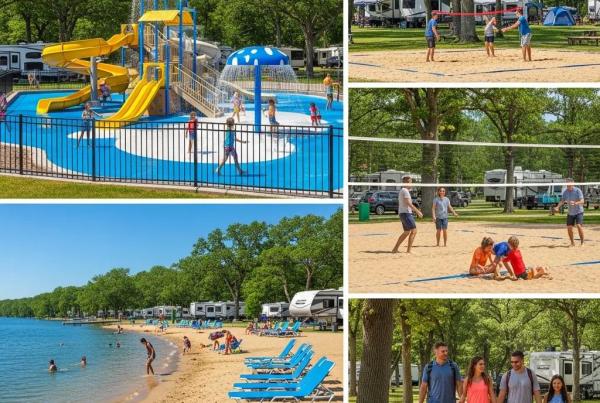
The Oaks Campground’s family-oriented infrastructure—playgrounds, a fishing pond, pavilions, and extensive golf-cart trails—complements mountain biking days by offering proximate non-riding activities. Families can structure mornings for adult riders while children are supervised at play areas, then regroup for a pavilion picnic and afternoon fishing or paddling for recovery and family time. The property’s pavilions and open spaces also facilitate bike staging, basic cleaning, and shared meals without separating riders from campsite activity. Planned additions, such as a forthcoming Wibit, will expand water-based recreation options and broaden activity choices for children while adults manage maintenance or route planning.

Combining these on-site amenities with short, family-appropriate rides creates a balanced itinerary that keeps all members engaged and minimises idle time. The article now turns to practical planning advice for mixed biking and camping trips in Michigan.

What Should You Know When Planning Your Mountain Biking Camping Trip in Michigan?

Successful mountain bike camping trips depend on appropriate seasonal timing, essential gear, and knowledge of local resources for rentals, repairs, and trail conditions. Advance planning reduces risk and increases on-trail enjoyment. Key actions include booking campsites early for peak weekends, packing a compact trail-side repair kit, and selecting routes that match rider ability. Understanding seasonal trail behaviour—mud in spring and firmer fall surfaces—and preparing for variable weather determines optimal visit windows and packing priorities. Local bike shops and rental providers can supply equipment or repairs for travellers who do not transport bikes, and current trail condition reports inform daily route selection.

The table below lists practical planning items alongside local resources and recommended actions to help organize a safe and enjoyable trip.

Planning ItemLocal ResourceRecommendation/Value
Gear and repairsLocal bike shops / rentalsPack basics; rent when travel prohibits bike transport
Trail conditionsPark updates / community trail groupsCheck before departure to avoid muddy closures
ReservationsNearby campgrounds (example: campground in Munith)Reserve early for peak weekends to secure family sites
Emergency preparednessBasic first-aid kits / phone signal checksCarry a repair kit and emergency supplies for remote sections

This checklist condenses planning essentials into actionable pairings to use when organizing a trip. The next subsections expand on timing and gear specifics.

When Is the Best Time to Visit Michigan for Mountain Biking and Camping?

Optimal windows for mountain biking in Michigan typically run from late spring shoulder season through fall. Fall often provides firmer surfaces, cooler temperatures, and scenic foliage that improve ride quality. Spring can be productive but may present muddy, soft trail conditions that lead to temporary closures and increased erosion risk; verify trail status and avoid sensitive routes after heavy rain. Summer offers warm weather and long daylight hours but coincides with peak campground demand, so secure reservations early for weekend visits. Fall tends to balance good trail firmness with reduced crowds, making it attractive for families and multi-loop days.

Seasonal awareness permits alignment of expectations, selection of appropriate gear, and choice of camping dates that match tolerance for crowds and weather variability. The following subsection details essential gear and local support options.

What Essential Gear and Local Resources Support a Successful Trip?

Essential items for mountain bike camping include a correctly fitted helmet, spare tube or tubeless repair kit, multi-tool, pump, lightweight first-aid kit, hydration system, and layered clothing for variable Michigan weather. Campsite necessities such as a tarp, quick-dry towels, and secure bike storage are also advisable. For families, child-sized helmets, trail snacks, and visibility vests increase safety and engagement. Local bike shops and rental partners near trail hubs provide bikes, repairs, and replacement parts when travel constraints prevent bringing personal equipment. Packing a concise, modular repair kit and identifying the nearest shop or rental partner before arrival minimises downtime and keeps itineraries flexible.

Preparing both trail-side tools and campsite conveniences reduces disruption during multi-day trips. Reserving campsites early—particularly at family-focused properties—simplifies logistics when trail conditions or weather prompt last-minute adjustments.

For riders seeking accommodations that combine family amenities and trail access, reserving early at campgrounds that advertise proximity to the Waterloo trail network and family-friendly facilities is advisable.

For planning and reservations, The Oaks Campground by GatherGrounds in Munith, Michigan provides a practical combination of family amenities and proximity to Waterloo State Recreation Area. The campground’s 160-acre property, including playgrounds, a fishing pond, pavilions, and 120 acres of golf-cart trails, supports groups that require quick trail access and on-site activities. Riders and families gain from reduced transfer times to trailheads and amenities that occupy non-riders between laps. Book early for popular weekends to secure RV or family site clusters and to align campsite selection with intended trail itineraries.

This closing operational note reinforces actionable planning while maintaining the guide’s emphasis on trail information and family-oriented trip design.

For riders and families preparing a mountain biking camping trip near Waterloo, selecting a campsite that balances trail proximity with family amenities improves the likelihood of a smooth, enjoyable trip. Consider booking a stay at The Oaks Campground by GatherGrounds to combine convenient trail access with on-site recreational options.

Frequently Asked Questions

1. What types of mountain biking trails are available in Michigan?

Michigan offers a broad spectrum of mountain biking trails suitable for all skill levels. Options range from beginner singletrack with gentle grades to technically demanding climbs in remote areas. Representative locations include the DTE Energy Foundation Trail, which provides well-maintained loops, and Copper Harbor in the Upper Peninsula, known for rugged terrain. Family-oriented sites commonly feature shorter, less technical loops that support safe progression for younger riders. The state’s variety makes it suitable for recreational and destination riding alike.

2. How can families ensure a safe mountain biking experience?

Families can enhance safety by selecting trails that align with the abilities of all participants and by enforcing appropriate protective equipment. Use properly fitted helmets and consider additional protective gear as needed. Establish clear expectations for pace and spacing, schedule regular breaks to avoid fatigue, and teach basic trail etiquette such as yielding to others and maintaining situational awareness. Carry a basic first-aid kit and be familiar with emergency exit points to further mitigate risk during outings.

3. What should I pack for a mountain biking camping trip?

Pack key biking items including a helmet, spare tube or tubeless repair kit, multi-tool, and pump. Also include hydration, layered clothing for changing conditions, and a compact first-aid kit. For the campsite, bring a tarp, quick-dry towels, and a secure method for storing bikes. When travelling with children, add appropriately sized helmets and nutritious snacks. A comprehensive checklist reduces omissions and supports a safe, efficient trip.

4. How do I find the best family-friendly campgrounds in Michigan?

Locate family-friendly campgrounds by researching properties that list playgrounds, fishing ponds, and picnic facilities in their amenities. Use reservation platforms and review sites to evaluate availability and user feedback. Consult local mountain biking forums and community groups for practitioner recommendations. Prioritise campgrounds that are convenient to popular trail systems to maximise ride time while ensuring non-riders have engaging activities available.

5. What are the benefits of booking a campground early?

Early booking secures sites during peak demand and allows selection of locations that meet specific family requirements, such as proximity to amenities or trailheads. Reserving in advance reduces last-minute stress, affords more time to organise equipment, and increases the likelihood of securing adjacent sites for group travel. Advance reservations also provide flexibility in aligning campsite choice with planned ride itineraries.

6. Are there any local resources for trail conditions and bike repairs?

Yes. State park websites and social media channels frequently publish trail condition updates. Local bike shops offer repair services, parts, and rental options, and community trail organisations maintain current status and maintenance schedules. Checking these sources prior to departure helps confirm ride viability and identify support options if mechanical issues arise.

7. What activities can families enjoy at campgrounds besides biking?

Campgrounds commonly provide activities such as fishing, hiking, playground access, and organised group spaces for meals and games. Families can plan nature walks, birdwatching, stargazing, and group recreation like frisbee or scavenger hunts. Shared meals and campfire time foster bonding and round out the outdoor experience beyond biking.

Conclusion

Selecting campgrounds with adjacent mountain biking trails in Michigan offers families a combination of efficient logistics and rewarding outdoor experiences. The Oaks Campground provides family-focused amenities along with quick access to a variety of trails, serving diverse skill levels and trip objectives. Applying the guidance in this guide will improve trail time and family engagement. Reserve a site at The Oaks Campground to streamline staging and enjoy coordinated on-site recreation for your next mountain biking camping trip.