
Selling Your RV Park: Direct Sales vs. Traditional Property Sales
When it’s time to sell your RV park or campground, understanding your options is key. We’ll walk you through the two main paths: selling directly to a buyer like GatherGrounds Resorts, or going the traditional route with a property broker. We’ll cover how each works, why outdoor hospitality assets are valued differently, and what factors influence your final payout and the transition itself. You’ll learn about Net Operating Income (NOI), cap rates, comparables, and tax rules that shape offers, plus how 2025 market trends might affect your timing. We’ll also outline practical steps for preparing your exit strategy, the documents buyers expect, and your choices for post-sale involvement, so you can make the best decision for your situation. Throughout, we’ll compare selling directly to GatherGrounds with using brokers, highlighting when each approach might best suit your priorities—whether that’s speed, keeping things private, or preserving your park’s legacy.
Why Choose a Direct Sale to GatherGrounds Resorts Over Traditional Property Sales?
Selling directly to GatherGrounds Resorts means a smoother process, more privacy, and a buyer focused on your park’s unique character. A direct acquisition cuts out the usual listing steps, making the transaction simpler and faster. We’re focused on delivering value through quick decisions and customized transition plans. We know sellers have different priorities—whether it’s immediate cash, keeping your park’s spirit alive, or getting the best price. As a direct buyer, we can tailor the terms to your needs without the need for broad public marketing. Let’s explore the benefits, how we preserve your park’s legacy, the savings you’ll see, and the typical transition process, so you can compare it to broker-assisted alternatives.
What Are the Benefits of Selling Directly to GatherGrounds Resorts?
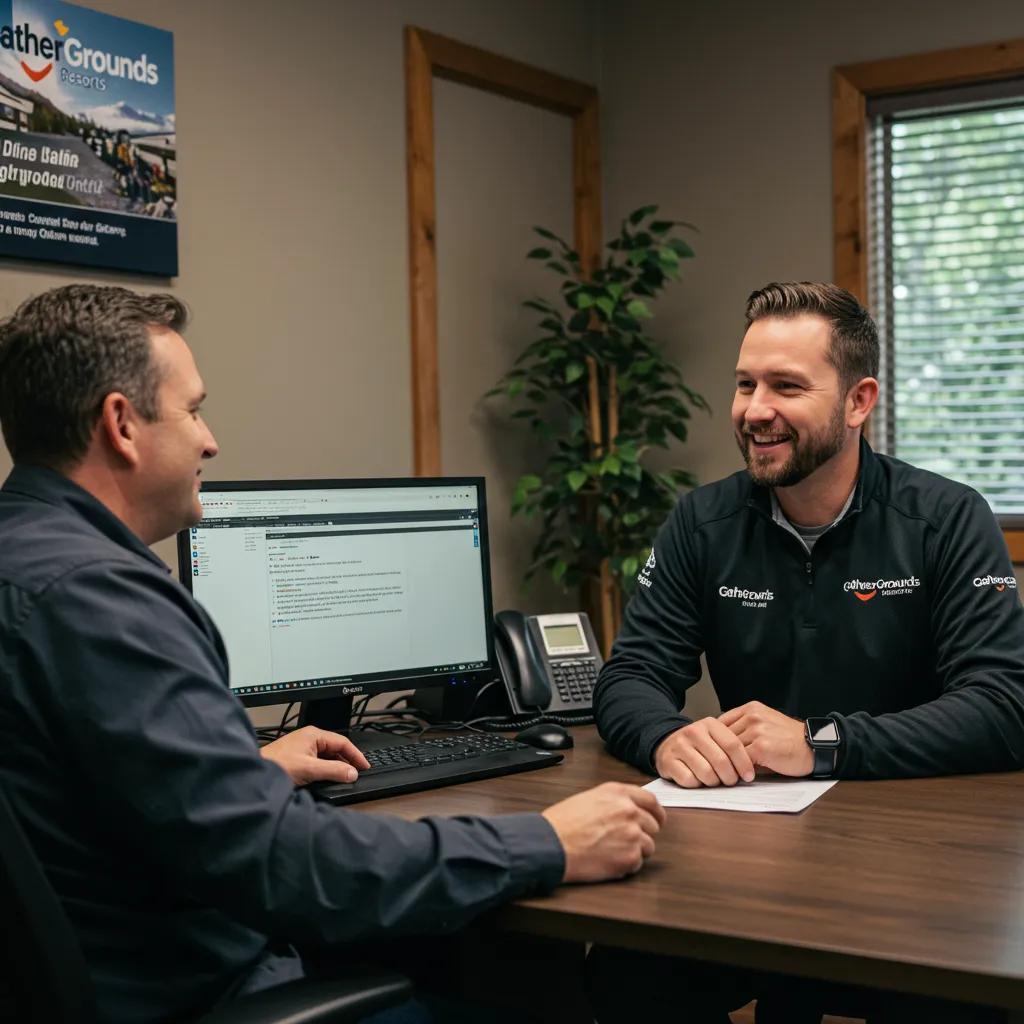
Selling directly to GatherGrounds Resorts offers tangible and intangible advantages, especially for campground owners nearing retirement or seeking a confidential sale.
First, direct negotiation streamlines communication. When it’s just you and the buyer talking, things often move faster and with less uncertainty.
Second, by avoiding an open listing, you maintain continuity for your guests and staff. This means less market exposure and fewer disruptive inquiries.
Third, our emphasis on thoughtful transitions and preserving legacy is crucial for owners who want their park’s traditions and quality of service to continue long after the sale.
These benefits make a direct sale a compelling choice when speed, discretion, and stewardship are your top concerns.
How Does GatherGrounds Preserve Your Campground’s Legacy?
At GatherGrounds Resorts, we’re committed to preserving the “heart and soul” and the legacy of every property we acquire. We focus on continuity in guest experience and maintaining the park’s unique character. This means we look at operations and amenities through a stewardship lens, aiming to keep what makes your park special while making smart investments in infrastructure. We also support staff continuity whenever possible and prioritize respectful transition conversations with you and the local community. If preserving your park’s legacy is important to you, consider how our philosophy aligns with your vision for its future.
How Does Avoiding Broker Fees Save You Money?
By avoiding broker fees, you reduce transaction costs significantly, as you won’t pay commissions or certain listing expenses. This can make a real difference in your net proceeds. For example, eliminating a commission can keep a substantial portion of the gross sale price in your pocket. You might also save on marketing costs and holding expenses if the sale takes longer. However, it’s wise to weigh these savings against potential price differences. Sometimes, broader market exposure through a broker can lead to more competitive bidding. Understanding both sides helps you determine if a direct sale truly offers a better net outcome for your specific park.
What Is the Typical Transition Process When Selling Directly?
When you sell directly to a buyer like GatherGrounds Resorts, the process is usually straightforward: a confidential inquiry, followed by data exchange and valuation, offer negotiation, due diligence, closing, and then hands-on transition planning.
The confidential inquiry is a low-pressure way to discuss your goals and see if there’s a good fit. If we both agree to move forward, we’ll review your financials and property details to establish a valuation.
Once an offer is accepted, due diligence confirms everything from operations to title and infrastructure. Then, we close, and transition planning ensures a smooth handover of staff, guests, and operations.
This process is designed for sellers who want a smoother, less public exit, and we can adjust it to include phased handovers or short-term advisory roles.
How Is an RV Park Valued Compared to Traditional Property Valuation?
RV parks and campgrounds are typically valued based on their income, using Net Operating Income (NOI) and cap rates as the main framework. We also consider comparable sales and expense adjustments. Since these properties combine land, infrastructure, and business operations, appraisers and buyers adjust income and expenses for seasonality, transient revenue, and amenity-driven premiums. Valuation also hinges on tangible assets like sites, hookups, and roads, as well as intangible factors like brand reputation and guest loyalty. Let’s dive into NOI, comparable sales, key value drivers, and how a direct buyer like us might approach valuation to make a fair offer.
What Is Net Operating Income and Why Is It Important?
Net Operating Income (NOI) is the difference between a property’s operating revenue and its operating expenses. It’s the cornerstone of income-based valuation for RV parks. NOI shows the recurring cash flow a buyer can expect before considering financing and taxes, forming the basis for applying a market cap rate to estimate value.
Typical revenue includes site fees, seasonal rentals, and other services. Common expenses cover utilities, maintenance, management, and insurance.
Because NOI reflects operational performance, improving revenue stability or cutting controllable expenses often has a more direct impact on valuation than cosmetic upgrades.
Here’s a look at how core valuation methods compare for RV parks and traditional properties:
As you can see, the income approach is usually the primary method for operating campgrounds because it directly links operations to investment value.
How Do Comparable Sales Affect RV Park Valuation?
Comparable sales offer market context, but they often require significant adjustments for unique campground assets, as no two parks are exactly alike. Appraisers match parks based on factors like site count, seasonal versus year-round operation, amenities, and regional demand, then adjust prices for differences in infrastructure, occupancy, and revenue generation.
Comparables are most useful in active markets with frequent transactions. In slower markets, buyers tend to rely more heavily on NOI and cap-rate benchmarks.
Sellers should gather examples of recent sales and operational metrics to help buyers and brokers agree on realistic comparables and justify price adjustments.
Which Factors Influence RV Park Value Most?
Several key factors determine an RV park’s value: consistent revenue (stable occupancy and rates), the quality and capacity of infrastructure, the number of sites, and local market demand. Occupancy and average daily rates directly impact revenue, while infrastructure condition—sewer, water, electrical hookups, roads—affects both operating costs and the capital expenditures a buyer might need to make. Location factors, such as proximity to attractions and demographic trends, shape long-term demand and cap-rate expectations.
Buyers also assess management quality and documented operating procedures, as strong operations reduce transition risk and support higher valuation multiples.
How Does GatherGrounds Approach Fair Valuation?
GatherGrounds Resorts engages in a seller-focused valuation dialogue, using adjusted NOI and market cap-rate reasoning to arrive at fair offers. We balance transparency with the practicalities of due diligence. We consider recurring revenue, normalize operating expenses, and assess likely near-term capital needs to determine an adjusted NOI. Then, we apply market-appropriate cap rates to estimate value.
Our goal is to provide sellers with a clear understanding of how offers are calculated, while also allowing for negotiation on unique property strengths like exceptional natural features or modern amenities.
If you’re considering a direct acquisition, we encourage you to ask prospective buyers for the same transparency regarding their NOI adjustments and cap-rate assumptions.
What Are the Key Differences Between Direct Sales and Traditional Broker-Assisted Sales?
Direct sales and broker-assisted sales differ in their process, timeline, cost structure, confidentiality, and seller control. These distinctions often guide a seller’s choice. Direct sales typically involve targeted outreach, private offers, and quicker closings with less public exposure. Broker-assisted sales leverage market exposure, professional marketing, and competitive bidding, but come with commissions and potentially longer timelines.
Confidentiality and legacy considerations often favor direct buyers, while maximizing price through broad marketing might lean towards broker-assisted routes. Let’s walk through the direct sale workflow, explain broker roles, weigh the pros and cons, and highlight scenarios where a direct acquisition makes the most sense.
How Does the Direct Sale Process Work Step-by-Step?
A direct sale usually follows a clear, seller-friendly workflow: confidential inquiry, financial document exchange for valuation, offer presentation, due diligence, closing, and transition execution.
The confidential inquiry stage helps us assess strategic fit without public listings or widespread outreach. If initial terms align, we’ll request key financials—P&L, occupancy records, and site inventories—to complete an adjusted NOI analysis and present a written offer.
After an accepted offer, due diligence confirms legal, title, and infrastructure conditions before closing. Transition planning then outlines staff continuity and guest communications.
Here are the typical direct sale steps:
- Confidential initial conversation to assess fit and your priorities.
- Provision of financials and site information for our valuation and offer.
- Negotiation, due diligence, and closing, with coordinated transition planning.
These steps explain why direct sales often shorten the time to close while preserving operational stability during the handover.
What Roles Do Real Estate Agents and Campground Brokers Play?
Real estate agents and campground brokers offer marketing reach, buyer screening, negotiation support, and transaction management. They can help generate competitive offers in public markets. Brokers prepare marketing materials, list the property to their networks, coordinate showings, and manage offers and escrow processes on your behalf.
Their value is often highest when market exposure leads to multiple competing bids that can drive the sale price higher than a single direct buyer might offer. However, brokerage services typically involve commissions and may require wider disclosure, which can impact confidentiality and the experience of your staff and guests during the listing period.
What Are the Advantages and Disadvantages of Each Selling Method?
Both selling methods have clear trade-offs that owners must consider based on their priorities for price, speed, confidentiality, and control. Direct sales often offer faster timelines, less public exposure, and the potential to avoid broker commissions, but may result in fewer competing bids. Broker-assisted sales provide broader market exposure and professional negotiation support that can maximize sale price, yet they often involve higher fees and longer marketing cycles.
Here’s a summary of the pros and cons:
- Direct Sale: Advantage—speed and confidentiality. Disadvantage—limited buyer competition.
- Broker-Assisted: Advantage—market exposure and potential price maximization. Disadvantage—commissions and public listing risks.
- Hybrid Approaches: Advantage—selective marketing with targeted outreach. Disadvantage—may still incur fees and longer timelines.
These trade-offs help clarify when each approach is most suitable and guide you toward informed next steps.
When Is Selling Directly to GatherGrounds the Best Option?
Selling directly to GatherGrounds Resorts is often the preferred route when you prioritize confidentiality, legacy preservation, and a collaborative transition, or when your park aligns well with our acquisition profile.
Typical scenarios include owners planning retirement who want a discreet, low-stress handover; operators seeking a buyer who values natural features and traditions; and parks that fit our focus on quality sites and amenity upgrades.
If you value a thoughtful transition and the potential to avoid brokerage fees, a direct acquisition discussion can quickly reveal if our terms meet your financial and non-financial priorities.
What Tax Implications Should You Consider When Selling Your Campground?
Selling a campground has several tax implications that can significantly affect your net proceeds. These include capital gains tax, depreciation recapture, and the possibility of a 1031 exchange to defer taxes. Since each seller’s basis, depreciation history, and capital improvements are unique, the taxable outcome will vary and requires professional analysis. Understanding the tax profile early allows you to structure deals—timing, installment sale features, or exchange strategies—to achieve your preferred outcomes. Let’s summarize capital gains basics, depreciation recapture, 1031 exchange mechanics, and why consulting a tax advisor is essential.
How Does Capital Gains Tax Affect Campground Sales?
Capital gains tax applies to the profit you make on the sale of a property, calculated as the difference between your sale proceeds and your adjusted tax basis. For campground owners, this basis is adjusted by your original purchase price, documented capital improvements, and reductions like depreciation.
Long-term capital gains rates and your individual circumstances determine your tax liability. It’s wise to calculate your likely taxable gain early in the process and model your net proceeds under different sale scenarios. Consulting a tax professional can help you identify timing or structuring strategies to manage your capital gains exposure.
Here’s a quick look at key tax concepts and seller considerations for campground sales:
These tax concepts interact and significantly impact your proceeds. Professional guidance is strongly recommended to select the right strategies.
What Is Depreciation Recapture and How Does It Apply?
Depreciation recapture converts prior depreciation deductions into taxable income when you sell depreciable property. This effectively increases the taxable gain for the portion of the profit attributable to prior depreciation. Campground sellers who have claimed depreciation on buildings, improvements, or fixtures typically face recapture taxed at special rates, separate from capital gains.
Because recapture can substantially increase the tax due at sale, owners should quantify their depreciable basis and consult tax counsel to explore options like 1031 exchanges or installment sale structures that may mitigate the immediate tax impact.
Accurate records of improvements and depreciation schedules are crucial for precise calculations.
How Can a 1031 Exchange Help Defer Taxes?
A 1031 exchange allows sellers to defer capital gains and depreciation recapture taxes by reinvesting proceeds into like-kind real property, provided strict timelines and procedures are followed.
To qualify, you must identify replacement property within 45 days and close within 180 days, using a qualified intermediary to handle the proceeds.
For campground owners, a 1031 exchange can be a powerful deferral tool if you plan to continue investing in real estate. However, it requires upfront planning and coordination with tax and legal advisors. If you’re considering a 1031, evaluate your liquidity needs and long-term investment objectives before committing.
Why Consult a Tax Professional Before Selling?
The tax consequences of selling a campground are complex and highly individual, making professional tax advice an essential step before listing or negotiating offers. A tax professional can assess your adjusted basis, potential depreciation recapture, eligibility for exchanges, and how these factors interact with your personal tax situation to recommend optimal structures.
Early consultation supports better deal structuring, timing decisions, and documentation preparation, which can prevent surprises at closing.
Sellers should prepare comprehensive financial records to enable accurate tax planning and collaboration with accountants and attorneys.
What Are the Current RV Park Market Trends and How Do They Impact Sales?
Market trends in 2025 indicate continued strong interest in outdoor hospitality assets. However, the landscape is shaped by demographic shifts, occupancy fluctuations, and evolving financing conditions, all of which influence valuation and buyer demand. Drivers like increased household camping participation and growth among younger RV owners support long-term interest. Meanwhile, short-term occupancy softness in some regions can compress NOI and make buyers more cautious. Financing constraints and higher borrowing costs have also increased the role of seller financing in transactions. Let’s explore market growth, demographics, occupancy effects, and financing trends that sellers need to consider.
How Is the RV Park Market Growing in 2025 and Beyond?
Industry data for 2025 points to steady interest in RV camping as a leisure activity, fueled by durable demand and ongoing manufacturer activity supporting fleet renewal. Market observers are tracking shipment and utilization trends through 2025. While regional performance varies, many areas report expanding participation, which supports campground revenues over the medium term. For sellers, these trends suggest selective market strength for well-located, amenity-rich parks. Parks in weaker markets might face longer sale timelines or require targeted investment to attract buyers. Strategic timing and property positioning remain key to achieving favorable valuations.
What Demographic Shifts Are Driving Demand for Campgrounds?
Younger demographics and increased participation among under-55 households are reshaping campground demand. Millennial and Gen X travelers are increasingly seeking experiential, amenity-driven outdoor stays. These shifts favor parks that offer modern conveniences, social programming, and digital-friendly reservations, which can command higher rates and occupancy.
Parks that adapt their amenities and marketing to appeal to younger cohorts can enhance revenue stability and attract a broader buyer pool. Understanding local demographic trends helps sellers prioritize capital improvements that boost marketability and valuation.
How Are Occupancy Rates Affecting RV Park Values?
Occupancy rates are a direct driver of NOI and therefore strongly influence valuation. Higher, stable occupancy tends to reduce perceived investment risk and supports stronger cap-rate multiples. Seasonality and year-to-year variability can complicate underwriting, so buyers often normalize occupancy and revenue data to reflect stabilized performance.
Parks experiencing declining occupancy may see compressed valuations unless owners can present clear plans for near-term improvement or evidence of non-recurring disruptions. Sellers should provide clear occupancy records and action plans demonstrating how revenue will stabilize or grow post-sale.
What Financing Trends Are Emerging for Sellers?
With tighter debt markets and more cautious lenders, seller-friendly financing tools like seller carrybacks and creative deal structures that bridge valuation gaps are becoming more common.
In markets where traditional lending is limited, buyers and sellers may use seller financing to complete transactions and preserve value. However, terms can vary widely and require careful negotiation.
For sellers, offering financing can expand the buyer pool and potentially secure higher sale prices, but it also introduces credit risk and extended exposure. Evaluating financing trends helps sellers decide whether to prioritize immediate cash or consider structured deals that balance price and risk.
How Can You Plan a Successful Exit Strategy When Selling Your Campground?

A successful exit strategy involves preparing your property, having thorough financial documentation ready, and defining your post-sale role to maximize value and ensure a smooth handover. Getting the park ready physically and operationally, compiling accurate financial records, and deciding on transition options reduces buyer friction and enhances perceived value. Sellers should align their timing with market conditions and tax planning, and consider their desired level of post-sale involvement to craft offers that meet both financial and legacy goals. The following sections offer practical checklists and examples of post-sale arrangements, plus how GatherGrounds supports thoughtful exits.
How Should You Prepare Your Property for Sale?
Preparing your campground means prioritizing maintenance, documenting recent capital improvements, and optimizing guest-facing operations to show consistent revenue and minimal deferred maintenance. Key tasks include repairing critical infrastructure, refreshing high-impact amenities, updating signage and online information, and ensuring all compliance documentation is in order. Operational readiness—clean grounds, up-to-date reservation records, and trained staff—reduces buyer questions and speeds up due diligence. A well-prepared property signals lower near-term capital needs, boosting buyer confidence and the quality of offers.
Here’s a pre-sale checklist:
- Address critical infrastructure repairs and document completed work.
- Consolidate operational records, reservations, and occupancy histories.
- Improve curb appeal and amenity presentation to reflect the guest experience.
These steps reduce perceived buyer risk and streamline due diligence.
What Financial Documentation Is Needed for a Smooth Sale?
Buyers expect organized financial records, including Profit & Loss statements, tax returns, occupancy and rate reports, and documentation of capital improvements, to accurately assess NOI and deferred maintenance.
Detailed records showing revenue by source, historical occupancy trends, and expense breakdowns support valuation modeling and minimize buyer questions.
Sellers should also prepare site inventories, lease agreements (if any), and vendor contracts that impact operations.
Clear, consistent documentation accelerates valuation, supports confident offers, and reduces negotiation friction.
What Post-Sale Involvement Options Are Available?
Post-sale involvement can range from a complete exit to phased transitions or short-term consulting roles, each with different implications for seller income and legacy outcomes. Common options include a brief advisory period to introduce staff and the community, an employment contract for operational continuity, or structured consulting to assist with owner-driven projects.
Sellers who want to protect their legacy while achieving liquidity can negotiate time-bound roles with clear objectives and compensation.
Discussing your post-sale preferences early helps buyers tailor offers that respect your priorities and operational needs.
How Does GatherGrounds Support a Thoughtful Exit Process?
GatherGrounds Resorts is committed to seller-focused, low-pressure transition support and respectful stewardship when acquiring campgrounds. We frame acquisitions around continuing park traditions and enhancing guest experiences through selective investments. Our Campground Acquisition Service offers a direct sale option with fair valuation and smooth transition planning designed to align with your priorities.
Our approach typically includes open dialogue about post-sale roles and investment plans aimed at improving infrastructure while preserving park character.
If you’re interested in a confidential conversation about a potential direct sale, you can request a valuation discussion to explore fit and next steps.
Frequently Asked Questions
What Should I Consider When Choosing Between Direct Sales and Broker-Assisted Sales?
When deciding between direct sales and broker-assisted sales, consider your priorities like speed, confidentiality, and potential sale price. Direct sales often lead to quicker transactions and maintain privacy, which is ideal if you value discretion. In contrast, broker-assisted sales can maximize exposure and competition, potentially resulting in higher offers. Evaluate your timeline, the importance of legacy preservation, and your comfort level with public marketing to determine the best approach for your situation.
How Can I Ensure a Smooth Transition After Selling My RV Park?
To ensure a smooth transition after selling your RV park, establish clear post-sale involvement options with the buyer. Discuss potential advisory roles, staff introductions, and community engagement to maintain continuity. Preparing comprehensive operational documentation and a transition plan can also facilitate a seamless handover. Open communication with the buyer about expectations and timelines will help both parties align on the transition process, ensuring that the park’s legacy and operations are respected.
What Are the Key Financial Records Needed for Selling an RV Park?
Key financial records needed for selling an RV park include Profit & Loss statements, tax returns, occupancy reports, and documentation of capital improvements. These records help potential buyers assess the park’s financial health and operational performance. Providing detailed revenue breakdowns, expense reports, and any lease agreements can also enhance transparency and build buyer confidence. Organized financial documentation is crucial for facilitating valuation discussions and expediting the sale process.
How Do Market Trends Impact the Sale of RV Parks?
Market trends significantly impact RV park sales by influencing buyer demand, valuation, and pricing strategies. Factors such as demographic shifts, occupancy rates, and economic conditions can affect how quickly a park sells and at what price. For instance, increased interest in outdoor activities among younger demographics can drive demand, while fluctuating occupancy rates may necessitate strategic pricing adjustments. Staying informed about these trends can help sellers position their parks effectively in the market.
What Role Does Seller Financing Play in RV Park Sales?
Seller financing can play a crucial role in RV park sales, especially in tight lending markets. By offering financing options, sellers can attract a broader pool of buyers who may struggle to secure traditional loans. This approach can also facilitate higher sale prices and quicker transactions. However, sellers should carefully evaluate the terms and risks associated with financing, including potential credit risk and the implications of extended payment periods on cash flow and liquidity.
What Are the Benefits of Preparing My Campground Before Selling?
Preparing your campground before selling can significantly enhance its marketability and value. Key benefits include demonstrating operational efficiency, reducing perceived buyer risk, and potentially increasing the sale price. Actions such as addressing maintenance issues, optimizing guest experiences, and ensuring compliance with regulations can create a positive impression. A well-prepared property signals to buyers that it requires minimal immediate investment, making it more attractive and likely to sell faster in a competitive market.
How Can I Leverage My Campground’s Unique Features in the Sale Process?
Leveraging your campground’s unique features during the sale process can differentiate it from competitors and attract potential buyers. Highlighting aspects like scenic views, historical significance, or specialized amenities can create a compelling narrative that resonates with buyers. Providing detailed information about these features in marketing materials and during negotiations can justify a premium price. Additionally, showcasing positive guest reviews and community engagement can further enhance the perceived value of your campground.
What Is the Best Way to Sell an RV Park?
The best way to sell an RV park depends on your priorities: choose a direct sale for confidentiality, speed, and legacy preservation; choose a broker-assisted sale for broad market exposure and potential price competition. If your primary goals are a low-disruption transition and respectful stewardship of park traditions, a direct buyer with aligned values is often preferable. Conversely, if maximizing sale price through competitive bidding is your priority, a broker may reach a wider set of potential buyers. Assess your timeline, tax considerations, and tolerance for public marketing when deciding the optimal path.
How Is an RV Park’s Value Determined?
An RV park’s value is typically determined using the income approach—NOI divided by an appropriate cap rate—supported by comparable sales and adjustments for site count, amenities, and infrastructure. NOI is calculated from stabilized revenue less operating expenses, and market cap rates reflect investor return expectations for similar risk profiles. Comparables and local market context refine the final valuation, while unique property attributes may justify premium adjustments or required capital allowances. Presenting clear NOI data and recent comparable transactions strengthens your position during negotiations.
Should I Use a Broker to Sell My Campground?
Using a broker is beneficial when market exposure and competitive bidding are needed to maximize sale price, especially in active markets with multiple buyers. A broker adds value through marketing, buyer screening, and negotiation expertise that can create competition and drive offers up. However, brokers charge commissions, and a public listing can disrupt staff and guest experience.
If confidentiality and a thoughtful transition are priorities, or if you have a pre-identified buyer who aligns with your goals, a direct sale may be preferable.
What Are the Tax Consequences of Selling a Campground?
Selling a campground triggers capital gains tax and potential depreciation recapture. Sellers may be able to defer taxes through a 1031 exchange if they reinvest in like-kind real property under required timelines. The exact tax impact depends on your basis, improvements, depreciation taken, and personal tax bracket, so professional tax advice is essential for modeling outcomes.
Early tax planning allows sellers to choose structures that balance liquidity needs against tax deferral opportunities and potential installment sales.
How Can I Maximize My Sale Price?
Maximizing sale price involves improving NOI, documenting stable occupancy, and presenting clean operational and capital records, while timing the sale to favorable market conditions. Tactical steps with varied impact include moderate capital improvements to infrastructure, targeted amenity upgrades, accurate occupancy and rate documentation, and professional valuation to set realistic expectations.
Engaging potential buyers with clear performance metrics and demonstrating a low-maintenance, turnkey operation often attracts higher offers and reduces negotiation friction.
For confidential conversations about a potential direct sale, you can explore GatherGrounds Resorts’ direct acquisition of campgrounds and RV parks or their Campground Acquisition Service to learn how a direct offer and thoughtful transition could align with your priorities.
Conclusion
Selling your RV park directly to GatherGrounds Resorts offers a streamlined process that prioritizes confidentiality, legacy preservation, and reduced transaction costs. By avoiding broker fees and engaging in direct negotiations, sellers can achieve a smoother transition while maximizing their net proceeds. Understanding the unique valuation methods and market trends can empower owners to make informed decisions that align with their goals. For a personalized discussion about your options, reach out to us today.