
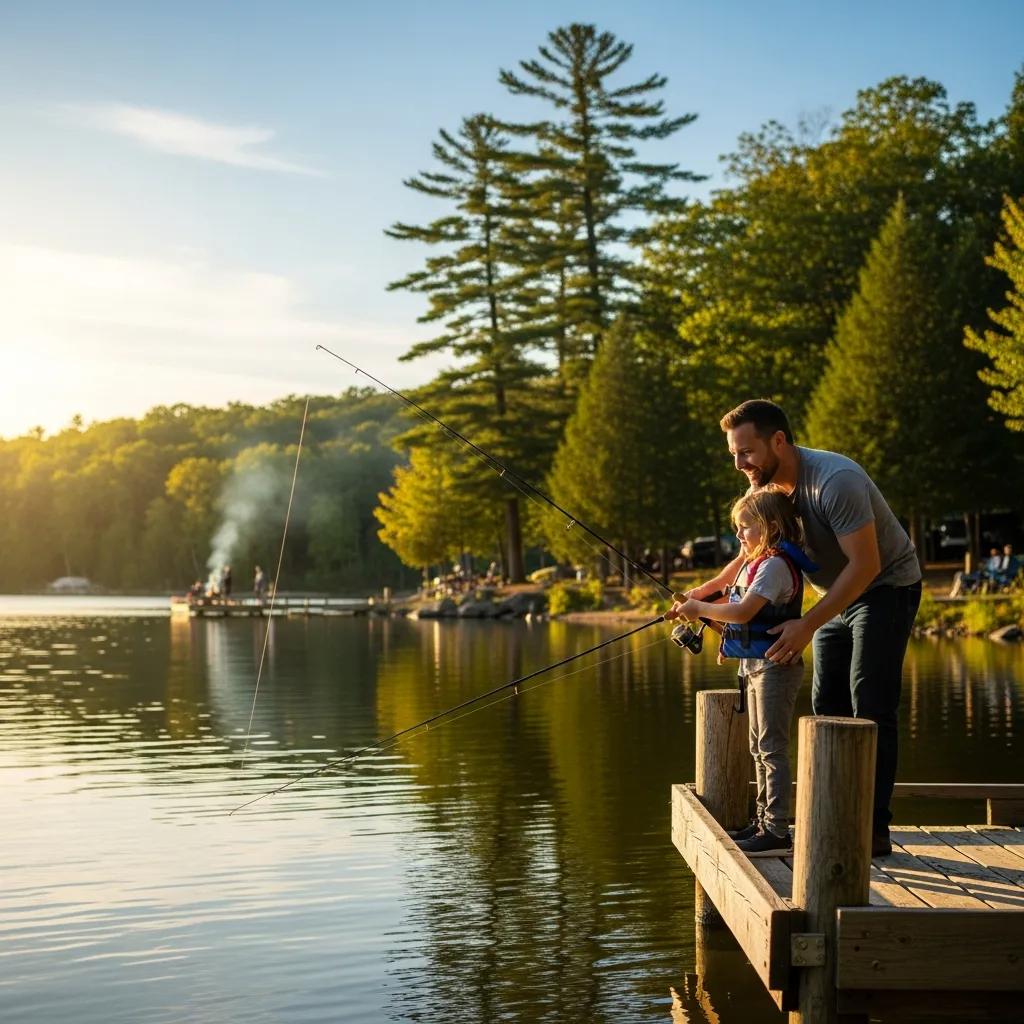
Family-Friendly Fishing Near Portage Lake, MI — Camp, Cast, and Make Weekend Memories
If you’re planning a family getaway with fishing near Portage Lake in Livingston County, you’ll find everything from stocked on-site ponds to public launches and lakes inside Waterloo State Recreation Area. This guide walks you through where to fish, how to pick a campsite with fishing-friendly amenities, and practical tactics for bass, walleye, and panfish on Portage Lake. We focus on easy-to-use planning advice — safety for young anglers, seasonal expectations, and straightforward gear tips — so a weekend trip becomes a relaxed, memorable experience. Along the way we point to a nearby family campground that offers an on-site fishing pond and kid-focused programming, showing how campsite choices link directly to real amenities and booking decisions.
Why The Oaks Campground Is a Smart Choice for Family Fishing Near Portage Lake
The Oaks Campground, part of GatherGrounds Resorts, is built around family needs: a managed on-site fishing pond, kid-friendly amenities, and quick access to nearby public fishing spots. That combo makes it easy to introduce children to bank or dock fishing in a safe setting, with the option to take day trips to Portage Lake or Waterloo State Recreation Area for bigger-water fishing. Recreational features — golf cart trails across the property, playgrounds, and weekend themes — give kids supervised, fun downtime between fishing sessions. Tip on reservations: if you want guaranteed pond access during busy summer weekends or themed events, reserve early through the campground’s booking channel. Those features make The Oaks a convenient base for mixing gentle pond lessons with lake outings that expand fishing skills.
The on-site pond is ideal for first casts and quick wins, while Portage Lake is nearby when you want to chase larger sport fish; the next section explains how the pond supports young anglers.
How The Oaks’ On-Site Pond Makes Learning to Fish Easy for Kids
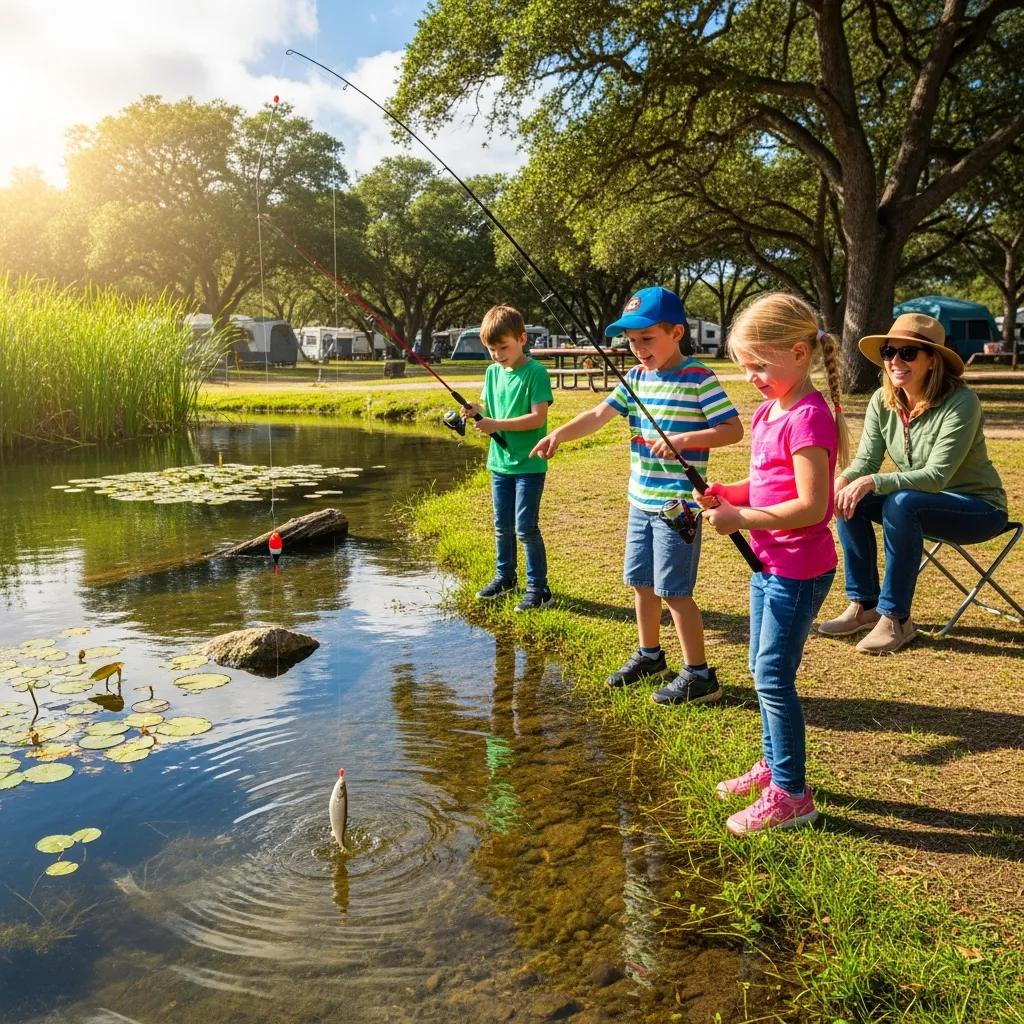
The pond at The Oaks is set up for safe, family-friendly fishing: bank and dock access reduce hazards and keep fish concentrated near shore for more action. Shallow edges and visible structure make short, supervised sessions perfect for teaching casting, bait presentation, and catch-and-release care without deep-water risks. Keep it simple: light tackle, small hooks, and bobbers make hookups easier, and supervised handling lowers the chance of injury to both kids and fish. Pair a quick chat about local regulations and water safety — life jackets when appropriate — with hands-on practice before you move to boat or public-launch fishing on Portage Lake. That step-by-step approach helps kids build confidence from pond success to shore or boat trips on larger waters.
Next, we’ll cover the kinds of fish you’re likely to find in a campground pond compared with Portage Lake.
What Fish Can Families Expect at The Oaks Pond — and How That Differs from Portage Lake
Campground ponds usually produce panfish like bluegill and other sunfish, with the occasional largemouth bass — species that are great for beginners because they bite small baits and stay close to shore. Bluegill and other panfish offer steady action on worms or small lures, keeping kids interested, while bass add a slightly tougher, rewarding fight with slightly larger lures. Portage Lake, by contrast, draws anglers for bass, walleye, and pike using deeper-water techniques and boat access. Timing matters: spring and early summer often bring the best panfish action near shallow edges, while bass and walleye on larger lakes show stronger bite windows later in the morning or around structural cover.
With species expectations clear, the next decision is choosing the campsite type that best matches your family’s fishing and comfort needs.
How to Pick RV or Tent Sites with Fishing Access Near Portage Lake
Your campsite choice depends on whether you want immediate pond access or a more rustic experience, plus conveniences like restrooms and proximity to play areas. Full-hookup RV sites reduce packing stress and let families stay on-site for repeat pond visits; tent sites close to the pond offer a more immersive outdoors feel with quick bank access. When you compare sites, check distance to the pond, whether there are shallow, regulated areas for kids, and nearby conveniences like restrooms and playgrounds. For busy summer weekends and themed events, book early to secure spots close to family amenities — reservations help avoid disappointment when pond access is in demand. The table below makes it easy to match site types to common family needs.
The table below compares typical campsite types and attributes to simplify selection.
Which Camping Options at The Oaks Work Best for Families Who Fish?
The Oaks lays out family-oriented options that match these site types: RV sites for longer, more comfortable stays and tent sites positioned for quick pond access during daytime lessons. RV sites make meal prep and rest easier between fishing sessions, while tent platforms near play areas keep kids in sight of both playgrounds and the pond. The campground’s circulation is family-focused — golf cart trails and stroller-friendly paths connect sites to central amenities so parents can transport kids to supervised fishing spots without long hikes. When deciding, think about how much gear you want to manage versus how often you’ll fish from shore — that trade-off usually tips the choice toward an RV or tent site.
Next up: booking tips and seasonal timing to make your Michigan fishing trip smooth.
Booking and Seasonal Tips for Fishing Campgrounds in Michigan
Southern Michigan’s camping and fishing season runs from late spring through early fall, with busiest weekends around summer holidays and themed events. Plan to reserve sites weeks to months ahead for weekend stays. If pond access and family programs matter most, request sites near the pond or family zones when you book — early reservations increase your chances of being close to the action. Remember licensing rules: anglers 17 and older need a Michigan fishing license; check DNR rules and buy licenses ahead of time so you can fish right away. Finally, know the campground’s cancellation policy and watch the weather — flexible plans reduce last-minute stress and make fishing days more productive.
Use these booking practices to line up your campsite with fishing goals and family schedules; the next section covers public fishing and recreation in Waterloo State Recreation Area.
Fishing and Outdoor Activities at Waterloo State Recreation Area — What to Expect
Waterloo State Recreation Area complements a campground stay with a mix of freshwater fishing, hiking, paddling, and family recreation. The area has several lakes with different species and access types, so you can choose shore-based panfish outings on smaller lakes or boat launches for bass and pike on larger waters. Trails and picnic areas offer non-fishing options to break up the day and keep kids engaged. A practical plan is to do a short morning lesson at the campground pond, then drive to a Waterloo lake for an afternoon boat or shore session targeting a different species. Below are a few Waterloo lakes to help you pick the right half-day or full-day trip.
The following list identifies key Waterloo lakes and their typical species focus to help plan half-day or full-day excursions.
- Mud Lake: Great for panfish and family shore fishing in late spring and summer.
- Portage Lake: Known for bass around structure — a good spot for lure anglers working submerged wood.
- Round Lake: Offers pike opportunities with boat access; suited to anglers chasing predators.
These options let families mix pond lessons with lake trips to experience different species; next we suggest family-friendly activities that pair well with fishing days.
Best Waterloo Lakes for Bass, Panfish, and Pike — Quick Guidance
Smaller, shallow Waterloo lakes are perfect for panfish and easy shore angling, while larger, deeper lakes hold bass and pike that respond to structure-focused presentations. For families with young children, pick lakes with public shore access and parking to avoid boat logistics; shallow coves loaded with panfish offer regular action and teach basic rigging. Bass on bigger lakes show up near submerged structure and weedlines — use crankbaits, spinnerbaits, or soft plastics and fish around low-light periods for better results. Pike favor open-water ambush spots and often need larger spinners or live bait from a boat; because they require more advanced handling, save pike outings for experienced anglers with proper supervision.
Choosing the right Waterloo lake by species and access helps match opportunity to skill and cuts down on travel time.
Family Activities at Waterloo That Pair Well with Fishing

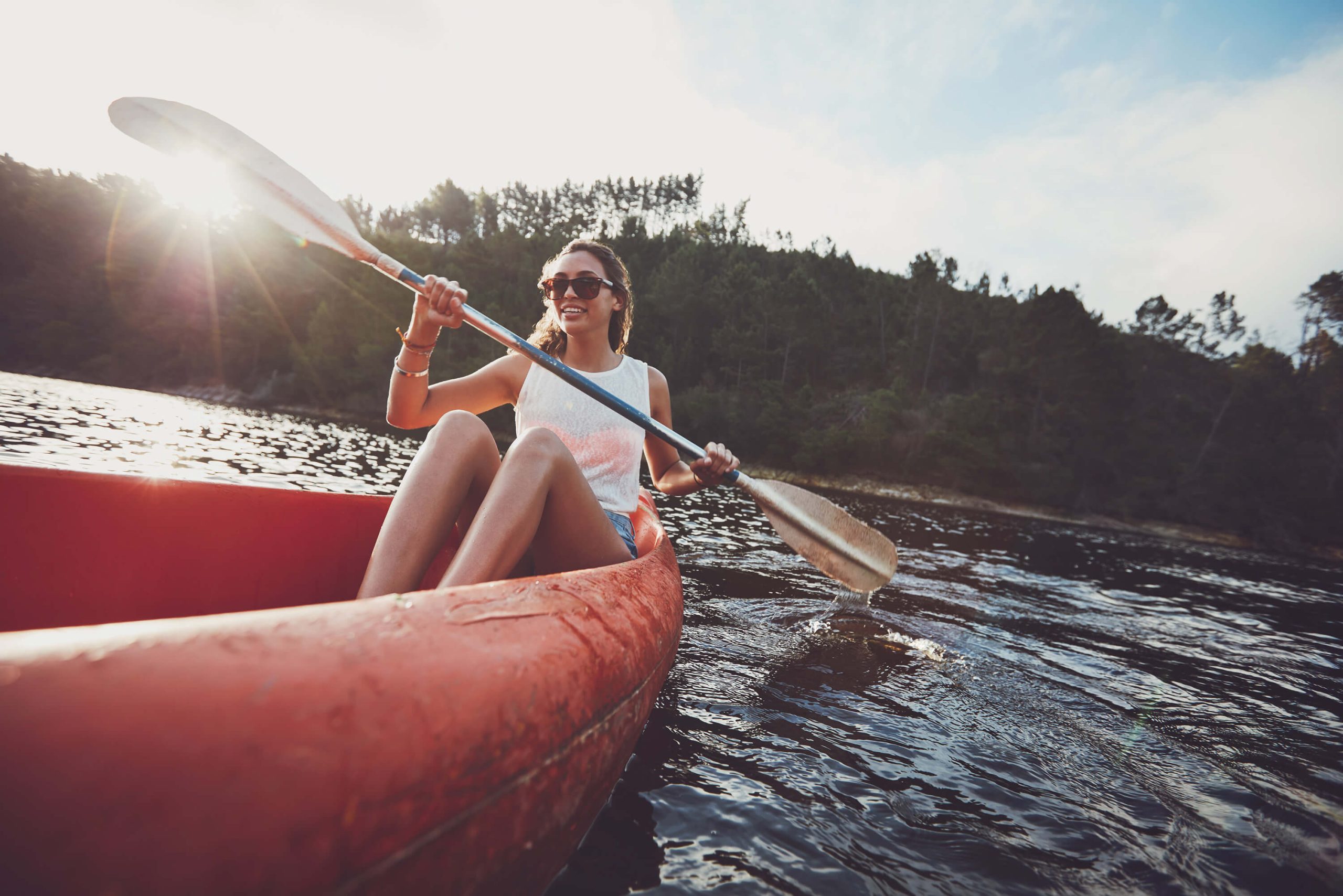
Beyond fishing, Waterloo has short, child-friendly trails, paddling sections, and picnic spots that work well when bites slow or kids need a break. Quick hikes are perfect between fishing sessions, and canoe or kayak rentals (where available) let families explore quiet coves and watch wildlife without traveling far. Pack simple, portable activities — a nature scavenger hunt or wildlife checklist — to make transitions from pond to lake engaging for kids. Pair a morning pond lesson with an afternoon paddle and an evening campfire for a balanced day that keeps energy steady and reinforces learning through variety.
These complementary activities help you plan full days that combine learning, play, and rest around your fishing goals; next we cover tactics and logistics for Portage Lake itself.
How to Get the Most from a Portage Lake Fishing Day
To make Portage Lake days productive, match species-specific techniques to seasonal patterns and pick launch points that fit your gear and experience. For bass and walleye, focus on structure and depth at key times: spring spawning and early summer nearshore structure for bass, and low-light periods over deeper flats for walleye. Gear matters — medium-action rods with appropriate line for bass, and slightly heavier setups plus electronics for walleye when boating — to improve casting and presentation. Plan boat logistics in advance: know public launches, parking norms, and any seasonal limits so you don’t lose time on arrival. The quick checklist below helps you prepare for a smooth, productive day on Portage Lake.
Use this checklist before launching so your Portage Lake day is productive and stress-free.
- Check weather and water conditions: Wind and clarity affect bait choice and location.
- Match bait to species and season: Small jigs and live bait for walleye; soft plastics and crankbaits for bass.
- Confirm access and parking: Know public launches and permit rules so launching is smooth.
With those basics covered, the next section outlines specific spots and techniques for bass and walleye.
Top Spots and Tactics for Bass and Walleye on Portage Lake
On Portage Lake, bass congregate around submerged structure, docks, and weed edges. Try topwater lures at dawn and soft plastics along drop-offs later in the day. Walleye often take live bait rigs or jigs on deeper flats during low-light windows; trolling or slow jigging can be effective. Spring concentrates bass near spawning flats and shallow structure, shifting deeper as the season warms — adjust cast length and retrieve speed accordingly. For walleye, lean on bottom-contact presentations and subtle jigging during crepuscular periods, and use live-bait rigs or harnesses where allowed. Small seasonal tweaks — slower retrieves in warm months, more probing in cooler spells — will improve your odds.
These tactics feed into logistical choices like where you’ll launch; the next section lists typical launch points and rental options for campers.
Where to Find Boat Rentals and Public Launches on Portage Lake
Public boat launches around Portage Lake are the main access points for anglers with boats; nearby marinas or rental providers (when available) can supply short-term boats for families without vessels. Check launch hours and parking fees in advance. Pick a launch close to the structure or species you plan to target to limit transit time and maximize fishing. If you rent, prioritize vendors who include safety gear and child life jackets so family outings match the skill level developed at the campground pond. And don’t forget to confirm license and registration requirements with state authorities before you head out.
With launch points and techniques set, families can blend pond lessons, lake trips, and downtime into a full outdoor itinerary; next we cover seasonal events that brighten a stay at The Oaks.
Seasonal Events and Themed Weekends That Make The Oaks More Fun
Seasonal programming can turn a typical camping trip into a themed family adventure — kid-friendly fishing activities, friendly competitions, and community events that create memorable learning moments. The Oaks schedules weekend themes and family programs that work well with pond access: think kids’ fishing clinics, scavenger hunts, and short pond derbies that reinforce skills learned at the bank. These events help you plan around peak dates and give children a low-pressure, social setting to practice casting and handling fish. Booking tip: reserve early for popular themed weekends to secure pond access and clinic spots; check the campground event calendar when you plan your visit.
Below is a compact event table with sample event types, seasons, and booking notes so you can align reservations with programming.
What Family Fishing Events Look Like at The Oaks
Events at The Oaks favor beginner formats: short fishing derbies for kids, guided pond sessions with basic tackle instruction, and themed weekends that blend play and learning across trails and playgrounds. Sessions usually start with a brief safety talk, move to supervised fishing, and end with a short wrap-up where kids practice catch-and-release and learn basic identification of common pond species. Clinics and events may have limited capacity, so register or reserve your site early during peak months. These programs speed up confidence building and create a natural path from pond skills to larger-lake outings nearby.
Next we explain how seasonal shifts change both fishing behavior and campground conditions.
How Seasonal Changes Influence Fishing and Camping Near Portage Lake
Season affects both fish behavior and campsite conditions: spring brings spawning activity and strong panfish action in shallow coves; summer settles into warm-water patterns with afternoon bass activity; and fall often revives cool-water feeding windows for walleye and bass. Amenities and programs peak in summer, while shoulder seasons are quieter but may mean cooler nights and reduced services. Pack and plan for the season: bring layers and windproof clothing for spring and fall, and reserve early for busy summer weekends. Knowing seasonal patterns helps families target the best bite windows and pick campsite logistics that match comfort and activity preferences.
Packing and scheduling with those patterns in mind turns proximity to fishing into successful, comfortable days on the water.
Ready to book? Consider reserving a family-friendly site at The Oaks Campground by GatherGrounds Resorts. Booking early secures pond access, themed-weekend spots, and easy access to trails and playgrounds. The Oaks pairs an on-site fishing pond and family activities with close access to Waterloo State Recreation Area and Portage Lake, making it a practical home base for mixed fishing itineraries. To plan your visit, review site types and event dates, pick the campsite that fits your fishing goals (tent for closest bank access, RV for comfort on longer stays), and register for any kids’ clinics or limited events. Advance reservations are recommended for peak summer weekends and themed events to get the best family experience.
Frequently Asked Questions
What safety measures should families consider when fishing with children?
Safety comes first. Always have children wear properly fitted life jackets near open water, especially on docks or boats. Supervise them closely, set clear boundaries, and teach basic water-safety rules before any fishing session. Bring a stocked first-aid kit and know local emergency contacts. A short safety chat before you fish goes a long way toward preventing incidents.
What fishing gear is recommended for beginners and children?
Choose lightweight, forgiving gear: a medium-action spinning rod with a simple spinning reel works well for most kids. Use light line, small hooks, and bobbers to simplify hookups. Live bait like worms, or small soft plastics, are easy for young anglers to handle. Focus on teaching basic casting and reeling techniques to build confidence quickly.
Are there any age restrictions for fishing in Michigan?
Michigan does not require a fishing license for anglers under 17 when fishing public waters, which makes it easy to bring kids along. Anglers 17 and older must carry a valid fishing license. Always check local size and bag limits for specific species and follow DNR guidelines to stay compliant and protect fisheries.
What are the best times of day for fishing at Portage Lake?
Early morning and late evening are typically the most productive times on Portage Lake — lower light often triggers more feeding activity. Overcast days can improve chances, too. Adjust your plan to target those low-light windows for species like bass and walleye.
What amenities should families look for in a fishing campground?
Look for campgrounds with an on-site fishing pond, clean restrooms, and playgrounds. Close proximity to lakes or boat launches is a big plus. Picnic areas, trails, and organized family activities add value between fishing sessions. A reliable reservation system helps you secure the best sites during busy times.
How can families balance fishing with other outdoor activities?
Create a flexible daily plan that mixes structured fishing with free play. A good rhythm is a short morning pond lesson, an afternoon hike or paddle, and relaxed evening activities like a campfire. Small, portable games or a scavenger hunt keep kids engaged between fishing sessions.
What should families pack for a successful fishing trip?
Pack rods, tackle with a variety of lures and bait, and a cooler for catches. Bring safety items — life jackets and a first-aid kit — plus weather-appropriate clothing, sunscreen, insect repellent, water, and snacks. Extras like a camera or binoculars help capture memories and wildlife moments.
Conclusion
Picking a family-friendly fishing campground near Portage Lake — like The Oaks Campground — gives you a comfortable base, an easy pond for teaching kids, and nearby lakes for bigger-water fishing. With a little planning and early reservations, you can build a weekend full of learning, play, and lasting memories. Ready to make plans? Check site availability and event schedules to pick the stay that fits your family’s fishing goals.