Breaking Down Camping Reservation Fees: How They Impact Your Camping Budget Explained Clearly

A reservation fee is a small booking charge that helps secure your campsite and reduces surprise costs when planning a family trip, and this article explains how reservation fees change your total camping budget. You will learn what reservation fees cover, how they interact with amenity and utility charges, and practical budgeting steps to estimate a 2-night family stay accurately. Breaking Down Camping Reservation Fees clarifies mechanisms like administrative processing, site holding, and optional amenity access so you can compare real cost-versus-value before you book. Many campers worry about hidden charges and refunds; this guide shows common fee types, how cancellation policies affect refunds, and specific tactics to avoid unnecessary fees. The article maps five clear sections: defining reservation fees, listing additional charges, explaining cancellation impacts, offering sample budgets and savings tips, and showing why Walnut Hills Family Campground by GatherGrounds still delivers strong family value. Throughout, expect semantic guidance on “how do reservation fees impact the overall cost of camping near me” and practical examples tied to Walnut Hills amenities like the Wibit water park and RV and tent sites.

What Are Camping Reservation Fees and Why Do They Matter?

A camping reservation fee is a per-booking or per-transaction charge that covers the administration and holding of a campsite, and it matters because it converts a quoted nightly rate into the true upfront cost you must prepare for. Reservation fees fund tasks like payment processing, staffing for bookings, and the operational cost of holding your specific site, which helps campgrounds manage inventory and reduce no-shows. Understanding this fee reduces the risk of budget shortfalls on arrival and helps families compare total trip costs across campgrounds and state parks. The next subsection breaks down what that reservation fee actually covers in concrete terms before we show how those fees are applied at a campground like Walnut Hills Family Campground by GatherGrounds.

What Is a Reservation Fee and What Does It Cover?

A reservation fee covers administrative work, payment processing, and the cost of holding a campsite off the market until check-in, which streamlines operations and helps ensure the site is ready. This fee typically pays for call center or online booking infrastructure, confirmation communications, and the modest labor involved in assigning and securing your site. For budgeting, treat the reservation fee as a fixed per-booking cost added to your nightly subtotal so your family can compare total trip estimates easily. Understanding those covered items leads directly into how a specific campground applies and displays reservation fees at booking.

How Are Reservation Fees Applied at Walnut Hills Family Campground?

Reservation fees at many private campgrounds are applied as a per-booking charge added to the nightly rate, and campers should check the booking confirmation for line-item details to see whether the charge is per night or per reservation. At Walnut Hills Family Campground by GatherGrounds, reservation fees are presented alongside the chosen accommodation—such as RV and tent sites or cabins—so guests can see the booking cost and plan accordingly. For example, a two-night stay on an RV site will show nightly rate plus reservation fee and any chosen amenities, which makes the total immediate and comparable. After understanding application, the next subsection explains refundability norms and how refundable or non-refundable reservation fees influence budgeting risk.

Are Reservation Fees Refundable or Non-Refundable?

Reservation fees can be refundable, partially refundable, or non-refundable depending on campground policy, and this status affects how much financial risk you accept when you book in advance. Many businesses treat reservation fees as non-refundable because they cover the immediate administrative cost of securing a spot, while some venues may apply those fees toward a future stay if you change plans within a specified window. To reduce risk, check cancellation windows and consider flexible booking options or travel insurance that covers non-refundable fees. Knowing refundability connects directly to the broader set of additional fees that can influence overall trip cost.

The Economics of Campground Reservations and No-Shows

The economics of campground reservations are complex, involving factors such as capacity, pricing, and cancellation policies. Reservation systems aim to manage demand and ensure efficient allocation of campsites. However, issues like no-shows and cancellations can disrupt this balance. Understanding these economic factors is crucial for effective campground management and for campers seeking to budget for their trips.

Managing No-Shows in Public Resource Allocation: The Economics of Campground Reservations, 2025

What Additional Fees Should Campers Expect Beyond the Base Reservation Fee?

Additional fees are charges beyond the reservation fee and nightly rate—common categories include amenity access, utility hookups, pet fees, vehicle fees, taxes, and activity charges—and they create the largest variance in the total trip cost. These supplemental charges exist because campgrounds offer differentiated services and recreational access that families may opt into, and each fee type should be evaluated for its marginal value to your group. Understanding these categories helps you forecast true cost and compare listings labeled “family friendly” or “amenities included” across competitors like state park systems or private resorts. The next subsections list amenity and utility fees, pet fee structures, and other often-overlooked charges so you can make an itemized estimate.

Different amenity and utility fees you might see include access charges for special water features, RV hookup fees, and premium site upcharges tied to location or services.

  • Amenity Access Fees: Charges to use attractions like inflatable water parks or organized activities and they are typically per person or per day.
  • Utility Hookup Fees: Additional nightly fees for full RV hookups (water, electric, sewer) that add convenience but increase nightly cost.
  • Premium Site Upcharge: One-time or per-night surcharges for preferred views or larger sites that improve comfort.

These amenity and utility fees should be weighed against the experience value you expect, and the next table summarizes common fee types with when they apply and what they pay for.

Introductory table showing typical additional fee types, timing, and purpose.

Fee TypeWhen Applied / UnitTypical Example / Purpose
Amenity Access FeePer person, per dayAccess to Wibit water park for children and supervised play
Utility Hookup FeePer nightRV hookup for electric, water, sewer to power appliances
Premium Site UpchargePer night or per stayLarger site or lakeside proximity for better family setup

This compact table clarifies what common fees buy and when they appear on your booking—next we identify Walnut Hills-specific amenities that may incur charges and the value they add.

What Amenity and Utility Fees Does Walnut Hills Charge?

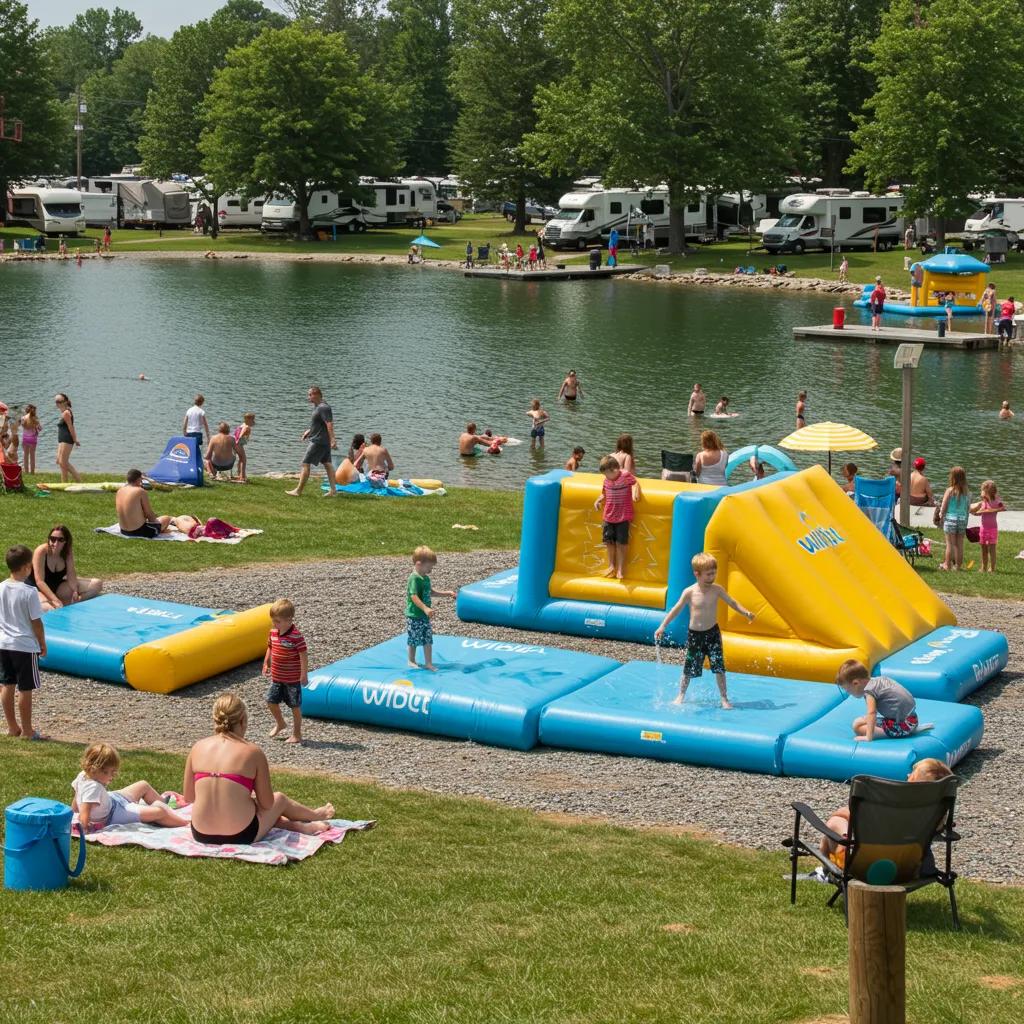
Families enjoying amenities at Walnut Hills Family Campground, including water park and swimming lake

Walnut Hills Family Campground by GatherGrounds provides multiple amenities that can affect cost, such as access to the Wibit water park, RV hookups for RV and tent sites when offered, and premium location upcharges, each of which may carry separate fees or be included depending on the booking package. Amenity fees for attractions like the Wibit water park deliver strong family value by replacing paid off-site activities, while RV hookup fees provide necessary utility service for RV stays and typically add a modest nightly amount. When evaluating a booking, compare the marginal cost of amenity access to the alternative expense of paying for similar activities offsite. Understanding those choices leads to pet fee structures and how pets influence your final budget.

Are There Pet Fees and What Are the Policies?

Pet fees often appear as a per-pet or per-stay charge to cover extra cleaning and maintenance, and families should budget for these if they plan to bring dogs or other approved animals to a campground. At many family campgrounds, a dedicated dog park or pet-friendly zones exist, and those conveniences may justify a modest pet fee that supports upkeep; Walnut Hills offers a large dog park which adds value for pet owners who want safe exercise space. When estimating costs, add the pet fee line item and confirm any limits, cleaning deposits, or policy requirements so surprises are avoided at check-in. These pet considerations segue into other less obvious charges that can affect your total camping budget.

Impact of Reservation Systems on National Park Camper Demographics

Campsites represent highly sought after recreational amenities in the national parks of the United States. Equitable allocation of scarce recreational resources has long been a key management issue in U.S. national parks, but has become increasingly difficult in an era of increasing demand. At present, a growing number of national park campsites are allocated through an online reservation system well in advance of a camper’s arrival at a park. Compounding the challenge of allocating these campsites is a long history of exclusivity within national park camping—institutionalized through campground design and predicated on a legacy of the leisure class’s affinity for camping in national parks. Given national park camping’s history of exclusivity, this exploratory study seeks to explore how online reservation systems may impact the demographics of national park campers.

Exclusionary effects of campsite allocation through reservations in US National Parks: Evidence from mobile device location data, WL Rice, 2022

What Other Charges Might Affect Your Camping Budget?

Less obvious charges include extra vehicle fees, boat rentals or day-use fees, cleaning or repair fees for damage, and applicable taxes or local surcharges that vary by location and operator, all of which can shift a modest camping bill into a larger family expense. To spot these, review the booking breakdown and terms for mentions of “extra vehicle,” “activity rental,” or “local tax,” because small per-day fees compound across multi-night stays. A quick checklist before you finalize payment reduces surprises and helps you decide whether an add-on is worth the marginal cost. The following checklist shows commonly overlooked items to verify at booking.

  1. Extra Vehicle Fees: Verify cost per additional car to avoid surprises on arrival.
  2. Activity Rentals: Confirm prices for boat or equipment rentals that add to daily costs.
  3. Cleaning or Damage Fees: Understand conditions that can trigger extra charges after your stay.

Reviewing these items before payment helps you avoid unexpected expenses and leads naturally into how cancellation and change rules can further affect your budget.

How Do Cancellation and Change Policies Affect Your Camping Budget?

Cancellation and change policies control whether reservation and other fees are refundable and how much of your payment you can recover if plans change, which directly affects the amount of money you risk when booking ahead. Strict non-refundable policies increase financial exposure, while more flexible policies that offer credits or partial refunds lower budgetary risk for families with uncertain schedules. Evaluating these policies before you pay helps you decide whether to accept a non-refundable bargain or pay a bit more for flexibility. The next table summarizes common policy types, windows, and refund implications so you can plan accordingly.

Policy TypeWindow / Fee AmountRefundable? / Example Scenario
Non-RefundableAt booking / full fee retainedNo refund if cancelled, cost retained as lost expense
Partial Refund7-14 days prior / partial fee keptPartial refund or credit issued if cancelled early
Credit-OnlyVariable window / no cash refundBooking credit applied for future stay if cancelled within policy

This table helps you weigh the risk of losing booking fees versus purchasing flexible options, and the following subsection outlines typical Walnut Hills cancellation and refund practices and practical examples.

What Are Walnut Hills’ Cancellation Fees and Refund Policies?

Cancellation fees determine whether you receive money back or credits when plans change, and many campgrounds, including private family-oriented properties, publish clear windows and options for refunds or credits that should be checked before booking. Walnut Hills Family Campground by GatherGrounds provides reservation and cancellation terms that indicate how fees and refunds are handled; travelers should consult the campground’s booking terms to confirm whether reservation fees are refundable or credited toward future stays. For practical planning, assume a conservative scenario where a portion of your payment may be non-refundable unless the policy explicitly states otherwise. Knowing the fine print allows you to choose the booking type that best fits your risk tolerance and budget.

How Can You Change or Cancel Your Reservation Without Extra Costs?

To minimize change or cancellation charges, modify bookings within the allowed policy window, request credits when refunds are not available, and document communications with reservations to support exceptions when needed. Many campgrounds offer flexibility when changes are made sufficiently in advance, and asking for a credit instead of a cash refund often preserves value if outright refunds are restricted. When you purchase a booking, note the deadline to cancel or change without penalties and set a calendar reminder to act before that window closes. These timing tactics lead directly into practical budgeting examples that show how to estimate total trip cost at Walnut Hills.

Understanding Campsite Reservations in National Parks

The most popular parks for camping are often those with the most amenities and the lowest fees. The reservation system is designed to ensure that all campers have an equal opportunity to access these popular parks. However, the reservation system can also lead to a situation where some campers are unable to secure a campsite, even if they are willing to pay a higher fee. This is because the reservation system is based on a first-come, first-served basis, and the most popular parks are often booked up months in advance.

Nature-based recreation: Understanding campsite reservations in national parks, M Walls, 2018

How Can You Effectively Budget for Your Camping Trip at Walnut Hills?

Family budgeting for camping trip at a picnic table with camping gear in the background

Budgeting effectively requires adding the nightly rate, the reservation fee, anticipated amenity and utility fees, pet or vehicle charges, and taxes to produce a realistic out-the-door total that families can compare against other options like state parks or private campgrounds. Breaking costs into clear line items turns an ambiguous quoted price into a predictable budget you can adjust by swapping amenities or choosing a different campsite type. The next subsection lists the key factors to include in an estimate, followed by a short EAV table with sample totals for common stays to illustrate typical 2-night and 3-night costs at different campsite types.

Key factors to include when estimating total camping costs:

  • Site type and nightly rate: Base price varies widely between RV sites, tent sites, cabins, and seasonal sites.
  • Reservation fee and taxes: Add these fixed charges per booking to avoid underestimating.
  • Amenity and utility fees: Account for Wibit access, RV hookups, or premium site upcharges.

Including these factors helps create a realistic total and the following table shows example totals for common stay lengths and campsite types to guide family planning.

Campsite TypeNightly Rate + Typical FeesExample 2-Night / 3-Night Total
RV site (hookups)Nightly + hookup + reservation2 nights: example total; 3 nights: example total
Tent siteNightly + reservation2 nights: example total; 3 nights: example total
CabinNightly + amenity access + reservation2 nights: example total; 3 nights: example total

This sample table illustrates how per-night charges, reservation fees, and amenity costs combine to form the booking total; the next subsection provides actionable tips to reduce those totals at Walnut Hills.

What Are the Key Factors to Consider When Estimating Total Camping Costs?

The main variables are site type, length of stay, amenity access choices, pet and vehicle counts, and seasonal pricing, each of which scales the total in predictable ways so you can model low, medium, and high spending scenarios. Nightly rates often dominate, but fixed per-booking fees like reservation charges and pet fees can materially change the effective per-night cost on short trips. Estimating a per-person amenity cost for attractions such as the Wibit water park or paid river float trips helps compare whether paying for site amenity access is cheaper than paying for offsite recreation. With these variables clear, families can make tradeoffs like choosing seasonal sites or packing food to reduce campground store purchases.

What Tips Help Save Money on Camping Fees at Walnut Hills?

Practical savings tactics include booking midweek to avoid premium weekend rates, choosing non-hookup tent sites instead of full hookup RV sites when possible, packing your own meals to reduce campground store spending, and considering seasonal sites for longer stays to lower per-night averages. Using the campground store for last-minute items is convenient but often more expensive than bringing supplies, so plan meals in advance to curb incidental charges. Families who weigh amenity access fees against likely usage—such as deciding whether the Wibit water park will be used enough to justify the fee—can reduce unnecessary spending while still enjoying key attractions. These cost-saving behaviors set up the final section on how Walnut Hills balances fees with family value.

Why Does Walnut Hills Offer Great Value Despite Reservation Fees?

Paid fees often reflect included conveniences, modernized facilities, and curated family programming, and Walnut Hills Family Campground by GatherGrounds pairs reservation and amenity charges with features that enhance the overall experience and justify the cost. Amenities like the Wibit water park, a swimming lake, and family and kid-friendly events every weekend create bundled entertainment value that can replace multiple offsite expenses. Modernized conveniences such as renovated bathrooms, playgrounds, and a large dog park reduce friction for families traveling with children and pets and can make a higher upfront cost feel like greater value. The next subsection clarifies the direct benefit of key amenities and then explains how transparent pricing fosters trust.

How Do Walnut Hills’ Amenities Enhance Your Camping Experience?

Walnut Hills’ amenity set—Wibit water park, swimming lake, Shiawassee River float trips, playgrounds, and organized weekend events—creates a high-value package that keeps families entertained on-site and reduces the need for extra paid outings. Each amenity substitutes for paid day trips, supervised activities, or offsite rentals, offering both experiential value and potential overall savings when compared to piecemeal alternatives. For families with dogs, the large dog park adds recreation without the need for external facilities, and on-site options like the campground store provide convenience when needed. Recognizing how amenities replace other expenses helps explain why reservation fees can be part of a fair value proposition.

How Does Transparent Pricing Build Trust with Campers?

Transparent pricing that lists reservation fees, amenity charges, and cancellation rules upfront reduces booking friction, increases confidence, and allows families to compare true total costs across options like Campnab listings or state park systems. When a campground clearly spells out fee composition and refund policies, families can budget without surprises and judge cost against included experiences such as weekend events and renovated facilities. Walnut Hills Family Campground by GatherGrounds demonstrates this approach by presenting amenity and accommodation choices like RV and tent sites, cabins, and seasonal sites so travelers can weigh cost versus benefit before booking. Clear line items and published policies create trust and make planning a family trip less stressful and more predictable.

Frequently Asked Questions

What Should I Know About Booking Campgrounds in Peak Season?

Booking campgrounds during peak season can be challenging due to high demand. It’s advisable to make reservations well in advance, as popular sites often fill up quickly. Additionally, be prepared for potentially higher rates during these times. Some campgrounds may implement dynamic pricing, where fees increase based on demand. To secure the best rates and availability, consider traveling during off-peak times or weekdays, and always check cancellation policies in case your plans change.

How Can I Find Discounts or Promotions for Camping Reservations?

Many campgrounds offer discounts or promotions, especially for extended stays, early bookings, or off-peak reservations. To find these deals, check the campground’s official website, subscribe to their newsletter, or follow them on social media for special offers. Additionally, membership programs like AAA or AARP may provide discounts. Some websites aggregate campground deals, so exploring multiple platforms can help you find the best rates for your camping trip.

What Are the Benefits of Using a Camping App for Reservations?

Using a camping app can streamline the reservation process by allowing you to search for available sites, compare prices, and read reviews all in one place. Many apps also provide real-time updates on site availability and can help you find nearby amenities and attractions. Additionally, some apps offer exclusive deals or discounts for users. By utilizing a camping app, you can enhance your planning experience and make informed decisions about your camping destination.

How Do I Prepare for Unexpected Fees During My Camping Trip?

To prepare for unexpected fees, it’s essential to read the fine print of your reservation and understand all potential charges. Create a budget that includes not only the base rate and reservation fees but also additional costs like utility hookups, pet fees, and taxes. Consider setting aside a contingency fund for unforeseen expenses, such as extra vehicle fees or activity rentals. Being proactive in your planning can help you avoid surprises and ensure a smoother camping experience.

What Should I Do If I Need to Change My Reservation?

If you need to change your reservation, review the campground’s cancellation and change policies first. Many campgrounds allow modifications within a specific timeframe without penalties. Contact the campground directly to discuss your options, as they may offer flexibility depending on availability. Document any communications regarding changes to ensure clarity. If your change involves a fee, weigh the cost against the benefits of altering your plans to make an informed decision.

Are There Specific Amenities That Can Enhance My Camping Experience?

Yes, certain amenities can significantly enhance your camping experience. Look for campgrounds that offer family-friendly features like swimming pools, playgrounds, or organized activities. Access to recreational facilities, such as water parks or hiking trails, can also add value to your stay. Additionally, amenities like clean restrooms, laundry facilities, and well-maintained common areas contribute to a more enjoyable camping experience. Evaluating these offerings can help you choose a campground that meets your family’s needs.

How Can I Ensure a Safe and Enjoyable Camping Experience?

To ensure a safe and enjoyable camping experience, start by researching the campground’s safety protocols and amenities. Familiarize yourself with the area, including potential wildlife encounters and weather conditions. Pack essential safety gear, such as first aid kits, insect repellent, and proper clothing. Additionally, communicate your plans with family or friends and establish a check-in routine. Following these guidelines can help you have a memorable and secure camping adventure.

Conclusion

Understanding camping reservation fees is essential for effective budgeting, as they directly impact the total cost of your family trip. By clarifying what these fees cover and how they interact with additional charges, you can make informed decisions that enhance your camping experience. Embrace the value of transparent pricing and well-structured amenities at campgrounds like Walnut Hills Family Campground, which offer significant family-friendly benefits. Start planning your next adventure today by exploring our booking options and discovering the best fit for your family’s needs.