
10 Key Questions to Ask When Choosing a Campground Real Estate Agent for Selling Your Campground
Selling a campground demands specialized expertise that general commercial real estate agents often lack. Selecting the right campground real estate agent can significantly impact the price you realize, the timeline of your sale, and the preservation of your park’s legacy. This guide breaks down what sets a campground broker apart, offers ten essential questions for vetting potential agents, and delves into valuation nuances—like site count, amenities, occupancy seasonality, and CAP rate impacts—to shape realistic seller expectations. You’ll also find a practical checklist for preparing your campground for market, a mapped sales process to set timelines, and techniques for verifying specialized credentials and references. Readers will learn how agents maximize sale value through targeted marketing and buyer segmentation, what to anticipate during due diligence and negotiations, and how to find brokers who truly understand outdoor hospitality real estate. Throughout, we integrate seller-focused context and brief examples of buyer-side expectations to help owners choose an agent who maximizes value and safeguards the campground’s legacy.
Why Is Choosing a Specialized Campground Real Estate Agent Crucial for Your Sale?
A specialized campground real estate agent is adept at valuing outdoor hospitality assets because they grasp how site count, amenity mix, and seasonality influence net operating income and buyer interest. Specialized agents translate operational metrics—occupancy, ancillary revenue, and infrastructure condition—into valuation inputs and targeted buyer outreach that general agents typically overlook. This leads to more precise pricing, faster identification of due diligence issues, and better buyer matching, all of which reduce time on market and negotiation friction. Owners who partner with specialized brokers benefit from niche marketing channels and networks populated by owner-operators and investors who appreciate campground-specific revenue drivers.
Specialized agents also anticipate common campground challenges—utility capacity, septic and well issues, and seasonal revenue fluctuations—allowing them to prepare documentation proactively before marketing. This preparation shortens due diligence timelines and boosts buyer confidence, often preserving the sale price. Understanding these operational specifics naturally leads to clear vetting questions you should ask when interviewing agents to confirm their genuine campground experience.
What Makes a Campground Broker Different from a General Real Estate Agent?

A campground broker concentrates on buyer pools, valuation methods, and marketing tailored to outdoor hospitality, whereas a general agent often relies on broad commercial listings and commodity comparables. Campground brokers cultivate relationships with owner-operators, park consolidators, and niche investors who understand amenity-driven revenue, making them more effective at matching buyers to a campground’s operational profile. They employ valuation metrics that weigh site-level revenue, occupancy seasonality, and ancillary income from glamping, pools, or utility hookups. Requesting transaction summaries from a broker demonstrates whether their buyer network and track record align with your park’s size and type.
When you evaluate an agent’s claims, ask for recent campground closings and typical site-price ranges to confirm expertise rather than broad commercial credentials. These verification steps allow you to move from general assurances to measurable evidence of campground-specific success, preparing you to examine how valuation is handled in practice.
How Does Experience in Campground and RV Park Sales Impact Your Selling Success?
Experience in campground and RV park sales directly influences pricing accuracy, deal velocity, and the smoothness of due diligence, as experienced brokers identify issues buyers will scrutinize and address them proactively. Agents with a campground track record can triangulate prices from income approaches, comparable park sales, and buyer demand signals to establish a defensible list price. They also anticipate buyer diligence requests—utility reports, occupancy histories, and environmental studies—minimizing negotiation surprises. This proactive preparation typically shortens escrow periods and prevents price erosion from late-stage findings.
Experience also aids in structuring offers and creative financing terms that appeal to qualified buyers while protecting seller value, leading into the next crucial reason to prioritize outdoor-hospitality familiarity when selecting an agent.
Why Should You Prioritize Agents Familiar with Outdoor Hospitality Real Estate?
Agents well-versed in outdoor hospitality value guest experience, staff continuity, and amenity-driven revenue, rather than viewing a campground as mere land or generic commercial property. This knowledge is vital for highlighting glamping units, pools, or robust onsite Wi-Fi that significantly boost ADR and ancillary sales, and for preserving staff or programming that sustains repeat visitation. Familiarity with seasonality enables realistic pro formas that buyers trust, reducing adjustments during negotiations. Prioritizing such agents ensures marketing materials accurately reflect the operational strengths buyers are willing to pay for, setting the stage for a smoother transaction that preserves the campground’s legacy.
Choosing a broker who balances operational understanding with marketing sophistication naturally transitions to the concrete questions you should ask to vet that expertise.
After reviewing these vetting questions and reference tactics, a relevant example of buyer-side stewardship is worth noting: GatherGrounds Resorts emphasizes family-owned stewardship and direct communication in acquisitions of existing campgrounds and RV parks from owners looking to sell, which illustrates the type of buyer sensitivity some sellers prefer when evaluating agent references and transition plans. Owners exploring options can also request a No-Obligation Conversation to confidentially assess fit with such acquirers.
What Are the Essential Questions to Evaluate a Campground Real Estate Agent’s Expertise?
This section outlines ten core questions to use when interviewing agents, explains what strong answers entail, and highlights red flags to watch for. Use these questions to verify transaction history, valuation approach, marketing strategy, due diligence coordination, fee transparency, and transition support. Requesting specific metrics and references helps you move from a sales pitch to verifiable performance.
The ten essential vetting questions are:
- What is your specific experience in campground and RV park sales?
- How do you approach campground valuation considering unique amenities and seasonality?
- What marketing strategies do you use to reach qualified campground buyers?
- How will you guide me through the due diligence process specific to campground sales?
- Can you advise on seller financing or creative transaction structures?
- What is your communication style and how frequently will you update me?
- What are your fees and commission structures for campground sales?
- Can you provide references from recent campground sellers?
- How do you support post-sale transition and preserve my campground’s legacy?
- What is your understanding of current campground market trends and challenges?
Below are brief expectations and verification tips for each question to capture what good answers include and what to watch for.
What Is Your Specific Experience in Campground and RV Park Sales?
Ask the agent to quantify recent campground deals, geographic focus, and property types handled; strong answers will provide a list of recent transactions, average site price ranges, and notes on buyer types. Verification steps include requesting anonymized deal summaries or references and checking whether closed deals align with your park’s scale and amenity mix. A weak answer will focus on general commercial experience without campground examples; a strong agent will present measurable campground metrics. Confirming this experience ensures the agent can position your property appropriately and target the right buyers.
When an agent presents transaction metrics, follow up by asking how those deals handled seasonality and infrastructure issues to see if their experience aligns with your park’s specific challenges.
How Do You Approach Campground Valuation Considering Unique Amenities and Seasonality?
Campground valuation typically combines an income approach that capitalizes NOI with comparable sales adjusted for site count, amenity mix, and seasonality; you should expect the agent to explain both methods. Ask how they adjust for glamping units, resort pools, strong Wi-Fi, and ancillary revenue streams that boost NOI, and how they model seasonality in pro formas. A useful artifact is a sensitivity table showing valuation changes across CAP rates and occupancy scenarios. Avoid agents who rely solely on broad commercial comps; prefer those who can map amenities to NOI adjustments and explain CAP rate reasoning.
To illustrate amenity impacts clearly, review the table below that links common amenities to typical NOI influence and valuation adjustments.
Different amenities have measurable effects on revenue and buyer value.
This EAV-style table clarifies how amenities translate into NOI and valuation adjustments, and it helps you probe whether an agent quantifies those effects in their valuation.
What Marketing Strategies Do You Use to Reach Qualified Campground Buyers?
A specialist’s marketing plan should integrate confidential syndication, targeted outreach to owner-operators, industry-specific broker networks, and amenity-focused investment teasers that highlight NOI drivers. Ask for examples of marketing collateral—photography, amenity one-pagers, and pro forma summaries—along with a distribution list strategy. Effective plans include segmented buyer lists (owner-operators, institutional investors, lifestyle buyers) and tailored teasers that emphasize high-impact features like glamping and pools. Red flags include generic MLS listings without targeted outreach or a lack of confidentiality protocols; a strong agent demonstrates how marketing creates competitive tension among qualified buyers.
A clear marketing roadmap naturally leads to questions about how the agent coordinates due diligence once a qualified buyer is engaged.
Real Estate Marketing Strategies for Campground Sales
Many enterprises in the real estate sector face downward risks and survival difficulties. To respond to these challenges, real estate enterprises need to gradually slow down development and pay more attention to the progress of development financing. In order to maintain competitiveness and stabilize cash flows, higher demands are placed on the marketing of real estate projects. Based on the foregoing, this work conducted an in-depth study of the marketing strategy of real estate enterprises. The article analyzes the impact of housing difficulties, epidemic prevention and control, and other factors on real estate marketing, and proposes targeted optimization strategies. These strategies include market segmentation, product strategy, pricing strategy, sales strategy, promotion strategy, and advertising strategy.
RESEARCH ON MARKETING STRATEGY OF REAL ESTATE ENTERPRISES, М Лишенко, 2024
How Will You Guide Me Through the Due Diligence Process Specific to Campground Sales?
Expect the agent to coordinate financial packet assembly, site infrastructure reports, environmental screening, and third-party vendor scheduling while advising on typical buyer requests. A practical due diligence checklist should include P&L statements, occupancy histories, utility costs, septic/well records, and guest reservation data. Ask the agent how they manage buyer requests and third-party report timing to avoid delays. Agents who proactively prepare documentation and anticipate common red flags reduce friction and help maintain deal momentum. This due diligence role ties directly to negotiation strategies and potential creative financing options.
To help evaluate an agent’s diligence coordination ability, request a sample due diligence timeline and a list of preferred third-party consultants they routinely engage.
Can You Advise on Seller Financing or Creative Transaction Structures?
Experienced campground brokers present common creative structures—seller financing, earn-outs tied to NOI, leasebacks, and earn-in management agreements—and explain when each narrows valuation gaps or expands the buyer pool. Ask for examples of term sheets showing trade-offs between price, interest rate, and repayment terms. A good agent will discuss tax and risk considerations at a high level and recommend advisors for legal and tax structuring. Avoid agents who dismiss creative terms without context; those willing to structure deals creatively can attract qualified buyers who otherwise lack institutional financing.
Understanding creative structures leads into communication and reporting expectations during an active sale.
What Is Your Communication Style and How Frequently Will You Update Me?
Clarify expected reporting cadence, preferred channels, and content of updates; strong agents propose regular progress reports that include marketing metrics, buyer feedback, and inquiry logs. Recommended cadence during active marketing is weekly written updates and prompt escalation for qualified offers or issues. Ask how the agent documents buyer interactions and who your primary contact will be to avoid handoff confusion. Transparent communication practices keep sellers informed and reduce stress during the selling process.
Reliable communication practices also reflect in fee transparency and commission structures, which you should explore next.
What Are Your Fees and Commission Structures for Campground Sales?
Request a clear fee schedule that details commission percentages, marketing cost allocations, and any additional administrative fees; a professional agent provides written fee terms and explains what is included. Commission norms vary, but transparency about what marketing or escrow coordination costs are covered prevents surprises. Consider performance-based incentives—tiered commission based on price thresholds—to align the agent’s motivation with your sale objectives. Avoid agents who are vague about net fees or who add open-ended expense allowances; insist on clarity up front.
Fee transparency ties into reference checks that confirm whether the agent delivered expected value net of fees.
Can You Provide References from Recent Campground Sellers?
Ask for recent, relevant seller references and anonymized case studies that reflect properties similar in size and amenity mix to yours. When speaking with references, probe timelines, communication quality, negotiation outcomes, and how the agent supported post-sale transition. If public references are limited, request redacted transaction summaries or third-party confirmations. Positive references should describe an agent’s ability to reach the right buyers and manage due diligence efficiently. Gathering these references provides direct insight into the agent’s real-world performance.
References also reveal whether the agent prioritized legacy preservation and smooth transitions for sellers.
How Do You Support Post-Sale Transition and Preserve My Campground’s Legacy?
Agents should describe transition services: buyer vetting for stewardship fit, staff continuity planning, handover coordination, and introductions to key vendors and local authorities. Strong agents help structure transition timelines and facilitate introductions between sellers and buyers to preserve guest experience and staff relationships. Ask how the agent screens buyers for operational commitment and whether they help draft transition checklists for continuity. Sensitivity to legacy concerns indicates the agent prioritizes long-term stewardship, which is particularly important for family-owned parks and community-minded sellers.
As part of reference checks, ask previous sellers whether the agent actively protected legacy priorities during buyer selection and transition planning.
After reviewing these vetting questions and reference tactics, a relevant example of buyer-side stewardship is worth noting: GatherGrounds Resorts emphasizes family-owned stewardship and direct communication in acquisitions of existing campgrounds and RV parks from owners looking to sell, which illustrates the type of buyer sensitivity some sellers prefer when evaluating agent references and transition plans. Owners exploring options can also request a No-Obligation Conversation to confidentially assess fit with such acquirers.
How Do You Assess and Value Unique Campground Assets When Choosing an Agent?
Valuing a campground requires mapping amenities, site count, occupancy, and infrastructure condition to net operating income (NOI) and then applying appropriate CAP rate assumptions; good agents explain the mechanics and provide scenario analyses. Assessments should separate base site revenue from ancillary amenity income and show how seasonality shifts effective annual yield. Agents must also document infrastructure needs and capital expenditure backlogs that reduce net proceeds. Understanding this valuation anatomy helps sellers pick agents who can defend a price to qualified buyers.
To make comparisons explicit, use the EAV table below showing amenity, typical impact on NOI, and example valuation adjustment so you can see how agents should quantify value contributors.
This table provides a structured way to compare attributes and forces agents to quantify their valuation assumptions in a transparent way.
What Factors Influence Campground Property Valuation?
Primary drivers are NOI, occupancy, site count, amenity mix, and infrastructure condition; agents should demonstrate how each factor maps to revenue streams and capital needs. Site-level metrics—revenue per available site and average length of stay—directly feed NOI, while amenities generate ancillary fees that increase ADR and lengthen stays. Infrastructure deficits, like aging sewer systems, reduce net proceeds because buyers factor replacement costs into offers. A concise, documented P&L and historical occupancy report allows an agent to build defensible financial models for prospective buyers.
Clear financial mapping leads into strategies for addressing market conditions such as rising CAP rates and softening demand.
How Does a Specialized Agent Account for Market Softening and Rising CAP Rates?
Specialized agents use sensitivity analyses to present multiple CAP rate and occupancy scenarios, and they recommend negotiation and structuring options—seller financing, earn-outs, or staged closings—to bridge valuation gaps caused by higher CAP rates. Agents also emphasize qualified buyer targeting to reduce time on market, as prolonged listings often pressure prices further. Presenting realistic, scenario-based valuations helps sellers choose between accepting market-driven pricing or offering creative terms to obtain a higher nominal sale price. These tactics protect seller value and speed the transaction under softening conditions.
Explaining market tactics naturally highlights why financial transparency is essential to those valuation models.
Why Is Financial Transparency Important in Valuation and Agent Selection?
Transparent financials—complete P&L statements, occupancy reports, utility costs, and detailed guest revenue breakdowns—enable buyers to validate NOI and speed due diligence, which preserves sale momentum. Agents who insist on assembling a clean financial packet before marketing demonstrate professionalism and reduce the risk of late-stage renegotiation. Sellers should expect their agent to advise on which documents to prepare and how to present normalized or pro forma adjustments. Transparency builds buyer confidence, which often results in stronger offers and smoother closings.
When financials are clear and modeled correctly, agents can better position amenities and prepare targeted marketing that emphasizes verifiable revenue strengths.
How Can a Campground Real Estate Agent Help Maximize Your Property’s Sale Value?
A competent agent increases sale value by preparing the property, crafting amenity-focused marketing, and targeting the buyer segments most likely to pay a premium for your park’s strengths. Preparation includes physical improvements with strong ROI, clean financial packaging, and operational continuity planning that reassures buyers. Marketing should showcase high-impact features—glamping, pools, hookups—with professional visuals and concise pro formas demonstrating ROI. Targeted outreach to buyer personas maximizes competition and price realization.
Below is an owner-focused preparation checklist that agents commonly use to enhance sale readiness.
Key preparation steps to prioritize before listing your campground:
- Gather and organize financial documents, occupancy reports, and P&L statements for at least the last three seasons.
- Complete small capital improvements that materially affect guest experience, such as repairing hookups or refreshing high-visibility amenities.
- Document operational processes and staff roles to facilitate a smooth buyer handover and demonstrate continuity of operations.
This checklist focuses on high-impact actions sellers can take quickly; implementing these steps creates stronger marketing collateral and reduces buyer diligence friction.
What Preparation Steps Should I Take Before Listing My Campground?
Prioritize documentation, minor CAPEX, and operational continuity to present a turnkey opportunity that attracts owner-operators and institutional buyers. Financial packet assembly, clear occupancy data, and a list of recent capital investments form the foundation of buyer confidence. Small physical improvements—site landscaping, repaired hookups, improved signage—often yield outsized returns in buyer perception and offers. Additionally, preparing a basic transition plan for staff and vendors signals stewardship and reduces buyer uncertainty.
These preparatory actions feed directly into marketing that emphasizes amenity ROI and buyer segmentation strategies.
How Does an Agent’s Marketing Strategy Highlight Amenities Like Glamping and Resort Pools?
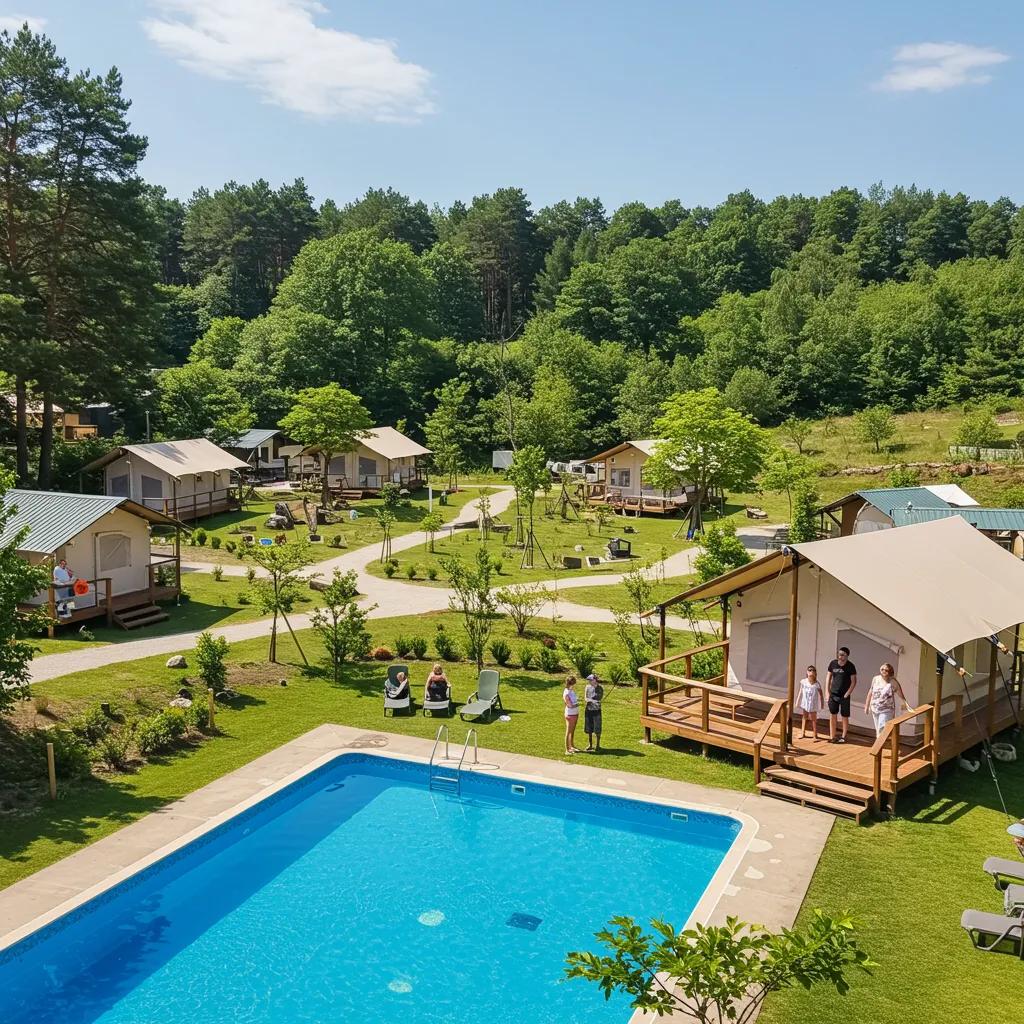
Agents translate amenity value into buyer-facing narratives using high-quality photography, amenity-specific one-pagers, and pro formas showing revenue uplift attributable to features like glamping or pools. Marketing collateral should include occupancy charts, ADR impacts, and guest demographics to make amenity ROI tangible to buyers. Effective teasers segment buyers who value those amenities—glamping appeals to lifestyle and boutique operators, pools attract family-resort buyers—ensuring messaging lands with the right audience. Data-driven marketing paired with aspirational visuals generates better-qualified inquiries.
Targeted marketing then channels those inquiries into the agent’s qualified-buyer list to create competitive dynamics.
How Do Agents Leverage Buyer Demographics and Trends to Attract Qualified Buyers?
Agents build buyer personas—owner-operators, lifestyle buyers, institutional investors—and tailor outreach channels for each, using industry broker networks, specialized listings, and direct contact lists. They factor recent trends such as growth in glamping demand and remote-work guests seeking strong Wi-Fi into pitch materials to appeal to contemporary buyer motivations. For each persona, agents recommend specific collateral and negotiation levers that resonate: operational transition assurances for owner-operators, revenue stability metrics for institutional buyers, and experiential amenities for lifestyle buyers. Aligning messaging with buyer motivations increases the likelihood of competitive, value-maximizing offers.
These segmentation techniques also affect how offers are evaluated in negotiation stages and whether creative financing will be considered.
What Should You Expect During the Campground Sales Process with Your Agent?

Selling a campground typically follows stages—preparation, listing, buyer qualification, LOI/offer, due diligence, closing, and transition—and a specialist agent coordinates those stages, timelines, and deliverables. Expect the agent to manage buyer outreach, collect and present qualified offers, and coordinate third-party reports during due diligence. Agents also advise on negotiation trade-offs among price, terms, and timing, and help structure seller financing or earn-outs when appropriate. Understanding these stages upfront sets realistic expectations for timing and seller involvement.
The table below maps typical sales stages to timelines and key deliverables, which helps sellers plan and maintain momentum.
This EAV-style timeline helps set expectations for typical ranges and the agent’s deliverables at each stage.
How Does the Listing to Closing Timeline Typically Progress?
The overall timeline depends on property complexity, financing contingencies, and buyer qualification, but a common progression is preparation, active marketing and buyer outreach, LOI and negotiation, due diligence, then closing and transition. Factors that extend timelines include environmental remediation needs, complex financing, or incomplete financial documentation. Sellers can accelerate the process by preparing a complete financial packet, addressing obvious CAPEX issues in advance, and working with an agent who maintains an active qualified-buyer list. Clear expectations about timing reduce stress and avoid surprises during negotiations.
Knowing the typical timeline clarifies the agent’s role during due diligence and legal review stages.
What Role Does the Agent Play in Navigating Due Diligence and Legal Reviews?
The agent coordinates buyer requests, schedules third-party consultants, and manages information flow while the seller and attorneys handle legal document preparation and contract specifics. Agents act as facilitators—assembling documents, managing confidentiality agreements, and helping prioritize buyer requests—so legal and environmental specialists can focus on technical evaluation. A proactive agent anticipates common diligence areas and recommends consultants to streamline reviews. Sellers should still retain legal and tax advisors for contract review and structure advice.
Effective agent coordination minimizes delays and ensures that negotiation remains focused on value rather than surprises.
How Are Offers, Negotiations, and Seller Financing Handled?
Offers should be evaluated on total economics—price, timing, contingencies, and financing certainty—not just headline numbers; agents provide comparative analyses of offers and advise on negotiation levers. Creative structures like seller financing or earn-outs can bridge valuation gaps and expand buyer pools; agents help model trade-offs between price and terms. Negotiation checklists prioritize core seller objectives—net proceeds, legacy protections, and staff continuity—to guide term trade-offs. Well-prepared agents present counteroffers that protect seller interests while keeping buyers engaged.
Clear negotiation strategy planning helps transition smoothly into final closing and post-sale handover work.
How Do You Find and Verify the Best Campground Real Estate Agent for Your Sale?
Finding the right specialist requires searching niche channels, verifying credentials and references, and evaluating communication and cultural fit; a methodical approach reduces the risk of hiring an inexperienced generalist. Start with industry broker lists, referrals from other campground owners, and specialized online marketplaces, then verify transaction lists, request references, and assess responsiveness during initial contacts. Good agents will provide relevant seller references and clear documentation of past transactions. This verification process ensures the agent can reach qualified buyers and manage the unique complexities of campground sales.
Below are practical places to search and how to evaluate candidates.
Where Can You Find Specialized Campground Brokers and RV Park Sales Experts?
Look in industry-specific broker lists, trade associations, referrals from other campground owners, and specialized online marketplaces that focus on outdoor hospitality properties. Asking peers for referrals often surfaces agents with demonstrated stewardship sensitivity, while industry lists identify brokers who advertise campground expertise. Initial outreach should test responsiveness and willingness to provide transaction details. Combining referrals with targeted searches gives you a balanced candidate pool to vet thoroughly.
Finding candidates leads to the next step: verifying credentials and references to confirm competence.
What Credentials and Client References Should You Verify?
Request a transaction list, closed-deal metrics (site-price ranges, days on market), and recent seller references who can speak to timelines, communication, and outcomes. Verify relevant licensing, industry involvement, and whether the agent has worked with properties similar in size and amenity mix to yours. When contacting references, ask about negotiation effectiveness and post-sale transition support. Documented evidence of comparable transactions is the strongest indicator of fit.
Reference checks naturally connect to evaluating an agent’s communication and transparency during an active engagement.
How Do You Evaluate an Agent’s Communication and Transparency?
Assess responsiveness, proposed reporting cadence, clarity on fees, and willingness to share marketing plans and buyer lists in anonymized form. Red flags include vague fee explanations, lack of a documented marketing plan, or inconsistent communication during initial outreach. Best-practice expectations include weekly written updates during marketing, immediate alerts for qualified offers, and transparent accounting of marketing expenses. Good communication practices reduce friction and give sellers confidence throughout the sale.
After narrowing candidates, consider buyer fit: some sellers prefer family-owned acquirers. GatherGrounds Resorts, for example, emphasizes Family-Owned Stewardship in acquisitions and offers a No-Obligation Conversation for owners exploring options; this illustrates the types of buyer qualities you might prioritize when evaluating your agent’s buyer networks. Additionally, noting Targeted Acquisition (parks with 130+ sites) criteria from potential buyers can help your agent find the right match.
What Are the Benefits of Partnering with GatherGrounds Resorts as Your Campground Buyer?
GatherGrounds Resorts presents specific buyer-side value propositions that align with many seller priorities, especially for owners seeking stewardship-minded transitions and direct communication during sale discussions. As a family-owned operator focused on acquiring existing campgrounds and RV parks from owners looking to sell, GatherGrounds emphasizes preserving traditions while investing where it benefits guests and staff. Their approach can appeal to sellers prioritizing legacy preservation and staff continuity over institutional roll-ups. Understanding buyer UVPs helps sellers and their agents evaluate buyer fit beyond price alone.
How Does GatherGrounds’ Family-Owned Stewardship Support a Thoughtful Transition?
Family-owned stewardship typically means decision-making that favors preserving traditions, maintaining staff continuity, and retaining guest-focused operations during transition periods. GatherGrounds frames stewardship as honoring what already works while investing selectively in amenities and staff to enhance guest experience. For sellers concerned about legacy, a family-owned acquirer’s intent to keep certain practices and personnel in place can provide emotional and operational reassurance. This stewardship orientation helps buyers and sellers plan smoother handovers.
What Makes Direct Communication with GatherGrounds Different from Corporate Buyers?
Direct owner-to-owner communication removes layers of corporate approval, enabling faster decisions, more personalized negotiation, and confidential discussions that respect seller timelines. GatherGrounds emphasizes direct communication with owners and operators to simplify evaluation and expedite offers when appropriate. Faster decision-making reduces periods of uncertainty for sellers and can preserve value by limiting protracted approval processes common with institutional buyers.
Direct communication naturally supports the practical step of beginning a confidential, no-pressure initial conversation.
How Does GatherGrounds Invest in Preserving and Enhancing Campground Value?
GatherGrounds describes investments that balance preservation with targeted upgrades—improving amenities that enhance guest experience, retaining key staff for continuity, and making incremental capital improvements where they yield the strongest returns. This investment approach seeks to maintain the campground’s identity while deploying capital in ways that boost long-term loyalty and revenue. For sellers, knowing a buyer plans to invest thoughtfully in amenities and operations can increase confidence that the park will thrive after sale. That assurance matters to owners prioritizing both financial and legacy outcomes.
Understanding these buyer priorities leads naturally to how sellers can begin a confidential conversation without formal listings.
How Can You Start a No-Obligation Conversation with GatherGrounds?
A No-Obligation Conversation is positioned as an initial, confidential, and low-pressure discussion for owners exploring options or retirement timelines; sellers should prepare basic property information—site count, general financial trends, and key amenities—to make that conversation productive. GatherGrounds offers this pathway to assess fit and discuss potential acquisition scenarios without commitment, which helps owners gather market feedback before deciding to list. Sellers interested in stewardship-minded outcomes can use such a conversation to learn buyer preferences and timeline expectations while preserving confidentiality.
Ready to Discuss Your Campground’s Future?
This final section provides a soft call to action that encourages owners to gather essential information and consider next steps—engage a specialized agent, prepare financials, and, if desired, request a confidential No-Obligation Conversation with interested acquirers—to evaluate fit and options without commitment.
Frequently Asked Questions
What are the key factors to consider when preparing my campground for sale?
When preparing your campground for sale, focus on three main areas: documentation, physical improvements, and operational continuity. Gather financial documents, occupancy reports, and P&L statements from the last three seasons to build buyer confidence. Make minor capital improvements that enhance guest experience, such as landscaping or repairing amenities. Additionally, document operational processes and staff roles to ensure a smooth transition for the new owner. These steps will help present your campground as a turnkey opportunity, attracting more qualified buyers.
How can I ensure my campground’s unique features are effectively marketed?
To effectively market your campground’s unique features, work with an agent who specializes in outdoor hospitality. They should create high-quality marketing materials that highlight amenities like glamping units and pools, using professional photography and detailed one-pagers. Additionally, the agent should segment potential buyers based on their interests, ensuring that the marketing collateral resonates with the right audience. This targeted approach increases the likelihood of attracting buyers who appreciate the specific features that make your campground stand out.
What should I expect during the due diligence process?
During the due diligence process, expect your agent to coordinate the collection of essential documents, such as financial statements, occupancy histories, and environmental reports. They will manage buyer requests and schedule third-party inspections to ensure a smooth flow of information. A well-prepared agent will anticipate common buyer inquiries and proactively address potential red flags, which helps maintain momentum in the sale process. Clear communication and organization during this phase are crucial for avoiding delays and ensuring a successful transaction.
How can seller financing benefit my campground sale?
Seller financing can be a valuable tool in your campground sale, as it allows you to attract a broader range of buyers who may not qualify for traditional financing. By offering flexible terms, such as lower down payments or extended repayment periods, you can make your property more appealing. This approach can also help bridge valuation gaps, allowing you to negotiate a higher sale price. Additionally, seller financing can provide you with ongoing income while ensuring that the buyer is committed to maintaining the campground’s legacy.
What role does communication play in the selling process?
Effective communication is vital throughout the selling process, as it keeps you informed and reduces stress. A good agent will establish a clear communication plan, providing regular updates on marketing progress, buyer feedback, and any developments in negotiations. Expect weekly written reports and prompt notifications for significant events, such as qualified offers. Transparent communication fosters trust and ensures that you remain engaged in the process, allowing for timely decision-making and a smoother transaction overall.
How can I verify the expertise of a campground real estate agent?
To verify a campground real estate agent’s expertise, request a detailed transaction history that includes recent sales, property types, and geographic focus. Ask for references from previous sellers who can speak to their experience, communication style, and negotiation effectiveness. Additionally, check for relevant industry credentials and involvement in campground-specific associations. A strong agent will be willing to provide this information, demonstrating their competence and ability to navigate the unique complexities of campground sales.
What are the benefits of working with a family-owned buyer like GatherGrounds Resorts?
Working with a family-owned buyer like GatherGrounds Resorts can provide several benefits, particularly for sellers concerned about legacy preservation. Family-owned buyers often prioritize maintaining traditions, staff continuity, and guest-focused operations during transitions. This approach fosters a smoother handover and reassures sellers that their campground’s identity will be respected. Additionally, direct communication with family-owned buyers can expedite decision-making and create a more personalized negotiation experience, ultimately leading to a more satisfactory sale process.
Conclusion
Choosing the right campground real estate agent is essential for maximizing your sale value and preserving your park’s legacy. By leveraging specialized knowledge and targeted marketing strategies, these agents can navigate the complexities of campground sales effectively. Take the next step in your selling journey by reaching out to a qualified agent who understands your unique needs. Explore your options today to ensure a successful transition for your campground.