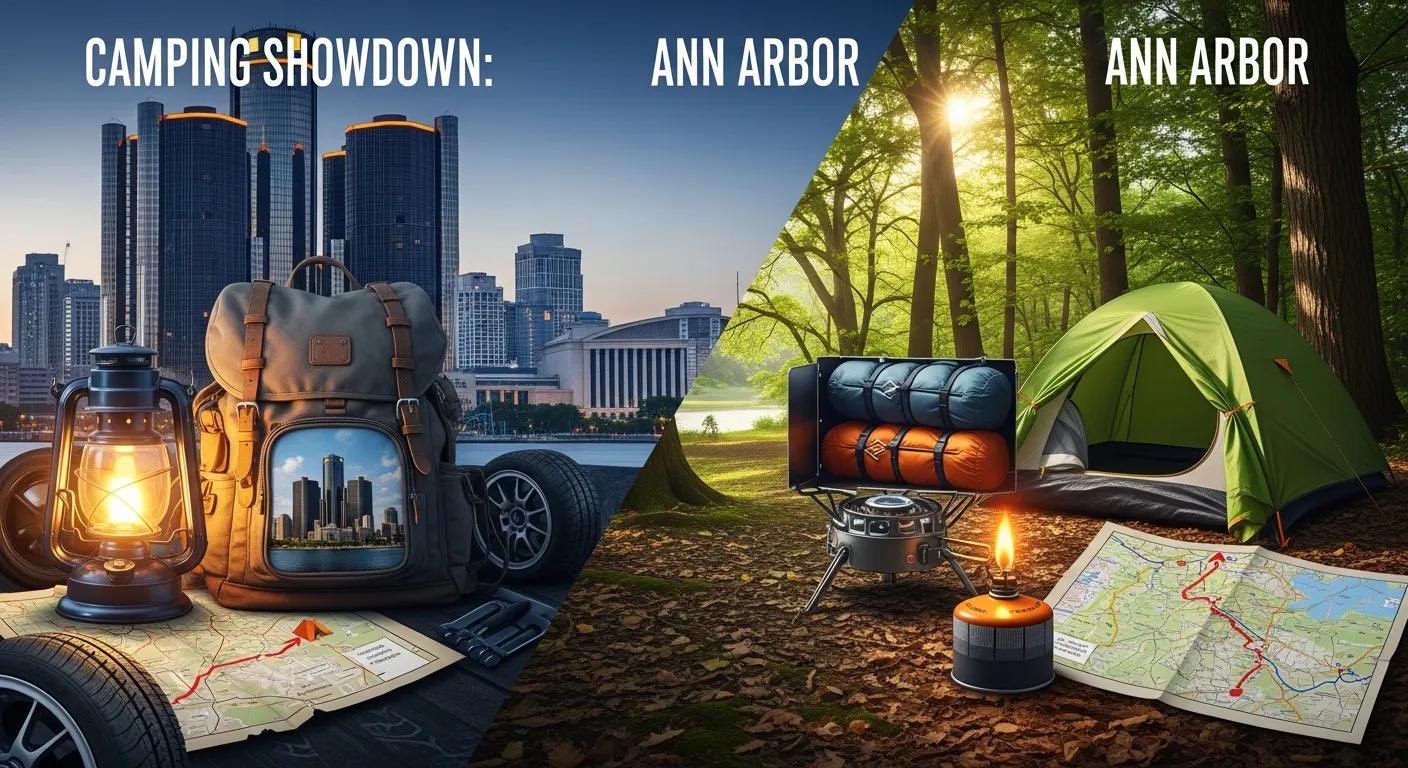
Camping Showdown: Detroit vs. Ann Arbor
Choosing where to camp in southeast Michigan is about more than miles on a map. Detroit-area sites tend to lean toward convenience and services, while Ann Arbor–area campgrounds usually emphasize trails, water access, and quieter, more natural settings. This guide lays out the differences—amenities, campsite types, and activity priorities—so you can match a trip to your group’s needs. We also show where a mid-Michigan property like The Oaks Campground by GatherGrounds fits on that spectrum. You’ll get straightforward comparisons (including Waterloo, Proud Lake, and private parks), clear takeaways on family- and RV-friendly options, and practical tips to pick the site that fits your priorities—whether that’s convenience, trails and water, or on-site programming.
What Are the Common Camping Amenities Near Detroit?
Campgrounds closest to Detroit usually prioritize ease and family-friendly comforts. Expect full hookups for RVs, camp stores, playgrounds, and small lakes or ponds—features that make short weekend trips simpler and cut down on planning. Because these parks are near population centers, they focus on services that save time. More remote parks, in contrast, invest in longer trail systems and bigger stretches of undeveloped land. If ease and predictable amenities matter most, Detroit-area options give dependable, well-serviced stays at the cost of some wilderness solitude.
If you want a quick checklist for Detroit-area choices, focus on three amenity groups:
- Full hookups and developed sites: Water, electric, and sewer hookups for hassle-free RV stays.
- Water access and play areas: Small beaches, ponds, and playgrounds that work well for families.
- Facilities and services: Camp stores, restrooms with showers, and weekend programs for social activities.
Those three clusters explain why many city residents pick private parks or county campgrounds for quick family weekends and save state recreation areas for longer, more nature-focused trips.
Before we name specific campgrounds, this table highlights how Detroit-area options typically line up so you can narrow choices fast.
Those common features—playgrounds, ponds, camp stores—are what most Detroit-area campers rely on. Thinking in these clusters helps you decide whether you want convenience or more open space.
Which Campgrounds Near Detroit Offer Full Hookup RV Sites?
Full hookup RV sites—water, electric, and sewer—are standard at many private RV parks near Detroit and are essential for campers who want comfort and longer stays. These hookups are most common at private and KOA-style campgrounds, which also offer pull-through pads and on-site dump stations. County parks can have hookups too, but they’re usually more limited and may require earlier booking; demand during peak season can fill sites weeks in advance.
- Private RV parks: Most have full hookups, paved sites, and online reservations.
- KOA-style campgrounds: Consistent hookups plus family amenities and scheduled activities.
- County/regional parks: Fewer full-hookup sites; often first-come or seasonal reservations.
Full hookups matter because they make stays more comfortable and predictable—less generator use, easier waste handling, and steady power—so many Detroit-area RVers choose them for short, efficient getaways.
How Do Detroit Campgrounds Integrate Urban Proximity and Recreation?
Campgrounds near Detroit balance city access with quick outdoor options. You’ll commonly find clean restrooms, camp stores, paved roads, and short interpretive trails that work well for multigenerational groups. The trade-off is smaller trail systems and fewer wild shorelines than more distant parks, but the upside is less driving and more time enjoying the site or nearby attractions.
- Urban-proximate parks work by pairing easy access with targeted outdoor activities like fishing ponds or small lakes.
- They’re ideal for spontaneous weekend trips—the low planning barrier is a big draw.
- When choosing, weigh easy access to shops and healthcare against larger trail networks and remote solitude.
That practical balance is why many campers pick developed sites near the city for short family stays, and head to state recreation areas when they want longer, exploratory trips into nature.
What Distinguishes Camping Features in the Ann Arbor Area?
Campgrounds around Ann Arbor generally emphasize larger natural systems, longer trail networks, and more waterfront opportunities. Because Ann Arbor sits close to big contiguous natural areas like Waterloo and Pinckney, its nearby parks lean toward rustic tent sites, multiuse trails, and paddling along rivers and lakes rather than high-density, developed camping.
Ann Arbor–area campgrounds typically differ from Detroit-adjacent parks in four ways:
- State-park focus with longer trail mileages and varied habitats.
- More rustic tent sites and primitive camping options.
- Strong emphasis on water-based recreation—rivers and lakes.
- Greater chances for wildlife viewing and quieter settings.
For campers who want longer hikes, paddling routes, and peaceful shoreline sites, the Ann Arbor region rewards longer stays and activity-focused trips.
To help match trip goals to park character, here’s a quick comparison of common Ann Arbor-area spots.
This comparison shows how “state recreation areas” often translate into more rustic campsite options versus the modern hookups you’ll find closer to the city.
Which State Recreation Areas Near Ann Arbor Provide Rustic and Modern Camping?
State recreation areas near Ann Arbor offer a range from primitive backcountry sites to drive-up spots with basic facilities. Waterloo and Pinckney, for instance, have walk-in and drive-in sites that support both backpacking-style solitude and family car camping. DNR-managed sites usually have trailheads and defined campsite boundaries but limited on-site services, so plan for self-sufficiency if you choose more rustic options.
- Rustic tent sites: Great for low-impact camping and trail-based trips.
- Modern drive-up sites: Defined parking, vault toilets, and sometimes potable water.
- Hybrid sites: A middle option with trail access and occasional nearby facilities.
Pick between rustic and modern based on trip length, group needs, and how much gear or support you want on hand. If you need camp stores or scheduled events, a private park may be a better fit.
How Does Waterfront Camping Near Ann Arbor Enhance Outdoor Experiences?
Waterfront campsites in the Ann Arbor area let you jump into swimming, paddling, shore fishing, and calm mornings on the water—activities that add variety without extra travel. Lakes and rivers make it easy to launch kayaks and watch birds from your campsite. Keep safety and seasonality in mind: some beaches are unsupervised and water levels or closures can affect activities, so plan accordingly.
- Waterfront access expands activity options with minimal logistics—great for family days.
- Rivers like the Huron offer float trips and short paddling journeys that suit mixed-ability groups.
- Summer brings swimming and boating; shoulder seasons offer quieter wildlife viewing.
That shoreline access is a big part of why Ann Arbor–area camping appeals to paddlers, anglers, and anyone who enjoys activity-rich days by the water.
How Does The Oaks Campground Bridge Detroit and Ann Arbor Camping Features?
The Oaks Campground by GatherGrounds sits between the Detroit convenience model and the Ann Arbor nature model. It blends family-focused amenities—playgrounds, pavilions, and weekend events—with natural features like a swimming lake and a large fishing pond. That mix lets The Oaks serve quick metro getaways and longer, activity-filled stays that feel more like state-park visits.
The property is also preparing for changes that expand its family offerings: GatherGrounds Resorts is scheduled to assume ownership and operations at the end of the 2024 season, and a Wibit water park addition is planned for 2025 to broaden on-site aquatic activities. Those developments make The Oaks an appealing mid-point for families who want both structured programming and natural settings.
Here are a few hybrid features that show how The Oaks bridges convenience and natural appeal:
- Large fishing pond and swimming lake for nature-based recreation next to developed amenities.
- Extensive golf cart riding trails that let families explore the grounds without long hikes.
- Playgrounds, pavilions, and a camp store for convenience and social programming.
That hybrid approach makes The Oaks a good option for visitors from Detroit or Ann Arbor who want both ease and access to larger outdoor areas.
What Unique Amenities Does The Oaks Campground Offer?
The Oaks emphasizes family engagement and easy outdoor access. It pairs natural features like a sizable fishing pond and golf cart trails with on-site programming such as scheduled weekend events. For RV guests, The Oaks offers full hookup sites and seasonal spots that support short stays and longer seasonal camping. The planned 2025 Wibit water park—an inflatable play course and slides—will build on the existing swimming lake and sandy beach to expand family water fun.
- Fishing pond: catch-and-release angling and shoreline recreation.
- Golf cart riding trails (120 acres): family-friendly mobility across the property.
- Full hookup RV sites and seasonal sites: options for both short and extended stays.
If you’re looking for a hybrid experience—service plus outdoor access—The Oaks delivers a balanced option. Check the campground’s reservation channels to confirm site types and availability; GatherGrounds’ operational transition at the end of 2024 may bring additional programming and amenity updates.
How Do Family-Friendly Events and Activities at The Oaks Enhance Camping?
Family events at The Oaks make camping easier by offering organized activities, themed weekends, and shared spaces that cut down on planning for parents and group leaders. Typical offerings include crafts, lakeside timed events, and weekend schedules that encourage families to meet and make memories. That structure often increases enjoyment for multigenerational groups and first-time campers.
- Scheduled weekend events: Organized fun with minimal prep required by families.
- Playgrounds and pavilions: Safe areas for kids and sheltered gathering spots for groups.
- Camp store and on-site services: Fewer supply runs—handy for families traveling with lots of gear.
By concentrating activities and services on-site, The Oaks reduces coordination work for group stays and fosters a sense of community. If you want a family weekend, reserve early—especially for peak summer dates—so you can secure the sites and programs you prefer.
How Do Family Campgrounds in Southeast Michigan Compare?
Family campgrounds in southeast Michigan differ most on three practical dimensions: kid-focused programming, accessible facilities and safety features, and event scheduling that encourages shared experiences. Detroit-area parks generally emphasize convenience—stores, showers, and quick access—while Ann Arbor–area parks emphasize space, trails, and outdoor skills. Larger private campgrounds like The Oaks intentionally combine programming and natural features to serve families who want both structure and outdoor exploration.
- Kid activities and event programming create predictable entertainment and chances to socialize.
- Safety and accessible facilities (restrooms, paved paths, first-aid access) matter for older adults.
- Onsite conveniences reduce logistical hassle for families traveling with gear and multiple generations.
Together, these factors determine whether a campground fits short, service-oriented trips or longer, activity-filled vacations.
Use this quick table to compare family-focused campground types in the region.
What Family-Specific Amenities Differentiate Detroit and Ann Arbor Campgrounds?
Key differences for families include programmed events versus self-guided play, the density of onsite services versus remoteness, and proximity to shops and healthcare. Detroit-area parks favor higher service density and shorter activity loops—great for low-prep trips. Ann Arbor–area sites offer larger trail corridors and more shoreline that reward families willing to bring or rent gear for immersive outdoor days.
- Programmed events vs. self-guided recreation: One reduces planning, the other increases exploration.
- Onsite services vs. remote facilities: Convenience lowers friction; remoteness boosts solitude.
- Proximity considerations: Closer to cities equals faster access to supplies and medical services.
Those contrasts help families match campground choices to the mobility and activity levels of kids, grandparents, and caretakers so everyone gets the right mix of comfort and adventure.
Why Is The Oaks Campground Ideal for Multi-Generational Family Camping?
The Oaks pairs accessible facilities—playgrounds, pavilions, and a camp store—with wide golf cart trails and water features that appeal to every age. Grandparents benefit from gently graded paths, nearby restrooms, and sheltered gathering spaces; parents get on-site programming and conveniences that cut planning time; kids enjoy the lake, fishing pond, and supervised events. That combination supports shared experiences while letting each person pick the activity level they prefer.
- Grandparents: accessible communal spaces and close-by amenities.
- Parents: on-site programs and conveniences that simplify logistics.
- Children: safe play areas, water activities, and scheduled events.
For multigenerational groups planning a cohesive weekend, reserve group or adjacent sites early. The Oaks’ blend of facilities and programming lowers coordination effort and raises the chance of a smooth, memorable trip—especially during summer and holiday weekends when demand is highest.
What Are the RV Camping Options Across Detroit, Ann Arbor, and The Oaks?
RV options in the region differ mainly by hookup availability, site layout (pull-through vs. back-in), and seasonal or transient site policies. Full hookups—water, sewer, electric—are common at private parks and resort campgrounds. Seasonal sites are aimed at long-stay RVers, while state parks usually offer fewer seasonal spots and more transient or primitive sites. Knowing these differences helps RVers pick sites that fit technical needs and length-of-stay plans.
RV features affect comfort and logistics: full hookups reduce generator use and simplify waste, pull-through sites make parking big rigs easier, and on-site dump stations let you finish a stay cleanly. Seasonal policies change availability and cost, so decide how often you’ll return and how much you want left in place between visits.
Here’s a quick comparison focused on RV features.
Which Areas Offer Full Hookup and Seasonal RV Sites?
Full hookup and seasonal RV sites are plentiful at private and resort-style campgrounds near Detroit, available to a lesser degree in some Ann Arbor-adjacent parks, and offered at larger private properties that support seasonal camping. Expect to reserve full-hookup spots well in advance during peak season. Seasonal sites often require a separate process or waitlist depending on each campground’s rules. Pull-through layouts are most common at private resorts, while state parks sometimes favor smaller, more rustic pads.
- Private/resort parks: High likelihood of full hookups and pull-through sites.
- State recreation areas: Fewer full hookups and more rustic or partial-service sites.
- Large private campgrounds (e.g., The Oaks): A mix of full hookups and seasonal options for different RV needs.
For RV travelers: plan ahead, check dump station access, and confirm site configurations to avoid surprises and make your stay more comfortable.
How Do RV Amenities at The Oaks Compare to Regional Campgrounds?
The Oaks offers full hookup RV sites and seasonal options that align with private-park expectations while layering family amenities and trail systems. Compared to many Ann Arbor-area state parks, The Oaks has more developed RV infrastructure—reliable hookups and on-site dump facilities—making longer stays easier. Against Detroit-area private parks, The Oaks matches hookup standards and adds large golf cart trails and waterfront features that many urban-proximate parks lack.
- Full hookups at The Oaks deliver the comfort and reliability RVers expect.
- Seasonal sites let long-stay campers set up a home base for months.
- The combination of developed RV services and family-focused outdoor offerings sets The Oaks apart from purely utility-focused RV parks.
If you want an RV site with full services plus family programming and natural amenities, The Oaks is a strong, balanced choice. Book early for peak dates and confirm the hookup and site type you need through the campground’s reservation process.
Frequently Asked Questions
What are the best times to camp in Detroit and Ann Arbor?
Late spring through early fall—roughly May to September—is prime camping season. Weather is warm, water activities are available, and families take advantage of school breaks. Early fall is also great for cooler hikes and fall colors. Always check local forecasts before you go.
Are there any pet-friendly campgrounds in the Detroit and Ann Arbor areas?
Yes—many campgrounds allow pets, but rules vary. Check leash requirements, designated pet areas, and any extra fees before booking. Some parks have breed restrictions or limits on where pets can roam, so read the campground’s pet policy first.
What types of outdoor activities can I enjoy while camping in these areas?
You’ll find fishing, swimming, and short hikes near Detroit; longer trails, mountain biking, and paddling are common near Ann Arbor. Both regions offer wildlife viewing, picnicking, and organized campground events. In winter, look for snowshoeing or cross-country skiing at larger parks.
How do I choose between a private campground and a state recreation area?
Decide what you value most. Private campgrounds typically offer more amenities—full hookups, camp stores, and scheduled activities—making them ideal for families and low-prep trips. State recreation areas usually offer larger natural spaces, longer trails, and a more rustic feel. Match your group’s needs and activity plans to the campground type.
What should I pack for a camping trip in southeast Michigan?
Pack by season and planned activities. Essentials include a tent, sleeping bags, cooking gear, and food. Bring hiking boots, water bottles, insect repellent, and sunscreen. For water activities, pack swimsuits and fishing gear. Include a first-aid kit and any necessary medications, and check campground amenities so you don’t over- or under-pack.
Are there any campgrounds with unique features in the Detroit and Ann Arbor areas?
Yes. The Oaks Campground offers a family-oriented mix—fishing pond, golf cart trails, and planned water-park additions—that works for multigenerational groups. State recreation areas like Waterloo and Pinckney offer large trail networks and more rustic camping. Each park has its own character—pick one that matches how you like to spend your time outdoors.
Conclusion
Picking the right campground in southeast Michigan comes down to your priorities: quick convenience and services near Detroit, or trail and water immersion around Ann Arbor. The Oaks Campground sits between those styles, offering family-friendly programming and natural features that suit a wide range of visitors. With a clear sense of what matters—hookups, trails, water access, or events—you can choose the site that will give your group the best trip. Start planning now: check availability and reserve the site that fits your next outdoor getaway.