Top RV Park Selling Strategies for Success: How to Sell Your Campground and Maximize Value
Selling an RV park or campground is all about hitting the right market timing, knowing its true worth, and ensuring your community and staff are looked after. This guide is packed with practical strategies for campground owners like you, covering everything from how to value your park using methods like NOI and cap rates, to checklists for getting ready and tactics to get the best price while keeping your park’s spirit alive. You’ll learn how to read the 2025 market signals, calculate value using per-site and income approaches, get your documents ready for due diligence, and decide if a broker or a direct buyer is your best bet. We’ll walk you through the entire process, from figuring out if you’re ready to sell, to picking the right buyer and closing the deal. Plus, we’ll show you how buyers who care about legacy can offer a smoother alternative to traditional brokered exits. Throughout, we’ve woven in keywords like “RV park selling strategies,” “campground valuation methods family business,” and “sell campground without broker” to help you find this information easily and take action. Keep reading to understand market indicators, explore your selling options step-by-step, discover operational tweaks that boost NOI, and see how a family-owned buyer can ensure a thoughtful transition.
Why Sell Your RV Park Now? Key Market Trends and Owner Motivations
If you’re a campground owner thinking about selling, it’s smart to look at what’s happening in the market in 2025. We’re talking about cap rate trends, per-site benchmarks, and the growing interest from buyers in outdoor hospitality properties. Things like the continued love for outdoor travel, more families looking for unique experiences and glamping, and shifts in demand across different regions all point to this being a strategic time to explore your exit options. Understanding these trends can help you time your sale to capture higher per-site values and get better offers. In the next few sections, we’ll dive into the latest 2025 market stats, why owners decide to sell, and how seasonality and location can impact the best time to list your RV park.
What Are the Current RV Park Market Trends in 2025?

Right now, in 2025, buyers are really focused on properties with steady income and amenities that create memorable experiences. You’ll typically see cap rates for well-run properties in the 8–12% range. The value per site can vary a lot depending on the area and what you offer, often going from around $15,000 in less popular rural spots to $50,000 or more for destination properties with strong demand year-round or seasonally. What’s driving this? More people are enjoying outdoor recreation, families are traveling more, and investors are looking to diversify their hospitality real estate portfolios. Knowing these benchmarks helps you set realistic price expectations and focus on improvements that will boost your per-site value and occupancy, ultimately leading to a higher valuation.
Which Owner Motivations Drive Campground Sales?
Owners decide to sell their campgrounds for a mix of personal and financial reasons, and understanding these motivations can help you choose the best selling path. Common reasons include planning for retirement or passing the business on, feeling tired or burnt out from operations, wanting to invest capital elsewhere, or needing to manage estate or tax plans for heirs. Some owners prefer a private, controlled transition over a public listing, while others are focused on getting the highest possible sale price through competitive marketing. Pinpointing your main goal—whether it’s speed, price, privacy, or legacy—will help you decide if a brokered sale or a direct acquisition is the right fit and prepare you for the best negotiation strategy.
How Do Seasonal and Regional Factors Affect Selling Timing?
The time of year and the local climate play a big role in how interested buyers are and when they can easily inspect properties, making timing crucial for visibility and appeal. Sellers in cooler climates often list in late winter or early spring to catch buyers looking for summer spots, while areas with year-round or snowbird traffic might see consistent interest. Regional differences, like the strong demand for family campgrounds in the Upper Midwest, can really boost per-site values for properties that match what buyers in that area are looking for. Getting ready for inspections outside of peak season and showing that your park has stable income even in the off-season can speed up due diligence and lead to better offers. So, plan your listing timing around both your operational realities and how buyers behave in your region.
How to Accurately Value Your RV Park: Understanding Campground Valuation
Valuing a campground involves a blend of income-based methods, per-site comparisons, and market-adjusted multipliers to arrive at a solid asking price. The key income figure is Net Operating Income (NOI). When combined with a market cap rate, this gives you an estimated value using the formula: Value = NOI / Cap Rate. Per-site valuations and looking at comparable sales provide important cross-checks and adjustments for amenities, location, and the number of sites. In the following sections, we’ll define the core metrics, explain what drives NOI, provide context for 2025 cap rates, and show how location and amenities impact value.
What Are the Main RV Park Valuation Metrics?
The primary metrics for valuing campgrounds are Net Operating Income (NOI), cap rate, per-site value, and occupancy rate. Each tells a different story about the property’s market value. NOI is your total operating revenue minus operating expenses (not including financing or owner taxes), and it’s the foundation for income-based valuation. The cap rate shows what investors expect in return and the perceived risk, while per-site value offers a tangible, comparable figure that buyers often use when looking at similar-sized properties. Occupancy directly impacts revenue predictability and projected NOI, so having consistent historical occupancy data really strengthens your valuation during negotiations and due diligence.
Introductory table: EAV comparison showing how NOI, cap rate, and per-site value interact and sample 2025 numbers.
How Does Net Operating Income Influence Your Campground’s Worth?
NOI is what determines the base income a buyer will capitalize on, so boosting your NOI directly increases your sale price when using income-cap models. To increase revenue, you can raise your average daily rates, add extra income streams (like store sales, rentals, or special events), and smooth out seasonal occupancy. Controlling expenses—through smart staffing, efficient utility management, and preventative maintenance—also lifts NOI. For instance, a conservative 10% NOI increase on a $300,000 NOI means an extra $30,000 in annual income. At a 9% cap rate, that translates to about a $333,000 increase in value, clearly showing how operational improvements directly impact your valuation.
The capitalization rate model is a standard approach, but its effectiveness can be enhanced by considering market trends and property-specific performance.
RV Park Valuation: Beyond Cap Rates with NOI and Market Trends
Estimating the value of multifamily properties and other commercial real estate properties is an important but difficult task for real estate investors and researchers. The commonly used capitalization rate model, which involves the estimation of capitalization rates, has limitations in practice, especially during periods of financial stress. This paper proposes a new property valuation methodology that directly estimates the value of multifamily properties by accounting for both market trends and property operating performance. Our results show that this new model significantly improves the valuation of multifamily properties, particularly distressed properties. This methodology can also be applied to the valuation of other commercial real estate properties.
The net operating Income, which measures how profitably the underlying property operates, excludes the mortgage payment, taxes, capital expenditures, depreciation and amortization.
Beyond the cap rate: Valuation of multifamily properties, 2020
What Is a Good Cap Rate for Selling an RV Park?
A good cap rate reflects current market conditions and the specific risks associated with your property. In 2025, many well-located, stable campgrounds are trading in the 8–12% cap rate range. Lower cap rates suggest stronger buyer competition or lower perceived risk, which drives up the price. Higher cap rates indicate more risk or weaker demand, leading to a lower price. Factors that can lead to tighter (lower) cap rates include proven occupancy stability, a good range of amenities, a prime location, and a strong base of repeat guests. As a seller, presenting clean historical financials and making improvements that reduce buyer-perceived risk will help you achieve the lower end of the cap-rate spectrum.
How Do Location and Amenities Affect RV Park Value?
Location and amenities act as multipliers on both per-site and income-based valuations because they directly influence demand and revenue potential. Larger parks (130+ sites) tend to attract strategic buyers looking for scale and operational efficiency. Destination amenities—like full hookups, modern bathhouses, organized activities, or glamping units—command higher per-site premiums. Being close to popular attractions, having easy access, and possessing favorable zoning all increase buyer interest and pricing power. Highlighting your amenity-driven revenue streams and location advantages helps justify a higher per-site value or a lower cap rate during negotiations.
What Are the Advantages of Selling Directly to a Family-Owned Buyer?
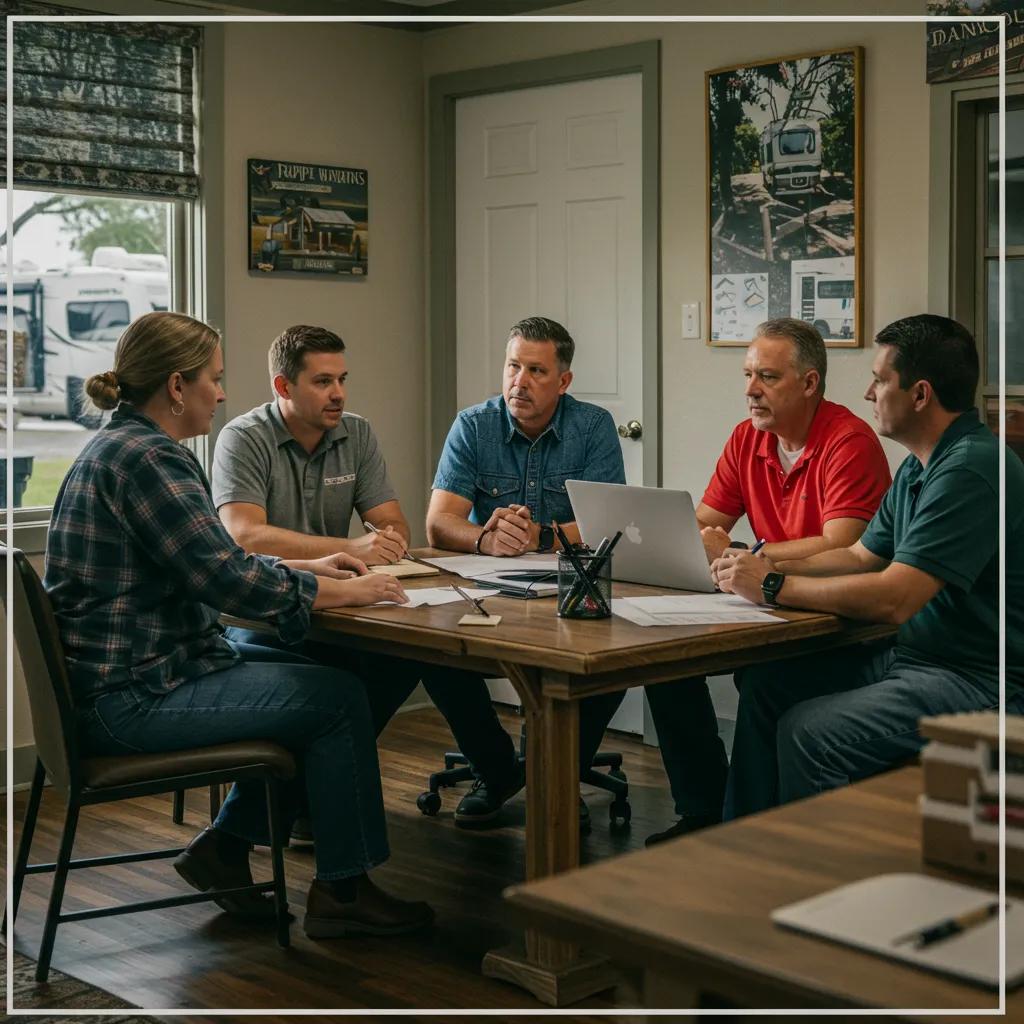
Selling directly to a family-owned buyer often leads to a more private, quicker, and legacy-conscious transaction compared to a public, brokered sale. The benefits include saving on or avoiding broker commissions, more confidential negotiations, a potentially faster timeline, and the chance to structure a transition that keeps staff and community relationships intact. These direct sales also allow for customized reinvestment plans and stewardship commitments that institutional buyers might not prioritize. The following sections explain how family-owned buyers preserve legacy, compare different acquisition paths, and show why a thoughtful transition benefits both sellers and their communities.
How Does GatherGrounds Resorts Preserve Your Campground’s Legacy?
GatherGrounds Resorts is committed to preserving the “heart and soul” and legacy of the properties they acquire by maintaining family values and community continuity. As a family-owned company focused on buying and operating campgrounds and RV parks, primarily in the Upper Midwest, GatherGrounds seeks out properties where upholding traditions and local relationships is important. Properties like Walnut Hills Family Campground (Durand, Michigan), Ridge Ranch Campground (Newton Falls, Ohio), and The Oaks Campground (Munith, Michigan) serve as great examples of their dedication to legacy preservation through steady operational stewardship and community-focused transition planning.
After discussing the advantages of family-owned buyers, we want to highlight that our Campground Acquisition Service and Sell Your Campground to GatherGrounds Resorts offerings provide a direct acquisition path for owners looking for a thoughtful transition and legacy preservation, especially for properties with 130+ sites.
Why Choose Direct Acquisition Over Traditional Campground Brokers?
Direct acquisition means avoiding public listings and the marketing cycles driven by brokers, potentially saving you commission fees and speeding up negotiations. Sellers who value confidentiality and a controlled handover often prefer direct buyers because they can start due diligence right away and present structured offers without broad market exposure. While brokered sales might achieve a higher purchase price through wider exposure, the trade-off is between maximizing price and gaining privacy, speed, and tailored transitions. Your decision should weigh your priorities and timeline against your revenue-maximization goals.
What Makes a Family-Owned Buyer Different from Large Investment Firms?
Family-owned buyers typically focus on stewardship and long-term operational continuity rather than quick asset flipping or aggressive cost-cutting, which leads to different decisions after the sale. They often invest in keeping staff, maintaining guest experience traditions, and reinvesting in property amenities to preserve value and community ties. In contrast, large investment firms may prioritize portfolio returns and shorter-term yield strategies. For sellers who are focused on legacy and community, a family-owned buyer can offer alignment that protects the property’s character and local relationships, ensuring a smoother handover.
How Does a Thoughtful Transition Benefit Sellers and Communities?
A thoughtful transition preserves institutional knowledge and community goodwill by prioritizing staff retention, phased management handoffs, and clear communication plans for all stakeholders. Sellers benefit from reduced reputational risk and often a less emotionally taxing sale, while communities and staff maintain continuity of service and operations. Thoughtful transitions can include short-term training support, public messaging strategies to reassure regular guests, and commitments to reinvest in facilities to maintain or upgrade them. All of these actions support long-term value preservation after the transfer.
How to Prepare Your Campground for a Successful Sale: Essential Checklist
Getting ready beforehand boosts buyer confidence and shortens the due diligence period, increasing your chances of getting favorable offers. A systematic checklist covers financial documentation, prioritized maintenance, operational improvements to boost NOI, and legal/regulatory confirmations. You should prepare clear P&L statements, occupancy histories, repair logs, and confirm zoning and utility compliance. The following sections detail the crucial documents, maintenance priorities, operational levers, and legal items you need to address before marketing your property.
Which Financial Documents Should You Organize Before Selling?
Gather multi-year Profit & Loss statements, tax returns, detailed operating expense ledgers, and occupancy and reservation histories to back up your revenue claims. Also, prepare records for ancillary income (store, rentals, special programs), payroll and staffing details, and any capital expenditure records. Having clean financials reduces buyer requests during diligence and supports your modeled NOI, enabling accurate per-site and income-based valuation comparisons. Presenting well-organized financials shows professionalism and speeds up the offer process.
How Can Property Maintenance Impact Your Sale Price?
Deferred maintenance can lower buyer confidence and often leads to lower offers or contingencies. Conversely, targeted repairs improve perceived value and reduce negotiation friction. Prioritize visible safety items, the integrity of your roof and septic systems, electrical and water systems, and campground roads. Quick fixes—like fresh paint, cleaned bathhouses, or repaired signage—make a big impression on buyers for relatively low cost. Larger capital projects should be disclosed and factored into pricing. A prioritized maintenance plan helps you allocate limited funds to the items that will most positively influence buyer perception and price.
What Operational Improvements Maximize Campground Value?
Operational levers that increase NOI and buyer appeal include dynamic rate management, diversified ancillary income (equipment rentals, packaged experiences), and optimizing your reservation system for convenience and upselling. Investing in staff training and consistent service quality boosts guest satisfaction and repeat bookings, which in turn increases occupancy metrics used in valuation. Small changes—like improving online booking conversion, adding high-margin services, and documenting repeat-guest behavior—translate into measurable NOI gains that buyers recognize and value during negotiations.
How to Address Legal and Regulatory Requirements Before Selling?
Confirm your zoning and conditional use permits, validate septic and water system compliance, and gather lease agreements and utility contracts for buyer review. Addressing title issues, environmental reports, and any encumbrances early on will reduce transaction delays. Bring in specialized advisors when needed—such as land-use attorneys or engineering consultants—to resolve complex issues before listing. Preparing a legal/regulatory binder for due diligence expedites offers and minimizes renegotiation later in the process.
After you’ve prepared your financials and operational documents, you can request a confidential review. GatherGrounds Resorts offers a Campground Acquisition Service that can review your prepared financials and discuss a no-pressure inquiry for owners ready to sell, focusing the conversation on thoughtful transition options.
What Is the Step-by-Step Process to Sell Your RV Park to GatherGrounds Resorts?
Selling directly to a family-owned buyer follows a discreet, structured process that prioritizes confidentiality and operational continuity. The typical stages include an initial confidential inquiry, document and financial review, an on-site assessment and due diligence, offer and negotiation, and finally, closing coordination and transition planning. Below are the practical steps owners can expect when engaging with a family-owned acquirer, illustrated with the specific process GatherGrounds Resorts follows for your information.
How Do You Initiate Contact and Inquiry?
Start by providing a confidential property summary that includes the site count, a basic list of amenities, recent annual revenue and NOI, and a brief description of the location and zoning. If you’re reaching out directly to GatherGrounds Resorts through our Sell Your Campground to GatherGrounds Resorts offering, present a concise property packet and clearly state your confidentiality expectations. The buyer will typically respond with a non-disclosure agreement and a timeline for their initial review. Initial responses and follow-up discussions usually happen within a short, defined window to respect your timing and privacy. Preparing a succinct summary will speed up the preliminary evaluation.
What Happens During the Valuation and Offer Stage?
Following an initial review, the buyer will request supporting financial documents to build a preliminary valuation model using NOI, comparable per-site metrics, and market cap-rate assumptions. A prospective buyer will typically conduct a site visit to assess the condition and operations, then present a non-binding offer structure detailing the price, contingencies, and proposed timelines. Negotiation will focus on aligning valuation assumptions, addressing any material issues found during inspection, and agreeing on transitional terms that reflect stewardship priorities. Clear documentation and transparent communication from you, the seller, will expedite this stage.
How Is the Sale Closed and Ownership Transferred?
Closing involves standard procedures: signing purchase agreements, coordinating escrow and title transfer, resolving any lien or permit issues, and finalizing financial settlement. The timeline from signing the purchase agreement to closing can vary depending on financing, title work, and regulatory clearances, but a streamlined direct acquisition can often compress this timeline compared to market-wide brokered sales. You should coordinate with your legal and tax advisors to structure the transfer in line with your financial goals. Effective coordination of advisors and early resolution of title or permit items will help maintain the agreed-upon closing schedule.
What Support Does GatherGrounds Provide After the Sale?
Post-sale transition support often includes phased operational handoffs, staff retention plans, and immediate reinvestment in high-priority maintenance items to stabilize the guest experience. GatherGrounds Resorts is committed to stewardship, which includes operational continuity and community communication to protect the property’s guest base and local relationships. This support minimizes operational disruption and helps preserve goodwill with staff and local stakeholders, benefiting both your reputation as a seller and the long-term performance of the property under new ownership.
How Can You Maximize Your Campground’s Value Before Selling?
Targeted capital improvements, operational refinements, and clearer market positioning can significantly increase buyer interest and the achievable sale price. Focus on upgrades with a high ROI, strategies to stabilize and increase occupancy, and branding that highlights unique guest experiences. The following sections list amenity investments that attract premium buyers, explain how occupancy improvements multiply into NOI and value, and detail positioning tactics to differentiate your property in the marketplace.
What Upgrades and Amenities Attract Higher Offers?
Buyers are willing to pay more for amenities that increase per-stay revenue and guest satisfaction. This includes modernized bathhouses, full hook-ups, upgraded electrical capacity, and glamping or cabin units that command higher average daily rates (ADRs). Infrastructure investments that reduce operating headaches—like reliable water/sewer systems and improved access roads—also boost buyer confidence. Prioritize upgrades that either directly increase revenue or reduce maintenance burden to demonstrate immediate NOI uplift to buyers and justify higher per-site values.
Introductory table: Cost/time-to-implement and estimated uplift for common upgrades.
How Does Improving Occupancy Rates Affect Sale Price?
Increasing occupancy directly boosts gross revenue and, consequently, NOI, which translates directly into a higher income-cap valuation. For example, raising average occupancy by 5 percentage points on a property with a stable ADR can generate an outsized NOI uplift that, when capitalized, yields a significant increase in value. Strategies to boost occupancy include targeted off-season promotions, partnerships with local attractions, and loyalty programs. Demonstrating a consistent multi-year trend of occupancy improvement strengthens buyer confidence in revenue predictability and supports lower cap-rate assumptions.
What Role Does Market Positioning Play in Maximizing Value?
Positioning your campground with a clear niche—whether it’s family-friendly, resort-style, an adventure basecamp, or a glamping destination—helps attract buyers targeting that specific guest profile and supports premium pricing. Enhancing guest experience metrics, maintaining consistent branding, and showcasing local partnerships or events signal defensible demand. Clear positioning also simplifies comparables for buyers and brokers, leading to a tighter valuation narrative and reducing perceived market risk. Documenting your brand positioning and marketing performance aids buyer due diligence and supports a stronger asking price.
Do You Need a Broker to Sell Your Campground? Exploring Your Selling Options
Deciding between a brokered sale, a direct sale to a buyer, or a hybrid approach depends on your priorities, such as market exposure, timeline, confidentiality, and legacy preservation. Brokers offer market reach and can stimulate competitive bidding, but they typically charge commissions and may require public listings. Direct buyers provide privacy, speed, and control over the transition, but might result in narrower price competition. The sections below examine the pros and cons of using brokers, compare a direct sale to GatherGrounds Resorts, and offer a decision framework to guide you.
What Are the Pros and Cons of Using Campground Brokers?
Brokers provide broad market exposure and expertise in packaging assets to attract competitive buyers, often leading to a higher final sale price despite commission fees. The downsides include public listings that can affect staff and guest perceptions, marketing timelines that can stretch for months, and commission costs that reduce your net proceeds. If you’re seeking the maximum price and are comfortable with an open market process, brokers offer value. However, if you prioritize privacy, speed, or legacy-focused outcomes, direct buyers might be preferable. Evaluate the complexity of your sale and your desired outcome when choosing representation.
Introductory table: Comparison of selling options, timelines, and fees.
How Does Selling Directly to GatherGrounds Resorts Compare?
Selling directly to GatherGrounds Resorts positions you with a family-owned buyer that emphasizes thoughtful transitions and legacy preservation, often enabling a more private and expedited process. Compared to brokerage-led public listings, a direct sale to a family buyer typically shortens the timeline, reduces exposure, and focuses negotiations on operational continuity. Price expectations can vary—direct sales can be competitive where alignment on stewardship and speed is valued—so you should assess whether your privacy and legacy goals outweigh the potential price uplift from a broad market auction.
When Is It Beneficial to Use a Broker Versus a Direct Buyer?
Consider using a broker if your property is in a high-demand area where competitive bidding can significantly increase the sale price, if the asset is complex or requires wide exposure to attract specialized buyers, or if maximizing net price is your primary objective. Choose a direct buyer when confidentiality, a thoughtful ownership transition, and a faster closing are most important—especially if you prioritize legacy preservation over chasing marginal price gains. Hybrid approaches can also work: initiate discreet buyer conversations while engaging a broker to gauge market appetite if initial direct negotiations don’t align with your goals.
How to Preserve Your Campground’s Legacy When Selling: Commitment to Community and Family Values
Preserving legacy means protecting the defining character of a campground—its traditions, staff relationships, and guest expectations—after ownership changes. Practical legacy commitments include staff retention plans, community outreach, and operational reinvestment to maintain the guest experience. Buyers can formalize these through transition agreements and documented stewardship plans. The following sections define legacy preservation concretely, describe GatherGrounds’ approach to continuity, and list past examples.
What Does Legacy Preservation Mean in Campground Sales?
Legacy preservation involves maintaining the property’s cultural identity, operating rhythms, and relationships with regular guests and local stakeholders. It includes commitments to retain key staff, continue signature events, and protect physical features that embody the campground’s character. Formalizing these elements in transition plans mitigates community disruption and preserves goodwill, which often supports sustained revenue post-sale. You should negotiate specific stewardship commitments and phased handover plans to ensure legacy elements are honored.
How Does GatherGrounds Ensure Continuity of Family Values?
GatherGrounds Resorts follows a family-owned stewardship approach that prioritizes maintaining the “heart and soul” of properties and supporting operational continuity. Their stated commitments focus on preserving family values, protecting the guest experience, and engaging with local communities to maintain traditions. This approach typically translates into operational decisions that favor staff continuity, measured reinvestment in amenities, and communication plans that reassure guests and neighbors during ownership transitions.
What Are Examples of Successful Legacy Preservation in Past Acquisitions?
Examples cited with this approach include Walnut Hills Family Campground, Ridge Ranch Campground, and The Oaks Campground, all named as properties where continuity and family-oriented stewardship have been emphasized. These examples illustrate how a family-owned buyer can maintain staff relationships, preserve guest programs, and invest selectively to sustain the property’s character. Sharing these outcomes helps sellers evaluate whether a buyer’s stewardship claims align with their legacy preservation priorities.
Frequently Asked Questions
What Should I Consider When Choosing Between a Broker and a Direct Sale?
When deciding between a broker and a direct sale, consider your priorities such as privacy, timeline, and potential sale price. Brokers can provide broader market exposure and may attract competitive bids, potentially increasing the sale price. However, they often charge commissions and require public listings. In contrast, a direct sale offers confidentiality and a quicker process, but may limit the number of potential buyers. Assessing your goals will help you choose the best option for your situation.
How Can I Improve My Campground’s Appeal Before Selling?
Enhancing your campground’s appeal can significantly impact its sale price. Focus on upgrading amenities that attract guests, such as modern bathhouses, full hookups, and unique lodging options like glamping units. Additionally, improving operational efficiency and guest experience can lead to higher occupancy rates, which in turn boosts your Net Operating Income (NOI). A well-maintained property with attractive features will appeal to buyers and justify a higher asking price.
What Are the Key Steps in the Due Diligence Process for Buyers?
The due diligence process for buyers typically involves several key steps. Buyers will review financial documents, including Profit & Loss statements and occupancy histories, to assess the property’s performance. They will also conduct site visits to evaluate the condition of the campground and its amenities. Additionally, buyers may verify compliance with zoning laws and environmental regulations. This thorough examination helps buyers make informed decisions and negotiate terms effectively.
How Can I Ensure a Smooth Transition for Staff and Guests After the Sale?
To ensure a smooth transition for staff and guests, consider implementing a detailed transition plan that includes staff retention strategies and clear communication with guests. Engaging with employees about the changes and maintaining key staff can help preserve operational continuity. Additionally, informing guests about the new ownership and any planned improvements can reassure them and maintain loyalty. A thoughtful approach to transition can enhance the property’s reputation and long-term success.
What Are the Benefits of Selling to a Family-Owned Buyer?
Selling to a family-owned buyer often provides several advantages, including a more personalized approach to the transaction. Family-owned buyers typically prioritize legacy preservation and community continuity, which can lead to a smoother transition for staff and guests. They may also offer more flexible terms and a quicker closing process compared to institutional buyers. This alignment on values can help ensure that the campground’s character and traditions are maintained post-sale.
How Do I Prepare for a Successful Sale?
Preparing for a successful sale involves several critical steps. Start by organizing your financial documents, including multi-year Profit & Loss statements and occupancy records. Next, address any maintenance issues to enhance the property’s appeal. Additionally, consider operational improvements that can increase your NOI. Finally, develop a clear marketing strategy that highlights the campground’s unique features and strengths to attract potential buyers effectively.
What Should I Expect During the Closing Process?
The closing process typically involves several standard steps, including executing purchase agreements, coordinating escrow, and transferring title. Both parties will need to resolve any outstanding issues, such as liens or permit requirements, before finalizing the sale. The timeline for closing can vary based on financing and regulatory clearances, but a direct sale often allows for a quicker process. It’s essential to work closely with legal and financial advisors to ensure a smooth transition.
How Do I Sell My RV Park Without a Broker?
You can sell your park without a broker by preparing thorough documentation, creating a concise property summary, and identifying direct buyers or private investors for confidential outreach. The steps involve organizing multi-year financials, preparing an inventory of your site and amenities, securing zoning and permit records, and engaging legal and tax advisors to structure the transaction. Contacting family-owned buyers or specialized acquirers directly allows for private negotiations; maintain confidentiality through non-disclosure agreements and controlled data-room access during due diligence.
What Documents Are Needed to Sell a Campground?
Essential documents include Profit & Loss statements, tax returns for multiple years, occupancy and reservation histories, capital expenditure records, leases and vendor contracts, permits and utility agreements, and as-built site maps. Providing a well-organized document package streamlines due diligence and allows buyers to model NOI and verify revenue streams quickly. Clear documentation minimizes renegotiation risk and speeds up the valuation and offer process.
How Long Does the RV Park Selling Process Usually Take?
The timeline varies depending on the route: brokered sales often take 6–12 months from listing to closing, while a direct sale to a committed buyer can be completed in 2–6 months, depending on the depth of due diligence, financing, and legal clearances. Factors that can lengthen timelines include complex title or environmental issues, financing needs, or required regulatory approvals. Early preparation of documents and proactively addressing legal or operational issues can reduce delays and compress the closing schedule.
How Is the Fair Market Value Determined for My Campground?
Fair market value is determined using income-based approaches (NOI divided by market cap rate), per-site comparables, and adjustments for site count, amenities, and location. Buyers build valuation models from historical financials and market cap-rate benchmarks, then cross-check using recent comparable sales and per-site metrics. Presenting accurate NOI, documented occupancy history, and a list of comparable local sales helps buyers and sellers converge on a defensible fair market value.
- Prepare: Assemble your financials and a property summary.
- Evaluate: Use NOI and per-site benchmarks to estimate value.
- Decide: Choose between brokered exposure or a direct sale based on your priorities.
These steps will help you proceed with clarity as you prepare to market or confidentially negotiate an RV park sale.
Conclusion
Successfully selling your RV park means understanding market trends, accurately valuing your property, and preparing for a smooth transition. By using strategies that focus on operational improvements and community continuity, you can maximize your campground’s value while preserving its legacy. Consider exploring direct acquisition options with family-owned buyers who appreciate thoughtful transitions and long-term stewardship. Take the first step toward a successful sale by reaching out to GatherGrounds Resorts today.