Key Features to Look For When Selecting Campgrounds for Your Group Adventure
Gathering together for a group camping trip creates opportunities for shared experiences. The right campground can make those moments comfortable, safe, and truly unforgettable. This guide will walk you through what group camping entails and why focusing on campground features—like sanitation, capacity, and on-site utilities—can significantly smooth out logistical challenges and boost everyone’s enjoyment, whether you’re planning for families, multi-generational reunions, or organized clubs. You’ll discover which amenities are most crucial, how to use a simple checklist to evaluate sites, how to compare Michigan options with a local example, and a step-by-step timeline for reservations and on-site coordination. The advice here combines practical evaluation criteria, concise comparison tables, and ready-to-use lists, empowering group leaders to make confident decisions about group camping amenities and reservation strategies. By the end, you’ll have a clear set of prioritized features for comparing campgrounds and actionable next steps for booking and organizing your adventure.
What Group Camping Amenities Are Most Important for a Successful Trip?
Group camping amenities are the physical features and services that directly impact comfort, logistics, and safety when multiple people share a site; they work by reducing individual coordination efforts and providing centralized resources. Prioritized amenities improve hygiene, accommodate large gatherings, and support diverse gear types, leading to smoother arrivals, fewer conflicts, and more time for activities. Below is a prioritized list of the most impactful amenities, followed by a compact comparison table to help you quickly rate prospective campgrounds.
The following amenities are essential for group leaders to prioritize before booking.
- Sanitation Facilities: Clean restrooms and showers with scheduled maintenance reduce illness risk and enhance comfort.
- Reserveable Group Sites: Dedicated pavilions and group loops maintain cohesion and simplify meal planning.
- Utilities and Hookups: Water, electric hookups, and dump stations accommodate mixed RV and tent groups.
- Safety Infrastructure: Lighting, ranger presence, and clear emergency access enable faster response.
- Family Conveniences: Playgrounds, laundry facilities, and kitchen shelters make multi-generational stays more feasible.
These prioritized amenities clarify what to assess when comparing campgrounds and point directly to the specific site attributes shown in the table below.
This quick comparison helps prioritize inspections on campground maps and photos before you call to confirm availability and rules.
Which Facilities Support Large Groups and Families?
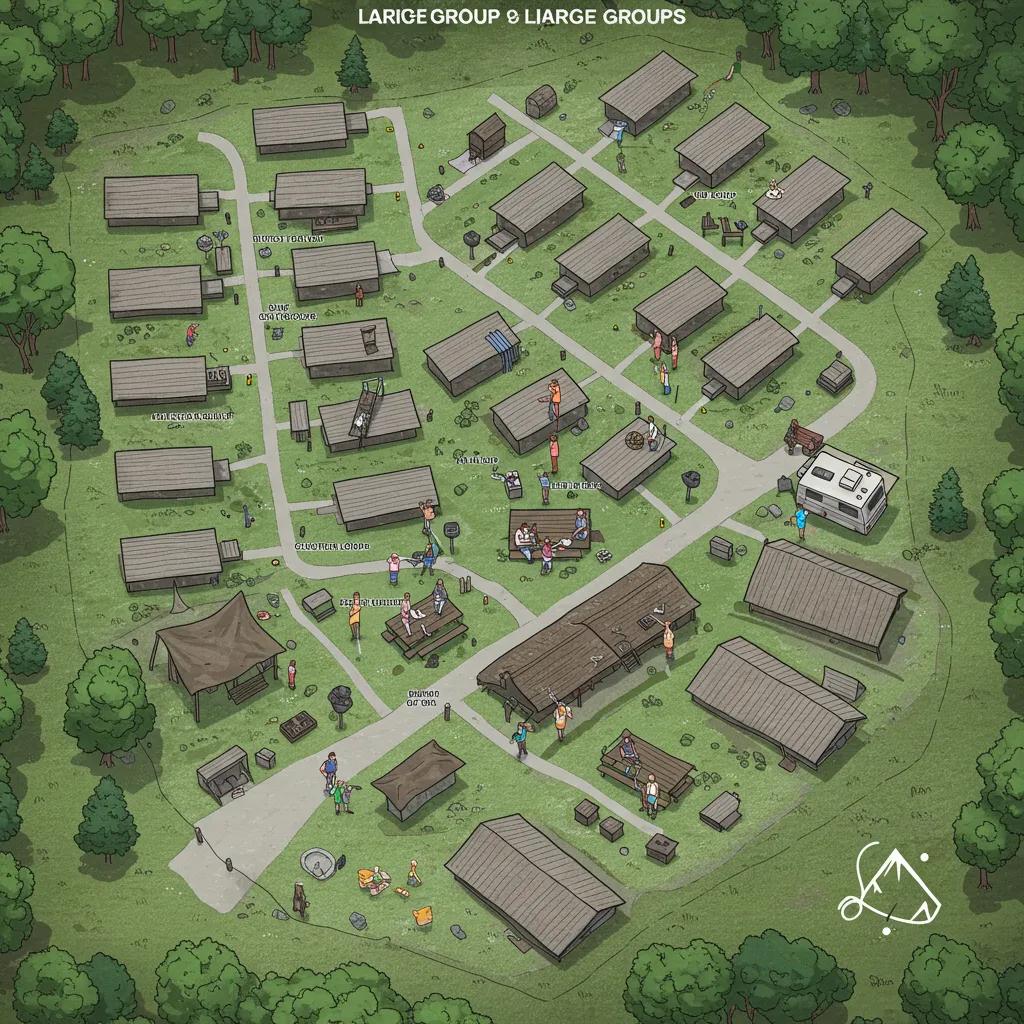
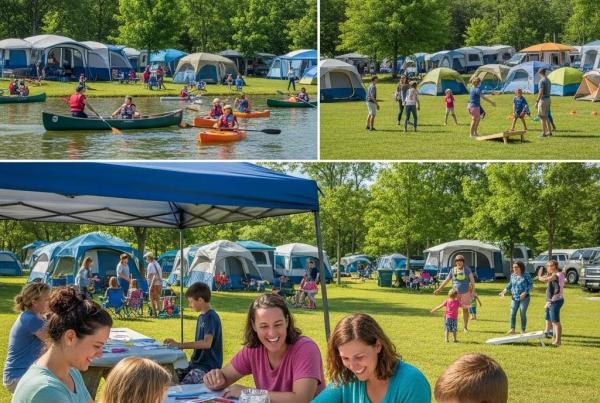
Facilities that support large groups include reservable pavilions, group loops with clustered sites, and spacious pull-through RV sites that allow trailers to park without obstructing roadways.
These facilities work by centralizing shared needs—cooking, seating, and sheltered activities—which reduces repetitive setup and cleanup tasks for each family.
Capacity guidance typically ranges from small group sites for 12–25 people to larger pavilions or group camps that accommodate 50–100 people; always confirm exact limits with the campground.
When choosing between RV group sites and tent group areas, consider parking for trailers and nearby restroom access to match gear and mobility requirements.
Checking the campground map and inquiring about site separation ensures families maintain privacy while preserving group cohesion.
How Do Shared Amenities Enhance Group Camping Experiences?
Shared amenities—like playgrounds, community kitchens, and activity fields—enable programmed activities and casual socializing without requiring each household to supply everything.
They enhance experiences by creating natural gathering points for meals, games, and supervised children’s play, which simplifies schedules and increases participation.
To leverage shared resources, plan activity times and reserve resource slots if the campground requires scheduling; this avoids conflicts and guarantees space for group events.
Always verify rules for shared spaces, such as quiet hours or reservation windows, so your group can coordinate activities without surprising other campers.
How to Evaluate Campground Selection Criteria for Group Camping?
Evaluating campground selection criteria for group camping means applying a consistent checklist that weighs safety, logistics, policies, and accessibility to produce a ranked short-list of suitable sites. This framework reduces subjective decisions and highlights practical trade-offs like convenience versus seclusion or hookups versus cost. Use the checklist and comparison table below to score campgrounds on objective attributes and to identify deal-breakers before making reservations.
Start with these evaluative checkpoints when comparing options.
- Safety & Emergency Access: Confirm ranger availability, cell coverage, and vehicular access for emergencies.
- Site Logistics: Inspect trailer parking, site layout, and proximity of restrooms to group loops.
- Rules & Policies: Verify group size limits, pavilion reservation rules, and pet/noise policies.
- Cost & Reservation Terms: Review deposit, cancellation, and minimum-night requirements.
- Accessibility: Check for ADA-accessible sites, ramps, and restroom features for multi-generational needs.
Use the table below to compare common site types by capacity and utilities to match your group composition.
This comparison clarifies which site types best match your group’s gear mix and mobility requirements, making the reservation conversation with campground staff more efficient.
What Safety and Accessibility Features Should You Look For?
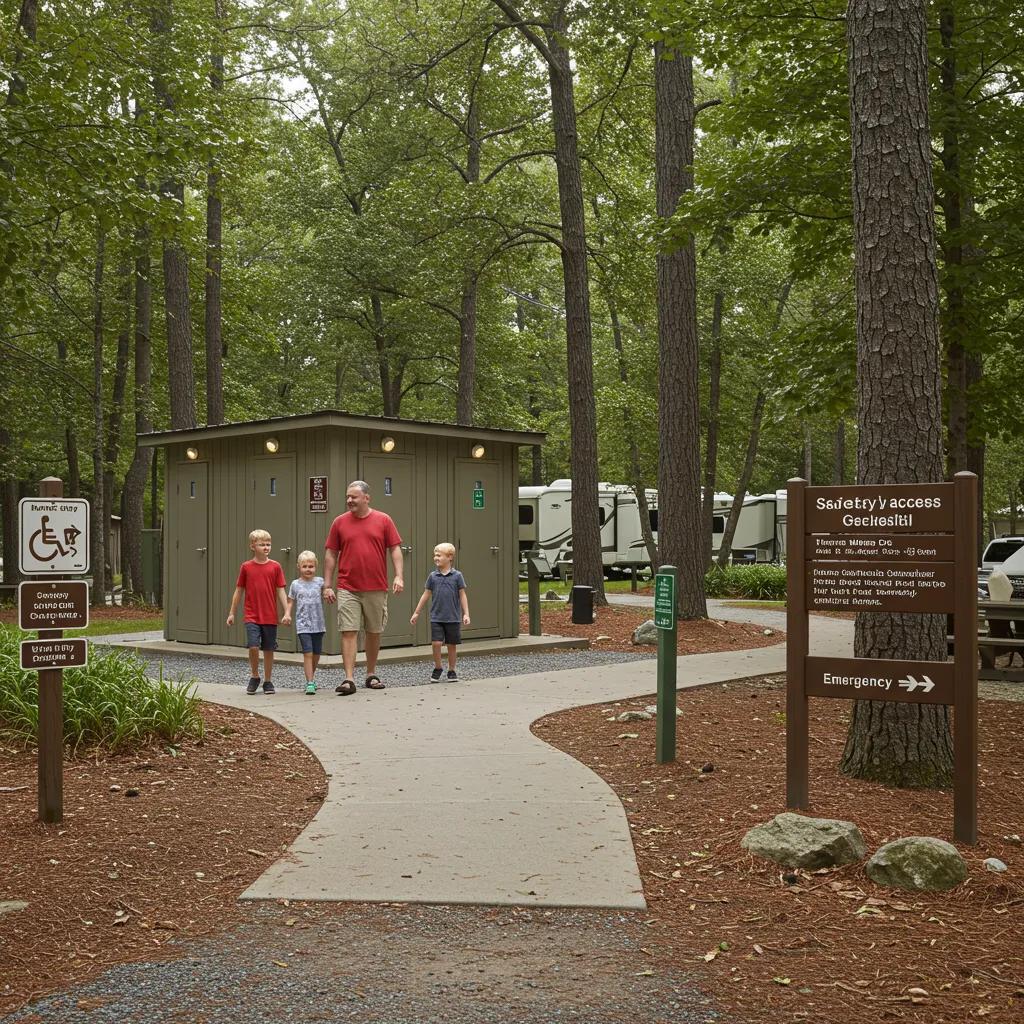
Key safety and accessibility features include ADA-accessible campsites and restrooms, clear signage and pathways, well-lit common areas, and reliable emergency vehicle access.
These features reduce the logistical burden of caring for older adults, children, or campers with mobility needs and provide peace of mind should medical issues arise.
Verify that designated accessible sites meet ADA criteria and that paths between sites and facilities are paved or otherwise manageable for mobility aids.
Lastly, request emergency contact procedures and staff presence levels; knowing these details enables you to create an effective on-site safety plan for the group.
How Does Location Impact Group Camping Planning?
Location affects travel time, attendee availability, and the range of off-site services and attractions that support group activities, such as grocery stores or medical facilities.
Choosing a location balances convenience—shorter drives and nearby supplies—against the benefits of seclusion, such as privacy for large gatherings and easier fire/permission management.
Consider seasonal weather patterns and road access for trailers; remote sites can be inaccessible in shoulder seasons.
Use the location decision as a filter: remove options that impose excessive travel time or lack critical nearby services for large groups.
What Are the Best Campgrounds for Groups in Michigan?
Finding the best campgrounds for groups in Michigan requires adapting general criteria to regional conditions, such as state-park reservation systems, lake access, and seasonal demand; apply the same checklist while paying attention to local booking windows and map details.
Michigan offers a mix of state parks, private family campgrounds, and resort-style properties—each has typical strengths and trade-offs for group stays.
The mini-grid below is a template you can use to compare sample Michigan campgrounds by the amenities that matter to groups.
As a practical, non-promotional example of how to record local options, note an option such as Walnut Hills Family Campground by GatherGrounds and list its features and reservation notes when comparing sites. Use campground maps and recent site photos to confirm group layout and pavilion locations before contacting staff for policy specifics.
Which Michigan Campgrounds Offer the Best Group Amenities?
State parks often provide scenic group pavilions and trail access, while private family campgrounds typically offer playgrounds, laundry, and central activity areas that reduce coordination work for families.
Resort-style campgrounds can supply full hookups and programmed activities that appeal to multi-generational groups.
When evaluating any Michigan campground, check the reservation system for group site blocks and view site maps to confirm how close restrooms and parking are to your proposed group loop.
Contact the campground to clarify pavilion reservation fees and any group-specific rules.
How to Compare Group Camping Options in Michigan?
Compare options using a simple scoring rubric: capacity (1–5), amenities (1–5), convenience (1–5), and cost/policies (1–5); total scores help rank choices objectively.
Use the EAV-style template below to document findings and copy it for each candidate campground.
Always ask specifically about group-site deposit rules and cancellation windows to avoid surprises during peak seasons.
For online availability and official operational details, check each campground’s official website and Google Business Profile while recording the date you checked.
This scoring method converts subjective impressions into actionable comparisons that guide the booking decision.
How Can You Plan a Group Camping Trip Effectively?
Effective group camping planning is a stepwise process that coordinates needs, assigns roles, secures reservations, and prepares contingencies; following clear steps reduces last-minute confusion and spreads workload across leaders.
Begin with a survey of attendees, then confirm site type and reserve with a clear deposit policy. The numbered plan below provides a straightforward timeline to follow from initial interest to post-trip wrap-up.
- Survey Attendees: Collect numbers, gear types (RV or tent), dietary needs, and mobility constraints.
- Shortlist Sites: Use the scoring rubric and site maps to narrow options to two top choices.
- Reserve Early: Book group sites or pavilions with deposits to lock dates and confirm cancellation terms.
- Assign Roles: Designate leads for food, safety, setup, and child supervision to distribute tasks.
- Pack & Share Lists: Create shared packing lists and gear rosters to avoid duplication.
- Plan Activities: Schedule group events and reserve shared amenities where required.
- Confirm & Communicate: Reconfirm reservations and share an arrival plan with all attendees.
What Are the Key Steps in Organizing Group Camping Adventures?
Organizing a group camping trip requires clear task allocation, a timeline for reservations, and shared packing and safety plans that account for diverse needs.
Start with an attendee survey to collect essentials, then reserve the appropriate site type and confirm group policies.
Assign leaders for logistics like food, medical kit management, and activity coordination to avoid single-person overload.
Create and distribute a final meeting plan with arrival times, site layout, and contingency options for weather or cancellations.
How Do Group Size and Needs Influence Campground Choice?
Group size and composition determine the ideal site type: small family groups may fit in clustered tent sites, multi-family reunions benefit from pavilions and nearby restrooms, and large organized groups often need dedicated group loops or multiple adjacent sites.
Mixed-gear groups require sites with parking for trailers plus tent space; accessibility needs steer you toward ADA-designated sites with paved paths.
Match the site to the most vulnerable group members—for example, choose sites with minimal walking distances for seniors and close restroom access for families with small children.
Which Family Campground Features Make Group Camping Enjoyable?
Family campgrounds should offer these conveniences to enhance enjoyment.
- Playgrounds & Supervised Activities: Structured programs engage children while adults manage setup.
- Swimming & Fishing Access: Safe water recreation with posted rules increases appeal for families.
- Laundry & On-site Store: Practical services reduce packing burden and provide emergency supplies.
- Family Restrooms & Quiet Areas: Designated family facilities make multi-generational stays manageable.
These features, combined with clear rules about supervision and lifeguarded hours where applicable, support safe, enjoyable group experiences and simplify day-to-day coordination.
What Recreational Activities Are Essential for Family Groups?
Recreational activities that work across ages include nature walks, picnics, swimming with lifeguard windows, and low-difficulty trail options; these activities promote inclusion and minimize the need for specialized equipment.
Schedule activities during daylight and confirm any required permits or sign-ups in advance.
Checking facility availability and posted safety rules ensures activities run smoothly and keeps younger participants engaged.
How Do Campground Services Cater to Multi-Generational Groups?
Campground services such as family restrooms, on-site stores, and medical-proximity information reduce friction for older adults and caregivers, while scheduled programs and accessible paths help children and seniors participate equally.
Confirm ADA features and request accommodations in advance when needed.
For up-to-date availability and to book group sites, consider checking a campground’s official website or its Google Business Profile and record the confirmation details for your group; one local example to reference during comparisons is Walnut Hills Family Campground by GatherGrounds.
Frequently Asked Questions
What should I consider when planning meals for a group camping trip?
When planning meals for a group camping trip, consider dietary restrictions, cooking facilities, and meal prep logistics. Create a menu that accommodates various preferences and allergies, and opt for easy-to-cook meals that require minimal equipment. Assign cooking duties to different group members to distribute the workload. Additionally, plan for food storage and transportation, ensuring you have coolers or containers to keep perishables fresh. Finally, consider bringing along some pre-prepared meals to simplify cooking during your trip.
How can I ensure everyone stays safe during the camping trip?
To ensure safety during your camping trip, establish clear communication about emergency procedures and designate a first aid officer among the group. Familiarize everyone with the campground layout, including the locations of restrooms, emergency exits, and ranger stations. Carry a well-stocked first aid kit and ensure that all group members know how to use it. Additionally, set rules for campfire safety, wildlife encounters, and general campsite behavior to minimize risks and promote a safe environment for all attendees.
What are the best practices for setting up a campsite for a large group?
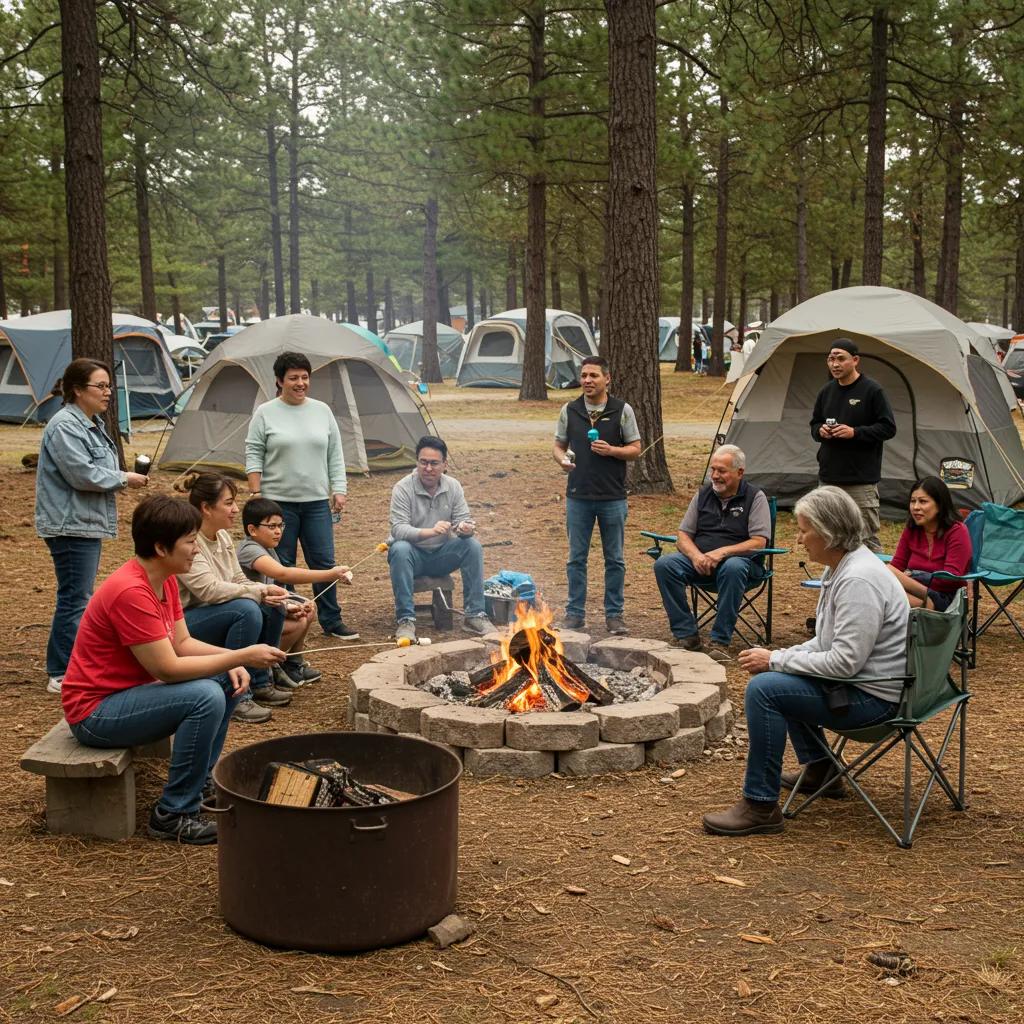
Setting up a campsite for a large group involves strategic planning and organization. First, designate specific areas for tents, cooking, and communal activities to avoid congestion. Use tarps or canopies to create sheltered spaces for cooking and gathering. Ensure that pathways between areas are clear and accessible. Assign roles for setup tasks, such as tent assembly and cooking area organization, to streamline the process. Finally, establish a communal area for meals and activities to foster interaction and cohesion among group members.
How can I manage group dynamics during a camping trip?
Managing group dynamics during a camping trip requires clear communication and flexibility. Start by setting expectations and guidelines for behavior, including respect for personal space and shared responsibilities. Encourage open discussions about preferences for activities and meal planning to ensure everyone feels included. Designate leaders for different aspects of the trip, such as cooking or activity planning, to distribute responsibilities. Lastly, be prepared to adapt plans based on group feedback and changing circumstances to maintain a positive atmosphere throughout the trip.
What should I do if the weather turns bad during our camping trip?
If the weather turns bad during your camping trip, prioritize safety and comfort. First, monitor weather updates to stay informed about conditions. If severe weather is expected, consider relocating to a more secure area or seeking shelter in a nearby building if available. Ensure that all group members are aware of emergency procedures and have access to rain gear and warm clothing. If conditions allow, engage in indoor activities or games to keep spirits high while waiting for the weather to improve.
How can I make the camping experience enjoyable for children?
To make the camping experience enjoyable for children, plan engaging activities that cater to their interests and energy levels. Incorporate nature walks, scavenger hunts, and arts and crafts using natural materials. Ensure that there are safe play areas and supervised activities to keep them entertained. Involve children in meal preparation and campsite setup to give them a sense of responsibility. Lastly, maintain a flexible schedule to accommodate their needs and allow for spontaneous fun, ensuring a memorable experience for the whole family.
Conclusion
Choosing the right campground for your group camping adventure ensures a comfortable and enjoyable experience, with essential amenities like sanitation, safety, and shared facilities enhancing your trip. By prioritizing these features, you can streamline logistics and create lasting memories for all attendees. Take the next step in planning your perfect getaway by exploring our curated list of top campgrounds tailored for groups. Start your adventure today and make the most of your time in nature!