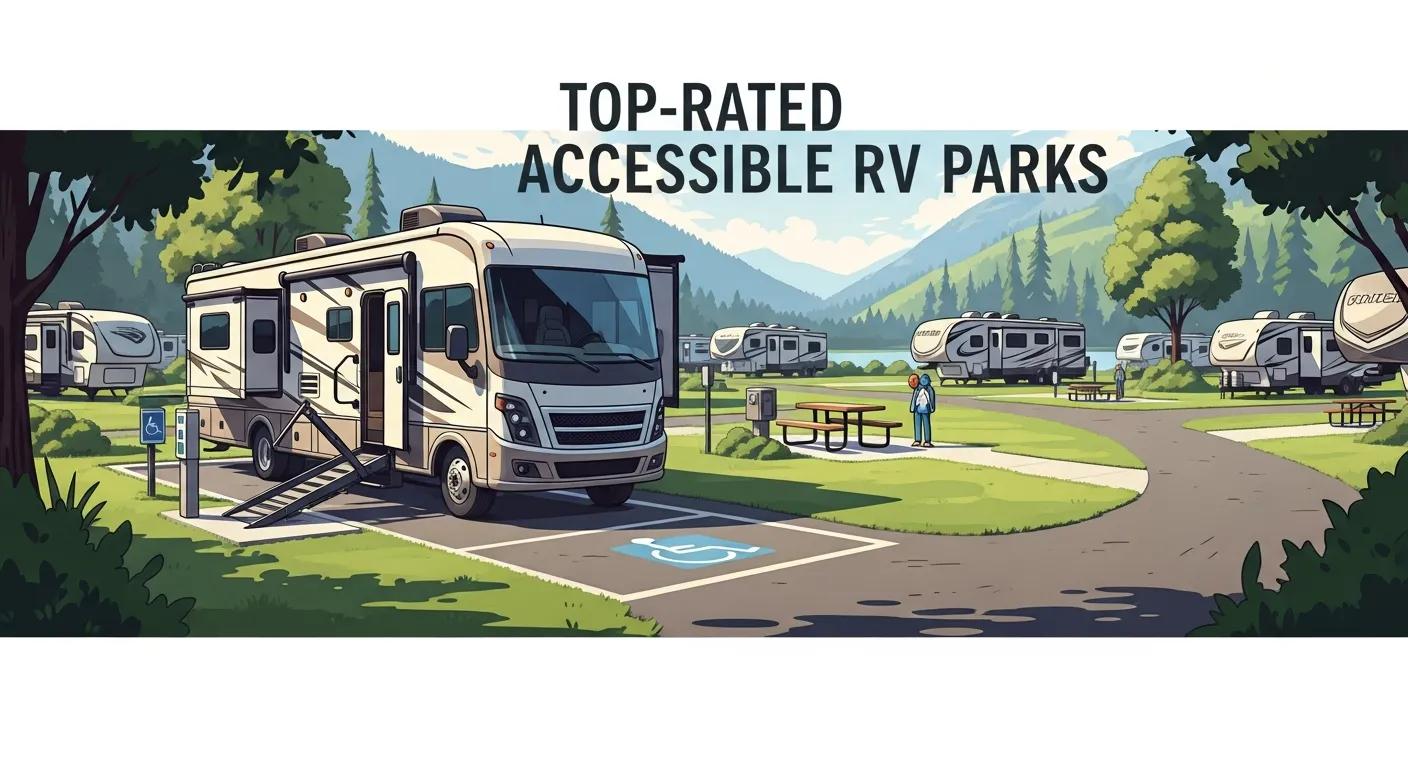
Top-Rated Accessible RV Parks
Accessible RV campgrounds are set up so people who use wheelchairs or other mobility devices — or anyone who needs level, firm surfaces and accessible services — can enjoy camping with dignity, safety, and independence. Reviews matter because they turn design and ADA claims into real experiences, showing whether paved pads, accessible hookups, roll‑in showers, and helpful staff actually work for guests with mobility needs. This guide explains what a truly accessible RV campground looks like, summarizes how reviewers describe successful stays, and points to regional options near Detroit, Ann Arbor, Jackson, Toledo, and Fort Wayne. You’ll get practical booking steps, checklist-style comparisons of accessible site features, and examples of inclusive activities — like accessible fishing and golf cart trails — that reviewers often single out as game‑changers. Keep reading to learn how to read accessibility from reviews, reserve ADA-friendly sites, see which amenities reviewers praise most, and where The Oaks Campground by GatherGrounds fits in the regional accessible camping scene.
What Makes an RV Campground Accessible and ADA Compliant?
An ADA-compliant RV campground meets design and service standards that let people with disabilities approach, enter, and use facilities safely and with reasonable independence. That mix includes built elements — level concrete pads, accessible hookup heights, adequate turning radii, and roll‑in showers — plus service elements like clear signage, paved walkways, and staff trained to assist. Together, these features remove the barriers reviewers most often call out.
The real benefit is everyday usability: an accessible site should let guests maneuver vehicles, connect utilities, and use restrooms and showers without unnecessary help.
Below is a compact checklist of core ADA concepts for campgrounds, followed by a simple comparison table that shows the items reviewers typically mention when judging accessibility.
The core accessibility checklist for RV campgrounds highlights the built and service features reviewers reference most.
- Level concrete or asphalt pads for safe transfers and steady lift operation.
- Accessible hookup points placed within reach from a wheelchair or transfer position.
- Paved routes from sites to restrooms, activity areas, and the office.
- Accessible restrooms and showers with roll‑in showers, grab bars, and turning room.
This table helps turn ADA concepts into the concrete items reviewers mention in positive posts. The following sections break down site attributes and restroom features so you can evaluate reviewer claims more easily.
Which Features Define Wheelchair Accessible RV Sites?
Wheelchair-accessible RV sites combine measured design and practical placement of utilities so mobility-device users can park, level, hook up, and move around without assistance. Key, measurable attributes include a firm, level pad wide enough for slide‑outs, a maneuvering area of roughly 60 inches for transfers and lifts, and hookups mounted at reachable heights with clear approaches. Reviewers often call out the difference between gravel pads and paved concrete — concrete stabilizes lifts and prevents wheels from sinking — and they note whether signage and designated parking made arrival straightforward. When you read reviews, give more weight to posts that name site numbers and pad types: those specifics are stronger evidence than vague praise and help you ask the right booking questions.
How Do Accessible Restrooms and Showers Enhance Camper Comfort?
Accessible restrooms and showers restore independence for bathing, dressing, and toileting without depending on others. Important features include roll‑in showers with handheld sprayers, well‑placed grab bars, fold‑down benches, accessible sink heights, and doors that allow a 32–36 inch clear opening for wheelchair approach and exit. Reviewers often praise clean, well‑maintained accessible restrooms more than generic amenities because hygiene, privacy, and functionality affect daily life. Watch reviews for comments about cleanliness, maintenance response times, and whether companion or family restrooms exist — those service notes usually predict whether the physical features are actually usable during a stay.
Where to Find Top Rated Accessible RV Resorts and Parks in Michigan
Finding wheelchair-friendly RV parks in Michigan starts with regional filters — distance from metro centers, accessibility highlights in listings, and reviewer mentions of specific features. Top-rated options near Detroit and Ann Arbor often pair city access with nature, while parks closer to Jackson, Toledo, and Fort Wayne tend to offer quieter sites and lake amenities reviewers call out for accessible recreation. Prioritize parks where multiple reviews cite level pads, accessible restrooms, and paved routes to amenities — consistent mentions like those are the best proxy for real accessibility. Below are typical nearby options and what reviewers say about each in terms of accessibility and travel time from major cities.
- Regional park A: Short drive from Detroit; reviewers note paved pads and close restrooms.
- Regional park B: Near Ann Arbor; praised for helpful staff and level hookups.
- Regional park C: Accessible trails and fishing platforms within a reasonable walk.
These examples show how reviewers put accessibility in context. The next subsection explains how The Oaks Campground compares and why we recommend it regionally.
What Are the Best Wheelchair Friendly RV Parks Near Detroit and Ann Arbor?
The best wheelchair-friendly RV parks near Detroit and Ann Arbor mix short drive times with accessibility features that guests consistently praise — level pads, reachable hookups, and paved paths to central amenities. Reviewers coming from those cities often report drive times under 90 minutes to the most convenient parks, and they stress reserving designated accessible sites in advance to guarantee the right pad and proximity to restrooms. Give preference to parks where several reviewers independently describe the same features — that corroboration signals dependable accessibility and makes planning weekend trips or day‑trip stays easier.
How Does The Oaks Campground Stand Out Among Handicap Friendly RV Camping Options in Michigan?
The Oaks Campground by GatherGrounds stands out in regional reviews by pairing family-friendly amenities with natural settings — a swimming lake with a sandy beach, a fishing pond, and a wide network of golf cart trails reviewers often praise for inclusive recreation. Its location makes it an easy drive from Detroit, Ann Arbor, Jackson, and nearby Ohio and Indiana cities. Planned additions like a Wibit water park in 2025 promise more family programming reviewers will likely assess for accessibility once it opens. If you’re reservation-minded, check site-specific reviews and the campground’s Google Business Profile to confirm accessible pads and restroom facilities before you book.
What Positive Reviews Say About Accessible Campgrounds for RV Trips
Positive reviews of accessible campgrounds focus on practical, experience-based features that matter most: firm, level pads; clean, functional restrooms and showers; paved routes to activities; and staff who respond to accessibility needs. Reviewers describe accessibility not only as meeting standards but as everyday usability — how easy it is to arrive, level, hook up, reach the lake or restroom, and take part in activities. The themes below translate common reviewer language into points you can use when comparing campsites and reading guest feedback. After this summary, you’ll find an invitation to check site review pages and the campground profile for current reservation info.
- Clean, well-maintained accessible restrooms: Hygiene and privacy are top quality markers in reviews.
- Level pads and stable surfaces: Reviewers highlight ease of transfers and lift use.
- Helpful, accessibility-aware staff: Staff responsiveness often turns a workable stay into a great one.
- Accessible routes to activities: Paved paths to beaches, ponds, and event areas get repeated praise.
These themes reflect what reviewers value. To verify current guest experiences and reservation options for a specific campground — including The Oaks Campground by GatherGrounds in Munith, Michigan near Waterloo State Recreation Area — consult the campground’s review listings and its Google Business Profile for recent accessibility-focused comments and booking guidance.
How Do Campers Describe Their Experiences at Accessible RV Sites?
Campers paint the clearest picture when they share concrete details about arrival, site setup, daily routines, and staff interactions. Common review details include site numbers, pad materials, and whether pathways to restrooms and activities are direct. Reviewers typically describe arrival ease — whether signage and designated parking made finding the site simple — then note hookup reachability, levelness for slide‑outs and lifts, and whether accessible showers supported independence. Reviews that narrate a day-in-the-life at the site give the most useful insight into whether features actually support routines like bathing, cooking, and using shared amenities. When planning, favor reviews that combine specific site details with staff observations to anticipate the real experience.
Which Accessibility Features Receive the Most Praise in Guest Testimonials?
Guest testimonials most often praise a handful of features that increase independence and comfort: restroom and shower design, stable site surfaces, paved access to amenities, clear signage, and staff helpfulness. Each plays a distinct role — restrooms support privacy and hygiene, stable pads enable vehicle and lift functions, paved paths connect guests to recreation, and attentive staff make features usable. Reviewers usually rank restroom/shower accessibility and pad quality highest because those determine whether campers can manage essential tasks without frequent help. Look for consistent praise across multiple testimonials to identify truly accessible campgrounds.
How to Plan and Book Your Accessible RV Camping Trip
Planning an accessible RV trip comes down to a short checklist, clear communication with camp staff, and checking recent guest feedback for accessibility details. The checklist below captures essential pre-trip tasks — confirm pad type, ask about restrooms and showers, request pathway descriptions, and note any equipment needs — so you can turn reviewer praise into verified site assurance. Following the checklist and getting written confirmation helps avoid the mismatches reviewers sometimes report between advertised features and on-the-ground conditions. After the checklist, you’ll find booking steps tailored to reserving ADA‑compliant sites at The Oaks Campground, using the campground’s reservation page and Google Business Profile to confirm reviews and directions.
- Confirm site surface and dimensions: Ask for pad type and turning radius.
- Ask about hookup height and labeling: Verify utility placement is reachable and labeled.
- Verify restroom/shower accessibility: Request the number and location of accessible units.
- Check pathways to amenities: Confirm paved routes and distances to key areas.
This checklist turns reviewer notes into concrete booking questions and lowers the chance of surprises on arrival.
What Steps Ensure Booking an ADA Compliant RV Site at The Oaks Campground?
To reserve an ADA-compliant site at The Oaks Campground, start by checking availability and getting clear, written confirmation of the accessibility features you need so the site you book matches reviewer-verified attributes. Follow this step-by-step approach: first, check current availability for accessible or designated ADA sites via the campground’s official reservation page and its public profile for recent guest comments; second, list your accessibility needs in the reservation notes — pad surface, required clearances for lifts, and proximity to accessible restrooms; third, ask staff to confirm the exact site number and amenities and, if possible, request photos or a short site description; fourth, get written confirmation of the agreed features so you can reference it on arrival. Reviewers who used a similar confirmation process often report smoother check‑ins and fewer onsite adjustments.
Which Local Accessible Attractions Complement Your RV Camping Experience?
Accessible attractions near many Michigan campgrounds add value by offering inclusive outdoor recreation — accessible trails in Waterloo State Recreation Area, firm-surface fishing platforms, and scenic drives reviewers recommend for day trips. Drive times from regional hubs vary, but attractions within about an hour usually work well for single-day excursions, and reviewers often suggest pairing accessible trail walks with early-morning fishing or a lake visit. When evaluating attractions, look for mentions of accessible parking, ramped entries, and staff or volunteer programs, since those details determine whether a visit will be genuinely accessible. Use review clusters to spot attractions reviewers consistently praise for both design and staff support.
What Inclusive Activities and Amenities Are Available at Accessible Campgrounds?
Inclusive amenities turn a stay from merely practical into genuinely recreational by adapting core activities — fishing, boating, trail exploration, and family events — so campers with a range of mobility needs can participate. Adaptations commonly include ramped fishing piers, firm-surface shorelines or launch pads, designated accessible boat launches with assisted boarding, and golf cart trail loops wide enough for mobility devices. Reviewers value these features because they let guests join leisure activities without constant help; detailed reviewer accounts of using adapted amenities give the clearest proof of practical accessibility. The table below maps common activities to the accessibility features reviewers look for when assessing inclusive campground offerings.
This mapping shows how thoughtful design converts activities into usable experiences and why reviewers single out certain amenities when describing memorable stays.
How Are Fishing, Boating, and Golf Cart Trails Made Accessible for All Campers?
Accessible fishing and boating amenities mix structural changes with operational supports so campers with mobility limits can participate safely. Structural improvements can include ramped piers, firm-surface approaches, widened trail corridors with compacted aggregate or pavement, and designated launch points with staff-assisted boarding. Operational supports include trained staff or volunteers who help with transfers and launch procedures. Reviewers often compare sites with and without these adaptations, noting how a single ramp or firm path can turn an activity into a regular routine rather than a one-off challenge. When reading reviews, prioritize those describing both the physical adaptations and how staff handle operations — that combination determines real-world accessibility.
What Family-Friendly Accessible Events Enhance the Camping Experience?
Family-friendly, accessible events make a campground feel inclusive by designing activities that work for mobility devices, sensory needs, and companion assistance so everyone can join. Examples include craft days with low tables and shaded seating, adaptive sports clinics staffed with volunteers or adaptive gear, and guided nature walks on firm-surface routes. Organizers typically plan accessible layouts, clear signage, and volunteer helpers to maximize participation. Reviewers often highlight events that let whole families take part together, and those programs frequently distinguish a functional campground from a truly inclusive, family-oriented resort. Accessible event programming builds community and is often the part of a stay that guests remember most.
Ready to reserve? To confirm current site-level accessibility, guest reviews, and reservation availability for The Oaks Campground by GatherGrounds in Munith, Michigan (near Waterloo State Recreation Area), check the campground’s official reservation page and its Google Business Profile for up-to-date feedback and directions. Those sources are commonly used by reviewers to post accessibility-specific observations and by prospective guests to verify site features before booking.
- Why verify via reviews and the campground profile: They provide recent, experience-based confirmation of pad types, restroom access, and staff responsiveness.
- What to request when reserving: Ask for an accessible site number, confirmation of pad surface and restroom proximity, and any recent photos or site notes.
- When to arrive: Early arrival helps staff finalize accessible site preparations and reduces check‑in congestion.
This practical guidance helps you turn review-based insights into a confident reservation at The Oaks Campground while keeping the article’s educational focus intact.
Frequently Asked Questions
What should I look for in reviews when choosing an accessible RV park?
Look for reviews that name specific features: pad condition, restroom and shower accessibility, and the quality of pathways to amenities. Pay attention to staff responsiveness and cleanliness. Reviews that include site numbers or photos give more reliable detail than broad compliments.
Are there any specific regulations for accessible RV parks?
Yes. Campgrounds must comply with the Americans with Disabilities Act (ADA), which sets design and service requirements like level surfaces, accessible restrooms, and clear signage. State and local rules can add requirements, so it’s wise to confirm both federal and local compliance.
How can I ensure my specific accessibility needs are met when booking?
Call or email the campground before booking and explain your needs: pad surface, lift clearances, restroom access, or other equipment. Ask for written confirmation and recent photos of the site when possible. Being specific up front prevents surprises at check‑in.
What types of activities are typically available at accessible RV parks?
Many accessible parks offer ramped fishing piers, firm-surface trails, adaptive sports clinics, and family events designed for broad participation. Check guest testimonials for real examples of how those activities work in practice.
How do I find accessible attractions near RV parks?
Use online resources, local tourism sites, and review platforms to find nearby accessible attractions. Look for mentions of accessible parking, pathways, and staffed programs in reviews. Those details will help you plan day trips that match your needs.
What are some common challenges faced by campers with disabilities?
Common issues include uneven or gravel pads, poorly maintained facilities, and staff who aren’t prepared to help. Reviews can reveal patterns — both good and bad — so read multiple recent posts before booking.
How can I provide feedback about my experience at an accessible RV park?
Leave specific reviews on travel sites, social media, or the campground’s own page. Describe what worked and what didn’t, and include site numbers or photos when appropriate. Clear feedback helps other guests and encourages campgrounds to improve accessibility.
Conclusion
Choosing an accessible RV park makes camping more comfortable and enjoyable for guests with mobility needs. Focus on practical features — level pads, accessible restrooms, paved routes, and helpful staff — and use reviews to confirm real-world usability. If you’re planning a trip, consider The Oaks Campground by GatherGrounds for its family-friendly amenities and accessible design; visit the campground’s official site to check availability and read recent guest reviews before you book.