
How to Sell an RV Park Successfully: A Complete Guide for Campground Owners
Considering selling your RV park? This guide walks you through maximizing its value and ensuring a smooth, respectful sale, including options to sell directly to a family-owned buyer. You’ll learn how RV park valuation works (NOI, cap rates, per-site value), what financial and operational documents buyers expect, and practical steps to ready your campground for sale. We’ve mapped out a step-by-step selling roadmap, compared selling direct versus using a broker, and explained what to expect when speaking with a direct buyer focused on preserving your legacy. Common seller questions are answered clearly, with actionable checklists and tables illustrating valuation math and due diligence priorities for 2025 market conditions. Throughout this guide, we’ve included targeted advice for owners looking to sell without a broker, how to estimate “What is an RV park worth,” and when a Campground Acquisition Service might be the right path for your property.
Why Choose GatherGrounds Resorts to Sell Your RV Park?
Selling directly to a thoughtful buyer shifts the sale dynamics, prioritizing speed, confidentiality, and legacy preservation over public listings and commission-driven processes. A direct buyer relationship cuts down on intermediaries, allowing for focused valuation conversations based on Net Operating Income and property-specific drivers. Sellers who value continuity for their staff and guests often prefer a values-driven buyer because that buyer uses stewardship as a key factor in offers and transition planning. The following sections detail the family-owned perspective, process simplifications, and non-financial advantages that many campground owners consider when deciding whether to pursue a direct sale.
What Makes GatherGrounds a Family-Owned, Values-Driven Buyer?
GatherGrounds Resorts operates as a family-owned acquirer that places a high value on legacy preservation and operational continuity when evaluating campgrounds. This family-owned identity means acquisition decisions often extend beyond pure financial return, incorporating considerations like maintaining the campground’s unique character and honoring staff and guest relationships. For sellers concerned about their property’s future, a values-driven buyer can offer reassurance that the campground’s identity is a significant part of the offer calculus. Understanding these stewardship practices helps owners determine if a values-based Campground Acquisition Service aligns with their objectives and legacy goals.
How Does Selling Directly to GatherGrounds Simplify the Process?

Selling directly to GatherGrounds typically streamlines negotiations and shortens decision cycles by removing brokerage layers and public marketing steps that can prolong sales. Direct buyer offers can focus on confidential financial review and operational alignment rather than broad-market positioning, which often reduces or eliminates brokerage fees and limits listing exposure. This streamlined approach frequently leads to faster timelines, fewer parties reviewing sensitive data, and more direct communication about the valuation drivers most important to both seller and buyer. That streamlined process is particularly attractive for owners who prioritize discretion and an efficient closing.
What Are the Advantages of a Thoughtful Transition for Campground Owners?
A thoughtful transition preserves goodwill with staff, long-time guests, and local stakeholders while minimizing operational disruption during ownership transfer. Thoughtful buyers emphasize staff continuity, guest experience maintenance, and community engagement as integral parts of their post-close plans, which reduces turnover risk and protects the goodwill that often represents a significant portion of an RV park’s intangible value. For owners focused on legacy preservation, these non-financial advantages can outweigh marginal price differences and provide invaluable peace of mind during a major life transition. Keeping these priorities in mind prepares sellers to evaluate offers on more than just price.
How to Determine the Value of Your RV Park or Campground?
Valuing an RV park centers on three core metrics: Net Operating Income (NOI), capitalization rate (cap rate), and per-site value—together, they translate campground performance into an implied sale price. NOI measures property cash flow before financing, cap rate reflects market return expectations and risk, and per-site value offers an intuitive benchmark for site-level comparisons in 2025 market conditions. Combining these metrics produces a defensible valuation and helps answer “What is an RV park worth” using transparent math that both buyers and sellers understand. The subsections below define NOI, explain cap rates and current benchmark ranges, present per-site value guidance for 2025, and outline how a direct buyer applies these principles with transparency.
What Is Net Operating Income and Why Is It Important?
Net Operating Income (NOI) is the annual property income after operating expenses but before debt service and taxes; it is the primary income measure used to value commercial hospitality assets. Calculated as Revenue minus Operating Expenses, NOI captures the campground’s cash-generating ability and becomes the numerator in cap rate valuation formulas. Typical revenue line items include nightly/site fees, long-term leases, ancillary income from stores or recreation, and seasonal event revenue, while operating expenses include utilities, maintenance, payroll, and property insurance. Clear, consistent NOI reporting enables sellers to demonstrate stabilized performance and supports transparent price discussions with buyers.
Before presenting NOI to buyers, reconcile one-off items and normalize owner discretionary expenses to showcase a sustainable cash-flow picture that prospective purchasers can model. This normalization helps the next topic—cap rate—translate NOI into a market value.
How Do Cap Rates Affect Your RV Park’s Market Value?
A capitalization rate, or cap rate, represents the market’s required return for a property and converts NOI into an implied price using the formula Price = NOI / Cap Rate. For example, a campground with an NOI of $300,000 and a market cap rate of 8% implies a price near $3,750,000, while the same NOI at a 10% cap rate implies $3,000,000. Cap rates vary based on market dynamics, asset quality, and perceived operational risk; higher cap rates reduce implied price while lower cap rates increase it. Understanding local cap rate benchmarks—and how property characteristics influence a buyer’s targeted cap rate—helps owners anticipate offer ranges and negotiate from an informed position.
What Is the Typical Per-Site Value for RV Parks in 2025?
Per-site valuation offers a practical check against income-based methods and reflects market appetite for campground sites in 2025; typical ranges can vary widely depending on region and amenities. In current practice, per-site values often span a wide range driven by hookups, bathhouse quality, recreational features, and location desirability; owners frequently see values from lower ranges up to materially higher figures for premium resorts. Per-site value is especially useful when comparing similar properties or gauging how incremental capital improvements could influence a sale price. Owners should combine per-site benchmarks with NOI-cap rate math to form a comprehensive valuation view.
The table below compares core valuation metrics to clarify how each one contributes to a final price estimate.
How Does GatherGrounds Approach Fair and Transparent Valuation?
When GatherGrounds evaluates an acquisition, the Campground Acquisition Service focuses on NOI, local market cap-rate signals, and property-specific drivers such as infrastructure and community goodwill. Sellers can expect requests for 3–5 years of financial statements, occupancy records, and documentation of capital expenditures to support a fair offer based on demonstrated performance. The buyer’s approach emphasizes transparent communication about valuation assumptions and the key sensitivities that affect the offer, such as utility costs or deferred maintenance. This clarity helps owners compare direct offers against brokered alternatives using consistent valuation concepts.
How to Prepare Your Campground for Sale to Maximize Value?
Preparing your campground begins with organizing financial records and evidencing stable operations, then prioritizing high-ROI property improvements and operational practices that buyers value. Clean, auditable P&Ls and occupancy histories reduce friction during due diligence and support higher implied prices by validating NOI. Physical improvements that target guest experience or operational efficiency typically yield the best returns, while well-documented SOPs and booking systems increase buyer confidence and may lower perceived operational risk. The following subsections list essential documents, recommended improvements, and operational best practices you should prepare before marketing the property.
What Financial Documents Are Essential for Selling an RV Park?
Buyers expect a prioritized set of financial and operational documents to verify NOI and identify risks during due diligence, and assembling them early shortens the sale timeline. Essential items include 3–5 years of profit-and-loss statements, federal tax returns, occupancy and reservation data, utility bills, and a schedule of capital improvements and deferred maintenance. Organizing vendor contracts, staffing schedules, and insurance documents further clarifies recurring costs and liabilities for potential buyers. Presenting these documents in a clear, indexed format signals operational competence and helps preserve negotiating leverage.
To illustrate the value of preparedness, consider how a clean P&L reduces valuation haircut by clarifying recurring revenue streams and expense normalization for prospective purchasers.
Which Property Improvements Can Increase Your Campground’s Worth?
Not all improvements deliver equal impact: prioritize infrastructure and amenities that directly enhance revenue or reduce operating costs when preparing for sale. High-impact items include electrical and sewer upgrades for full-hookup sites, improved bathhouse facilities, and repaired or repaved roads that reduce deferred maintenance risk. Mid-level enhancements like modern reservation systems, signage, and recreational upgrades increase guest appeal and can move per-site valuations upward. Low-cost operational investments—such as improved site landscaping and clear site numbering—enhance first impressions and buyer confidence without large capital outlays.
The list below ranks common improvements by typical impact to help owners prioritize pre-sale investments.
- Infrastructure Upgrades: Replace or repair utilities that limit occupancy or site types.
- Amenity Enhancements: Modernize bathhouses, add Wi-Fi or recreational offerings to increase nightly rates.
- Curb Appeal and Safety: Road repairs, lighting, and signage reduce liability concerns and improve guest perception.
Focusing on higher-impact items first gives sellers the best chance to increase net proceeds while conserving upfront expense.
How Can Operational Best Practices Boost Your Sale Price?
Operational rigor demonstrates stability and reduces perceived risk, which can compress the cap rate applied by buyers and increase the implied price. Practices that signal operational quality include documented standard operating procedures, reliable reservation software with historical occupancy data, staff training records, and clear maintenance logs. Showing a history of effective marketing and repeat guest rates also underscores revenue resilience and justifies stronger price multiples. Presenting operations in an organized package shortens due diligence and positions the property as a turnkey asset attractive to buyers seeking immediate cash flow.
Well-documented operations bridge the gap between past performance and future projections, making it easier for purchasers to model post-acquisition results.
What Is the Step-by-Step Process to Sell Your RV Park to GatherGrounds?
A clear sale roadmap helps owners set expectations for timing, information exchange, and decision points when considering a direct offer from a buyer like GatherGrounds Resorts. The high-level steps include an initial confidential inquiry with summary metrics, an offer based on preliminary valuation, a due diligence phase with access to requested documents, and a closing with transitional planning for staff and operations. Compared to brokered sales, direct offers often shorten the period between initial contact and getting a written proposal, while preserving confidentiality. The subsections below compare direct sale versus broker use, outline a realistic timeline, and describe legacy-preserving transition practices.
How Does Selling Directly to GatherGrounds Differ from Using a Broker?
Selling directly to a buyer eliminates brokerage commissions and public marketing, which changes the seller’s tradeoffs around net proceeds, timeline, and confidentiality. A brokered sale can broaden market exposure and potentially attract multiple buyers, but it generally incurs commission costs and requires more public information sharing. Direct sale options often offer faster offers and tighter confidentiality, but may present fewer bidders—making valuation transparency and negotiation skill critical. The comparison table below summarizes the common differences to help sellers weigh choices.
What Is the Typical Timeline for a Smooth Campground Sale?
A realistic timeline for a campground sale ranges from an expedited 3–6 months for well-prepared direct transactions to 9–12 months or longer for brokered listings that require market marketing and multiple bidding rounds. Key timeline stages include an initial confidential inquiry and memorandum (1–4 weeks), preliminary offer and negotiation (2–6 weeks), due diligence and financing (4–12 weeks), and closing with transition planning (2–6 weeks). Factors that speed or slow the timeline include completeness of financial documentation, clarity on title and zoning, and the buyer’s financing path. Preparing documents and addressing obvious maintenance issues in advance shortens each phase and improves the likelihood of a smooth close.
Understanding these ranges helps owners plan personal and operational transitions while evaluating offers.
How Does GatherGrounds Preserve Your Campground’s Legacy?
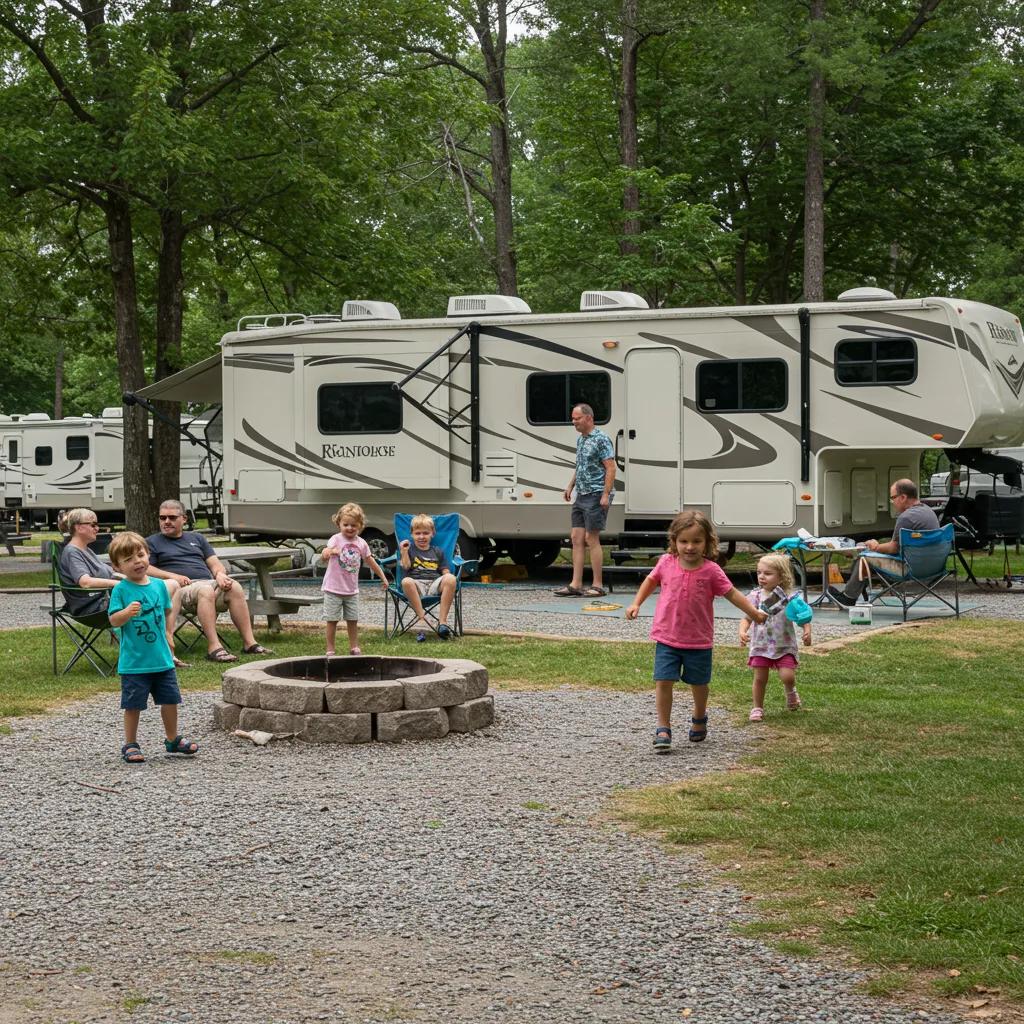
GatherGrounds emphasizes stewardship practices during transition planning to maintain campground character, keep valued staff where possible, and sustain guest experience quality under new ownership. Legacy preservation measures frequently include maintaining key facility aesthetics, honoring seasonal programming, and coordinating with former owners on community introductions when appropriate. For owners concerned about reputation and continuity, these practices can mitigate disruption and preserve goodwill that sustains revenue. Discussing these priorities during early negotiations clarifies expectations and helps align post-close operational plans with the seller’s legacy goals.
What Are Common Questions About Selling an RV Park?
Owners commonly ask about sale timing, required documents, fit criteria for direct buyers, and the practical benefits of avoiding brokers, all of which influence how they prepare and evaluate offers. Clear answers to these recurring questions help owners self-assess readiness and decide whether to pursue a direct sale, brokered listing, or hybrid approach. The short-answer subsections below provide concise, actionable responses tailored for campground owners who want straightforward guidance to move forward.
How Long Does It Usually Take to Sell a Campground?
Most campground sales fall within a 6–12 month window when owners are prepared with financial records and the property has no major title or regulatory issues; direct sales can be faster at 3–6 months. Factors that shorten timelines include organized P&Ls, clear occupancy histories, and resolved deferred maintenance, while complex zoning, environmental reviews, or incomplete records can extend the process. Proactive preparation and early communication with prospective buyers streamline negotiations and due diligence.
What Documents Do I Need to Prepare Before Selling?
Buyers typically request 3–5 years of profit-and-loss statements, federal tax returns, occupancy and reservation data, utility bills, capital expenditure records, vendor contracts, and insurance certificates during initial diligence. Preparing an indexed data room with these items accelerates review and demonstrates professionalism, increasing buyer confidence. Prioritizing the most recent two years of stabilized performance plus supporting historic records provides a practical balance between thoroughness and speed.
How Do I Know If My RV Park Is a Good Fit for GatherGrounds?
GatherGrounds generally targets campgrounds meeting certain scale and regional fit criteria, and owners can self-assess by considering site count, market location, and facility condition. A clear initial checklist includes the number of sites (owners should note whether the park meets the stated threshold), historical occupancy and revenue trends, and infrastructure condition. If in doubt, confidential preliminary inquiries allow sellers to share summary metrics and learn whether their property aligns with the Campground Acquisition Service’s acquisition criteria.
What Are the Benefits of Avoiding RV Park Brokers?
Avoiding brokers can increase net proceeds by saving on commissions, reduce public exposure of sensitive operational details, and shorten the sales timeline through direct negotiation. Sellers also retain tighter control over the process and can prioritize legacy-preserving terms rather than strictly market-driven bidding strategies. However, reduced exposure may limit competitive bidding, so owners should weigh confidentiality and speed against the potential for higher market offers that brokers may generate.
How Can Success Stories Help You Sell Your RV Park Confidently?
Success stories and anonymized seller outcomes illustrate practical benefits of different sale routes and help owners set realistic expectations for valuation and transition experience. Case narratives typically highlight how clear financials improved offers, how targeted improvements increased per-site values, and how stewardship commitments led to smoother transitions. Reviewing these types of outcomes helps owners anticipate common negotiation points and prepare for the operational handover. The next subsections summarize seller feedback themes and common post-sale benefits reported by owners.
What Do Previous Campground Owners Say About Selling to GatherGrounds?
Previous owners commonly emphasize fairness in valuation discussions and appreciation for confidential, respectful negotiations when dealing with a values-driven buyer. Summarized themes include satisfaction with transparent offer rationale, relief at reduced public exposure, and positive notes about coordinated transition plans that prioritized staff continuity. These seller perspectives help potential sellers understand what to expect and how to position their property in valuation conversations.
How Have Other Owners Benefited from a Thoughtful Transition?
Owners who prioritized a thoughtful transition frequently report peace of mind knowing their community and staff were treated respectfully and that the property’s character was preserved. Practical benefits include smoother operational handoffs, retained guest loyalty, and fewer post-close disputes about facility expectations. For many sellers, these qualitative outcomes support selecting buyers who commit to stewardship alongside fair financial terms.
How to Start Your Confidential Conversation with GatherGrounds Resorts?
Initiating a confidential conversation begins with preparing a concise summary of key metrics and understanding the confidentiality safeguards that protect sensitive information during early discussions. Sellers should gather essential data points to speed assessment, expect confidentiality agreements for deeper diligence, and ask about the buyer’s valuation approach and transition priorities in the first exchange. The final subsections describe the information to have ready and how confidentiality is typically preserved during a direct-sale conversation.
What Information Should You Have Ready for Your Initial Inquiry?
Prepare a short summary that includes number of sites, recent annual revenue or high-level NOI, average occupancy, location region, and any major recent capital investments to accelerate preliminary assessment. Including basic property highlights and a contact method enables a buyer to quickly determine fit with acquisition criteria and whether a confidential conversation is warranted. This concise packet helps buyers estimate interest and speeds the transition to a more detailed valuation conversation.
How Does GatherGrounds Ensure Confidentiality and Respect?
Confidentiality practices include limiting internal distribution of sensitive seller information, using non-disclosure agreements for deeper diligence, and handling all communications discreetly to protect staff and guest relationships. Buyers that prioritize respect will outline these controls early and agree on information-sharing boundaries to prevent unnecessary disclosure. These measures protect the seller’s operational integrity and community reputation while enabling the valuation and due diligence process to proceed.
- Prepare summary metrics: Number of sites, high-level revenues, occupancy.
- Request confidentiality terms: Ask about NDAs and limited-distribution policies.
- Schedule a preliminary call: Use the initial discussion to confirm fit and next steps.
Having these steps in place helps owners start a confidential conversation efficiently and confidently.
These actionable steps provide a straightforward way to begin a confidential conversation while safeguarding sensitive information.
Frequently Asked Questions
What Should I Consider When Choosing a Buyer for My RV Park?
When selecting a buyer for your RV park, consider their values, experience, and commitment to legacy preservation. A buyer who prioritizes continuity for staff and guests can help maintain the campground’s character and community ties. Additionally, evaluate their financial capability and willingness to engage in transparent negotiations. Understanding their vision for the property and how they plan to manage it post-sale is crucial for ensuring a smooth transition and preserving the goodwill you’ve built over the years.
How Can I Improve My RV Park’s Curb Appeal Before Selling?
Enhancing your RV park’s curb appeal can significantly impact its market value. Focus on landscaping, signage, and overall cleanliness to create a welcoming atmosphere. Simple improvements like fresh paint, well-maintained roads, and clear site numbering can make a strong first impression. Additionally, consider upgrading amenities such as bathhouses or recreational areas to attract potential buyers. These enhancements not only improve guest experiences but also signal to buyers that the property has been well cared for, potentially leading to higher offers.
What Are the Risks of Selling My RV Park Without a Broker?
Selling your RV park without a broker can save on commission fees, but it also comes with risks. You may lack access to a broader market, which could limit competitive bidding and potentially lower your sale price. Additionally, without a broker’s expertise, you might struggle with valuation, negotiation, and navigating legal complexities. It’s essential to be well-prepared and informed about the selling process to mitigate these risks and ensure a successful transaction.
How Do I Handle Buyer Due Diligence Requests?
During the due diligence phase, buyers will request various documents to assess the property’s value and operational health. Be prepared to provide financial statements, occupancy records, and maintenance logs. Organizing these documents in a clear, indexed format can streamline the process and demonstrate your professionalism. Responding promptly and transparently to requests can build trust with potential buyers and facilitate a smoother negotiation process, ultimately leading to a successful sale.
What Are the Benefits of a Thoughtful Transition for My RV Park?
A thoughtful transition can preserve the goodwill of your RV park, ensuring that staff and guests experience minimal disruption during the ownership change. This approach emphasizes continuity, which can maintain guest loyalty and staff morale. Additionally, a well-planned transition can help uphold the campground’s reputation in the community, which is vital for long-term success. By prioritizing these aspects, you can enhance the perceived value of your property and foster a positive relationship with the new owner.
How Can I Assess the Market Demand for My RV Park?
To assess market demand for your RV park, start by researching local market trends, occupancy rates, and comparable sales in your area. Analyze the performance of similar properties to gauge interest and pricing strategies. Engaging with local real estate professionals or campground associations can provide valuable insights into buyer preferences and market dynamics. Understanding these factors will help you position your property effectively and set realistic expectations for your sale.
Conclusion
Successfully selling your RV park involves understanding valuation metrics, preparing essential documents, and choosing the right buyer to ensure a smooth transition. By prioritizing legacy preservation and operational continuity, you can maximize the value of your property while maintaining its character and community ties. Take the next step towards a successful sale by exploring our resources and connecting with GatherGrounds Resorts today. Your campground’s future deserves thoughtful stewardship and a respectful transition.