
Top Tips for Selling RV Resorts Fast: A Complete Guide to Maximize Sale Price and Speed
Selling an RV resort quickly while protecting value requires a blend of financial clarity, targeted improvements, and a thoughtful transition plan. This guide defines what “selling fast” means for campground owners and why speed need not sacrifice price. You will learn practical valuation methods, specific pre-sale actions that attract qualified buyers, and a step-by-step documentation and timing framework designed to reduce friction and shorten closing timelines. Early in the article, we briefly note GatherGrounds Resorts as a family-owned, direct buyer option that emphasizes legacy preservation and a respectful handover for owners who want a confidential, faster exit; the remainder of the guide remains seller-focused and impartial. Owners facing retirement, health issues, or market opportunities will find actionable checklists, simple NOI/cap rate math with 2025 benchmarks, and decision criteria for choosing a direct buyer or a conventional brokerage. The guide covers valuation, preparation, essential documents, a fact-based comparison of selling paths, transition planning, current 2025 trends, and common seller FAQs to equip you to move quickly with confidence. Read on for concise lists, worked examples, and tables you can use to estimate value and accelerate due diligence.
Why Should You Sell Your RV Resort Quickly? Key Motivations and Benefits
Selling quickly can reduce carrying costs, accelerate access to capital, and remove ongoing operational burdens, which together improve net proceeds and owner well-being. A faster sale often reduces months of maintenance, insurance, and staffing overhead while allowing owners to redeploy proceeds earlier for retirement or other investments. Sellers frequently choose speed for personal reasons—health, succession timelines, or liquidity needs—and strategic reasons like market windows where buyer demand is strong. Understanding common motivations helps shape the sales approach, which leads directly to identifying the specific actions that will make a rapid sale both possible and profitable.
What Are Common Reasons RV Park Owners Sell Fast?
Many owners accelerate sales for reasons that range from personal urgency to tactical market moves, and cataloging those reasons clarifies priorities for the sale process. Retirement timelines and succession planning top the list when owners want a firm closing date to fund retirement, while health or family needs create immediate time constraints requiring a faster transaction. Financial pressure or attractive reinvestment opportunities prompt owners to convert illiquid property into cash quickly, and opportunistic sales occur when local market demand or favorable cap-rate conditions present a limited window. Recognizing your primary reason for selling informs whether to pursue a direct buyer or a market listing and sets the pace for preparing documentation and improvements.
How Does Selling Quickly Benefit Your Financial and Personal Goals?
A prompt sale decreases carrying costs and can preserve equity that would otherwise erode through ongoing repairs, staffing costs, or seasonal volatility, producing a clearer net outcome for owners. Financially, saving even three to six months of operating expenses can meaningfully increase net proceeds, while earlier access to capital enables timely reinvestment or debt reduction. Personally, reducing the managerial burden frees owners from day-to-day responsibilities and lowers stress, which is especially important when health or family factors are driving the sale. Framing the sale around these financial and personal benefits helps prioritize which improvements to make and how to structure the timeline for a fast, clean handover.
When Is the Best Time to Start Preparing Your RV Resort for Sale?
Begin preparing 6–12 months before you expect to transact to maximize both speed and sale price; this lead time allows focused improvements, clean financial packaging, and marketing setup without rushing due diligence. Seasonal considerations matter: list preparation in the off-season can let you present stabilized financials and perform repairs, while listing near peak booking season can showcase occupancy and revenue but may extend showings and negotiations. Starting earlier gives time to resolve permit or environmental issues, consolidate financial records, and optionally stage the property for high-quality photography. Align your preparation timeline with the motivations identified earlier so timing supports both personal goals and market realities.
How to Accurately Value Your RV Park: Essential RV Park Valuation Methods
Valuing an RV park relies primarily on the income approach—calculate Net Operating Income (NOI) then divide by an appropriate cap rate—because buyers focus on income stability, per-site revenue, and market risk when pricing hospitality assets. The income approach converts operational performance into market value and allows owners to test price scenarios quickly by adjusting revenue, expenses, or assumed cap rates. In 2025, typical regional cap rates for smaller to mid-sized RV resorts often fall in a benchmark range, which influences per-site valuations and buyer expectations. Below we define NOI clearly, explain cap rate mechanics, list key valuation drivers for 2025, and show a simple step-by-step example for an owner to estimate value.
What Is Net Operating Income and How Does It Affect RV Park Value?
Net Operating Income (NOI) equals gross operating revenue minus operating expenses and is the key earnings metric buyers use to assess property-level profitability and cash flow. NOI excludes financing costs and capital expenditures, focusing on the recurring revenue the property generates—camping fees, cabin or glamping rentals, ancillary services—less operating costs such as payroll, utilities, maintenance, and management. A higher, stable NOI increases market value because buyers apply a cap rate to that income to derive price; conversely, volatile or declining NOI reduces value and increases perceived risk. Preparing an accurate NOI requires clean P&L statements, consistent occupancy reporting, and documented expense lines to make buyer underwriting faster and more confident.
How Do Cap Rates Influence Your RV Resort’s Market Price?
Cap rate expresses the market’s expected return for a property and converts NOI into value via the formula Value = NOI / Cap Rate, making cap-rate selection critical for final pricing. Cap rates vary with risk factors—location, asset condition, discretionary income trends, and buyer demand—and in 2025 many RV park transactions show cap rates often in the mid-to-high single digits, with a common benchmark range around 8–10% for well-located parks. A lower cap rate increases value (e.g., NOI $300,000 / 8% = $3.75M), while a higher cap rate decreases it (NOI $300,000 / 10% = $3.0M), illustrating how market perception alters sale price independent of operations. Buyers will test your NOI and apply cap-rate scenarios, so presenting defensible revenue and expense assumptions helps sustain higher valuations.
Introductory EAV table: valuation factors showing how NOI and cap rates yield value estimates.
This table clarifies how changing NOI or cap rate shifts estimated market value and provides quick benchmarks sellers can use to check their expectations.
Which Factors Most Impact RV Park Valuation in 2025?
Buyers in 2025 emphasize occupancy trends, amenity mix, direct-booking share, and demographic alignment because these factors drive revenue resilience and growth potential. Higher occupancy and diversified revenue streams—such as glamping units, event revenues, or strong on-site services—increase NOI predictability and support lower cap rates, while poor infrastructure, unresolved permitting, or dependence on third-party booking can raise perceived risk. Location quality, remote-work-friendly amenities like high-speed internet, and on-site management SOPs also alter buyer appetite and valuation. Documenting these strengths and quantifying their revenue contribution helps buyers apply favorable underwriting assumptions.
While the capitalization rate model is widely used, it has practical limitations, especially during financial stress, leading to the development of alternative valuation methodologies that account for market trends and operating performance.
Beyond Cap Rate: New Valuation for Multifamily & Commercial Real Estate
Estimating the value of multifamily properties and other commercial real estate properties is an important but difficult task for real estate investors and researchers. The commonly used capitalization rate model, which involves the estimation of capitalization rates, has limitations in practice, especially during periods of financial stress. This paper proposes a new property valuation methodology that directly estimates the value of multifamily properties by accounting for both market trends and property operating performance. Our results show that this new model significantly improves the valuation of multifamily properties, particularly distressed properties. This methodology can also be applied to the valuation of other commercial real estate properties.
Beyond the cap rate: Valuation of multifamily properties, 2020
How Can You Estimate Your RV Park’s Value Using Simple Formulas?
A practical three-step estimate uses your latest 12-month NOI, a conservative cap-rate choice, and per-site benchmarks to sanity-check results, producing a quick market-value range you can refine with buyer feedback.
- Step 1: calculate NOI from most recent P&L
- Step 2: select a cap rate within the 2025 benchmark range (8–10%) based on location and risk
- Step 3: compute Value = NOI / Cap Rate and divide by site count to get per-site value
For example, NOI $300,000 at an 8.5% cap rate gives $3,529,000 total value and, if the park has 100 sites, a per-site value of $35,290. Use this quick calculation to set realistic expectations and to decide whether a direct buyer or a brokered sale aligns with your timing and price goals.
What Are the Best Tips to Prepare Your RV Resort for a Fast Sale?
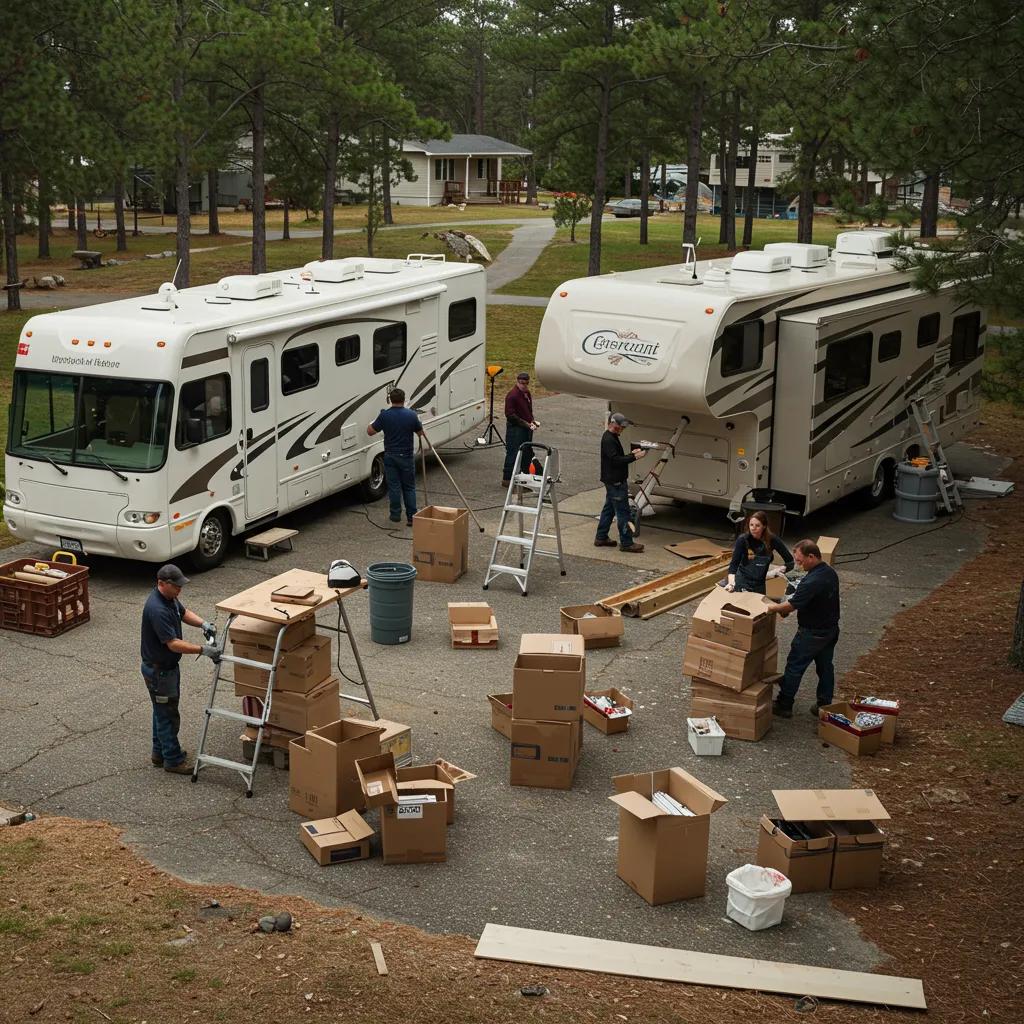
Preparing for a fast sale centers on three areas: physical readiness, operational clarity, and market-facing presentation; doing all three shortens due diligence and increases buyer confidence. Physical readiness involves targeted repairs and staging to improve curb appeal and safety, operational clarity requires organized financials and SOPs to speed underwriting, and market presentation focuses on photography, listing assets, and direct-booking data to attract serious buyers quickly. Below are prioritized, high-impact actions owners can implement immediately to increase interest and reduce contingencies during offers.
High-impact immediate actions to prepare your RV resort for sale:
- Professional photography and clear site maps that showcase usable sites and amenities.
- Complete safety and code-related repairs including signage, electrical, and septic checks.
- Consolidate 12 months of P&L, occupancy reports, tax returns, and booking data into a single data room.
- Create basic SOPs for operations, staff roles, and maintenance to demonstrate continuity.
- Highlight direct-booking metrics and online reputation to show revenue diversification.
- Stage or refresh high-visibility areas—bathhouses, clubhouse, and entrance—to improve first impressions.
How Can Physical Improvements Maximize Your RV Park’s Appeal?
Targeted, cost-effective repairs and cosmetic upgrades yield disproportionately large improvements in buyer perception and listing performance when preparing for a rapid sale. Prioritize safety fixes and visual improvements—repair potholes, refresh landscaping, ensure signage is clean and visible, and update high-traffic amenities such as restrooms and laundry facilities. Buyers notice operational readiness and curb appeal during initial walks, and improved photography after these upgrades often increases inquiry rates and perceived per-site value. Making these improvements early prevents last-minute surprises that can delay closing and introduces potential buyers to a park that appears well-maintained and investable.
What Operational Efficiencies Help Speed Up the Selling Process?
Organized financial records, standardized reporting, and documented SOPs reduce buyer due diligence time and increase confidence in projected NOI and staff continuity. Prepare clear monthly and annual P&Ls, occupancy and ADR (average daily rate) summaries, vendor and staff contracts, and a concise operations manual describing seasonal processes and maintenance routines. These operational efficiencies reduce the number of contingencies buyers request and shorten the period between LOI and closing because underwriters have reliable data to assess risk. Demonstrating a stable management structure and documented processes also positions the park as a turnkey asset, appealing to buyers seeking a quicker transition.
How Does Enhancing Your Digital Presence Attract More Buyers?
A compelling online presentation—professional site photos, virtual tours, and transparent direct-booking data—expands the buyer pool and speeds qualified inquiries, especially from operators and investors who screen remotely. Update your website and OTA listings with recent imagery and clear statements of revenue streams, then compile direct-booking metrics to show owner-driven revenue and lower OTA dependence. Virtual tours and high-resolution galleries reduce wasted site visits and let serious buyers shortlist properties quickly, which accelerates the negotiation window. Sellers who present strong digital evidence of demand often receive faster, cleaner offers because buyers can underwrite revenue performance with confidence.
Which Financial and Legal Documents Are Essential for Selling an RV Resort Quickly?
Buyers expect a standardized, complete set of documentation to underwrite NOI, verify licenses and permits, and assess operational continuity, and having those documents organized accelerates due diligence and decision-making. The essential package includes P&L statements, tax returns, occupancy reports, permits and licenses, vendor contracts, and environmental or septic reports where relevant. Preparing these items in advance and presenting them in a secure data room reduces the number of requests from buyers and shortens the time from LOI to closing. Below is a descriptive table that owners can use as a checklist to assemble the most critical files before marketing.
Documents checklist for streamlined buyer due diligence:
What Financial Records Should You Prepare Before Selling?
Prepare 12–36 months of P&L statements, business tax returns, occupancy and revenue reports, and any ancillary income records, and format them so buyers can quickly derive NOI and seasonal performance. Provide clearly labeled spreadsheets and summaries that reconcile to tax returns, and include notes explaining one-time expenses or non-recurring items to avoid misinterpretation. If you have cabins, glamping, or other revenue streams, break out per-unit revenue to show diversification. Presenting these records in a single organized package reduces follow-up requests and accelerates buyer confidence in your stated NOI.
What Legal Permits and Licenses Must Be in Order?
Ensure zoning approvals, business licenses, septic and wastewater permits, and any campground-specific health and safety certifications are current and documented to avoid transaction delays from regulatory questions. Early engagement with local authorities or counsel to confirm transferability of permits can surface potential issues ahead of buyers’ inspections. Problems or ambiguities in permits often create major contingencies or price adjustments, so resolving these preemptively preserves speed and value. Clear documentation also positions your park as lower risk, which can attract buyers who prefer a smoother closing.
How Does Organized Documentation Accelerate Buyer Confidence?
Organized documentation reduces friction by letting buyers and their underwriters verify assumptions without repeated requests, shortening LOI-to-closing timelines and limiting renegotiation points. A well-structured data room that matches the buyer’s expected diligence flow—financials, legal, operational—minimizes surprises and communicates transparency, which often results in cleaner offers. Faster buyer confidence translates to fewer contingencies, smaller holdbacks, and a greater likelihood of closing on the agreed timeline. This readiness also supports either direct-sale offers or a faster market sale through conventional channels.
How Does Selling Directly to GatherGrounds Resorts Compare to Using Campground Brokerage Services?
Selling directly to a family-owned buyer versus listing with a conventional brokerage presents trade-offs in speed, fees, market exposure, and legacy outcomes, and understanding those differences helps owners choose the best path for their goals. Direct buyers can often move faster with fewer contingencies because they do not require public listings or lengthy marketing windows, while brokered sales may achieve higher gross offers through competitive bidding but typically take longer and involve commissions. GatherGrounds Resorts, as a family-owned direct buyer, emphasizes respectful transitions and legacy preservation as part of their acquisition approach, offering one option for owners prioritizing a faster, mission-aligned handover. Below is a concise comparison table to help sellers weigh the options.
What Are the Benefits of Selling Directly to a Family-Owned Buyer?
Family-owned purchasers often prioritize continuity, community relationships, and staff retention and therefore can structure transitions that preserve park identity and traditions. Such buyers may offer faster, more personalized negotiations with fewer public disclosures, which can be important for owners who value confidentiality and a respectful handover. A direct sale can also reduce marketing time and related costs, yielding speed advantages that align with owners who have tight timelines. For sellers whose primary goals are legacy preservation and quicker liquidity, a family-owned direct buyer can be an attractive option.
How Does the GatherGrounds Acquisition Process Work?
GatherGrounds Resorts follows a straightforward process from confidential inquiry to valuation, letter of intent, diligence, and handover, designed to respect owner privacy and streamline timelines without public listing requirements. The process emphasizes upfront confidentiality, a valuation conversation based on documented NOI and cap-rate benchmarks, and a structured due diligence period focused on operational continuity and permits. This approach aims to minimize disruptions to guests and staff while providing a clear roadmap to closing and transition. Owners considering direct sale should prepare the same organized documentation they would for a market sale to facilitate rapid evaluation.
What Are the Drawbacks of Traditional Campground Brokerages?
Traditional brokerages can deliver wide exposure and potential bidding, but that often comes with longer listing periods, public marketing, and commission costs that reduce net proceeds or extend timelines. Public listings may disrupt operations or community relationships if marketing materials highlight issues buyers would otherwise handle privately, and brokers may propose incentives that alter park operations to attract buyers. In cases where time and confidentiality are paramount, the brokerage route may not align with owner goals, though it remains appropriate when maximizing gross sale price through competitive bidding is the priority.
How Can You Decide Which Selling Option Is Best for Your RV Resort?
Decide by aligning timeline, financial goals, and legacy concerns: if speed, confidentiality, and staff continuity matter most, a direct sale is often preferable; if maximizing gross price through market exposure is the priority, a brokerage can be appropriate. Create a decision checklist: define your target closing window, acceptable fee level, tolerance for public listing, and importance of legacy preservation, then compare offers against these criteria. Speak confidentially with potential direct buyers and interview brokers to understand expected timelines and net proceeds before committing. This structured decision process helps owners choose the sale path that best meets both personal and financial objectives.
How Can You Plan a Thoughtful and Smooth Transition When Selling Your RV Resort?
Transition planning balances operational handover, staff continuity, and legacy considerations so the property retains value and guest trust after ownership changes. A clear transition plan includes a timeline for phased responsibilities, offers to retain key staff where feasible, and communication plans for guests and the local community to maintain goodwill. Documented SOPs and a concise training package shorten the new owner’s ramp-up time and reduce service interruptions. Below are the practical steps to craft an exit strategy that protects both value and the park’s identity.
Why Is Legacy Preservation Important to RV Park Owners?
Legacy preservation matters because many campground owners view the property as a community institution where guests, staff, and local relationships reflect decades of stewardship and reputation. Protecting these elements can be a primary motivator for selecting the right buyer, influencing terms such as staff retention, programming continuity, or branding considerations in the sale contract. Emotional and reputational factors also affect how owners negotiate handover timing and ongoing involvement. Recognizing the importance of legacy helps structure deals with provisions that ensure traditions and staff are respected when possible.
How Does GatherGrounds Ensure a Respectful and Seamless Handover?
GatherGrounds Resorts emphasizes staff retention where possible and reinvestment in the property as part of its acquisition approach, which aims to preserve park identity and minimize disruption during transition. Their process typically includes confidential inquiry, a focused valuation discussion, and structured handover steps designed to maintain operations and honor established community ties. By prioritizing reinvestment and continuity, the buyer seeks to uphold the park’s traditions while implementing gradual improvements that benefit long-term value. Sellers who prioritize a gentle transition often find this approach aligns with legacy-focused objectives.
What Are Key Steps in Crafting Your Campground Exit Strategy?
An effective exit strategy starts with a 12-month planning phase, assembles an advisor team (accountant, counsel, broker or direct-buyer contact), and sequences improvements and documentation preparation across defined milestones. Recommended steps include: 12 months out—create timeline and advisors; 6 months out—implement high-impact repairs and compile documentation; 3 months out—finalize data room, update marketing materials or confidential sale packet, and brief key staff. Communicating thoughtfully with staff and stakeholders at appropriate times preserves morale and operational continuity. This staged approach delivers a smoother handover and supports both speed and sale price.
What Are the Latest 2025 RV Park Market Trends Sellers Should Know?
In 2025, buyer focus centers on amenities that support remote work and experiences, demographic shifts bringing younger RV users, and occupancy trends that influence cap-rate expectations and per-site values. Demand for glamping, cabins, high-speed internet, and experiential programming increases per-site revenue potential, while buyers place a premium on parks with strong direct-booking channels and diversified income. Typical occupancy benchmarks and cap-rate ranges in 2025 help owners set realistic price expectations and timing strategies. Below are trend details and valuation benchmarks you should consider before listing.
How Are Changing Demographics Affecting RV Resort Sales?
Younger cohorts entering the RV market, including many under 55, create demand for connectivity, experiential stays, and alternative lodging that can improve revenue per site and buyer interest. Millennial and Gen X travelers prioritize on-site activities, social spaces, and reliable internet, which in turn shifts buyer underwriting to value amenities that support longer stays and remote work. Buyers view parks that have adapted to these preferences as having lower demand risk and potentially lower cap rates. Understanding the demographic shift lets sellers prioritize upgrades that resonate with the fastest-growing guest segments.
What Amenities and Experiences Are Increasing RV Park Value?
High-impact amenities for 2025 include high-speed internet and remote-work facilities, curated glamping or cabin offerings, enhanced on-site recreation, and event programming that increases average daily revenue. Amenities that diversify income—such as rentals, retail, or food services—improve NOI stability and buyer appeal because they reduce reliance on seasonal variability. Buyers reward parks that demonstrate the ability to command higher nightly rates or longer stays through unique experiences. Prioritizing these amenities before a sale can improve per-site value and attract strategic buyers.
How Do Occupancy Rates and Booking Trends Impact Sale Timing?
Occupancy and booking lead-time patterns influence how buyers underwrite forward revenue and whether they view the property as stabilized or in need of repositioning, affecting both timing and price. In 2025, many parks show typical occupancy ranges that vary by region but generally fall into moderate bands; buyers will scrutinize both peak and shoulder-season performance to estimate sustainable NOI. Increasing direct bookings reduces dependence on OTAs and presents a cleaner revenue story that shortens due diligence and supports higher valuations. Aligning your listing with demonstrable occupancy trends helps you choose the optimal sales window.
What Are Current Valuation Benchmarks and Cap Rates for RV Parks?
Valuation benchmarks in 2025 commonly place cap rates for well-located, amenity-rich parks in a mid-single-digit to low-double-digit range, with 8–10% serving as a practical working benchmark for many owner-operated parks. Per-site values vary widely—lower in rural markets and higher near desirable destinations—with per-site benchmarks often used to sanity-check income-derived values. Sellers should present both NOI-based valuations and per-site metrics to buyers to facilitate comparability and negotiation. Being transparent about assumptions and showing sensitivity analyses for cap-rate scenarios helps reduce disputes and quickens offers.
Frequently Asked Questions
What Should I Do to Prepare My RV Resort for Sale?
Preparing your RV resort for sale involves several key steps. Start by enhancing the physical appearance of the property through targeted repairs and staging to improve curb appeal. Organize your financial records, including profit and loss statements, occupancy reports, and vendor contracts, to streamline the due diligence process. Additionally, invest in professional photography and create a comprehensive marketing package that highlights your resort’s unique features. These preparations can significantly increase buyer interest and reduce the time it takes to close the sale.
How Can I Attract More Buyers to My RV Resort?
To attract more buyers, focus on enhancing your digital presence. Update your website and online travel agency (OTA) listings with high-quality images and detailed descriptions of your amenities. Consider offering virtual tours to give potential buyers a comprehensive view of the property. Highlight direct-booking metrics to demonstrate revenue potential and reduce reliance on third-party platforms. A strong online presentation can expand your buyer pool and lead to quicker, more qualified inquiries.
What Are the Risks of Selling My RV Resort Too Quickly?
Selling your RV resort too quickly can lead to several risks, including potentially undervaluing the property and missing out on higher offers. Rushed sales may also result in incomplete documentation, which can create complications during due diligence. Additionally, if the property is not adequately prepared, it may deter serious buyers or lead to lower offers. It’s essential to balance speed with thorough preparation to ensure you achieve the best possible outcome for your sale.
How Do I Choose Between a Direct Buyer and a Broker?
Choosing between a direct buyer and a broker depends on your priorities. If speed, confidentiality, and a respectful transition are your main concerns, a direct buyer like GatherGrounds Resorts may be the best option. However, if maximizing the sale price through competitive bidding is your goal, a broker can provide wider market exposure. Consider your timeline, financial objectives, and the importance of legacy preservation when making this decision to ensure it aligns with your overall goals.
What Should I Include in My Transition Plan When Selling?
Your transition plan should outline key steps to ensure a smooth handover of operations. Include a timeline for transferring responsibilities, plans for retaining key staff, and communication strategies for informing guests and the local community. Documenting standard operating procedures (SOPs) and providing training materials for the new owner can help minimize disruptions. A well-structured transition plan not only preserves the property’s value but also maintains goodwill among guests and staff during the ownership change.
What Are the Current Trends Affecting RV Resort Sales?
Current trends impacting RV resort sales include a growing demand for amenities that support remote work, such as high-speed internet and unique lodging options like glamping. Younger demographics are increasingly entering the RV market, prioritizing experiences and connectivity. Additionally, buyers are looking for properties with strong direct-booking capabilities and diversified income streams. Understanding these trends can help sellers make informed decisions about property improvements and marketing strategies to attract potential buyers.
How Can I Ensure a Smooth Closing Process?
To ensure a smooth closing process, prepare all necessary documentation in advance, including financial records, permits, and operational manuals. Organize these documents in a secure data room to facilitate buyer due diligence. Clear communication with potential buyers and their representatives can also help address any concerns promptly. By being proactive and transparent throughout the process, you can minimize delays and increase the likelihood of a successful and timely closing.
How Do I Estimate the Value of My RV Park Quickly?
Use the NOI / Cap Rate formula: Value = NOI ÷ Cap Rate, with 2025 cap-rate guidance around 8–10% as a starting point, then divide by site count for a per-site benchmark. For example, an NOI of $300,000 at an 8.5% cap rate implies roughly $3.53M in market value; dividing by 100 sites yields about $35,300 per site. This quick method gives a practical range to inform pricing and decisions about direct sale versus brokerage.
How Long Does It Typically Take to Sell an RV Resort?
Typical sale timelines range from approximately six months to a year, depending on pricing, documentation readiness, market conditions, and whether you opt for a confidential direct sale or a public brokerage listing. Direct sales to motivated buyers can compress this timeline significantly if documentation is ready, while brokered listings may take longer as the property is marketed to a broader audience. Preparing records and repairs in advance reduces due diligence time and increases the likelihood of closing within the owner’s target window.
What Documents Are Needed to Sell My Campground?
Key documents include profit & loss statements, business tax returns, occupancy/revenue reports, permits and licenses, vendor and staff contracts, and environmental/septic records where applicable; organize these into an accessible data room. Providing 12–36 months of financials and a simple operations manual typically satisfies most buyer diligence requests. Having these files ready before marketing minimizes contingencies and speeds negotiation.
How Can I Maximize My RV Park Sale Price Fast?
Focus on three immediate areas: increase apparent NOI through revenue-boosting, low-cost improvements; reduce perceived risk by organizing documentation and permits; and improve market presentation with professional photography and clear booking metrics. Prioritize repairs that improve safety and guest experience, package ancillary income streams, and show direct-booking trends to signal owner-driven demand. These steps often boost offers quickly and reduce negotiation friction.
Why Should I Consider Selling Directly Instead of Using a Broker?
A direct sale can be faster, more confidential, and reduce transaction fees while enabling legacy-preserving handovers; a brokered sale may achieve higher gross price through wider exposure and competitive bidding. Choose direct sale if time, confidentiality, and a respectful transition are primary, and consider brokerage when maximizing headline price through market competition is the objective. A brief confidential valuation conversation with a direct buyer can clarify whether that path meets your timing and financial goals.
- Next step: Compile your 12-month NOI and permit documents to run a quick valuation and decide whether a confidential direct inquiry or a broker interview best matches your timeline.
- If legacy is a priority: Consider family-owned buyers who emphasize continuity and staff retention as part of their acquisition approach.
- If price maximization is priority: Interview qualified brokerages to understand expected marketing timelines and net proceeds after commissions.
Conclusion
Successfully selling your RV resort quickly can lead to reduced carrying costs, improved net proceeds, and a smoother transition for both you and your buyers. By understanding the key motivations and implementing strategic improvements, you can maximize both speed and sale price while preserving your legacy. Consider exploring direct buyer options like GatherGrounds Resorts for a more personalized and efficient selling experience. Start preparing your documentation and reach out today to take the first step towards a successful sale.