
Top Tips for Selling an RV Park: How to Maximize Value and Navigate the Sales Process
Selling an RV park or campground is a significant decision, blending financial considerations, operational readiness, and often deep emotional ties to legacy and community. This guide walks you through preparing your property, how buyers and markets assess parks using metrics like Net Operating Income (NOI) and capitalization rate (cap rate), and the practical steps from listing or outreach through closing and transition. You’ll discover targeted tips to boost per-site value, assemble your due diligence documentation, and choose between a brokered sale or a direct buyer path to meet your timing and legacy goals. We’ll compare typical timelines and costs, provide checklists and worked valuation examples, and offer actionable tactics to enhance NOI and buyer confidence. For owners considering a direct-sale alternative, GatherGrounds Resorts is presented as a low-pressure, family-owned buyer option focused on thoughtful transitions and legacy preservation. Read on for clear, practical steps to maximize value and reduce friction in selling your RV park.
How Do You Prepare Your RV Park for Sale?
Preparing your RV park for sale means making the property understandable, investable, and low-risk for buyers by aligning finances, physical condition, and documented operations. This preparation process reduces buyer uncertainty, shortens due diligence time, and can directly lift the multiple buyers will apply to your NOI—resulting in a higher sale price. Start by assembling organized financial records, addressing deferred maintenance with prioritized projects, and codifying operating procedures that demonstrate stable, repeatable cash flow. Clear preparation also helps you decide whether to pursue a brokered market exposure or a direct buyer route based on your timing and legacy priorities. The next sections drill into the specific documents, maintenance items, and operational changes that buyers expect to see during screening and due diligence.
What Financial Documents Are Essential for Selling Your Campground?

Sellers must present three years of consistent financial records so buyers and lenders can validate historical performance and forecast NOI accurately. Typical documents include profit & loss statements, balance sheets, tax returns, and detailed expense ledgers showing line-item costs for utilities, payroll, and maintenance; these allow buyers to reconcile reported revenue and expenses. Reservation and occupancy logs that show seasonality and RevPAS (revenue per available site) are crucial because they reveal revenue stability and peak demand windows. Providing documented capital improvement records and maintenance schedules helps buyers separate recurring expenses from one-time capex, which refines NOI calculation and valuation. Well-prepared financials reduce negotiation friction and expedite both brokered and direct transactions.
How Can Property Maintenance and Enhancements Increase Sale Price?
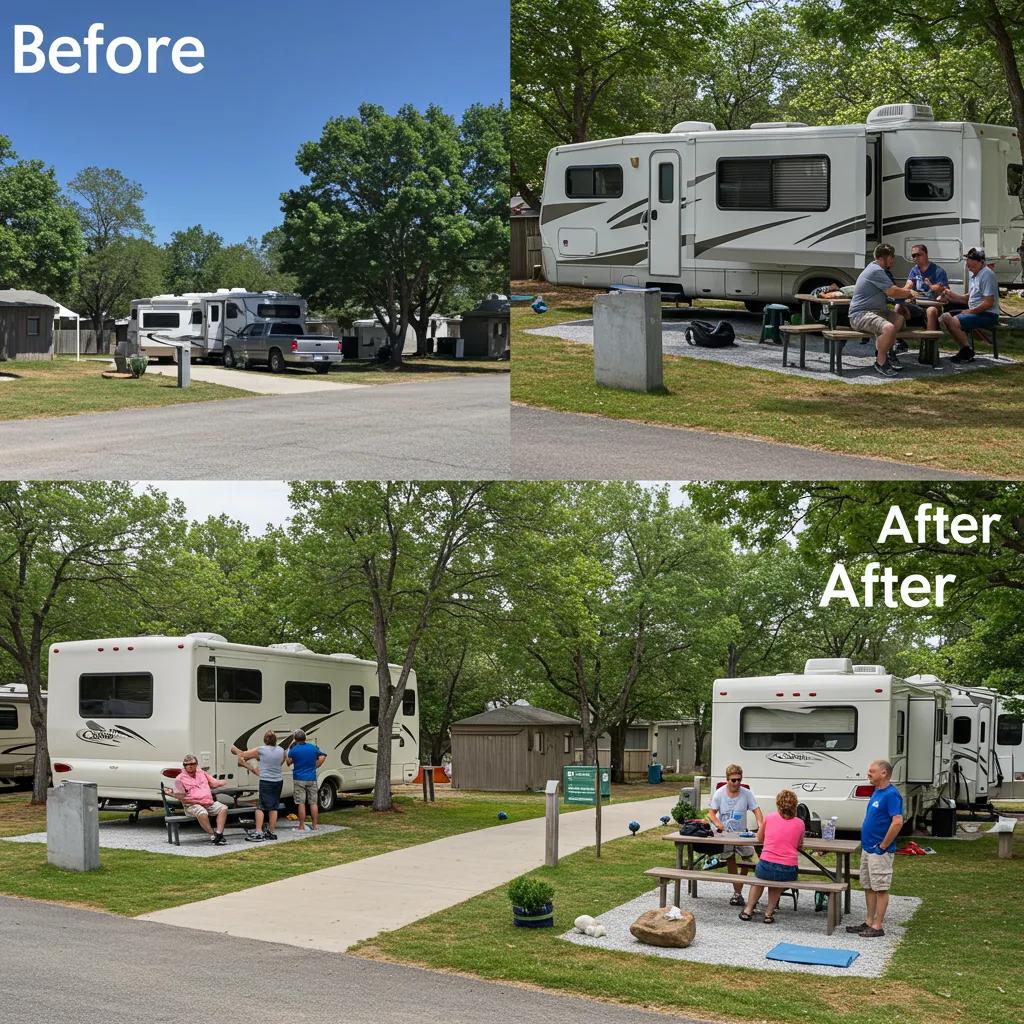
Targeted maintenance and amenity upgrades reduce perceived buyer risk and often return multiples of their cost in sale price uplift by compressing applied cap rates. Prioritize low-to-moderate-cost work that affects guest experience and utility reliability—examples include bathhouse renovations, upgraded utility hookups (water/sewer/electric), improved site surfaces, and enhanced landscaping that increases curb appeal. Documenting a history of preventive maintenance and recent capital investments reassures buyers that the property won’t require immediate large expenditures post-acquisition and can justify higher per-site valuations. Presenting before-and-after photos and recent invoices during marketing helps prospective buyers validate your claims and speeds due diligence, which in turn increases the likelihood of stronger offers.
The value-add strategy for RV parks often focuses on enhancing Net Operating Income (NOI) through improvements that directly impact revenue and operational efficiency.
RV Park Value Add: Enhancing NOI Growth
The segment continues to deliver strong results producing same community NOI growth of nearly 31 percent in the do value add enhancements such as enlarging parking spots as modern
Thesis Topic: What makes a successful RV Park in the US, 2022
What Operational Changes Boost Your RV Park’s Marketability?
Demonstrating consistent operations and scalable processes makes a park more attractive by showing reliable, transferable cash flows that investors value. Key operational improvements include standardized reservation and revenue-tracking systems, documented standard operating procedures (SOPs) for maintenance and guest services, and clear staffing plans that show continuity or simple transition options. Increasing ancillary revenue streams—such as on-site retail, equipment rentals, or packaged activities—and presenting those revenue lines separately highlights upside potential to buyers. Improving online reputation, streamlining booking and payment systems, and providing a documented training program for staff make a property easier to operate for a new owner and therefore more valuable; these operational strengths also shorten buyer onboarding and support smoother transitions.
How Is an RV Park Valued? Understanding Key Metrics and Market Factors
RV park valuation centers on income-based approaches where Net Operating Income (NOI) and capitalization rate (cap rate) form the core relationship converting operating performance into an estimate of market value. In the income-capitalization method, sellers and buyers focus on stabilizing and forecasting NOI, then apply a market-appropriate cap rate that reflects risk and expected return to calculate value. Beyond NOI and cap rate, per-site value ranges and regional comparables (including demand drivers and zoning/expansion potential) influence final offers. Understanding these metrics and showing clear, reproducible financials helps sellers set realistic expectations and negotiate effectively. The table below presents key valuation metrics, concise definitions, formulas, and a worked numeric example to illustrate how these pieces determine an asking or target price.
This table summarizes key valuation metrics and a simple worked example to show how NOI and cap rate produce an illustrative value.
What Is Net Operating Income and Why Does It Matter?
Net Operating Income (NOI) is the income a property generates from operations after all operating expenses are deducted but before financing costs and taxes; it is the principal income measure buyers use to value income-producing hospitality real estate. NOI matters because it isolates operational profitability and becomes the numerator in the income-capitalization formula that investors use to estimate market value. Sellers increase perceived value by improving occupancy, average daily rate (ADR), and ancillary revenue while managing controllable expenses—actions that raise NOI and directly increase the valuation multiple applied. Clear expense classification and consistent accounting practices ensure buyers and appraisers treat items correctly, which reduces valuation adjustments during due diligence and shortens negotiation cycles.
The capitalization rate is a fundamental metric used to assess the profitability and risk associated with a real estate investment, directly influencing its valuation.
Capitalization Rates: A Key Metric for Property Valuation
The capitalization rate is a popular metric for determining whether a property is worth purchasing. It is calculated by dividing the net operating income (NOI) by the property’s market value.
Assessing the Spatial Variability of Capitalization Rates., 2023
How Does Capitalization Rate Affect Your Park’s Value?
The capitalization rate converts NOI into an estimated market value using Value = NOI ÷ Cap Rate; a lower cap rate produces a higher valuation for the same NOI because it signals lower risk or higher demand. Cap rates are driven by market comparables, interest rates, investor appetite for hospitality assets, and property-specific risk factors such as location, site count, and amenity mix. Sellers can influence the cap rate buyers apply by reducing perceived risk through documented operations, recent capital improvements, and demonstrated occupancy trends. Improving NOI is often the most direct lever to raise value quickly, but understanding local market cap-rate ranges helps set realistic pricing and negotiation strategies.
Estimating future Net Operating Income (NOI) growth is crucial for accurately modeling capitalization rates in real estate valuation.
Estimating NOI Growth for CRE Capitalization Rate Models
In CRE capitalization rate models, rent growth rates often proxy for the net operating income (NOI) growth rates. This paper examines the relationship between rent growth and NOI growth and develops a method to estimate NOI growth rates for use in CRE capitalization rate models.
Estimating net operating income growth for modeling US apartment property capitalization rates, S Shin, 2014
What Factors Influence RV Park Valuation Beyond Financials?
Non-financial attributes materially affect buyer interest and valuation because they alter perceived risk and upside potential; these factors include site count and permitted density, zoning and expansion potential, proximity to attractions and highway access, and environmental or permitting constraints. Well-documented permits, clear title and easement history, and demonstrable room for expansion or added amenities increase strategic value for buyers who plan to optimize yields. Conversely, environmental issues, restrictive zoning, or limited utility capacity can reduce the buyer pool and increase applied cap rates. Sellers should inventory these non-financial assets and liabilities and present them in a straightforward package to help buyers assess fit quickly.
When Should You Get a Professional RV Park Appraisal?
A professional appraisal is recommended before listing to establish a defensible asking price and again during financing negotiations to support lender underwriting; appraisals are also useful when market comparables are sparse or when sellers and buyers require an independent benchmark. Appraisers analyze NOI, comparable sales, replacement cost approaches, and local market conditions to produce a reconciled value opinion; providing clean financials and permit documentation speeds the appraisal process and reduces unexpected adjustments. Expect appraisal timelines to vary with complexity, and prepare required records—tax returns, P&Ls, occupancy logs, and capex receipts—to ensure timely completion. An early appraisal can sharpen negotiation strategy and reduce pricing surprises later in the sale process.
What Are the Key Steps in the RV Park Sales Process?
The RV park sales process follows a predictable sequence: prepare the property and documentation, market or outreach to buyers, vet and negotiate offers, complete buyer due diligence, and close with planned transition activities that protect value and legacy. Each phase has specific tasks that reduce friction—organizing financials, choosing sale route, staging targeted marketing materials or outreach packages, and anticipating legal and environmental checks. Clear planning and early disclosure of known issues shorten due diligence and can reduce holdbacks or purchase price adjustments. Below is a concise ordered list of the core sale stages to guide a typical timeline and priorities.
Use this starter list to orient your sale planning and assign near-term priorities.
- Prepare: Assemble 3+ years of financials, occupancy logs, maintenance records, and capitalize priority repairs.
- Market / Outreach: Choose brokered listing or targeted outreach to direct buyers and collect preliminary offers.
- Negotiate & Execute LOI: Agree on price, contingencies, and timetables; sign a letter of intent.
- Due Diligence: Facilitate buyer inspections, environmental reviews, and title searches.
- Close & Transition: Complete escrow, transfer licenses, and implement agreed transition support.
How Do You Start Selling Your Campground?
The first 30–90 days of a sale focus on documentation, early valuation, and selecting the sale route that matches your timeline and priorities. Begin by compiling three years of financial statements, occupancy and reservation reports, and a list of capital improvements and deferred maintenance; this packet enables informed preliminary valuations and buyer screening. Consult an attorney and accountant to structure the transaction and understand tax implications, and consider obtaining a professional appraisal or broker market opinion to set expectations. Deciding early whether to list with a broker or pursue direct buyers is important because marketing approach and timing differ; the next section compares those routes and their respective due-diligence impacts.
What Legal and Due Diligence Considerations Should Sellers Know?
Legal and due diligence checks typically include title and easement review, environmental site assessments, permit and land-use compliance, employment agreements, vendor contracts, and disclosed liabilities; addressing these in advance reduces last-minute surprises. Sellers should order a title commitment, gather permits and inspection reports, and assemble copies of vendor contracts and employee arrangements that a buyer will want to review. Clear and accurate disclosure of known issues and remediation plans limits buyer leverage during negotiation and can reduce escrow holdbacks. Preparing these legal documents early facilitates a smoother buyer review and shortens the time-to-close.
How Does Closing an RV Park Sale Typically Work?
Closing an RV park sale generally proceeds through escrow or settlement, with proration of income and expenses, transfer of licenses and permits as allowed, and formal assignment of reservation systems and vendor relationships where applicable. Typical closing documents include the purchase agreement, settlement statement, deed, bill of sale for personal property, and any transition or seller-financing agreements. Sellers should plan for a communication strategy to staff and regular guests and outline agreed transition assistance—such as onboarding periods or vendor introductions—that can maintain operations during handover. Preparing for administrative tasks like utility transfers, reservation system access changes, and vendor notifications reduces friction at closing and supports continuity for the incoming owner.
Should You Use a Broker or Sell Directly? Comparing Campground Broker Services and Direct Buyers
Choosing between a brokered sale and a direct buyer depends on your priorities: maximizing price through market exposure versus speed, certainty, and potentially legacy-focused transitions offered by vetted direct buyers. Brokers provide broad market exposure, marketing expertise, and negotiated competitive bidding that can push price upward, but they often come with longer marketing timelines and commission costs. Direct buyers—especially family-owned, mission-aligned buyers—can shorten timelines, reduce transaction complexity, and offer tailored transition plans that preserve staff and community ties. The table below compares typical timelines, cost ranges, and pros/cons to help sellers decide which route aligns with their objectives.
What Are the Pros and Cons of Using a Campground Broker?
Brokers can command higher sale prices by creating competitive tension and exposing the asset to a broad buyer pool, but their services come at a cost of commissions and longer listing windows. Typical broker advantages include professional marketing materials, access to investor networks, and negotiation support, which can be critical when achieving peak market price is the goal. Disadvantages include reduced confidentiality, time-on-market exposure that can introduce operational interruptions, and fees that reduce net proceeds; brokers are most appropriate when sellers can wait for market-driven offers. Sellers should evaluate broker track records for similar assets and align expectations on timeline and net-of-fee proceeds before engaging.
Why Sell Directly to GatherGrounds Resorts?
GatherGrounds Resorts offers a family-owned direct-buyer path that emphasizes preserving the “heart and soul” and legacy of properties while simplifying the transaction process for owners. As a direct buyer and operator focused on acquiring campgrounds and RV parks in the Upper Midwest, GatherGrounds targets parks with over 130 sites and positions itself as a low-pressure alternative to traditional brokerage that can shorten timelines and reduce complexity. For sellers prioritizing thoughtful transitions, staff continuity, and stewardship of community relationships, selling directly to an aligned buyer like GatherGrounds can offer unique value beyond headline price. Understanding your own priorities—speed, net proceeds, or legacy—will determine whether this direct path is a fit.
How Do Sales Timelines and Costs Differ Between Brokers and Direct Buyers?
Brokered deals often take longer—commonly six months to a year or more— because of marketing cycles, showing schedules, and negotiation among competing bidders, and they incur commissions and marketing expenses. Direct buyers typically move faster, sometimes closing in 30–120 days, by streamlining diligence and using in-house underwriting, and they often present fewer contingency risks though they may offer a narrower price range. Costs depend on negotiated terms, potential seller financing, and the degree of transactional complexity; sellers who need speed or wish to preserve legacy may accept a trade-off in price for certainty from a direct buyer. Clear early communication about timing and cost expectations aligns both parties and reduces the chance of late-stage adjustments.
How Can You Maximize Your RV Park Sale Price?
Maximizing sale price involves strategic packaging of operations, financial performance improvements, and tailored exit structures that broaden buyer appeal or create premium offers from targeted acquirers. Sellers should focus on raising stabilized NOI through occupancy and ADR enhancements, documenting scalable processes, and presenting realistic growth opportunities in marketing materials. Exit strategies such as selective seller financing, phased transitions, or value-added packaging of ancillary revenue streams can increase buyer options and sometimes command higher prices. Communicating legacy priorities or stewardship expectations early lets strategic buyers—especially family-owned acquirers—craft offers that align with both financial and non-financial seller goals.
What Exit Strategies Help Campground Owners Achieve the Best Sale?
Exit strategies include outright sale, seller financing, phased ownership transitions, and management or leaseback arrangements; each has trade-offs for price, tax exposure, and seller involvement. Seller financing can increase the pool of buyers and sometimes justify premium pricing, but it also requires comfort with ongoing credit exposure and operational handover risk. Phased transitions, where sellers assist with onboarding staff and operations for an agreed term, help preserve legacy and can attract buyers willing to pay more for continuity. Choose a structure aligned with your personal retirement goals, liquidity needs, and the desire to influence post-sale stewardship.
How Does Improving Financial Performance Impact Sale Price?
Small, sustainable increases in NOI convert directly into significant increases in estimated value through the income-capitalization relationship; for example, a $50,000 increase in NOI applied to an 8% cap rate produces a $625,000 increase in theoretical value. Therefore, targeted operational moves—raising occupancy through better marketing, optimizing ADR with dynamic pricing, and expanding ancillary revenues—offer high leverage on sale price. Expense rationalization that preserves service levels also improves margins and strengthens buyer confidence in projected cash flows. Documenting ongoing improvements with verifiable metrics is critical for buyers to underwrite projected NOI and to reduce price concessions in negotiations.
What Role Does Legacy Preservation Play in Selling Your Family Campground?
Legacy preservation influences how sellers weigh offers: some owners will accept a lower headline price in return for contractual protections around staff retention, naming rights, or stewardship covenants that preserve community relationships. Buyers who prioritize stewardship may be willing to structure deals with phased transitions or specific covenants that align with seller values, and these non-price terms are often negotiable within purchase agreements. Communicating legacy priorities early reduces friction and helps attract buyers—like family-owned operators—whose acquisition model includes continuity and community care. If legacy matters, embed those priorities into the sales process so offers reflect both financial and emotional objectives.
What Is the GatherGrounds Resorts Acquisition Process?
GatherGrounds Resorts approaches acquisitions as a direct-buyer pathway that emphasizes thoughtful transitions and alignment with family-focused campground stewardship, operating primarily in the Upper Midwest and targeting properties with more than 130 sites. Their process is structured to screen for fit quickly, reduce seller burden during early conversations, and, when matched, move through diligence toward a transition plan that preserves legacy and operational continuity. Sellers who fit the profile can expect an initial, no-pressure outreach and a streamlined information request focused on site count, basic financials, and operational highlights. The following subsections describe the transition approach, selection criteria, and how to begin a conversation with GatherGrounds.
How Does GatherGrounds Ensure a Thoughtful Transition for Sellers?
GatherGrounds emphasizes preserving the “heart and soul” of the properties they acquire by planning transitions that prioritize staff continuity, guest communication, and phased onboarding to maintain service standards. Transition commitments typically include coordination on staffing plans, introductions to key vendors, and community outreach to ease the changeover for long-standing guests and neighbors. By aligning transition timelines with seller needs, GatherGrounds aims to minimize disruptive operational changes and preserve goodwill that long-term patrons expect. This approach reduces buyer-seller friction and supports a smoother post-closing operational transfer.
What Criteria Does GatherGrounds Use to Select Campgrounds?
GatherGrounds focuses on parks that fit a family-centered mission and strategic footprint: target properties have over 130 sites and are located within their operating focus in the Upper Midwest; operational stability and potential for stewardship or enhancement are also important. Site count matters because scale enables efficient operations and investment in amenity upgrades, while regional fit affects market demand and management logistics. Sellers should self-assess against these criteria—site count, demonstrated cash flow, and alignment with family-focused stewardship—to determine if GatherGrounds is a likely match. Clear alignment shortens screening and improves the speed of progressing to detailed diligence.
How Can Sellers Start a No-Pressure Conversation with GatherGrounds?
Sellers can initiate a low-commitment outreach by sharing basic high-level information—property location, total site count, recent revenue summary or NOI indication, and preferred timeline—and request an exploratory discussion to assess fit. GatherGrounds positions its acquisition conversations as no-pressure and oriented toward thoughtful transitions; initial screening focuses on fit rather than immediate offers. When sellers are matched, the process typically progresses to requests for more detailed financials and site documentation to expedite a focused due diligence path. For owners who want a direct buyer alternative and value legacy preservation, inquiring about “Sell Your Campground to GatherGrounds Resorts” or their “Campground Acquisition Service” is a practical first step.
What Are Common Seller Questions About Selling an RV Park?
Sellers frequently ask how to find buyers, what records to prepare, typical sale timelines, and whether they can transact without a broker; concise, practical answers help owners triage next steps and decide on the best route given timing, financial goals, and legacy preferences. The following short Q&A entries address these high-priority concerns and point sellers to which deeper sections to consult for procedural detail. These answers are optimized to help owners act quickly while assembling required documentation and choosing an appropriate sale path.
How Do I Find a Buyer for My RV Park?
Finding buyers includes three primary channels: working with specialized campground brokers, targeted outreach to strategic direct buyers and family operators, and listing services or industry networks that connect sellers to hospitality investors. Brokers provide broad exposure and investor outreach, direct buyers offer quicker, simpler transactions when fit is clear, and industry associations or targeted listings can attract strategic buyers seeking specific regional opportunities. As a practical first step, compile your financial packet and a basic property summary to share with advisors, brokers, or direct buyers to solicit preliminary expressions of interest and to compare timelines and terms.
What Financial Records Should I Prepare for Due Diligence?
Prepare at least three years of profit & loss statements and tax returns, occupancy and reservation logs showing seasonality, detailed expense ledgers, and documented capital improvement records to support NOI and demonstrate maintenance practices. Include copies of vendor contracts, utility bills, leases, and records of permits and environmental reports that a buyer or lender will request during underwriting. Having these documents organized in a shared folder shortens buyer review cycles and reduces requests during diligence, which can accelerate closing and reduce transaction costs.
How Long Does It Typically Take to Sell an RV Park?
Time-to-close varies: brokered sales commonly run 6–12+ months from listing to close due to marketing cycles and negotiation, while direct-buyer transactions often close faster—typically 30–120 days—when underwriting and diligence are streamlined. Factors that influence timing include buyer type, financing needs, the thoroughness of seller-prepared documentation, and the complexity of environmental or title issues. Early preparation and clear communication on timeline expectations are the strongest levers sellers have to shorten the process.
Can I Sell My Campground Without a Broker?
Yes, sellers can pursue direct sales without a broker, but doing so typically requires engaging legal and accounting counsel, preparing a strong data room of financial and operational records, and being prepared to negotiate terms and manage due diligence logistics. Direct sales can prioritize speed, confidentiality, and legacy preservation, but sellers should still use professional advisors to handle contracts, title work, and tax considerations to avoid common transactional pitfalls. For owners seeking a direct buyer that emphasizes thoughtful transitions, exploring options like “RV Park Acquisition” or “Campground Acquisition” via direct outreach may provide a seller-friendly path.
Frequently Asked Questions
What are the common mistakes to avoid when selling an RV park?
Common mistakes include inadequate preparation of financial documents, neglecting property maintenance, and failing to understand market conditions. Sellers often underestimate the importance of presenting organized financial records, which can lead to buyer skepticism. Additionally, overlooking necessary repairs or upgrades can diminish perceived value. Not conducting thorough market research may result in unrealistic pricing. To avoid these pitfalls, you should invest time in preparation, seek professional advice, and ensure the property is in optimal condition before listing.
How can I effectively market my RV park to potential buyers?
Effective marketing involves creating a comprehensive marketing package that highlights the park’s unique features, financial performance, and growth potential. Utilize high-quality images, detailed descriptions, and financial summaries to attract interest. Listing on specialized platforms, engaging with campground brokers, and leveraging social media can broaden exposure. Additionally, consider hosting open houses or virtual tours to showcase the property. Tailoring your marketing strategy to target specific buyer demographics, such as family-oriented or investment-focused buyers, can also enhance your outreach efforts.
What role does location play in the valuation of an RV park?
Location is a critical factor in RV park valuation as it influences demand, accessibility, and potential for growth. Parks situated near popular attractions, natural landmarks, or major highways typically command higher prices due to increased visitor traffic. Additionally, proximity to amenities such as restaurants, shopping, and recreational activities can enhance appeal. Buyers often assess local market trends, zoning regulations, and future development plans when evaluating a property’s location. A well-located park can significantly impact occupancy rates and overall profitability.
How can I ensure a smooth transition for the new owner?
To ensure a smooth transition, create a comprehensive transition plan that includes detailed operational procedures, staff training, and introductions to key vendors. Open communication with the new owner about ongoing projects, guest relationships, and community ties is essential. Providing a clear timeline for the transition and offering support during the handover period can help maintain operational continuity. Additionally, consider involving the new owner in the final stages of the sale to foster a sense of ownership and commitment to the property’s future.
What should I consider when setting a sale price for my RV park?
When setting a sale price, consider factors such as Net Operating Income (NOI), market comparables, and the capitalization rate. Analyze your financial performance over the past few years and assess how it aligns with similar properties in your area. Additionally, consider non-financial factors like location, amenities, and potential for expansion. Engaging a professional appraiser or broker can provide valuable insights and help establish a competitive yet realistic asking price that reflects the park’s true value.
What are the benefits of selling to a family-owned buyer like GatherGrounds Resorts?
Selling to a family-owned buyer like GatherGrounds Resorts offers several benefits, including a focus on legacy preservation and community stewardship. These buyers often prioritize maintaining the park’s character and relationships with staff and guests, which can lead to a smoother transition. Additionally, family-owned buyers may provide a more personalized approach, reducing the pressure often associated with traditional sales. Their commitment to thoughtful transitions can ensure that the park continues to thrive under new ownership, aligning with your values and goals.
Conclusion
Successfully selling your RV park requires a strategic approach that maximizes value while ensuring a smooth transition for both you and the new owner. By preparing your property, understanding key financial metrics, and choosing the right sales route, you can enhance buyer confidence and achieve a favorable sale price. Whether you opt for a brokered sale or a direct buyer, aligning your goals with the right approach is crucial for a successful transaction. Start your journey today by exploring your options and reaching out to potential buyers who share your vision for the future of your park.