How to Choose a Campground Near Michigan Lakes: What Families and RVers Should Look For
Camping beside a Michigan lake usually means fishing, swimming and easy family fun — but the best trip starts with the right campground. This guide walks you through the practical and safety-related features that matter most: fishing access and species, kid-friendly swim and play areas, RV hookups and site fit, how location affects your plans, and the steps to book confidently. You’ll find quick checklists, comparison tables for anglers and RVers, and straightforward planning steps to help families and RV owners pick a spot that fits their needs. Examples from a nearby family-focused property show how on-site amenities and nearby recreation areas can make a weekend simple and enjoyable.
Which Michigan Lakes Offer the Best Fishing Opportunities for Campers?
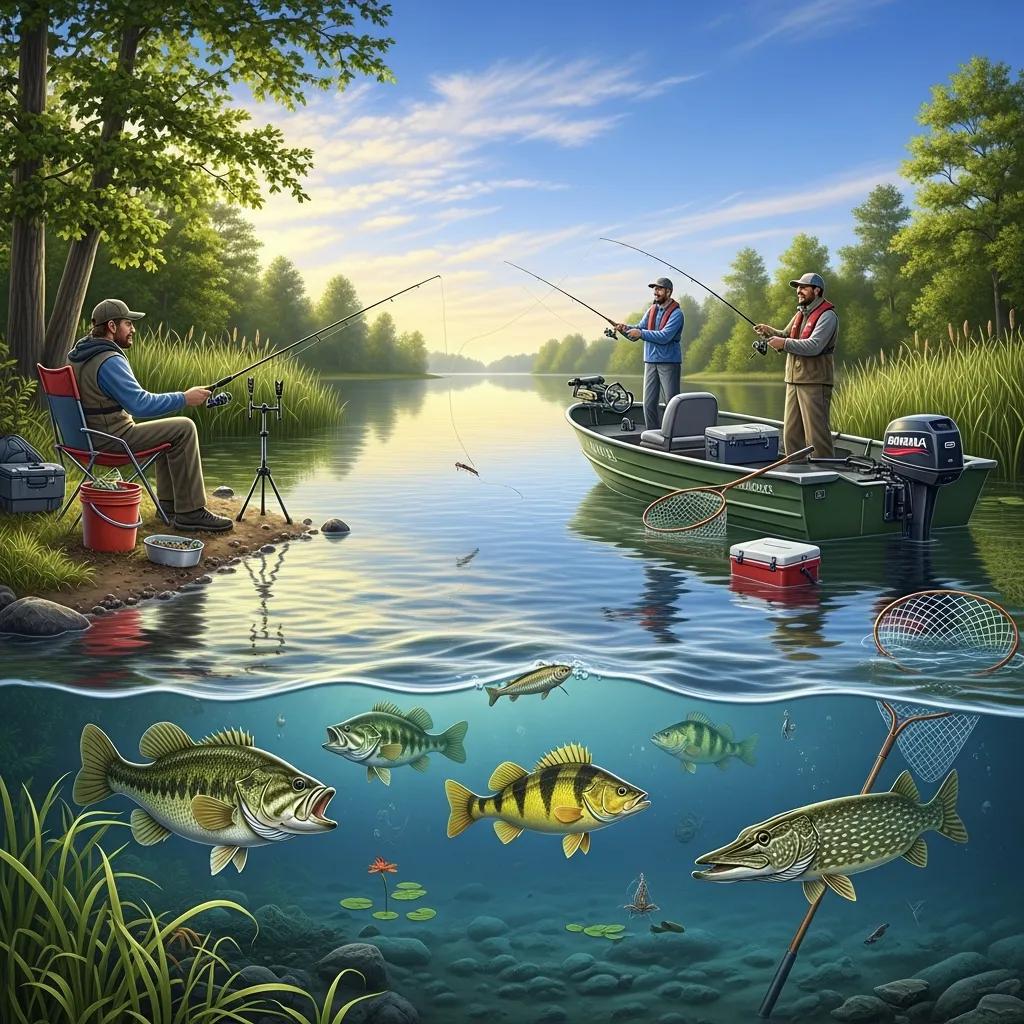
Michigan has many kinds of lakes for anglers — from small, stocked ponds at private campgrounds to larger inland lakes and reservoirs that hold a wider range of sport fish. Different species prefer different habitats: panfish stay near shallow vegetation, bass and walleye use deeper structure, and trout favor cold, oxygen-rich inlets. Knowing the likely fish and seasonal patterns helps you choose a campsite that matches your family’s skill level and expectations, and avoids disappointment at the water’s edge. Below is a short comparison to help you weigh convenience versus trophy potential when picking a lakeside site.
This table lays out common campground water types and the fish species you’re most likely to encounter, so you can compare on-site ponds to larger regional lakes at a glance.
What Fish Species Can You Expect at Michigan Lake Campgrounds?
At many campground waters you’ll find panfish, bass and crappie — and on larger lakes, walleye and perch. Panfish like bluegill and sunfish hang near docks and shallow vegetation, so they’re great for kids and first-time anglers who use simple rigs. Largemouth bass and crappie offer more of a challenge and are often targeted from shore or small boats with lures or live bait. Walleye tend to favor deeper structure and show strong seasonal patterns. Knowing which species dominate a lake helps you pack the right tackle and set realistic expectations for how the day will go.
When Are the Best Seasons for Fishing at Michigan Lakes?
Fishing changes with the seasons and the species you target. Spring spawn brings concentrated feeding and good shore action. Summer can be steady, with some midday slow periods, and fall often produces aggressive feeding as fish bulk up for winter. Panfish and bass are usually best from late spring into early summer when they move shallow; walleye often peak in spring and again in fall in cooler water. Weather and water levels matter too — heavy rain can push fish deeper, and low water can limit shoreline access. Plan your trip around the species’ seasons and local conditions to get the most out of your time on the water.
What Amenities Define Family-Friendly Campgrounds Near Michigan Lakes?
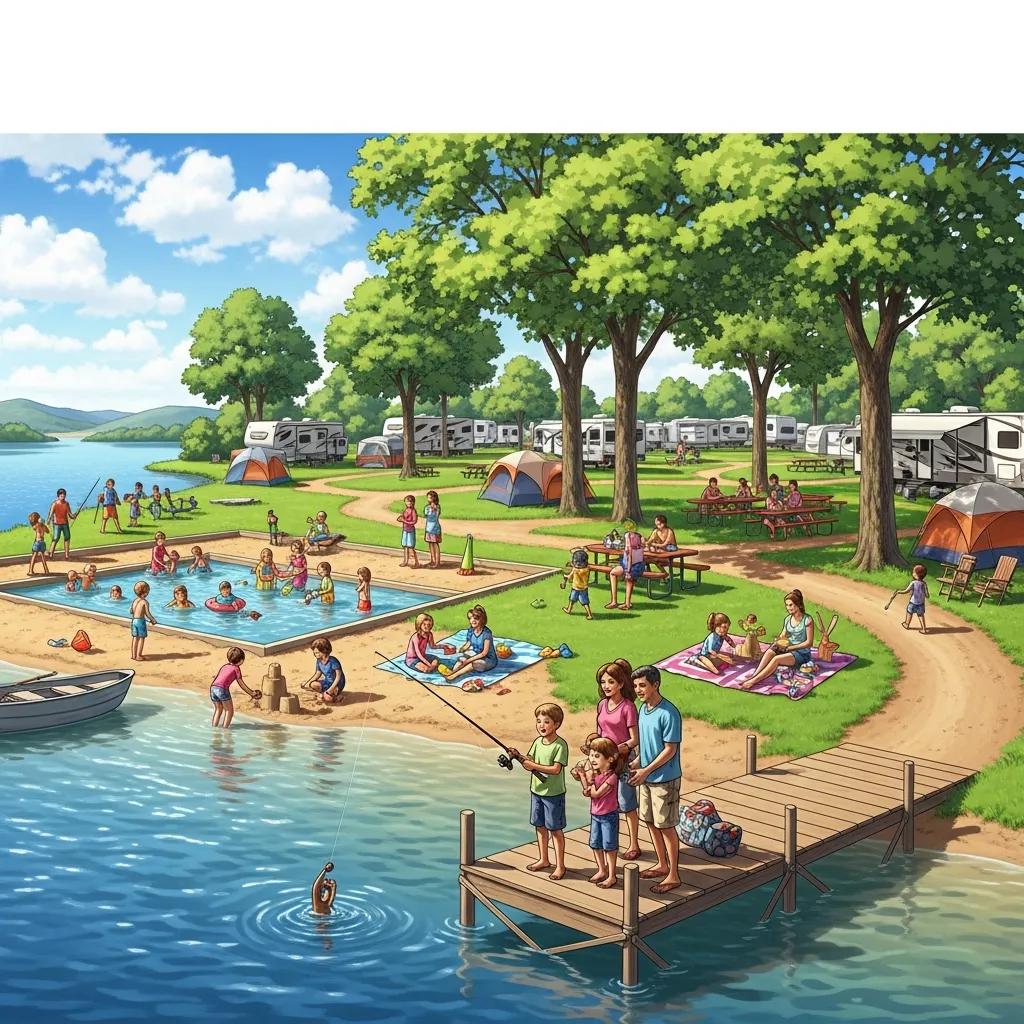
Family-friendly lakeside campgrounds combine safety, age-appropriate play, and conveniences that make weekends easier for parents. Look for a clearly marked swimming area with a gradual entry, playgrounds for different ages, clean restrooms and showers, and on-site conveniences like a camp store and pavilions for group meals. Together, these features create safe water access, simple entertainment options, and quick trips for supplies — all the things that keep a family trip smooth and fun. The short list below highlights the essentials to prioritize when you compare campgrounds.
Family-focused campgrounds typically offer these amenities and benefits:
- Designated swimming area: A marked swim zone keeps kids safe and focuses supervision.
- Playgrounds and shaded play spaces: Age-appropriate play areas keep children active and nearby.
- Clean restrooms and changing facilities: Comfort and hygiene matter on family trips.
- Camp store and pavilions: On-site supplies and covered gathering spots for meals and gear.
- On-site events and programming: Weekend activities take pressure off planning and create memories.
Use this quick list to prioritize what matters most for your group, based on kids’ ages and your comfort level.
Quick reference: compare common family amenities and the benefits they deliver so you can pick the campground that fits your group.
How The Oaks Campground matches these features
The Oaks Campground by GatherGrounds is an example of a family-focused property near Munith, Michigan that brings many of these amenities together. The site features a large fishing pond plus a separate swimming lake, playgrounds, pavilions, a camp store, and golf cart trails across roughly 160 acres, with easy access to Waterloo State Recreation Area. The Oaks also planned a Wibit water park for 2024 and runs weekend events for families — small touches that remove planning headaches and help visitors relax. For families comparing campgrounds, The Oaks shows how a private lakeside property can offer both safe water access and predictable programming.
What Should You Know About RV Camping Facilities at Michigan Lakeside Campgrounds?
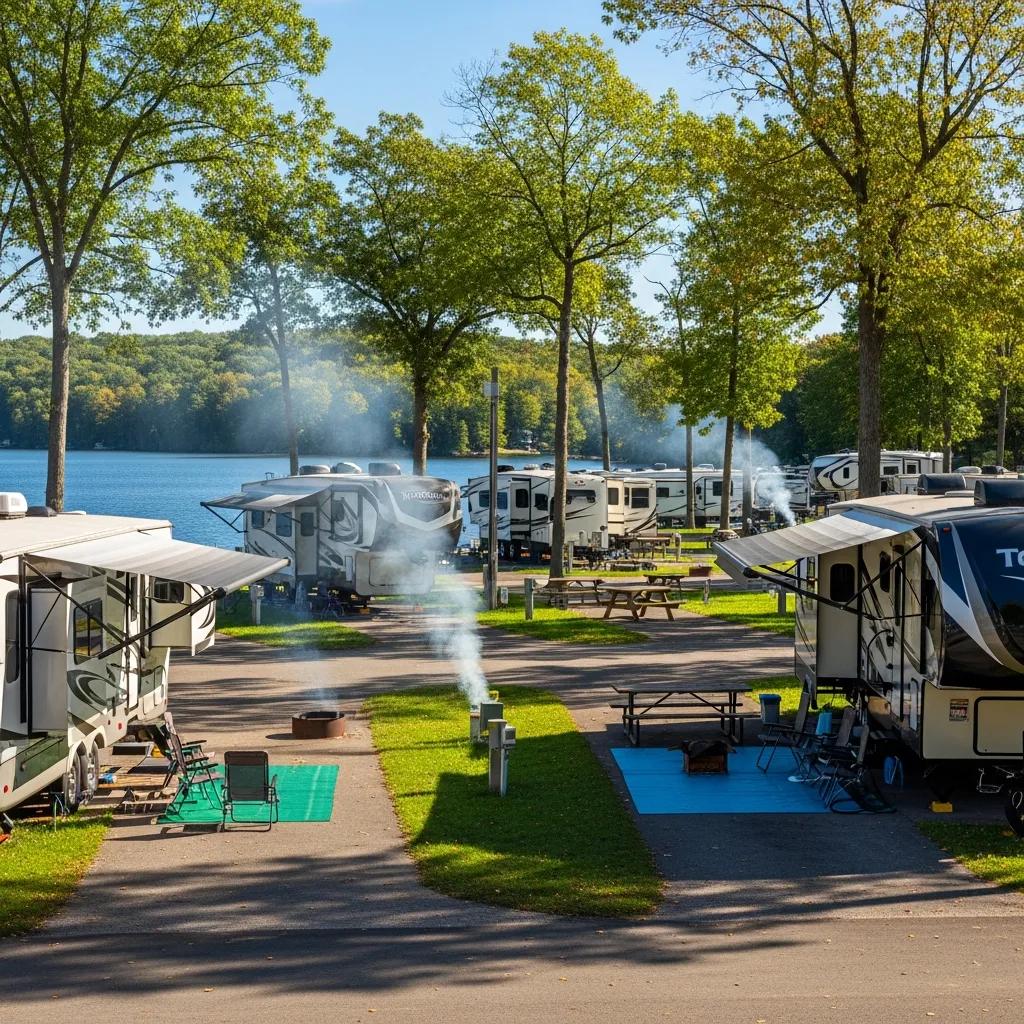
RV camping at lakeside sites means checking hookups, site length and layout, and on-site services that make longer stays comfortable. Key infrastructure includes clearly labeled electrical hookups and amperage, potable water access, sewer or dump stations, and roads wide enough for towing. Site spacing, shade, level pads and internal mobility (trails or cart paths) affect setup ease and comfort. Below is a short checklist RVers can use to confirm a site will work for their rig before booking.
RV site checklist for lakeside campgrounds — check these before you reserve:
- Confirm hookup amperage: Know if the site offers 30A or 50A power and what your rig needs.
- Check site length and clearance: Make sure the pad and overhang space fit your tow or motorhome.
- Locate potable water and dump station: On-site water and dumps reduce extra stops.
- Assess access roads and turning radii: Wider roads and pull-throughs make arrivals easier.
- Verify on-site conveniences: Wi‑Fi, camp store and fuel options matter for longer stays.
This checklist helps RV travelers avoid surprises and ties directly to the facility information you’ll see in reservation systems.
Quick table: common RV site types and typical hookup offerings to match your rig to the right site.
What Are the Essential RV Hookups and Services to Look For?
Must-have RV hookups include the right electrical amperage, potable water spigots, and sewer or dump access. Larger motorhomes often need 50A service for AC and appliances; knowing this ahead of time prevents power headaches. Potable water and dump stations make multi-day stays simpler, and clear pad dimensions plus pull-through options help ensure your rig fits safely. When you reserve, ask for site measurements and a map so you know what to expect on arrival.
How Do Golf Cart Trails and Camp Stores Improve the RV Camping Experience?
Golf cart trails and a stocked camp store add practical value to RV stays. Trails let families move kids and gear around a large campground without driving the RV, and they make short trips to facilities quick and safe. Camp stores save time by offering bait, snacks, basic gear and emergency items, cutting down on off-site errands — especially useful if you arrive late or are camping with children. These conveniences let you spend less time running errands and more time enjoying the lake.
How Does Location Influence Your Choice of Campgrounds Near Michigan Lakes?
Location affects travel time, access to larger public lands and the range of activities beyond the campground. Close proximity to cities makes lakeside camping an easy weekend plan, while nearby state or national recreation areas expand options for hiking, paddling and wildlife viewing. Local services, emergency access and drive-time logistics also matter: remote sites may require more self-sufficiency. The next section explains how drive times and access to Waterloo State Recreation Area shape convenience and day-trip possibilities.
Practical location considerations that influence trip planning:
- Drive time from major cities: Shorter drives make weekend trips and single-day plans easier for families.
- Access to larger recreation areas: Nearby public lands broaden trail and water options beyond the campground.
- Local services and emergency access: Proximity to towns supports quick resupply and medical help when needed.
Together these factors determine the kind of trip you can take and the gear you should pack, so it’s worth checking drive times and nearby attractions before you reserve.
Why Is Proximity to Major Cities Like Detroit and Ann Arbor Important?
Being within a reasonable drive of Detroit, Ann Arbor or other population centers makes lakeside campgrounds more practical for short getaways. For families and weekenders, a 1–2 hour drive turns camping into a true break that fits school and work schedules; longer drives usually require more nights to make the trip worthwhile. Close proximity also increases your options for last-minute reservations and eases logistics for hauling gear. If you want more frequent weekend trips, prioritize shorter drive times.
What Recreational Opportunities Does Waterloo State Recreation Area Offer Nearby?
Waterloo State Recreation Area opens up miles of trails, multiple lakes for paddling and fishing, and wildlife habitat for birding and foraging — all great additions to a campground stay. Trails range from easy family walks to multi-use routes for hiking and horseback riding, and the area’s lakes support varied fishing and paddling outings for day trips. Combining a private campground’s on-site amenities with nearby public lands gives families and outdoor enthusiasts more ways to explore across several days. Check trail maps and lake access points to plan outings that match your group’s energy and skill levels.
How Can You Plan and Book Your Ideal Camping Trip Near Michigan Lakes?
Good planning covers reservations, species and season timing, required licenses, and packing for safety and comfort. Sites fill up in peak season and on holiday weekends, so book early if you can — especially for larger RVs or family groupings. Anglers should check local stocking schedules and rules, and families should confirm swim-safety measures and programming schedules. The checklist below walks through the main tasks to handle before you leave.
Steps to plan and book your Michigan lakeside camping trip:
- Choose dates and check availability: Look at private campground calendars and state park reservation sites early for peak-season weekends.
- Confirm site specifics: Verify site type, pad dimensions, hookups and how close you’ll be to the amenities that matter most.
- Secure permits and licenses: Buy necessary fishing licenses and check local fire, leash and park rules before arrival.
- Pack gear and safety items: Bring life jackets, a first-aid kit, fishing tackle for your target species and sun protection.
- Plan arrival logistics: Note check-in times, directions and any campground rules so arrival goes smoothly.
What Are the Steps to Make Reservations at Michigan Campgrounds?
Reservations usually go through state park systems, private campground booking portals, or by phone for private properties. Timing matters — summer weekends fill fast. Start by narrowing dates and guest count, then compare state and private options for amenities and policies. When you pick a site, confirm pad size, amenity access and cancellation terms so there are no surprises. For family-focused private properties that run events, check their calendar so your stay lines up with planned programming.
These booking steps naturally lead to a final check of legal and safety rules, especially fishing licenses and campground policies.
What Regulations and Licensing Should Campers Be Aware Of?
Follow Michigan Department of Natural Resources fishing license rules, obey campground policies (quiet hours, pet rules and fire regulations), and watch for posted water quality or safety notices. Fishing without a valid license can lead to fines, so verify requirements for the specific waterbody and buy your license through official channels. Campgrounds may also enforce leash rules, designated fire rings and golf cart speed limits — following these keeps everyone safe and respectful. A quick rules check before you go removes surprises and helps your trip run smoothly.
Ready to book a family-friendly lakeside stay? Look for properties that pair lake access and child-focused programming with nearby recreation areas to get the most out of your visit. For a practical example, The Oaks Campground by GatherGrounds in Munith, Michigan offers on-site fishing and pond access, a swimming lake, playgrounds and pavilions, a camp store, golf cart trails, weekend events, and easy access to Waterloo’s recreation lands — and you can reserve dates through its official booking channels.
Frequently Asked Questions
What should I consider when choosing a campground for my family?
Focus on amenities that keep kids safe and entertained: a designated swim area, age-appropriate playgrounds, and clean restrooms. Look for clear safety signage or lifeguard info, plus conveniences like a camp store and family programming. Also consider how close you are to emergency services and grocery stores — those details matter when you’re traveling with children.
Are there specific fishing regulations I need to know about in Michigan?
Yes. Michigan has fishing regulations that vary by waterbody. Most anglers need a valid fishing license, and there are rules for size limits, bag limits and seasonal closures. Check the DNR’s site for the latest regulations, and confirm any campground-specific fishing rules like designated areas or bait restrictions before you cast.
What types of recreational activities are available at Michigan lakeside campgrounds?
Expect fishing, swimming, kayaking and hiking at many lakeside campgrounds. Many also offer trails for biking and walking, plus organized family events like games and crafts. Nearby state parks expand options for birding, paddling and longer hikes, so you can mix relaxed lake time with more active outings.
How can I ensure my RV is compatible with campground facilities?
Ask about electrical hookups (30A vs. 50A), pad length and clearance, and whether there’s a potable water hookup or dump station. Look for pull-through sites or wider roads if you tow, and request site dimensions or a map when you book. That simple check avoids tight fits and emergency late-night maneuvering.
What are the benefits of staying at a campground with golf cart trails?
Golf cart trails make it easy to move kids, gear and groceries around a large property without starting the RV. They speed up trips to the beach or store and are handy for short errands, especially with small children. Trails also let families explore the campground safely and comfortably between activities.
How do I find the best time to book a campground in Michigan?
Off-peak windows like late spring and early fall tend to be less crowded. For peak summer weekends and holidays, book as early as possible — sites fill fast. Watch for local events that might raise demand, and be flexible with dates to improve your chances of getting the site you want.
What should I pack for a camping trip near Michigan lakes?
Bring life jackets for everyone who’ll be on the water, fishing gear for your target species, and a well-stocked first-aid kit. Pack sun protection, insect repellent and layered clothing for variable weather. If you plan to swim or fish, include swimwear, proper footwear and the tackle you’ll need. Don’t forget basics like cooking supplies, food and some outdoor games to keep the family entertained.
Conclusion
Choosing the right Michigan lakeside campground comes down to matching amenities and location to your group’s needs. Prioritize water safety and family features, confirm RV hookups and site fit, and factor drive time and nearby recreation into your plans. With a little planning, you’ll maximize fun and create lasting memories with the people you care about. Start narrowing dates and comparing sites — your next lakeside getaway is waiting.