Unlock RV Park Marketing Secrets for Successful Campground Sales
Selling a campground is a unique endeavor, blending real estate strategy, hospitality marketing, and thoughtful exit planning for owners who’ve built both a thriving business and a lasting legacy. This guide walks you through how to sell your campground by detailing marketing tactics that boost occupancy and perceived value, the fundamentals of valuation like NOI and cap rate, the step-by-step sales process, buyer selection options, exit strategies, and practical pre-sale actions. You’ll discover how targeted RV park marketing drives measurable revenue uplift, how to calculate Net Operating Income and apply 2025 cap rate benchmarks, and how to choose between brokers, investment firms, or direct acquirers. Many owners face the challenge of maximizing price while preserving their property’s traditions; this article offers actionable checklists, comparison tables, and examples designed to bridge those needs. We’ll cover key marketing strategies, valuation mechanics with sample calculations, a comprehensive sales checklist, buyer comparisons, exit planning, and marketing-to-valuation mapping, so you can prepare your campground sale with clarity and confidence.
What Are the Key RV Park Marketing Strategies to Maximize Campground Sales?
Marketing your campground effectively means increasing bookings, stabilizing occupancy, and making your revenue streams more predictable—all factors that heighten buyer interest and valuation. Digital marketing and brand positioning work by boosting visibility and conversion, while enhancements to guest experience and local partnerships encourage repeat visits and extend seasonality. Effective pre-sale marketing transforms sporadic occupancy into documented demand trends that buyers use for projecting NOI, and that reliability can lower perceived risk, justifying tighter cap rates. Below are tactical pillars owners should prioritize before listing to convert marketing efforts into higher sale value and stronger buyer offers.
How Can Digital Marketing Boost Your RV Park’s Visibility?

Digital marketing for RV parks focuses on local discovery, a seamless mobile-first booking journey, and measurable paid channels that drive net revenue, not just vanity metrics. Local SEO and Google Business Profile optimization increase visibility for drive-market guests who convert at higher rates, while a smooth website booking experience and direct reservation engine reduce OTA commissions and improve net yield. Paid social and search campaigns during peak booking windows amplify seasonal promotions and produce measurable occupancy uplift, which can be translated into projected NOI in valuation discussions. Integrating analytics and conversion tracking turns marketing spend into documented revenue improvements that buyers value when forecasting future performance.
- Optimize local SEO and your business listing to capture nearby searchers.
- Improve website booking UX to reduce abandonment and lower OTA reliance.
- Run targeted social ads for peak-season inventory to increase immediate bookings.
These actions drive measurable bookings and provide the documentation buyers need to validate occupancy trends.
What Role Do Guest Experience and Reviews Play in Marketing?
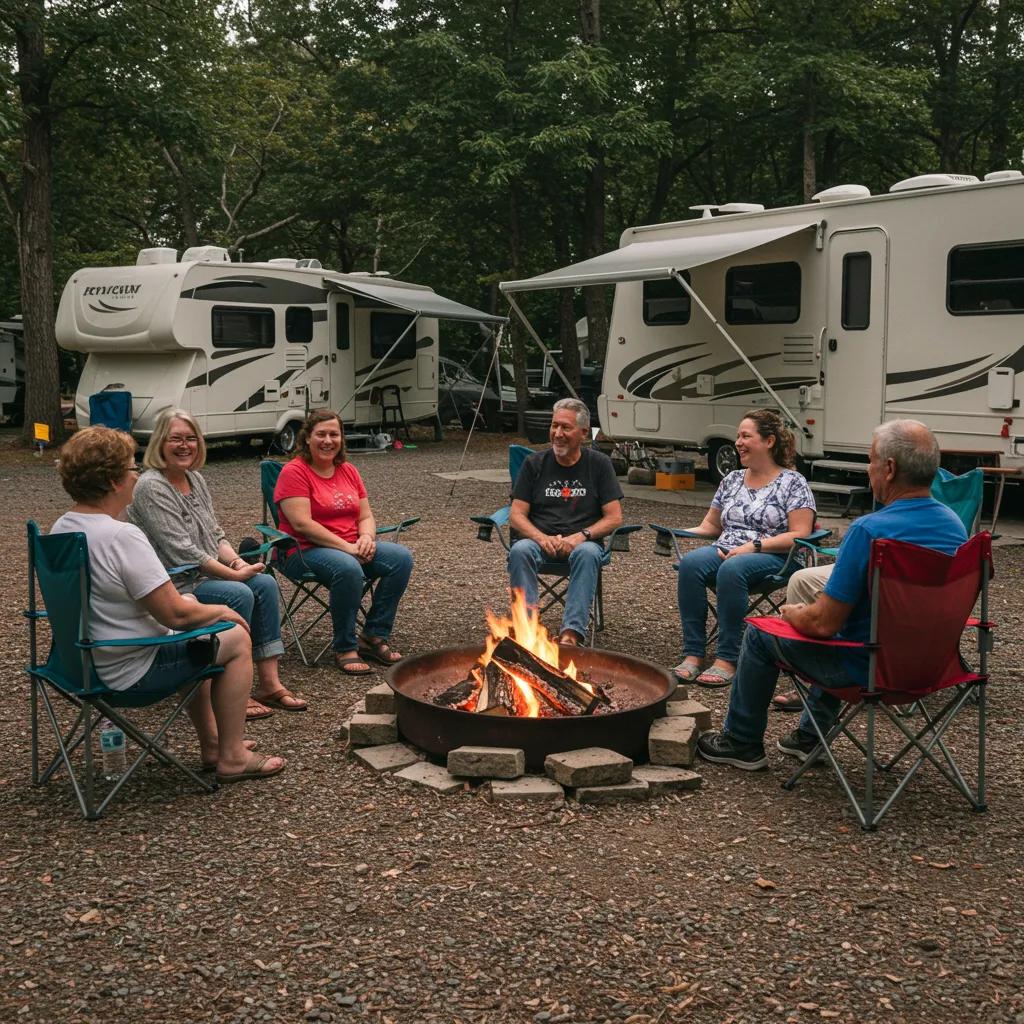
Guest experience and online reviews are direct indicators of future demand and operational quality that buyers interpret as lower operational risk and higher revenue potential. Systematic review solicitation, timely responses, and on-ground improvements—clean facilities, reliable utilities, friendly staff—boost ratings, increase direct bookings, and raise average nightly rates. Buyers examine historic review trends and net promoter dynamics to gauge reservation durability and guest retention, which feed into occupancy projections and cap-rate assumptions. Implementing a review-generation workflow and an operational checklist yields both better guest outcomes and stronger evidence for buyers evaluating the property.
- Solicit reviews after checkout with a standardized message and simple link.
- Track review scores quarterly and address recurring operational issues.
- Use high-scoring reviews in listing materials to demonstrate market reputation.
These steps convert guest sentiment into quantifiable signals that support higher valuation multiples.
How Does Branding Differentiate Your Campground in a Competitive Market?
Branding crafts a narrative and visual identity that helps an RV park command a premium by attracting a targeted guest segment willing to pay more per night or visit more frequently. A clear property story, consistent visuals across the website and listings, and a focus on signature amenities create differentiation and justify higher per-site values. Buyers evaluating multiple assets prefer properties with strong brand equity because guest loyalty and targeted marketing reduce customer-acquisition costs and improve margin stability. A concise branding checklist—story, logo, photography, amenity messaging—translates into better listing presentation and stronger buyer interest.
- Craft a one-paragraph property story that highlights unique experiences.
- Standardize photography and visual assets for listings and social channels.
- Emphasize signature amenities that support a higher per-site rate.
Strong branding accelerates buyer recognition of the asset’s revenue potential and reduces perceived repositioning risk.
What Local Partnerships and Promotions Can Enhance Your Campground’s Appeal?
Local partnerships and event-driven promotions expand your market reach, smooth off-season demand, and create packaged offers that increase average length of stay and per-visit spend. Collaborations with tourism boards, nearby attractions, and local retailers create bundled experiences—for example, attraction tickets plus a campsite discount—that appeal to multi-day visitors and boost midweek occupancy. Measured promotions that show consistent uplift provide buyers with documented demand channels and revenue source diversification. Negotiating revenue-sharing or referral agreements with local partners also demonstrates repeatable marketing channels that buyers value.
- Seasonal package with a local attraction and discounted campsite.
- Midweek “Work-and-Play” package with local coffee shop or restaurant partner.
- Event weekend promotion tied to regional festivals to capture overflow demand.
These partnerships show buyers how revenue can be diversified and scaled beyond walk-in demand.
How Is RV Park Valuation Determined Before Selling Your Campground?
RV park valuation centers on Net Operating Income (NOI) and capitalization rate (cap rate), linked by the formula Price = NOI ÷ Cap Rate; this mechanism translates documented revenue into sale price. NOI reflects recurring revenue less operating expenses and excludes debt service, while cap rate encodes buyer expectations about risk and growth potential. Buyers analyze historical occupancy, amenity mix, site types, and regional demand to assess both the NOI and the appropriate cap rate; the more predictable and documented the NOI, the more competitive the cap-rate outcome can be. Below is a sample comparison of RV park valuation metrics to help owners see how NOI and cap rate combine to generate price estimates.
Before the table, here is why the comparison matters: buyers will stress-test revenue assumptions and apply different cap rates based on asset quality, and presenting clear NOI documentation shortens valuation debates.
This table shows how a higher NOI and a lower cap rate (reflecting lower perceived risk or stronger growth prospects) multiply to a significantly higher sale price, which underscores the importance of marketing and operations that raise NOI and reduce perceived risk.
What Is Net Operating Income and How Does It Affect Valuation?
Net Operating Income is the stabilized annual revenue after operating expenses and is the foundation for campground valuation because it represents the cash flow available to a buyer. NOI = Gross Operating Income − Operating Expenses, where income includes site fees, hookups, amenity fees, and ancillary sales, and expenses include utilities, maintenance, staff, and property services. Accurate NOI calculation requires cleaned financials, consistent revenue categorization, and adjustments for owner-specific discretionary expenses. Preparing a transparent NOI with supporting documentation reduces buyer skepticism and speeds underwriting, which often leads to tighter cap-rate offers.
Owners should gather supporting statements and map revenue sources clearly so buyers can project NOI into future years.
How Does Capitalization Rate Influence Your RV Park’s Price?
The capitalization rate represents the buyer’s required return and market dynamics; the formula Price = NOI ÷ Cap Rate directly shows that a lower cap rate produces a higher sale price for the same NOI. In current 2025 benchmarks, a reasonable cap rate range for campgrounds is roughly 8%–10%, with top-quality, low-risk assets achieving cap rates near the lower end and smaller or more operationally risky parks at the higher end. Factors that push cap rates lower include stable occupancy, diversified revenue streams, strong branding, and documented growth trends. Conversely, perceived operational issues, inconsistent occupancy, or limited amenity appeal raise cap rates and reduce price.
Understanding how buyers apply cap-rate logic helps owners target improvements that shift a property into a lower-cap-rate category.
What Factors Impact Campground Value: Location, Amenities, and Occupancy?
Location, amenity quality, and occupancy history form the cornerstones of campground value—each part contributes to the whole valuation picture and affects cash flow stability. Location impacts regional demand, drive-market access, and seasonality; amenities (lake access, full hookups, updated restrooms) influence per-site rates and guest satisfaction; occupancy and ADR history determine recurring revenue and future growth. Buyers rank these factors differently based on their strategy—some prioritize high-growth markets, others seek operational efficiencies—so owners must present ranked improvements and evidence-based occupancy forecasts. A concise improvement checklist targeted to these factors increases buyer confidence and can lower cap-rate assumptions.
Owners should document demand drivers and improvement plans that directly tie to occupancy and per-site yield.
Should You Choose Professional Appraisal or Broker Valuation?
Professional appraisals provide formal, impartial valuations useful for financing and precise benchmarking, while broker valuations offer market-savvy pricing and buyer access with marketing support; direct acquirers present another route focused on speed and continuity. Appraisals are rigorous and helpful for financing but may be slower and costly; brokers add outreach and negotiation expertise but charge commissions; direct acquirers can simplify negotiation and offer a thoughtful transition with less marketing exposure. The right choice depends on priorities: achieve top market price (broker), secure financing (appraisal), or prioritize speed and legacy preservation (direct acquirer).
Choosing the valuation path should align with an owner’s goals—price maximization, confidentiality, or rapid, legacy-preserving transition.
After reviewing valuation options, owners often need a structured sale timeline and clear documentation to convert valuation into actual offers.
What Are the Essential Steps in the Campground Sales Process?
Selling a campground follows a clear sequence: property and financial preparation, confidential or public marketing, buyer vetting and offers, due diligence, and closing with transition planning. Each phase requires distinct deliverables—physical repairs and permits upfront, comprehensive financial statements for valuation, discreet buyer outreach if confidentiality matters, and organized document delivery during due diligence. A methodical sales process reduces transaction friction and increases the likelihood of offers at or above valuation expectations. The checklist below organizes the essential steps for owners preparing to sell.
- Prepare property and clean financials to present reliable NOI documentation.
- Choose a marketing approach (confidential or public) and identify qualified buyers.
- Manage offers, support due diligence, and negotiate contingencies ahead of closing.
A disciplined process helps preserve property value and accelerates buyer confidence during negotiations.
How Do You Prepare Your Campground for Sale: Maintenance and Financials?
Preparation focuses on prioritized repairs that yield the highest buyer ROI and on financial housekeeping that clarifies true NOI. Safety and code compliance items come first because buyers will flag issues during diligence, followed by high-visibility deferred maintenance that affects first impressions—paving, signage, restroom fixtures. Financially, owners should produce clean profit-and-loss statements, detailed site-level revenue records, and historical occupancy data for at least three years. Presenting a prioritized repair list and clean financial package converts uncertainty into predictable adjustments during buyer underwriting and supports a stronger asking price.
These preparatory actions set the stage for confidential outreach or public marketing, depending on owner preference.
What Documentation Is Needed to Sell an RV Park?
Buyers expect a comprehensive set of documents covering financial performance, property details, and legal compliance: P&L statements, tax returns, occupancy and reservation data, site maps, permits, utility agreements, leases, and any environmental reports. Clear documentation of ancillary revenues—store sales, RV service, event fees—helps buyers validate NOI and model future income. Organizing documents into a virtual data room and categorizing them by financial, operational, and legal folders speeds due diligence and projects professionalism, which can translate to stronger offers and faster closings.
A well-organized document package reduces buyer friction and shortens the due-diligence timeline.
How Should You Market Your Campground Confidentially for Sale?
Confidential marketing protects staff morale and guest experience while still reaching qualified buyers through blind listings, NDA-based information sharing, and selective broker or direct acquirer outreach. Use a short teaser with high-level metrics and require NDAs before releasing detailed financials; consider direct approaches to targeted buyers known for operating campgrounds or family-owned acquirers that value continuity. Confidential marketing balances exposure and price discovery, enabling owners to test market interest without disrupting operations. Vetting buyer qualifications upfront limits wasted diligence and expedites the offer-to-close timeline.
Confidentiality strategies lead naturally into buyer comparisons and selection criteria to choose the most aligned offer.
What Happens During Due Diligence and Closing the Deal?
Due diligence covers financial verification, environmental and physical inspections, and title and permit reviews, typically executed within a buyer-defined period after an accepted offer. Common contingencies include environmental assessments, utility capacity verification, and lease or vendor contract reviews; preparing for these ahead of time streamlines the process. Closing logistics include finalizing purchase agreements, addressing escrow conditions, and coordinating any transition services stipulated in the sale. Clear timelines, transparent responses to buyer requests, and readiness to supply requested documentation shorten the time to close and reduce the likelihood of renegotiation.
Efficient diligence and closing practices increase buyer trust and decrease last-minute price adjustments.
How Do You Choose the Right Buyer: Brokers, Investment Firms, or Direct Acquirers?
Choosing a buyer type depends on owner priorities: maximize price, ensure confidentiality, speed up closing, or preserve legacy and employee continuity. Brokers can maximize market exposure but charge commissions; investment firms seek financial returns and standardization; direct acquirers often offer smoother operational handoffs and can emphasize legacy preservation. Comparing fees, timeline, confidentiality, and legacy outcomes helps owners align the sale method with personal and financial goals. Below is a comparative table to make these trade-offs explicit and actionable.
This comparison helps owners choose a path based on priorities such as confidentiality, speed, net proceeds, and legacy preservation.
What Are the Benefits of Selling to a Family-Owned Company Like GatherGrounds Resorts?
Selling to a family-owned buyer often results in a more personalized transition that emphasizes legacy preservation, continuity of staff and guest experience, and respect for property traditions. For owners prioritizing those outcomes, a family-owned acquirer can craft a thoughtful handoff and maintain the property’s heart and soul while ensuring operational continuity. GatherGrounds Resorts, for example, focuses on the acquisition of existing campgrounds and RV parks, particularly those with over 130 sites, and emphasizes preserving the property’s traditions and family values during transition. Choosing a family-owned buyer can ease emotional complexities for retiring owners and often leads to a less disruptive operational changeover.
This buyer type directly contrasts with institutional approaches and ties back to exit strategy planning.
What Services Do Campground Brokers Provide and What Are Their Fees?
Campground brokers provide valuation guidance, marketing to a broader buyer pool, buyer vetting, and negotiation management, typically charging percentage-based commissions upon sale. Brokers are valuable when an owner seeks maximum market exposure, complex deal structuring, or access to institutional buyers; costs vary but should be weighed against the potential for a higher sale price. Brokers also support confidentiality via blind listings and can coordinate multiple offer scenarios to maximize seller leverage. Choosing a broker depends on whether the owner values top-dollar exposure over more private, direct negotiations.
A broker can be the right partner when market reach and price optimization are the primary objectives.
How Do RV Park Investment Firms Differ from Direct Acquirers?
Investment firms typically evaluate campgrounds as financial assets with a focus on standardization, operational efficiencies, and returns; direct acquirers often prioritize continuity, hands-on operation, and legacy. Investment firms may target lower cap rates through scale and may impose more aggressive operational changes post-acquisition, whereas direct acquirers may value the intangible benefits of a property’s brand and traditions. Timelines and due diligence depth tend to be longer with investment firms due to committee approvals and capital structures. Understanding these differences helps sellers choose the buyer whose post-sale plans align with their exit priorities.
These distinctions directly inform exit strategy decisions and succession planning.
What Are the Pros and Cons of Direct Sale Versus Using a Brokerage?
A direct sale can reduce fees and accelerate closing, while a brokerage can increase market exposure and potentially the sale price but adds commissions and a longer timeline. Direct sales are ideal for sellers valuing confidentiality and speed; brokers are preferable for owners who prioritize reaching a larger buyer pool and maximizing price. The trade-offs include negotiation leverage, marketing reach, and the complexity of deal structures that brokers can manage. Owners should assess their willingness to invest time in outreach versus paying for broker services to secure broader exposure.
Owners who prefer a legacy-preserving, private transition may find direct acquirers a better fit than a public brokerage process.
What Exit Strategies Should Campground Owners Consider When Selling?
Exit planning should align retirement goals, family succession preferences, tax considerations, and desired timing to optimize net proceeds and life transition outcomes. Options include full retirement sale to an external buyer, company buyout among partners, phased transitions, or partial sales that allow ongoing involvement. Each path has different implications for cash flow, tax timing, and operational continuity, so owners should coordinate with financial and legal advisors to map desired net proceeds to transaction structure. Below is a concise list of exit strategies and considerations to guide early planning.
- Full sale to an external buyer for retirement liquidity.
- Company or partner buyout to retain control within existing ownership.
- Phased transition or partial sale to smooth operational handoff.
How Can Retirement Planning Influence Your Campground Sale?
Retirement planning determines timing, desired net proceeds, and acceptable deal structures, including seller financing, earn-outs, or staggered transitions to provide ongoing income. Owners should estimate retirement cash-flow needs and choose a sale timeline that aligns with market cycles to maximize proceeds. Tax planning and coordination with advisors influences whether a lump-sum sale or structured payout better meets post-sale goals. Factoring retirement objectives into sale negotiations helps align buyer offers with the owner’s long-term financial security.
Clear retirement objectives simplify negotiations and inform whether to prioritize speed, price, or legacy preservation.
What Are Company Buyout and Individual Buyout Options?
Company and individual buyouts encompass negotiated terms among co-owners or family members, including cash-out formulas, seller notes, or equity transfers; these structures require legal, tax, and governance planning. Buyout options vary from financed purchases by remaining partners to staged ownership transfers tied to operational milestones. Each structure has tax consequences and operational implications that should be reviewed with advisors. Well-documented buyout agreements prevent future disputes and enable clear succession or sale timing.
Buyout planning often leads to clearer succession decisions and reduces later transaction friction if an external sale is later pursued.
How Do You Plan Succession for Family-Owned Campgrounds?
Succession planning for family-owned campgrounds requires clarity on leadership roles, operational responsibilities, governance structures, and communication among stakeholders to prevent disputes and ensure continuity. Formalizing succession in writing, establishing training timelines, and considering partial sales or phased transitions help balance family relationships with business needs. Including contingency plans for unexpected events and aligning roles with skills rather than titles produces smoother transitions. Thoughtful succession planning preserves the property’s legacy and supports value retention.
Succession clarity also signals stability to potential buyers or lenders, positively impacting valuation.
How Can You Maximize Your Return on Investment at Sale?
To maximize ROI at sale, owners should prioritize high-ROI capital improvements, document revenue growth from marketing initiatives, and present a professional financial package that supports projected NOI. Improvements that typically yield strong returns include utilities upgrades, campsite resurfacing, and amenity enhancements that raise ADR. Demonstrating occupancy uplift tied to specific marketing tactics or partnerships converts operational efforts into valuation drivers. Professional photos, a compelling property narrative, and a transparent data room support buyer confidence and competitive offers.
Combining targeted capital projects with strong marketing documentation creates both immediate revenue and long-term buyer appeal.
How Can RV Park Marketing Enhance Your Campground’s Sale Value?
Targeted RV park marketing directly increases bookings, stabilizes occupancy, and produces evidence of demand that buyers value when forecasting NOI and applying cap rates. Digital tactics reduce dependence on commission-heavy channels, guest-experience upgrades improve review-driven demand, branding differentiates per-site value, and local partnerships expand demand windows. Measuring marketing ROI in terms of occupancy uplift and incremental NOI provides the quantitative proof buyers need to justify higher offers. The table below maps common marketing tactics to estimated impacts and implementation considerations so owners can prioritize actions that produce valuation improvements.
Before the table, note that mapping tactics to expected NOI uplift helps translate marketing investment into valuation increments.
Implementing a robust revenue management strategy can significantly impact a campground’s profitability and attractiveness to buyers.
Enhancing Campsite Revenue Management: The MERMCAMP Model for Outdoor Hospitality
Revenue Management (RM) maximizes revenue and profitability in industries with perishable goods. This study proposes the MERMCAMP model (Model for Evaluation of Revenue Management in Camping Industry), a framework developed to evaluate RM implementation in outdoor hospitality. The model is based on previous research and was further refined through an expert consensus in a qualitative Delphi survey. A panel of 10 experts participated in several rounds of interviews to identify and evaluate key RM practises for the camping sector. MERMCAMP comprises 119 items categorized under eight key elements: culture, forecasting, segmentation, pricing, distribution channels, competitors, evaluation and digitalization. The model provides a practical and scalable approach for campsite operators to improve pricing, inventory management and business performance.
Indoor vs. outdoor hospitality: enhancing campsite revenue management implementation with MERMCAMP, S Janković, 2025
What Digital Marketing Strategies Are Most Effective for Campgrounds?
The most effective digital strategies emphasize discoverability and direct booking: local SEO, optimized Google Business Profile, mobile-first booking flow, email remarketing, and targeted paid search for peak offers. Reducing OTA reliance through a better direct booking experience increases net per-booking revenue, while email and remarketing lift repeat bookings and lifetime value. Tracking conversion metrics—click-through rate, booking conversion, cost per acquisition—creates a data-driven narrative for buyers about marketing efficiency. Prioritizing these strategies yields measurable NET improvements to revenue that translate into stronger valuation multiples.
Documented metrics and conversion improvements make marketing impacts tangible to potential acquirers.
How Does Enhancing Guest Experience and Online Reviews Increase Value?
Improved guest experience and higher review scores increase occupancy, ADR, and referral rates—all of which raise NOI and reduce perceived operational risk for buyers. Operational changes such as streamlining check-in, improving restroom facilities, and enhancing site cleanliness lead to measurable increases in repeat bookings and positive review velocity. Buyers evaluate review trends to estimate reservation durability and future revenue stability, so consistent review improvement over time is persuasive. A simple case example: improving review scores by one full star often correlates with higher occupancy and easier price negotiation during sale.
Showing a timeline of review improvement and corresponding occupancy uplifts helps buyers translate reputation into valuation.
Why Is Branding Important to Differentiate Your Campground Before Sale?
Strong branding clarifies target guest segments and justifies above-market per-site pricing by creating perceived scarcity or premium positioning. Narrative-driven listings that highlight unique experiences—family traditions, natural features, curated events—attract guests who pay higher ADRs and stay longer. For buyers, branding reduces repositioning risk because guest loyalty and identity are already established. Presenting polished branding assets in the sales package—photography, story, amenity showcases—helps buyers value intangible benefits and can narrow cap-rate negotiation.
A compelling brand reduces the need for immediate post-sale repositioning, which buyers often prefer.
How Do Local Partnerships and Promotions Support Marketing Efforts?
Local partnerships and promotions broaden reach into feeder markets and create package offers that lengthen stays and improve midweek occupancy. Working with tourism boards, attractions, and local retailers produces bundled promotions that appeal to multi-day travelers and capture event-driven demand. Tracking promo performance and attributing incremental bookings to specific partnerships provides concrete evidence buyers can use to project future revenue. When promotions are repeatable and measurable, they become tangible assets in the sales narrative and help justify premium offers.
Measured partnerships demonstrate diversified demand channels that buyers prize during valuation.
What Common Questions Do Campground Owners Have About Selling Their RV Parks?
Campground owners commonly ask about marketing before sale, the best sales approach, accurate valuation methods, the role of brokers, and cap-rate benchmarks for 2025; clear, concise answers help reduce uncertainty and guide decision-making. This FAQ-style section provides short, actionable answers optimized for quick reference and decision clarity. Below are concise responses to the most frequent owner questions that tie marketing actions to valuation outcomes and outline practical next steps.
How Do You Market an RV Park Effectively Before Selling?
A focused pre-sale marketing plan prioritizes quick, high-impact items that improve bookings and document demand: optimize GBP and website booking flow, run targeted seasonal promotions, amplify guest reviews, and prepare professional listing assets. Implementing these actions within 30–90 days produces measurable occupancy and revenue changes that buyers can validate. Document campaign performance, conversion rates, and revenue uplifts to support valuation discussions. These steps create quantifiable improvements that directly translate into stronger buyer offers.
Documented short-term wins make a compelling case during buyer underwriting and negotiation.
What Is the Best Way to Sell a Campground?
The best sale approach depends on seller priorities: use a broker for broad market exposure and price maximization, choose a direct acquirer for speed and confidentiality, or pursue a hybrid strategy for targeted outreach. Define goals—maximum price, confidentiality, or legacy preservation—then select the buyer type and prepare corresponding documentation and marketing materials. A structured checklist and timeline help align expectations and expedite the sale. Matching method to priority ensures the sales process supports the owner’s personal and financial objectives.
A clear decision map reduces negotiation ambiguity and speeds the path to closing.
How Do You Value an RV Park Accurately?
Accurate valuation relies on NOI calculation and applying an appropriate cap rate: Price = NOI ÷ Cap Rate, with 2025 cap-rate benchmarks typically around 8%–10% depending on risk and asset quality. Supplement NOI-based valuation with per-site comparables and regional market analysis to triangulate a realistic range. Seek a professional appraisal or broker opinion if financing or market benchmarking is required. Accurate valuation requires clean financials and documented occupancy trends to validate underwriting assumptions.
Presenting multiple valuation perspectives demonstrates thorough preparation and supports seller pricing.
What Is an RV Park Broker and When Should You Use One?
An RV park broker markets the property, sources buyers, vets offers, and manages negotiation; brokers are useful when maximizing sale price and accessing a broad buyer pool outweigh broker fees. Use a broker when you want expert market positioning, complex deal structuring, or exposure to institutional buyers. Brokers also facilitate confidentiality and blind listings when required. Evaluate broker track record and fee structure relative to expected uplift in sale price to determine if their services justify the cost.
Selecting a broker should align with your sale priorities and timeline.
What Is a Good Cap Rate for an RV Park in 2025?
A good cap rate for an RV park in 2025 generally falls in the 8%–10% range, with the lower end for higher-quality, stable assets and the higher end for smaller or higher-risk properties. Cap rates reflect buyer return expectations, local market strength, and property-specific risk factors. Owners should use local comps and documented NOI to negotiate a cap rate aligned with asset quality. Consulting market sales data ensures cap-rate expectations match prevailing market conditions.
Use local comparables and NOI-strength evidence to justify a cap-rate target.
For owners ready to explore a sale with a family-focused, legacy-preserving approach, consider a no-pressure conversation with GatherGrounds Resorts about the acquisition of existing campgrounds and RV parks, particularly those with over 130 sites, or options that include management, and operation of campgrounds and RV parks and a thoughtful transition for owners. GatherGrounds Resorts emphasizes preserving the property’s heart, soul, traditions, and family values while offering continuity of operations following acquisition. If preserving legacy alongside a smooth transaction is a priority, discussing these specific options can clarify whether a direct-acquirer path matches your exit goals.
Frequently Asked Questions
What are the most common mistakes campground owners make when selling?
Common mistakes include inadequate financial documentation, neglecting property maintenance, and failing to optimize marketing strategies before the sale. Owners often underestimate the importance of presenting clean financials and a well-maintained property, which can significantly impact buyer perception and valuation. Additionally, not having a clear marketing plan can lead to missed opportunities for showcasing the campground’s strengths. Engaging in thorough preparation and addressing these areas can help owners avoid pitfalls and achieve a successful sale.
How can I ensure a smooth transition for staff and guests during the sale?
To ensure a smooth transition, communicate openly with staff and guests about the sale process and what it means for them. Establish a transition plan that includes training for new management and maintaining operational continuity. Consider involving key staff in discussions to address their concerns and ensure they feel valued during the change. Additionally, maintaining guest experience standards throughout the transition will help preserve loyalty and minimize disruptions, making the property more attractive to potential buyers.
What role does timing play in selling a campground?
Timing is crucial when selling a campground, as market conditions can significantly influence sale price and buyer interest. Selling during peak camping seasons can attract more buyers and potentially lead to higher offers, while off-peak times may result in lower demand. Additionally, aligning the sale with personal circumstances, such as retirement or market trends, can optimize financial outcomes. Owners should monitor market conditions and plan their sale to coincide with favorable timing for both personal and financial goals.
How can I leverage social media in my campground marketing strategy?
Social media can be a powerful tool for campground marketing by enhancing visibility and engagement with potential guests. Create visually appealing content showcasing the campground’s amenities, events, and guest experiences. Utilize targeted ads to reach specific demographics and promote seasonal offers. Engaging with followers through contests, polls, and user-generated content can foster community and encourage repeat visits. Regularly updating social media channels with fresh content keeps the campground top-of-mind for potential guests and can drive bookings.
What are the benefits of having a professional appraisal before selling?
A professional appraisal provides an unbiased valuation of the campground, which can help owners set a realistic asking price. It also identifies potential issues that could affect value, allowing owners to address them before listing. An appraisal can enhance credibility with buyers, as it demonstrates a commitment to transparency and due diligence. Additionally, having a clear understanding of the property’s worth can inform negotiation strategies and help owners maximize their return on investment during the sale process.
How can I prepare my campground for a successful sale?
Preparing your campground for sale involves several key steps: conduct necessary repairs and maintenance to enhance curb appeal, organize financial records to present a clear picture of profitability, and optimize marketing materials to highlight the campground’s unique features. Additionally, consider implementing guest experience improvements to boost reviews and occupancy rates. A well-prepared property not only attracts more buyers but also justifies a higher sale price, making it essential to invest time and resources into the preparation process.
Conclusion
Successfully selling a campground requires a strategic blend of effective marketing, accurate valuation, and careful buyer selection to maximize both price and legacy preservation. By implementing targeted marketing tactics and maintaining clear financial documentation, owners can enhance their property’s appeal and justify higher offers. Engaging with a family-focused buyer like GatherGrounds Resorts can ensure a smooth transition while honoring the campground’s traditions. If you’re ready to explore your options, reach out to us for a no-pressure conversation about your campground’s future.