
Top Techniques for Selling Your RV Park Successfully: Expert Tips to Maximize Your Campground Sale Price
Selling your RV park successfully means capturing true market value while creating a smooth transition for staff, guests, and the local community. This guide teaches practical techniques to maximize sale price and reduce friction, covering valuation fundamentals, property preparation, financial organization, sales-path decisions, the sales process, financing structures, and family-owned buyer considerations. Owners who want to prioritize legacy and continuity will find specific guidance on preparing documentation, improving NOI, and aligning upgrades to 2025 market trends, and can also explore selling directly to family-operated buyers like GatherGrounds Resorts for a thoughtful transition. The article begins with valuation—how NOI and cap rate convert operating performance into market value—then moves to property and operational improvements that deliver per-site uplift, explains the financial documents buyers demand, compares broker and direct-buyer options, walks through the sales timeline, and outlines financing strategies. Throughout, readers will find checklists, comparison tables, and sample calculations to support decision-making when thinking about how to sell my RV park or how to sell a campground quickly.
How Do You Accurately Value Your RV Park for Sale?
Valuing an RV park combines operating performance, market capitalization, and per-site comparables to determine an answer buyers trust. Net Operating Income (NOI) measures the park’s recurring cash flow after operating expenses, and capitalization rate (cap rate) translates that NOI into market value, so NOI → determines → value is the core semantic triple. Accurate valuation helps sellers set expectations, target upgrades, and justify the asking price during buyer negotiations. The right valuation approach depends on buyer type: investors focus on NOI and cap rates, while owner-operators may emphasize per-site value and amenity quality, so choosing a method follows your desired buyer pool.
What Are the Key Campground Valuation Methods, Like NOI and Cap Rate?
NOI is total revenue minus operating expenses, excluding financing and owner draws; it isolates property-level performance. Cap rate is the market rate of return that buyers use: Value = NOI / Cap Rate, which gives a straightforward conversion from performance to price. Per-site value divides a comparable park sale price by site count to produce site-level benchmarks useful in smaller markets or when buyer preferences hinge on site quality. For example, a park with an adjusted NOI of $200,000 and a market cap rate of 6% yields an implied value near $3.33M, illustrating how NOI and cap rate interact to set expectations for offers.
How Does Professional Appraisal Impact Your RV Park’s Sale Price?
A professional appraisal provides an independent estimate of value using income, cost, and sales-comparison approaches, and appraisers examine financials, site condition, and local comparables to validate price. Engaging an appraiser early clarifies realistic cap rates, surfaces condition issues that affect value, and supports lender underwriting when buyers use bank financing. Prepare for appraisal by organizing P&L statements, rent rolls, occupancy reports, and recent capital expense records; this reduces adjustments and speeds review. A credible appraisal often strengthens negotiation leverage by aligning seller and buyer expectations, which in turn shortens time-to-close.
What Market Trends Affect RV Park Valuation in 2025?
Market trends in 2025 affecting valuations include steady consumer interest in outdoor recreation, a segment of long-term stay demand, rising expectations for connectivity and amenities, and a constrained pipeline of quality parks in many regions. These trends compress cap rates for well-located, amenitized parks and increase per-site values where utilities and bathhouse quality are strong. Owners should map upgrades—improving hookups, Wi-Fi, and bathhouses—to buyer priorities to capture trend-driven premium value. Understanding these forces helps sellers choose valuation method and prioritize investments that most directly increase NOI and per-site price.
Before reviewing valuation numbers below, note that the table summarizes typical methods and ranges to help owners reconcile NOI, cap rate, and per-site approaches.
This comparison clarifies how different valuation methods emphasize operating income, market return, or physical site attributes and sets the stage for targeted preparation and negotiation.
How Should You Prepare Your Campground for a Successful Sale?
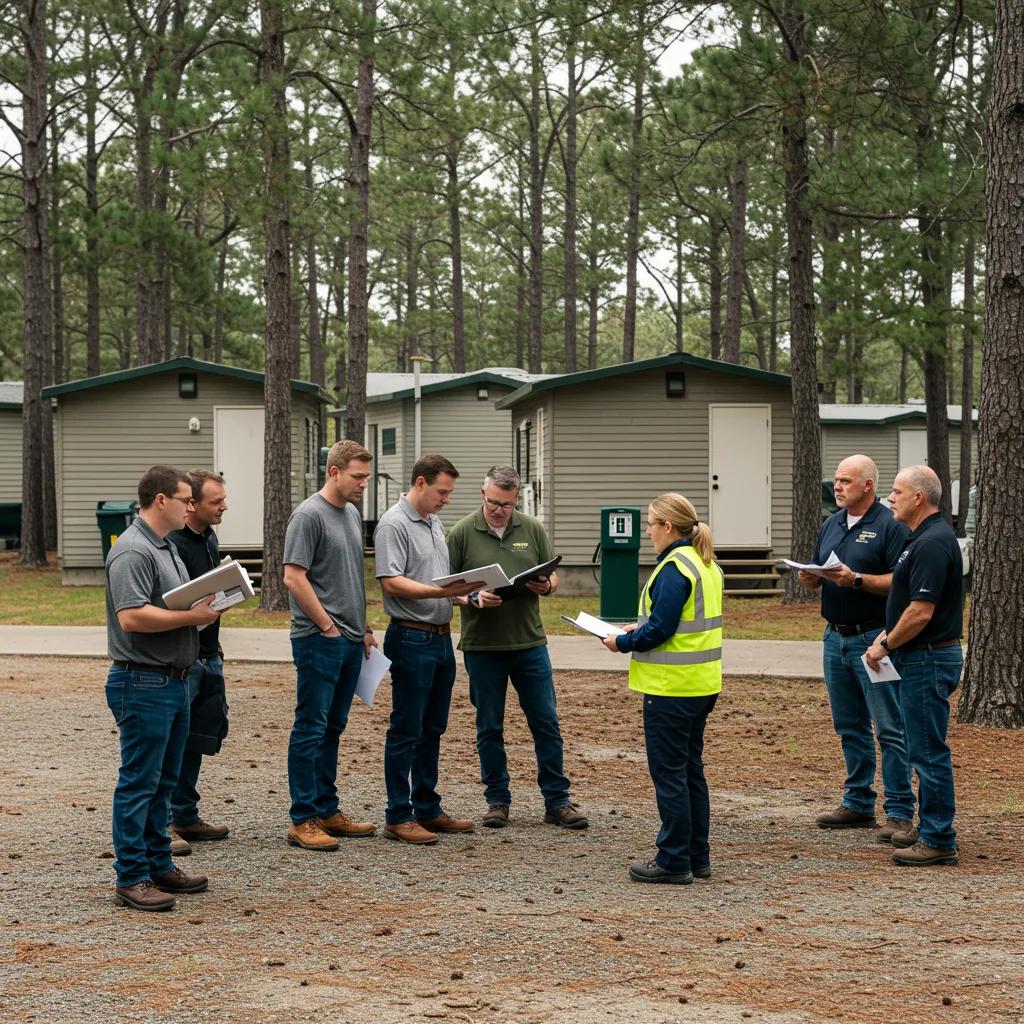
Preparing a campground for sale increases buyer interest and often raises offers by improving perceived and actual value through targeted capital and operational updates. Focus first on safety, compliance, and infrastructure—electrical, septic, roads—because buyers discount properties with deferred maintenance. Secondary investments in guest-facing amenities such as bathhouses, reliable Wi-Fi, and upgraded hookups typically yield strong per-site value uplift and expand buyer pool to both investors and operators. Operational clarity—documented SOPs, reservation systems, and reconciled financials—reduces perceived transaction risk and accelerates due diligence, so combining property and process work produces the best results.
What Property Maintenance and Upgrades Increase Your RV Park’s Value?
Prioritize safety and code compliance upgrades because these eliminate major buyer objections and preserve valuation. After infrastructure, invest in high-return guest amenities: modern bathhouses, reliable electrical hookups, and broadband connectivity directly support higher rates and occupancy. Road grading, site leveling, and clear landscaping enhance curb appeal and marketing photography, which can accelerate buyer interest. Documenting costs and expected per-site uplift for each improvement supports negotiation and shows buyers where value has been intentionally created.
Before listing, owners should use a concise pre-listing checklist to sequence repairs and marketing, which is the subject of the next section and helps synchronize contractors, staff, and photography.
How Can Operational Efficiency Boost Buyer Interest?
Operational efficiency improves measured performance and reduces transition friction, and that makes buyers more comfortable offering full value. Implement or standardize a reservation and billing platform to produce clean occupancy and ADR metrics, and prepare SOPs for core tasks such as check-in, grounds maintenance, and revenue reconciliation. Maintain staff training records and role descriptions to demonstrate continuity plans for new owners. These operational items both increase verified NOI and lower perceived management risk, which can lead to faster closings and higher net proceeds.
What Are the Essential Steps in a Pre-Listing Checklist?
A targeted pre-listing checklist ensures repairs, documentation, and marketing assets are ready in a sequence that supports listing momentum. Start 90 days out with a full property inspection and financial reconciliation, 60 days out with prioritized repairs and amenity upgrades, and 30 days out for professional photography, drone shots, and mapping. Prepare marketing assets such as an amenity list, site map, and summarized P&L to present a consistent asset narrative. A staged timeline reduces last-minute surprises and positions the park to attract competitive offers.
How Do You Organize Financial Records to Facilitate Your RV Park Sale?

Organized financial records build buyer confidence by making NOI traceable and verifiable, and clear documentation often raises offer quality and accelerates due diligence. Key documents include multi-year Profit & Loss statements, tax returns, occupancy reports, rent rolls for leased sites, and a capital expenses log. Present adjusted NOI schedules that reconcile owner-drawn expenses and normalize discretionary spending to reveal true operating performance. Transparent financial presentation reduces underwriting friction for both bank lenders and direct buyers and enables more accurate appraisal results.
Which Financial Documents Are Critical for Buyers?
Buyers expect comprehensive financial files to evaluate acquisition returns, and providing these documents upfront reduces requests during due diligence. Essential items include:
- Multi-year Profit & Loss (P&L) statements showing revenue lines and operating expenses.
- Federal tax returns for the same periods to reconcile reported income.
- Occupancy and reservation reports, including ADR and length-of-stay breakdowns.
- Rent rolls, vendor contracts, and recent capital expense receipts.
Organizing these files into labeled folders and an executive summary lets buyers and lenders assess the property quickly and increases the likelihood of stronger, clean offers.
How Does Financial Transparency Influence Buyer Confidence?
Financial transparency lowers perceived risk, which often results in higher offers and fewer contingencies; showing reconciled NOI and clear CapEx history helps buyers and underwriters rely on your numbers. Where anomalies exist, provide written explanations and supporting invoices to preempt valuation adjustments. Consider a third-party compilation or CPA-reviewed statement if numbers are complex or if you expect lender scrutiny. These actions bridge trust gaps between sellers and buyers, making negotiation smoother and reducing days-on-market.
What Are Your Options for Selling: Broker vs. Direct Buyer?
Sellers typically choose between listing with a broker to maximize market exposure or negotiating directly with buyers—each route has trade-offs in price, timeline, and control. A broker can generate broader interest and competitive bids, which often pushes price, while a direct buyer transaction can be faster and more private and may prioritize legacy or operational continuity. Decision factors include the seller’s priority (maximum price vs. smooth transition), confidentiality needs, and the complexity of the asset. Use a structured comparison to map goals to the best sales path.
What Are the Benefits of Selling Directly to a Family-Owned Buyer Like GatherGrounds Resorts?
Selling directly to a family-owned operator can preserve campground character, simplify negotiations, and support a transition that honors legacy and staff continuity. Family-owned buyers often value long-term stewardship and may offer flexible transition plans that include phased handovers and owner consultation, which benefits retiring owners who want an orderly handoff. This route is often a fit for parks that meet specific size and region profiles and for owners prioritizing culture and community. Evaluate direct offers alongside market bids to see how intangible values align with monetary terms.
When Should You Consider Using an RV Park Brokerage or Real Estate Agent?
Engage a specialist broker when broad market exposure, investor outreach, and structured bidding processes are necessary to maximize price. Brokers add value when you need deep networks to reach institutional investors, when zoning/lease complexities exist, or when confidentiality must be balanced with a competitive marketing process. Select brokers with specific campground experience, a track record of closed transactions, and clear marketing plans to ensure the listing represents the asset effectively. A broker can also manage negotiation logistics and vet buyer qualifications to protect seller interests.
How Do You Choose the Right Sales Path for Your Campground?
Choose a sales path by mapping seller priorities—maximize sale price, speed of close, confidentiality, or legacy preservation—to the strengths of each route. If price maximization is top priority, a broker-led auction or broad marketing process often yields the best outcome. If a low-friction transition is primary, targeted outreach to qualified operators, including family-owned buyers, may be preferable. Obtain multiple opinions, including a broker market analysis and curated direct offers, to compare net proceeds and transition terms before committing to one path.
What Is the Step-by-Step Sales Process for Selling Your RV Park?
A clear, stepwise process reduces surprises and keeps a transaction moving from listing through closing; understanding each phase helps sellers plan timing and resource needs. The typical stages are preparation and listing, buyer qualification and marketing, due diligence and negotiation, and closing with transition planning. Each stage requires document readiness—financials, permits, environmental records—and proactive communication with staff and the community to preserve value. Early alignment on timeline expectations and contingency handling reduces deal fatigue and supports a successful sale.
How Do You List and Market Your Campground Effectively?
Effective marketing emphasizes high-quality photography, a clear amenity list, and accurately presented financials to attract qualified buyers and justify pricing. Use professional photos, drone imagery, and a detailed site map to convey layout and asset quality, and prepare an executive summary and offering memorandum that highlights stabilized NOI, occupancy trends, and amenity strengths. Targeted distribution to campground operators, family-owned buyers, and specialist brokers increases the likelihood of relevant inquiries. Clear marketing accelerates buyer qualification and leads to more efficient negotiation.
What Does Due Diligence Involve for Sellers?
Seller-side due diligence involves preparing documents and access to streamline buyer investigations and minimize discovery-based renegotiations. Key items include environmental reports, title and easement records, utility agreements, operating contracts, maintenance logs, and proof of recent capital expenditures. Organize these records in a virtual data room with indexed folders and provide guided site tours to facilitate inspections. A proactive due diligence approach reduces surprises that can derail offers and shortens the path to closing.
How Do Negotiation and Closing Work in an RV Park Sale?
Negotiation focuses on price, contingencies, earnest money, and transition terms such as staff retention and phased handovers, with common contingencies including financing, environmental, and lease confirmations. Use clear contingency timelines and escrow arrangements to protect both parties, and consider arbitration or defined dispute-resolution clauses for complex issues. Closing logistics cover title transfer, permit assignments, escrow funding, and recording deeds, and successful closings often include a documented transition plan addressing staff, vendors, and customer communications. Effective negotiation balances protecting seller value with addressing buyer concerns to reach a durable agreement.
How Can Financing Options Affect Your Campground Sale?
Financing structure significantly shapes buyer pool, sale price, and time-to-close; offering seller financing can expand qualified buyers, while insisting on cash may shorten the timeline but narrow buyers. Seller financing can increase sale price or facilitate a phased payout, while bank loans require documented NOI, appraisals, and typically a down payment that limits some buyers. Presenting clear financing options—cash, bank loan, or seller terms—broadens interest and lets sellers optimize between price and closing certainty. Below is a comparative EAV table to show typical trade-offs.
What Are the Advantages and Risks of Seller Financing?
Seller financing can expand the buyer pool to owner-operators and smaller investors who lack institutional down payments and can allow sellers to command premium pricing by offering attractive terms. Risks include borrower default and the need for lien management, which sellers mitigate with properly drafted promissory notes, security interests, and escrowed reserves. Tax timing and income recognition also change depending on amortization and balloon structures, so consult tax and legal advisors. When structured carefully, seller financing aligns incentives and smooths transition while preserving value.
How Do Traditional Bank Loans Impact Buyer Offers?
Bank underwriting focuses on verified NOI, property condition, and borrower credit, so clean financials and recent appraisals materially speed loan approval. Typical lender requirements include a debt-service coverage ratio test, a minimum down payment, and environmental and title reviews, which can lengthen closing timelines. Sellers can support lender processes by providing reconciled financial statements, a current appraisal, and documented CapEx history. Facilitating lender access to information reduces delays and increases the pool of qualified buyers who can perform.
Why Choose GatherGrounds Resorts for a Thoughtful and Family-Focused Campground Transition?
GatherGrounds Resorts is a family-owned company focused on acquiring and operating campgrounds and RV parks with an emphasis on preserving unique character and family values. Their approach centers on stewardship rather than institutional scale, and they prefer parks that align with their acquisition profile, which commonly includes larger properties. For owners prioritizing a values-driven transition and continuity for staff and guests, a conversation with a family-owned buyer can surface flexible timing, phased handovers, and operational support that preserve traditions. Consider GatherGrounds Resorts among direct-buyer options if maintaining legacy and a careful handoff matter to your sale decision.
How Does GatherGrounds Preserve Your Campground’s Legacy and Family Values?
GatherGrounds emphasizes preserving traditions, maintaining property character, and stewardship of community relationships when working with sellers, and they often plan operational continuity to respect guest expectations. Their stated intent is to enhance amenities thoughtfully rather than erase existing identity, offering owner-involved transition pathways where appropriate. This stewardship approach can include phased staff retention plans and investment strategies that prioritize long-term guest experience. For owners who weigh non-financial elements heavily, an alignment of values can make a direct sale to a family-owned operator particularly attractive.
What Does a Thoughtful Transition Look Like for Retiring Owners?
A thoughtful transition typically includes a phased operational handover, staff retention assurances, customer communication plans, and clear timelines for management responsibility transfer. Sample timelines vary from short (30–90 days) to extended (6–12 months) handovers depending on owner involvement preferences and park complexity, and retention of key staff reduces operational disruption. Post-sale options may include short-term consulting or advisory arrangements that preserve institutional knowledge and ease ownership change. Such structured transitions protect guest relationships and maintain revenue continuity during the buyer’s early ownership period.
How Can You Contact GatherGrounds to Start Your Sale Process?
If you are considering a direct sale and would like a confidential, no-pressure conversation, mention GatherGrounds Resorts as a candidate buyer that prioritizes family-focused stewardship and parks matching specific profiles. When preparing an initial inquiry, have basic property details ready: approximate site count, general location (region), recent stabilized revenues, and any standout amenities or operational notes. Providing a concise executive summary with these elements speeds initial qualification and helps determine fit for a thoughtful transition.
- Prepare your executive summary: site count, region, revenues, and key amenities.
- Request a confidential discussion: express priorities such as legacy, timing, or price.
- Share selected documents: P&L, occupancy trends, and major CapEx history on request.
Frequently Asked Questions
What are the common mistakes to avoid when selling an RV park?
Common mistakes include inadequate property preparation, failing to organize financial records, and not understanding the market. Sellers often underestimate the importance of first impressions; neglecting maintenance or upgrades can deter potential buyers. Additionally, not having clear financial documentation can lead to mistrust and lower offers. It’s also crucial to avoid emotional decision-making; sticking to a well-researched valuation and being open to negotiations can significantly impact the sale outcome. Lastly, overlooking the importance of marketing can limit exposure to qualified buyers.
How can I effectively market my RV park to potential buyers?
Effective marketing involves showcasing the unique features of your RV park through high-quality photography, detailed descriptions, and a clear amenity list. Utilize online platforms, social media, and specialized real estate websites to reach a broader audience. Consider creating a virtual tour or video walkthrough to engage potential buyers. Networking with local real estate agents who specialize in commercial properties can also enhance visibility. Additionally, prepare an executive summary that highlights financial performance and operational strengths to attract serious inquiries.
What role does timing play in selling an RV park?
Timing is crucial in selling an RV park, as market conditions can significantly influence buyer interest and sale price. Seasonal trends, such as peak camping seasons, can affect demand; listing during high-demand periods may yield better offers. Additionally, economic factors, such as interest rates and local real estate trends, can impact buyer behavior. Sellers should also consider their personal timeline for transitioning out of the business, ensuring they align their sale with both market conditions and their readiness to hand over operations.
What should I include in my executive summary for potential buyers?
Your executive summary should provide a concise overview of your RV park, including key details such as site count, location, and recent financial performance. Highlight unique amenities, occupancy rates, and any recent upgrades or renovations that enhance value. Include a brief history of the park, its operational strengths, and any community ties that may appeal to buyers. This summary serves as a first impression, so clarity and professionalism are essential to attract serious inquiries and facilitate discussions.
How can I ensure a smooth transition for staff and guests after the sale?
To ensure a smooth transition, develop a comprehensive transition plan that includes staff retention strategies, training for new management, and clear communication with guests. Involve key staff in the transition process to maintain operational continuity and reassure guests about the future of the park. Consider offering consulting support post-sale to help the new owners acclimate. Communicating openly with guests about changes and maintaining familiar services can help preserve relationships and minimize disruptions during the transition period.
What are the benefits of engaging a real estate agent for my RV park sale?
Engaging a real estate agent can provide numerous benefits, including access to a broader network of potential buyers and expertise in pricing strategies. Agents can help navigate complex negotiations, ensuring that your interests are protected throughout the process. They also bring valuable market insights, helping you position your RV park competitively. Additionally, agents can manage marketing efforts, including professional photography and listing on multiple platforms, which can significantly enhance visibility and attract qualified buyers.
Conclusion
Successfully selling your RV park involves understanding valuation methods, preparing your property, and organizing financial records to attract the right buyers. By implementing targeted upgrades and maintaining operational efficiency, you can enhance your park’s appeal and maximize its sale price. Engaging with family-owned buyers like GatherGrounds Resorts can ensure a thoughtful transition that honors your legacy and community values. Start your journey towards a successful sale by exploring your options and reaching out for a confidential discussion today.