
Essential Outdoor Safety Gear Every Camper Needs for a Safe and Enjoyable Trip
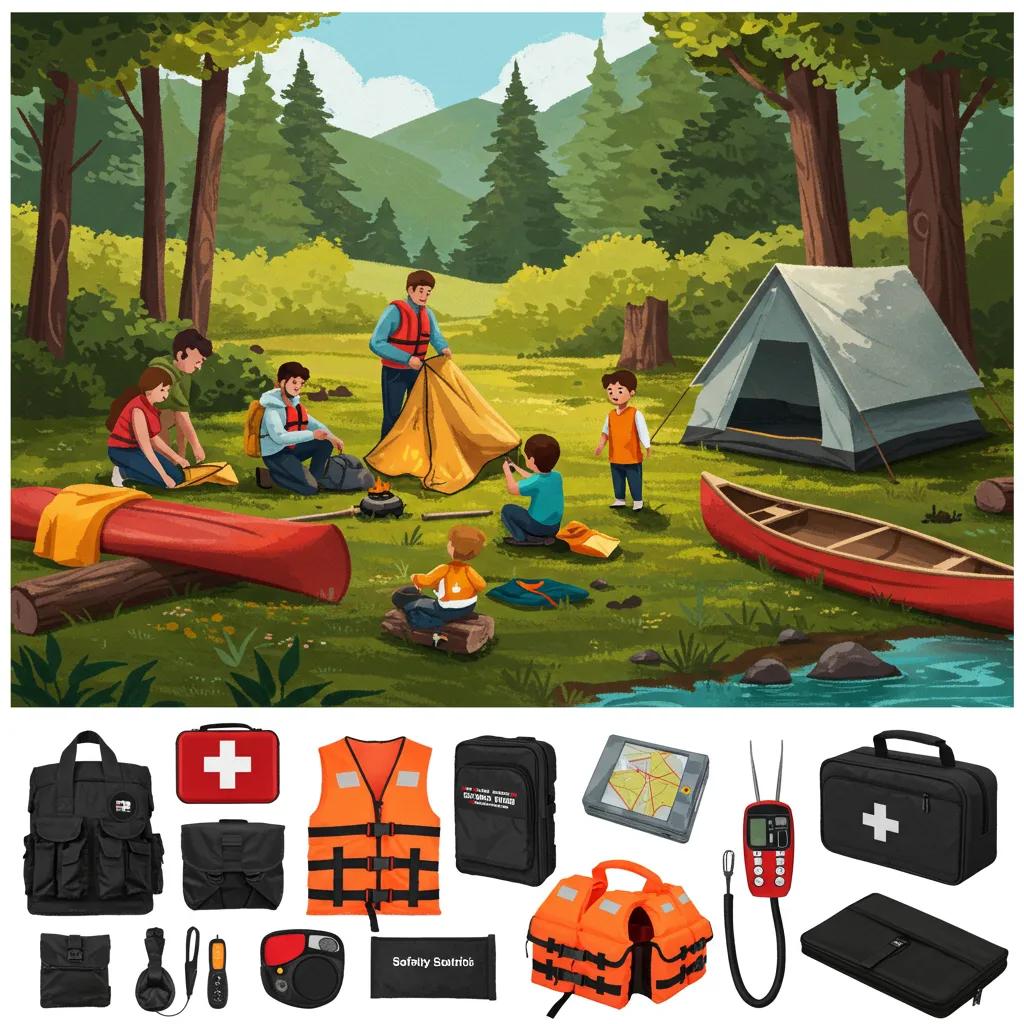
A well-chosen set of safety gear keeps a family trip comfortable, prevents small incidents from becoming emergencies, and makes outdoor recreation more enjoyable. This article explains what “outdoor safety gear” covers—medical, survival, hazard protection, communication, and water safety—and why each category matters for family camping. You will learn concrete checklists, concise how-to steps for common injuries, and practical product-agnostic guidance that fits tent, RV, or cabin stays. For families planning a Midwest getaway, these recommendations align with activities at Walnut Hills Family Campground in Durand, Michigan, including canoeing on local waterways and supervised water play. Read on for H2 sections that cover first-aid kit essentials, survival tools, insect and wildlife protection, emergency communications, and safe drinking and boating practices. By the end you’ll have actionable lists and tables to create a pre-arrival packing plan that keeps kids and adults safer on site and on day trips.
What Are the Must-Have Items for a Camping First Aid Kit?
A camping first aid kit is a compact collection of supplies designed to treat common outdoor injuries quickly, reduce infection risk, and stabilize someone until professional care is available. Carrying a kit works by giving immediate access to wound care, pain control, and tools that stop bleeding or remove hazards like splinters and ticks, which lowers complication risk. Families benefit from a kit tailored to age and activity by including child-dose medications, allergy treatments, and easy-to-use tools for caregivers. Practical storage and labeling increase speed in emergencies and reduce confusion during night-time incidents. The next subsections list specific medical supplies and practical treatment steps to assemble and use a family-friendly kit.
Which Medical Supplies Should Every Camper Include?

This subsection lists the specific items that make a first aid kit effective for camping and explains their primary use in brief, actionable terms. Include bandages in assorted sizes for cuts and scrapes, sterile gauze and tape for larger wounds, and adhesive blister patches for foot protection. Add antiseptic wipes and an antibiotic ointment to reduce infection risk after cleaning, plus tweezers and blunt scissors to remove splinters or snags safely. Pack over-the-counter pain relievers and fever reducers with labeled child and adult dosages, and store prescription meds in original containers with a copy of dosing instructions. Consider an epinephrine auto-injector only if prescribed, and keep a water-resistant container with all supplies accessible.
Intro to table: The table below clarifies common first-aid items, their purpose, and a recommended family-friendly specification for packing.
This compact EAV table highlights items that address common campsite injuries and shows choices that work well for families.
How to Treat Common Camping Injuries and Ailments?
Treating common injuries relies on basic steps that stabilize a person and prevent complications until further care is possible.
For cuts and scrapes, clean the wound with antiseptic wipes, apply antibiotic ointment, then cover with an appropriate bandage to keep dirt out.
For sprains: rest the joint, apply ice wrapped in cloth, compress with an elastic bandage, and elevate to reduce swelling; seek care for severe pain or inability to bear weight.
For burns, cool the area with running water for several minutes, cover loosely with sterile dressing, and avoid applying ice or butter.
For insect bites and stings, remove visible stingers, clean the area, apply cold compress, and use antihistamines for mild allergic reactions; seek emergency help if breathing or swelling of the face occurs.
Knowing when to get professional care—uncontrolled bleeding, signs of infection, or altered consciousness—keeps families safe.
What Survival Gear Is Essential for Outdoor Camping Safety?
Survival gear provides the means to navigate, create shelter, start a fire, and solve small equipment failures so an outing remains safe even if plans change. Core items reduce risk by enabling orientation, warmth, signaling, and basic repairs that keep groups together and protected. Families should prioritize lightweight, user-friendly tools that kids can learn to use with supervision and that fit their trip length. The following H3s explain navigation tools and fire-starting equipment, and then provide a concise list of essential survival items to pack for day hikes and overnight stays.
Which Navigation Tools Help Campers Stay on Track?
Navigation tools help campers maintain situational awareness by combining location reference (map), directional guidance (compass), and electronic backup (GPS) to avoid getting lost. A paper map paired with a magnetic compass remains reliable when batteries fail; teach at least one adult how to read contour lines and orient a map to the landscape. Compact GPS devices provide coordinates and breadcrumb trails but require charged batteries or spare power banks; program waypoints like the campground office before leaving. For families, assign a simple navigation role to older kids and practice returning to a visible landmark so everyone knows how to find the group. Carrying redundant navigation tools reduces single-point failures and improves confidence on local trails.
What Fire Starting Equipment Should You Bring Camping?
Fire-starting equipment allows campers to cook, dry wet clothing, and signal for help while also needing responsible handling to prevent wildfires and injuries. Carry multiple ignition methods—waterproof matches in a sealed container, a refillable lighter, and a ferro rod as a mechanical backup—to ensure redundancy in damp conditions. Pack small amounts of tinder (cotton balls in petroleum jelly or commercial tinder) stored in a waterproof bag, and keep fire-starting tools separated from accelerants. Practice safe campfire construction by using established fire rings at family campgrounds, keeping a bucket of water or sand nearby, and following campground rules about burn bans. Proper fire tools and habits decrease accident risk and support respectful campground stewardship.
Below is a short prioritized survival gear checklist to guide packing decisions for families.
Survival gear checklist explanation: This checklist prioritizes multi-use items and child-appropriate selections for safe family camping.
- Multi-tool: Versatile for repairs, food prep, and first-aid tasks.
- Headlamp + spare batteries: Hands-free light for night activities and emergencies.
- Emergency shelter: Lightweight tarp or space blanket to retain heat.
- Fire starters (matches, lighter, ferro rod): Redundancy for ignition in wet conditions.
- Compass + map or GPS: Basic navigation with electronic backup.
This list emphasizes redundancy and ease of use so families stay prepared for routine and unexpected situations.
How Can Campers Protect Themselves from Outdoor Hazards?
Protection from outdoor hazards reduces the likelihood of bites, heat illness, and wildlife encounters and supports a comfortable family experience by preventing avoidable incidents. The right precautions work by minimizing exposure: treated clothing and repellents reduce insect contacts, sun protection limits UV harm, and proper food storage discourages animal visits. Families should layer protections—behavioral (stay on trails), physical (appropriate clothing), and chemical (repellents)—to create robust defense against regional risks like ticks in Michigan. The H3s below cover tick and insect prevention and how to behave around wildlife on campground grounds.
What Are the Best Insect and Tick Protection Methods for Michigan Camping?
Preventing insect and tick bites in Michigan relies on a combination of repellents, clothing choices, and routine checks to catch ticks early and reduce disease risk. Use EPA-registered repellents such as DEET or picaridin on exposed skin and consider permethrin-treated clothing for extended protection on pants and socks; apply permethrin only to gear and allow it to dry fully before wearing. Wear light-colored long sleeves and tuck pants into socks when hiking tall grass, and perform full-body tick checks on children and adults after outdoor time. If a tick is found, remove it with fine-tipped tweezers close to the skin and save it for identification if illness develops. These layered measures lower the chance of tick-borne illness while keeping outdoor play accessible.
Tick-Borne Diseases in US National Parks: Trends and Camper Impact
Tick-borne diseases are reported at most national parks, and the average total tick-borne diseases combined (ie, Lyme disease, Rocky Mountain spotted fever, and ehrlichiosis) have increased in recent years. This report includes data from national parks and camper visits.
Tick-Borne Diseases in America’s National Parks: Observations and Recommendations for Improved Public Health, SP Maxwell, 2024
List intro: Quick prevention actions families should adopt each day.
- Apply repellent: Use DEET or picaridin per product directions before outings.
- Treat clothing: Use permethrin-treated garments or apply permethrin to outer layers only.
- Check for ticks: Inspect children, pets, and adults after hikes and before bed.
Summary paragraph: Combining these steps forms a practical routine that drastically reduces bite exposure and gives caregivers confidence to let kids explore safely.
How to Stay Safe Around Wildlife at Walnut Hills Campground?
Staying safe around wildlife involves preventing attraction, keeping distance, and knowing how to react if animals approach a campsite to protect people and animals alike. Store all food and scented items in secure containers or enclosed vehicles and use campground-approved storage methods to avoid drawing raccoons, skunks, or bears into camp areas. Never feed wildlife and keep a respectful distance when observing animals; teach children to stay with adults and use calm, steady voices rather than running. If you encounter larger mammals, back away slowly, make yourself appear larger, and report concerning behavior to campground staff so they can respond appropriately. These behaviors protect families and the campground’s natural inhabitants.
What Emergency Communication Devices Are Recommended for Campers?
Emergency communication devices let campers call for help, signal rescuers, and coordinate family members when separated, with choices balancing coverage, cost, and ease of use. Cellular phones work well near developed campgrounds but can fail in remote areas; satellite messengers and personal locator beacons (PLBs) provide global SOS capability where cell service is absent. Two-way radios are useful for short-range communication within a campsite or along a river launch point, and portable power banks extend device runtime. Families should combine a primary device with a backup and rehearse their use so everyone knows how to request help quickly. The following H3s compare devices and outline a family emergency plan; campground staff and the office serve as on-site contacts to report non-urgent problems, and the campground’s no-wait check-in process helps guests know where to get immediate assistance on arrival.
Which Devices Ensure Reliable Contact in Remote Areas?
Device selection depends on range needs and simplicity: cell phones are ubiquitous but limited by network coverage; satellite messengers provide two-way text and SOS functions; PLBs transmit an SOS signal with GPS coordinates to rescue services but usually do not support two-way messaging. Two-way radios work well for short distances and do not rely on infrastructure, making them ideal for coordinating groups during a day on the river. Consider attributes like battery life, ease of use for children, subscription costs (for satellite services), and whether a device has an SOS function. A common recommendation is a cell phone for daily use plus a satellite messenger or PLB for remote outings to ensure redundancy and reliable rescue signaling.
Reliability of Emergency Communication Technologies in Critical Situations
Emergency communication equipment that is not utilized ordinarily tends to fail during an emergency. This study is not only applicable to remote sensing constellations, but it is also applicable to other communication systems that may be used in emergency situations.
Communication technologies in emergency situations, A Carreras-Coch, 2022
Intro to comparison table: This table compares common emergency devices by range, battery life, and practical value for family campers.
Summary: Matching device capabilities with planned activities ensures families have reliable contact options whether at a developed campground or on a remote trail.
How to Create a Family Emergency Plan for Camping Trips?
A family emergency plan establishes meeting points, communication roles, and steps to follow if someone is injured, lost, or separated, and practicing it reduces panic and speeds response. Choose a primary meeting spot at the campsite and an alternate location a short walk away; ensure each child knows both places and an adult’s phone number. Assign roles—who carries the first aid kit, who has the map, and who checks children on trails—to reduce confusion during an incident. Include the campground office as a contact and identify the nearest emergency medical services before departure; review the plan at arrival and rehearse a quick drill so everyone understands their part.
What Water Safety and Purification Gear Should Campers Use?
Water safety and purification gear protects families from drowning risks during recreation and from waterborne illness when sourcing drinking water outdoors by providing flotation, rescue tools, and proven treatment options. Boating gear prevents fatalities by ensuring buoyancy and rapid recovery, while purification methods eliminate pathogens in natural water sources to avoid gastrointestinal illness. Selecting kid-sized personal flotation devices (PFDs), carrying throw lines, and choosing a family-appropriate purification method creates layered safety for canoe trips and backcountry water use. The H3s that follow compare purification methods and list canoeing-specific safety gear; note that the campground’s canoe livery supports family paddling but renters and owners alike should use properly rated life jackets.
Which Water Purification Methods Are Effective for Campers?
Effective water purification methods remove or inactivate pathogens to make untreated sources safe to drink, with options that balance weight, speed, and ease for families. Boiling reliably kills bacteria, viruses, and protozoa but uses fuel and time; chemical tablets are lightweight and effective against many pathogens but may taste unpleasant and require wait times. Pump filters remove protozoa and bacteria and many remove particulates, while UV devices inactivate pathogens quickly but need batteries and clear water to work well. For family camping, a pump filter or gravity filter paired with a small supply of tablets offers a balance of speed, capacity, and redundancy for groups. Choose methods based on group size, trip length, and comfort with equipment maintenance.
Intro to EAV table: The table below summarizes purification methods by effectiveness, weight, and best family use-case.
Summary: Combining a primary method with a lightweight backup ensures safe drinking water for families and reduces the chance of gastrointestinal interruptions while camping.
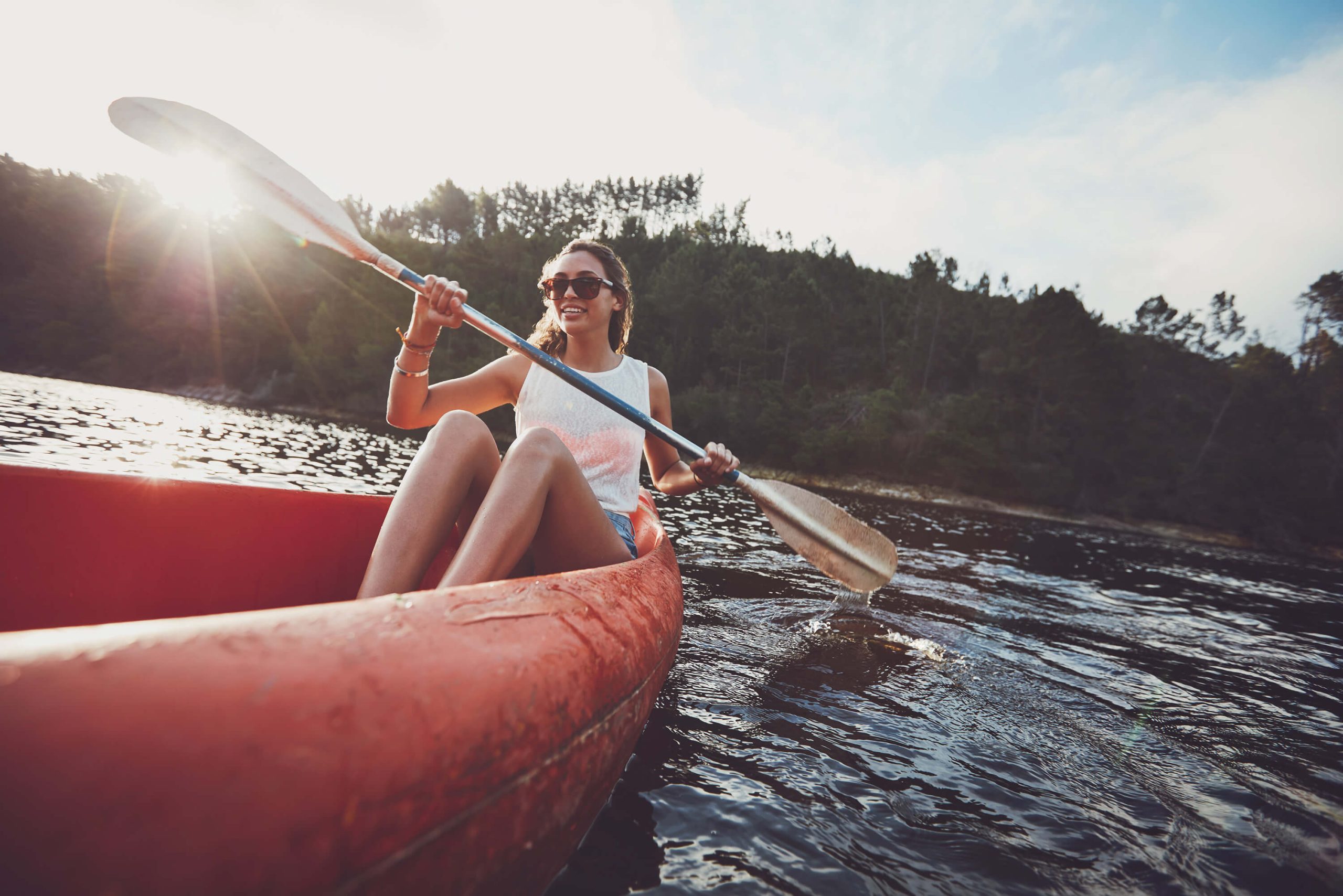
What Essential Water Safety Gear Is Needed for Canoeing the Shiawassee River?
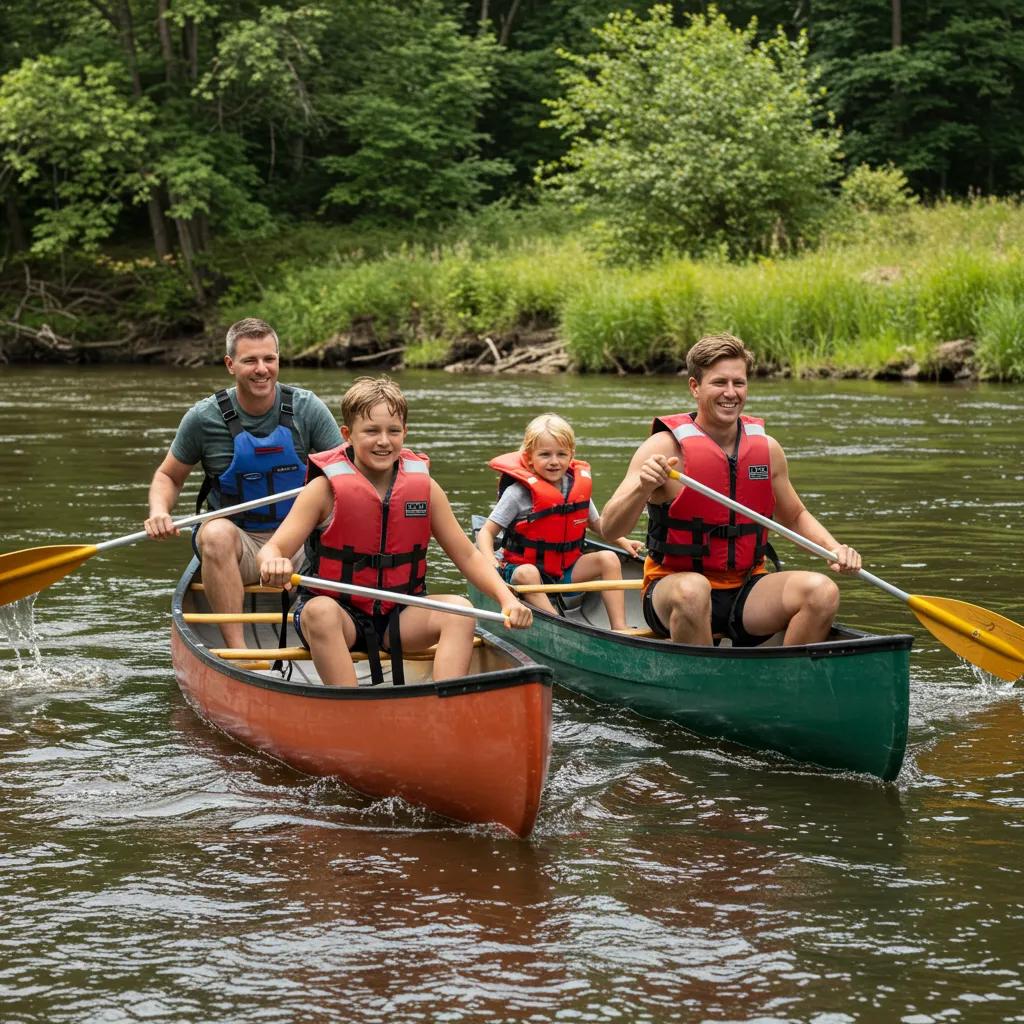
Safe canoeing requires personal flotation devices, a throw line or rescue rope, and audible signaling like a whistle to alert others in case of capsize or separation. Use Coast Guard–approved, properly sized PFDs for each occupant and prefer child-sized PFDs for kids; ensure jackets fit snugly and are worn at all times on the water. Carry a bilge sponge or small bailer, dry bags for essentials, and a basic first aid kit designed for wet conditions. When renting from a canoe livery or using campground services, confirm PFD condition and sizing during the no-wait check-in process and supervise children closely near launch and landing zones. Following these practices helps families enjoy paddling the Shiawassee River while minimizing on-water risk.
Frequently Asked Questions
What should I consider when choosing a camping first aid kit?
When selecting a camping first aid kit, consider the size of your group, the ages of participants, and the types of activities planned. A family-friendly kit should include child-specific medications and supplies for common injuries. Look for kits that are compact, waterproof, and easy to access. Additionally, ensure that the kit is well-stocked with essential items like bandages, antiseptics, and pain relievers. Regularly check and replenish supplies, especially before each trip, to ensure readiness for emergencies.
How can I prepare my children for outdoor safety while camping?
Preparing children for outdoor safety involves educating them about potential hazards and teaching them basic safety skills. Discuss the importance of staying close to adults, recognizing wildlife, and understanding the use of safety gear. Role-playing scenarios can help them practice what to do in case of an emergency. Additionally, assign them simple tasks, like carrying a whistle or a small first aid item, to instill a sense of responsibility and confidence in their ability to contribute to safety.
What are the best practices for food storage while camping?
Proper food storage is crucial to prevent attracting wildlife and ensuring food safety. Use bear-proof containers or coolers with tight-fitting lids to store food and scented items. Keep food stored away from sleeping areas and use designated food storage areas if available. Always clean up spills and dispose of trash in sealed bags. Additionally, consider using odor-proof bags for leftovers and ensure that all food is stored securely, especially in areas known for wildlife activity.
How can I ensure my family is prepared for sudden weather changes while camping?
To prepare for sudden weather changes, check the forecast before your trip and pack accordingly. Bring layered clothing to adapt to temperature fluctuations, and include waterproof gear like rain jackets and tarps. Familiarize your family with the signs of severe weather, such as darkening skies or strong winds. Establish a plan for seeking shelter if conditions worsen, and ensure that everyone knows where to go in case of an emergency. Having a portable weather radio can also provide timely updates.
What should I do if someone gets lost while camping?
If someone gets lost while camping, remain calm and follow a systematic approach. First, gather the group and establish a meeting point. If the lost person does not return within a reasonable time, send a search party to retrace their steps, while others stay at the meeting point. Use whistles or other signaling devices to communicate. If necessary, contact campground staff or local authorities for assistance. It’s essential to have a plan in place before your trip, including designated roles and communication methods.
How can I teach my family about fire safety while camping?
Teaching fire safety while camping involves discussing the importance of responsible fire use and the potential dangers. Establish clear rules about where to build fires, such as using designated fire rings, and ensure that children understand the need for adult supervision. Demonstrate how to safely start and extinguish a fire, and emphasize the importance of keeping flammable materials away from the fire. Always have water or sand nearby for emergencies, and practice proper disposal of ashes after the fire is completely out.
What are the key considerations for canoeing safety with children?
When canoeing with children, prioritize safety by ensuring that everyone wears properly fitted personal flotation devices (PFDs) at all times. Choose calm waters for paddling and avoid areas with strong currents or heavy boat traffic. Teach children basic canoeing skills, such as paddling techniques and how to respond in case of capsizing. Always have a safety plan in place, including a designated meeting point and communication methods. Supervise children closely, especially during launch and landing, to prevent accidents.
Conclusion
Equipping your family with essential outdoor safety gear ensures a secure and enjoyable camping experience, minimizing risks and enhancing comfort. By understanding the importance of first aid kits, survival tools, and protective measures, you can confidently navigate the great outdoors. Take the next step in your adventure planning by reviewing our comprehensive gear lists and recommendations. Prepare for your next family trip with the right equipment to create lasting memories in nature.