
Truly free camping in Ohio exists, but mostly not where people first look. Nearly every Ohio state park campground charges a nightly fee and is booked through Reserve Ohio. The free options are dispersed camping in Wayne National Forest, free backpack camps in a few Ohio state forests (Zaleski, Shawnee and Tar Hollow, with a free self-registration permit at the trailhead), and the no-fee primitive campgrounds at Jesse Owens State Park in southeast Ohio. Here is where each one is, how the rules work and what to bring, plus when a paid campground makes more sense. Plan your stay at Ridge Ranch Campground in Newton Falls.
Rules change, so confirm anything important with the Ohio Department of Natural Resources (ODNR) or the U.S. Forest Service before you go.
Is there free camping at Ohio state parks?
Very little. Ohio state park campgrounds are fee-based. Sites are reserved through Reserve Ohio (reserveohio.com or (866) 644-6727), and every reservation carries a small non-refundable reservation fee on top of the site fee. A “primitive” or non-electric site at a state park is cheaper, but it is not free. For how the booking system works, see our guide to Reserve Ohio campsite reservations.
The exception: Jesse Owens State Park’s no-fee campgrounds
Jesse Owens State Park and Wildlife Area, near McConnelsville in southeast Ohio, is the one state park with free camping. According to ODNR, its Hook Lake, Maple Grove and Sand Hollow campgrounds are no-fee, first-come, first-served campgrounds with self-registration and a two-week maximum stay. Sites are primitive: a picnic table and a fire ring, with latrines nearby and no water or electric. They are generally open from April 1 to mid-December. The park’s Big Muskie Campground is a separate, fee-based full-hookup campground that does take reservations.
Shawnee State Park vs. Shawnee State Forest
People searching for the Shawnee State Park campground are often looking for something cheap in the hills of southern Ohio. The state park campground is a regular paid, reservable campground. The free option nearby is the backpack trail in the surrounding Shawnee State Forest, covered below.
Free primitive camping in Ohio state forests
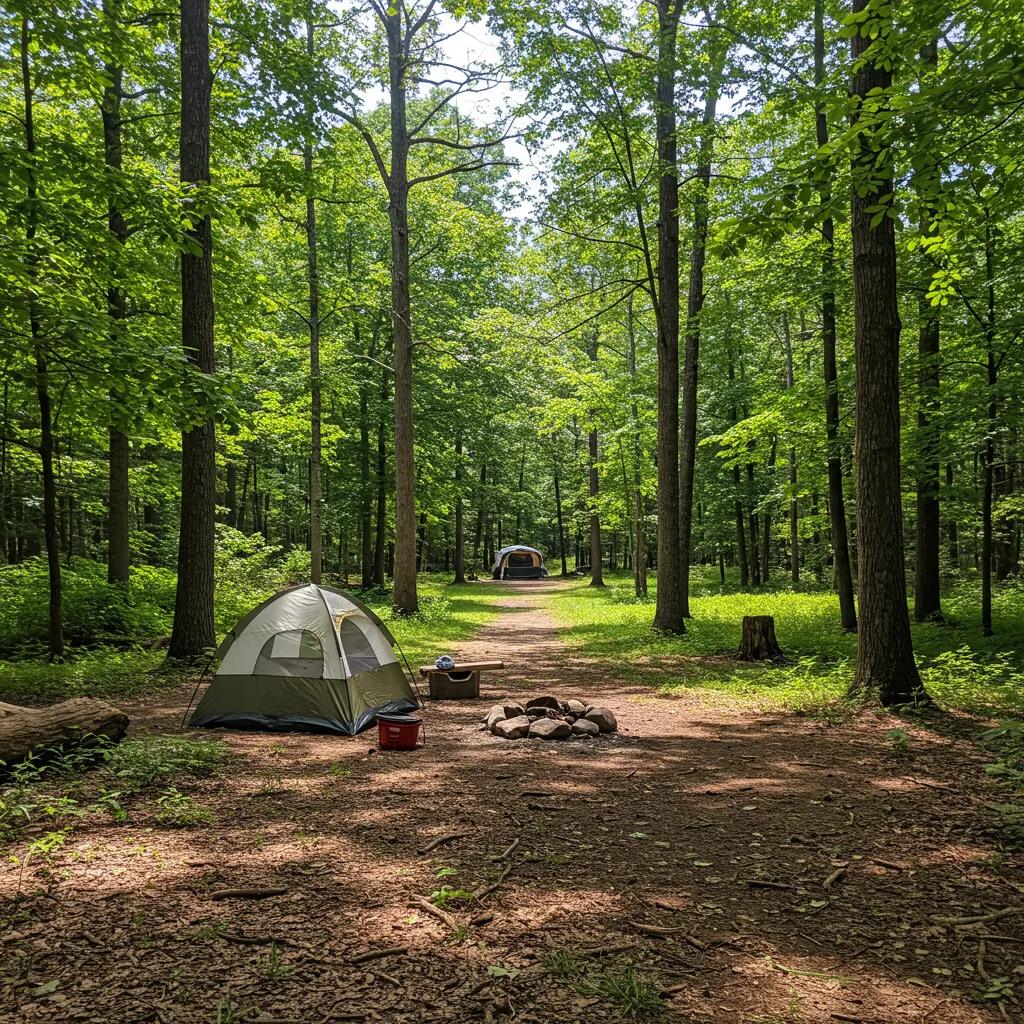
Ohio state forests are managed by ODNR’s Division of Forestry, not the state parks division, and the rules are different. The key one: camping in a state forest is allowed only in areas set aside for it. You can’t pull off a forest road and pitch a tent wherever you like. The free options are the walk-in backpack camps along the state forest backpack trails.
| State forest | Free camping option | How to register |
|---|---|---|
| Zaleski State Forest | Backpack walk-in camps on the Zaleski Backpack Trail | Free self-registration permit at the trailhead |
| Shawnee State Forest | Backpack walk-in camps on the Shawnee Backpack Trail | Free self-registration permit at the trailhead |
| Tar Hollow State Forest | One backpack walk-in camp | Free self-registration permit at the trailhead |
| Mohican-Memorial State Forest | Seven remote “park and pack” sites | Self-registration; call the forest office for current details |
Several state forests (Harrison, Hocking, Shawnee, Tar Hollow and Zaleski) also have primitive horse camps for riders. Mohican-Memorial is the closest of these to Northeast Ohio. The others are in the southern and southeastern part of the state.
State forest backpack camp rules
The Shawnee Backpack Trail rules give a good picture of what to expect on any of the trails:
- Fill out a free self-registration permit before you start, drop it in the box and carry the stub.
- Camp only in the designated backpack campgrounds, and move to a different one each night.
- No more than 14 days in any 30-day period, and no more than 10 people per campground.
- Fires only in fire rings or on a portable stove, never left unattended. Don’t cut live trees.
- Drinking water is limited and found only near some road crossings, so carry your own. Water points may not be serviced in winter.
- Pack out all trash. Pets must be leashed or under control.
Wayne National Forest dispersed camping
Wayne National Forest is Ohio’s only national forest and the best place in the state for free, dispersed camping. Unlike state forests, the Forest Service allows remote backcountry camping spread throughout the forest, not just at marked sites, unless an area is posted closed. There’s no fee and no reservation. The forest is split into the Athens Ranger District (Athens and Marietta units) and the Ironton Ranger District, all in southeast and southern Ohio.
Rules and stay limits
- Stay limit: no more than 14 days in any 30-day period. That limit dates to a 2013 forest order.
- Group size: the same order restricts large gatherings, so bigger groups should check the current limits with the district office before planning.
- Campfires: small, open campfires are allowed except during extreme fire danger. Use an existing fire ring where there is one and put the fire completely out before you leave. Check trailhead bulletin boards for fire bans.
- Firewood: don’t bring firewood unless it’s commercially packaged with a USDA inspection label. You can gather small amounts of dead and down wood by hand.
- Trash: pack out everything. Trash service is rare at trailheads.
- Leave No Trace: the Forest Service asks dispersed campers to follow Leave No Trace practices on every stay.
Best free camping spots in Wayne National Forest
Wildcat Hollow in the Athens Ranger District is the classic choice. The Forest Service lists dispersed camping as allowed along the trail and at the trailhead, with no fee. The trail offers a 17.2-mile backpacking loop over ridgetops and stream bottoms, plus a shorter 5-mile loop. The trailhead has a vault toilet but no drinking water. Campfires need a rock ring and a 10-foot clearance.
Beyond Wildcat Hollow, campers look for established clearings near trailheads and along forest roads in all three units. Pick a spot that has clearly been used before rather than making a new one, and park only where vehicles are allowed.
Is there a Wayne National Forest dispersed camping map?
There isn’t one official map of numbered dispersed sites, because dispersed camping isn’t tied to set sites. Start with the forest’s Motor Vehicle Use Map, which shows which roads are open to vehicles, then check the ranger district’s page or call the Supervisor’s Office at (740) 753-0101 for closures and current conditions. Apps such as Campendium, The Dyrt and Freecampsites.net show spots other campers have used, but check what you find there against Forest Service information.
Paid campgrounds in Wayne National Forest
If you’d rather have a toilet and a designated site, Wayne also runs low-cost developed campgrounds, including Burr Oak Cove, Lamping Homestead, Lane Farm, Leith Run, Oak Hill, Iron Ridge, Ring Mill and Hune Bridge, plus horse camps such as Stone Church. These charge a fee.
What to bring for free primitive camping
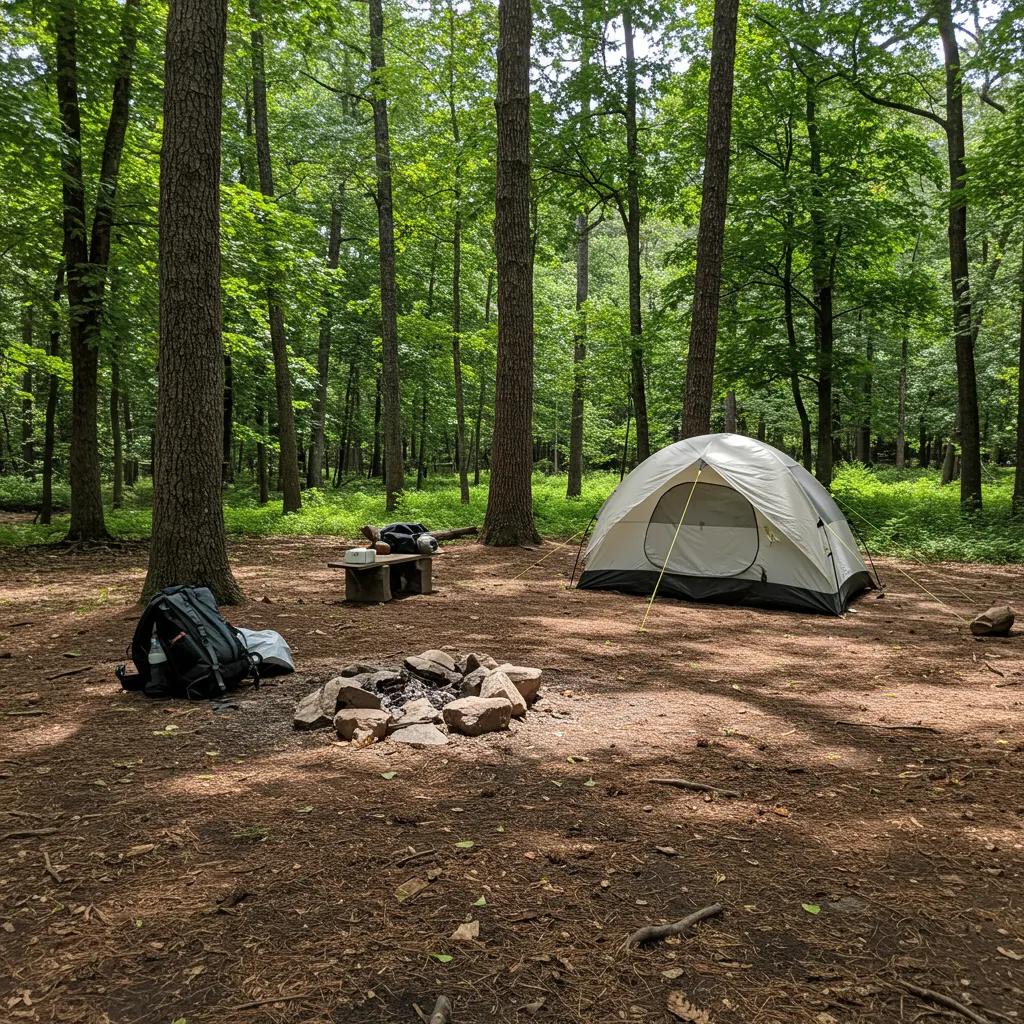
Free sites come with little or nothing, so plan to be self-sufficient:
- All your water, or a reliable filter or treatment method.
- A way to deal with human waste (a trowel, or bags where required), and trash bags to pack everything out.
- A paper map. Cell service in the southeast Ohio hills is unreliable.
- A stove, since fire bans happen in dry spells.
- A first-aid kit, and a plan someone at home knows about.
Free camping vs. a paid campground
Free camping trades services for solitude and savings. That works well for experienced backpackers and self-sufficient campers. It is harder with young kids, a big RV or a group that wants showers.
| Free (dispersed / backpack / no-fee) | Paid private campground | |
|---|---|---|
| Cost | Free | Nightly fee |
| Reservations | None; first-come or self-register | Usually reserved ahead |
| Water and restrooms | Usually none, or a vault toilet | Restrooms, showers, water |
| Hookups | None | Electric, and often water and sewer |
| Things to do | Hiking, solitude | Beach, playground, events |
Most of Ohio’s free camping is in the south and southeast. If you live in Northeast Ohio or the Pittsburgh area, that can mean a long drive. Ridge Ranch Campground in Newton Falls is one paid option closer to home. Primitive tent sites (no water or electric) start in the low $40s per night and cover two adults and two kids, with fire rings and picnic tables on every site and new restrooms and showers a short walk away. The tent area up front sits near the Kangaroo Jumper bounce pillow for families. A second, wooded tent area between the full-hookup sites and the creek is quieter. It’s about 10 minutes from Nelson-Kennedy Ledges State Park. See the rates page for current pricing, or our guide to affordable campgrounds in Ohio for more lower-cost ideas.

Free camping in Ohio FAQ
Is dispersed camping legal in Ohio?
Yes, in Wayne National Forest, where it’s allowed throughout the forest unless an area is posted closed. In Ohio state forests and state parks, you can camp only at designated sites.
Where can I find free tent camping in Ohio?
Wayne National Forest (for example, Wildcat Hollow), the backpack camps in Zaleski, Shawnee and Tar Hollow state forests, and the no-fee campgrounds at Jesse Owens State Park.
How long can I camp for free in Wayne National Forest?
Up to 14 days in any 30-day period.
Do I need a permit to camp in an Ohio state forest?
For the backpack trails, yes, but it’s free. You fill out a self-registration permit at the trailhead. No reservation is needed.