
RV Park vs Campground: Which Sells Better and How to Maximize Your Sale
Selling your outdoor hospitality property brings up immediate, practical questions: is an RV park easier to sell than a traditional campground, what metrics drive price, and what steps will maximize buyer interest? This article answers those questions for owners considering selling in 2025 by comparing property types, outlining valuation mechanics like adjusted net operating income and cap rates, and offering a seller playbook for preparing financials, site improvements, and marketing. Readers will get clear comparisons between RV parks, tent and glamping campgrounds, and RV resorts, learn which buyer profiles favor each property type, and see prioritized improvements that drive return on investment. The guidance here covers the selling process from preparation through due diligence and highlights current market trends affecting deals in 2025. Throughout, practical checklists, EAV comparison tables, and concrete lists help owners make decisions about pricing, buyer selection, and whether a direct sale to an acquirer or a broker-led listing fits their goals.
What Are the Key Differences Between RV Parks and Campgrounds?
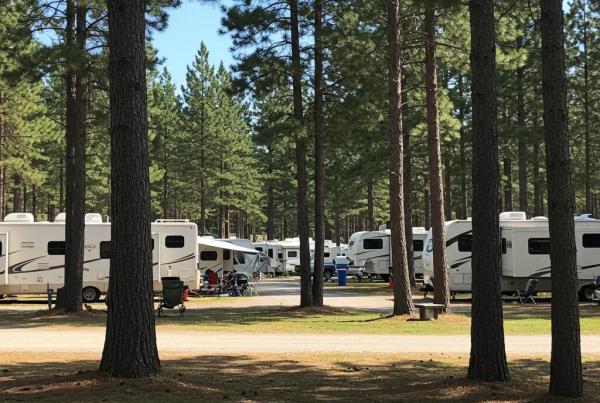
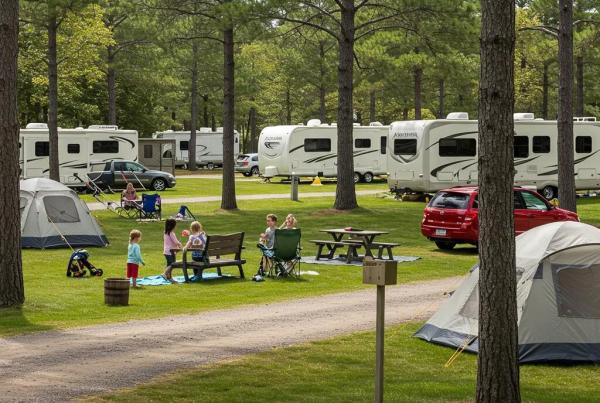
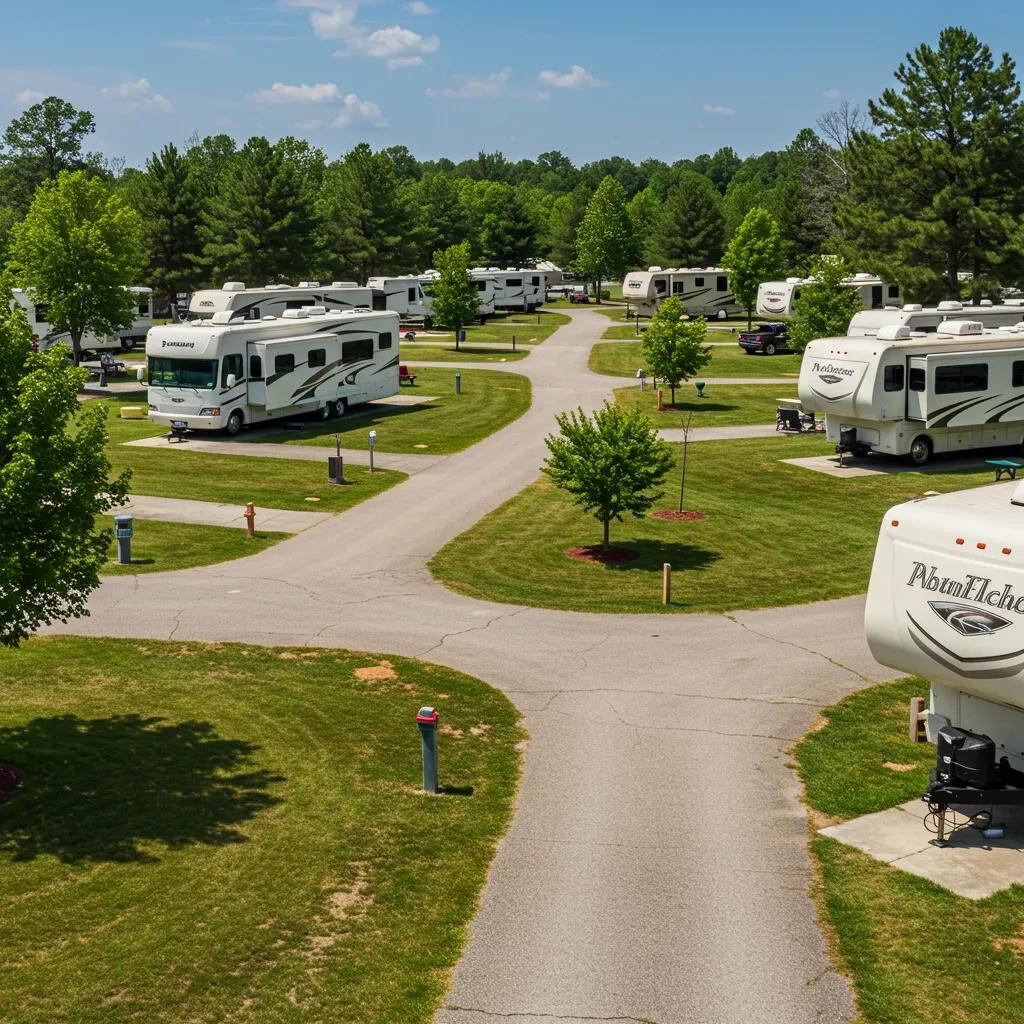
RV parks and campgrounds are distinct types of outdoor hospitality businesses that differ in site mix, infrastructure, and guest expectations; these differences shape revenue models and buyer interest. RV parks typically emphasize full-hookup sites, paved or gravel pull-throughs, and consistent demand from towable and motorized RVs, which increases predictable nightly rates and ancillary revenue from hookups and long-term stays. Campgrounds often include tent-only sites, primitive sites, and a growing number of glamping units that attract lifestyle buyers focused on scenery and guest experience rather than pure NOI. Understanding these operational and physical differences helps sellers position the property to the right buyer pool, and it sets the stage for valuation conversations that hinge on site count, hookups, and amenities.
How Do Amenities and Site Types Vary Between RV Parks and Campgrounds?
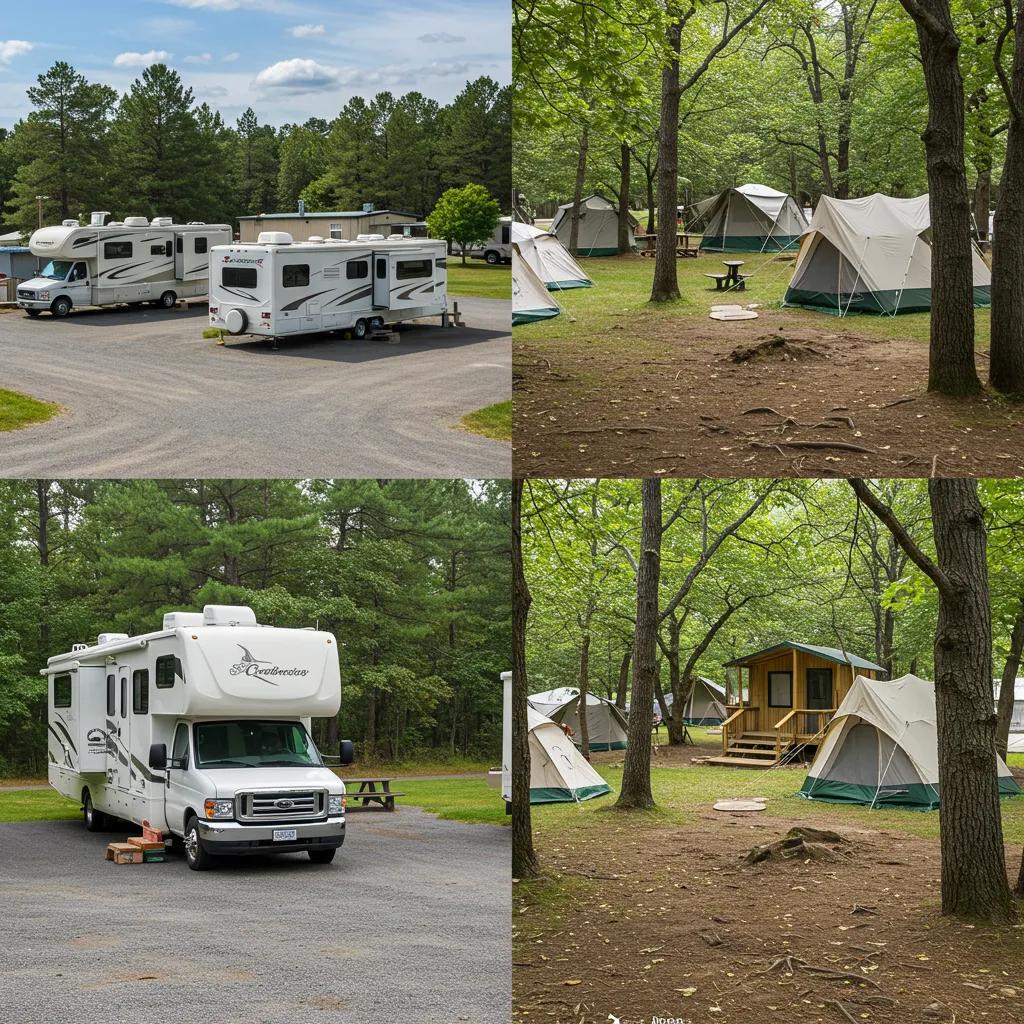
Amenities and site types form the physical meronyms of each property and directly influence guest expectations and revenue potential through increased ADR and occupancy. RV parks commonly offer full hookups (electric, water, sewer), pull-through sites, on-site laundry, reliable Wi-Fi, and paved pads; these elements drive repeat stays and appeal to investors seeking stable cash flow. Campgrounds can include tent pads, primitive sites, bathhouses, cabins, and glamping structures that elevate guest experience but often require more hands-on operations. The mix of amenities determines both short-term revenue (daily rates, add-on fees) and long-term buyer interest, so documenting site-level infrastructure and amenity conditions is essential when selling.
Introductory comparison table showing how site types and amenities differ:
This table clarifies the practical differences that buyers evaluate when assessing operational complexity and revenue streams. Sellers should use site-level inventories to show how each amenity contributes to occupancy and ADR.
Key Amenities and Site Types for Successful RV Parks
The most common amenities found in an RV park are electricity, water, and sewer hookups. Other amenities that add value include Wi-Fi, laundry facilities, recreational areas, and pet-friendly spaces. Successful RV parks often offer a variety of site types, such as pull-through sites, back-in sites, and sites with full hookups, to cater to different needs and preferences of RV travelers.
Thesis Topic: What makes a successful RV Park in the US, 2022
What Are the Typical Buyer Profiles for RV Parks vs Campgrounds?

Buyer profiles for these property types split broadly into investor, lifestyle, and acquisition-company archetypes, which drives differing price expectations and deal structures. Investors and portfolio buyers prioritize scalable RV parks with high site counts, consistent occupancy, and strong adjusted NOI; they model returns using cap rates and revenue multiples. Lifestyle buyers and family operators often target scenic campgrounds or glamping sites where natural features and existing staff matter more than immediate yield. Acquisition companies and direct buyers evaluate portfolio fit and preservation intentions; they may offer streamlined transactions for parks meeting scale thresholds. Recognizing which buyer profile aligns with your property influences marketing strategy and what documentation to emphasize.
Common buyer attributes to consider:
- Investor buyers: seek predictable cash flow, scalability, and standardized operations.
- Lifestyle buyers: value location, legacy, and guest experience over short-term yield.
- Acquisition companies: prioritize portfolio fit, site count thresholds, and transition smoothness.
These buyer types suggest different selling strategies, so owners should tailor their pitch and disclosures accordingly, which leads directly into how seasonality and location affect buyer interest.
How Does Location and Seasonality Affect Each Property Type?
Location and seasonality act as primary demand drivers that alter occupancy curves and the buyer pool, making adjusted NOI sensitive to geographic context and operating months. Properties with year-round climates or proximity to major recreation corridors attract buyers looking for consistent revenue, while seasonal parks tied to summer peaks may see compressed but intense demand that affects financing and cap rate expectations. Market seasonality requires owners to document occupancy by month, describe weather-related constraints, and present strategies used to extend season length, such as events or off-season programming. Presenting clear seasonality data helps buyers model cash flow accurately and reduces valuation friction during due diligence.
Three ways location and seasonality change buyer interest:
- Proximity to attractions increases leisure-driven occupancy and can support higher ADR.
- Year-round operation reduces financing risk and broadens the investor pool.
- Strong seasonality necessitates detailed monthly occupancy and revenue records to justify projections.
Understanding these effects allows owners to frame seasonality as an asset when supported by mitigation strategies, guiding the next section on valuation.
What Factors Determine the Value of RV Parks and Campgrounds in 2025?
Valuation in 2025 centers on adjusted net operating income (NOI) and market cap rates, with critical influence from site count, infrastructure, and documented revenue diversification; these factors determine price under both cap-rate and revenue-multiple methods. Buyers compute adjusted NOI by starting with historical revenue, subtracting operating expenses, and making standardized owner-related adjustments for non-recurring items and discretionary expenditures. Cap rates in 2025 reflect the financing environment and perceived risk; they translate NOI into a market value estimate while revenue multiples provide an alternative view based on gross revenue trends. Transparent, well-organized financial records and operational data sharply reduce valuation discounting and support stronger offers.
How Is Net Operating Income Used to Value These Properties?
Adjusted NOI is the primary valuation engine: revenue minus operating expenses, with specific adjustments for owner perks, one-off repairs, and normalized staffing costs, which yields a stabilized cashflow figure buyers use to apply cap rates. For campgrounds and RV parks, common adjustments include removing owner personal expenses, normalizing management salaries, and estimating market-level utilities or property taxes when irregular. Accurate NOI allows potential buyers to model debt service and returns while ensuring comparability across listings. Owners who can present multi-year P&Ls and reconciled adjustments command more credibility and often achieve higher valuations.
What Are the Typical Cap Rates and Revenue Multiples for RV Parks and Campgrounds?
Cap rates and revenue multiples in 2025 vary by property quality, market, and risk profile; sellers should expect a range rather than a single figure that applies universally. Broadly, well-located, infrastructure-rich RV parks and resorts attract lower (tighter) cap rates reflecting lower perceived risk, while seasonal or primitive campgrounds trade at higher cap rates reflecting operational variability. Revenue multiples—gross revenue times a multiple—remain a secondary check, particularly for lifestyle campgrounds where NOI can be seasonally volatile. Presenting comparable sales and capital expenditure histories helps justify where a property sits within these ranges.
Typical 2025 valuation ranges (illustrative):
Sellers should use these ranges as negotiation starting points and provide data to support their placement within them. If owners want a valuation conversation, a direct, no-obligation discussion with a buyer that assesses adjusted NOI can clarify realistic expectations in the current market.
Which Property Features Most Influence Selling Price?
Certain physical and operational features disproportionately affect buyer valuation because they either increase NOI or reduce capital spend risk; these include site count, hookup coverage, water/sewer infrastructure, and quality bathhouses. Buyers treat site count and site mix (percentage of full-hookup and pull-through sites) as proxies for revenue capacity, while infrastructure condition indicates near-term capital needs that will reduce effective NOI. Road access, proximity to demand drivers, and unique natural features can improve multiple or reduce the cap rate applied. Presenting a prioritized list of these features with cost-to-cure estimates helps buyers model future returns and speeds the negotiation process.
Top features ranked by buyer impact:
- Site count and mix: directly scales revenue potential.
- Hookup coverage and utility capacity: reduces immediate capex.
- Bathhouses and amenity condition: drives guest satisfaction and ADR.
- Access and zoning: affects long-term development or expansion options.
Documenting these attributes with clear site maps and inspection summaries makes it easier for buyers to validate assumptions, moving us into how the selling process looks for different property types.
How Does the Selling Process Differ for RV Parks Compared to Campgrounds?
The selling process for RV parks tends to be more finance-driven and data-heavy, while campground sales often involve lifestyle considerations and legacy issues; both require thorough preparation and clear disclosures. RV parks aimed at investors typically emphasize multi-year P&Ls, site-level revenue reports, and utility cost breakdowns so buyers can model NOI and financing. Campground sellers should prepare guest experience documentation, community relationships, and staff transition plans because buyers may weigh intangible goodwill and ecological or cultural value. Both sale types benefit from organized due diligence materials, a realistic timeline, and consideration of whether to use a broker or pursue a direct sale to an acquirer.
What Are the Essential Steps to Prepare Your Property for Sale?
Preparation combines organizing financials, auditing physical assets, and addressing deferred maintenance to present a risk-reduced asset to buyers who will closely scrutinize records during due diligence. Owners should assemble three to five years of P&Ls, detailed occupancy and ADR reports, site inventories, permits, and a schedule of capital improvements; these documents speed buyer underwriting. Physically, prioritize high-ROI repairs—utility fixes, bathhouse cleaning/updates, and pad improvements—to reduce buyer ask for immediate capex. Clear preparation and documentation improve buyer confidence and often shorten the time from offer to close.
Checklist for immediate seller action:
- Assemble 3–5 years of financial statements and monthly occupancy reports.
- Create a detailed site inventory and map showing hookups and amenities.
- Address deferred maintenance items with the highest ROI (see improvements table below).
These steps improve valuation clarity and reduce friction during due diligence, which connects directly to expected timelines discussed next.
How Long Does It Typically Take to Sell Each Property Type?
Time-on-market depends on property quality, price positioning, and financing availability; in 2025, expect a variable timeline that can range from a few months for well-priced, infrastructure-ready RV parks to a year or more for niche campgrounds seeking the right lifestyle buyer. Financing conditions and buyer certainty are key determinants: properties that align with investor underwriting standards move faster, while unique or legacy-rich campgrounds require more buyer vetting and may lengthen the process. Sellers should budget time for marketing, offer negotiation, due diligence, and lender timelines, and build contingency plans for staff and seasonal carryover. Clear expectations reduce stress and preserve operational continuity during the sales process.
What Legal and Due Diligence Considerations Should Sellers Know?
Legal and due diligence focuses on zoning, environmental records, easements, leases, and permits—issues that can materially affect transferability, operations, or future development potential. Sellers should gather title documents, septic and well reports, environmental assessments if available, and copies of any long-term site leases or vendor agreements to expedite buyer review. Disclose any known issues like access constraints or pending code violations to avoid later indemnity disputes. Retaining experienced advisors—real estate counsel and a CPA familiar with outdoor hospitality assets—helps anticipate buyer questions and streamline closing.
Practical legal checklist:
- Gather title, survey, and easement documentation.
- Compile permits, licenses, and environmental/utility reports.
- Assemble leases, vendor contracts, and employee agreements.
Proactive legal preparation reduces deal risk and supports the seller’s credibility during negotiations, while also clarifying options for direct sale vs. brokered sale.
Why Choose GatherGrounds Resorts for Selling Your RV Park or Campground?
GatherGrounds Resorts is a family-owned campground management and ownership group that focuses on acquiring and enhancing campgrounds and RV parks, primarily in the upper Midwest; their approach emphasizes thoughtful transitions that preserve legacy, traditions, and existing staff. For owners who prioritize legacy outcomes and a direct line to decision-makers, GatherGrounds offers owner-to-owner conversations that can reduce negotiation layers and preserve confidentiality. Their acquisition focus centers on properties meeting scale thresholds (commonly over 130 sites) with strong NOI, which helps sellers understand which assets match direct-buyer interest. A no-obligation conversation about valuation and transition options is available for owners exploring alternatives to broker-led listings.
How Does GatherGrounds Preserve Your Property’s Legacy and Staff?
Preservation practices at GatherGrounds emphasize retaining existing staff where possible, honoring community relationships, and maintaining local traditions while implementing targeted operational improvements to enhance guest experience and revenue. Their operational playbook typically includes transition staffing plans, phased capital improvements to minimize service disruption, and communication strategies for guests and local stakeholders. This approach reassures owners concerned about legacy outcomes and staff welfare, and it supports continuity that often preserves occupancy and NOI through the transition. For owners weighing sale options, understanding how a buyer plans to handle transition is as important as price.
What Are the Benefits of Selling Directly to GatherGrounds vs Using Brokers?
Selling directly to an acquirer like GatherGrounds can deliver benefits such as faster decision cycles, reduced marketing exposure, and potentially lower transaction costs because negotiations occur owner-to-owner without broker layers; however, brokers may still be preferable when broad market exposure or an auction-like process is desired. Direct sales can preserve confidentiality, minimize disruption to operations, and prioritize legacy outcomes, while broker-led listings can generate competitive offers that maximize price in active markets. Owners should evaluate offers not just on price but on terms, certainty, staff outcomes, and timing to decide between direct sale and broker engagement.
Understanding these tradeoffs helps owners choose the path that best aligns with financial goals and legacy priorities, and points back to preparing great documentation to support either route.
How Does GatherGrounds Enhance Properties Post-Acquisition?
Post-acquisition enhancements typically focus on amenity upgrades, targeted capital projects to reduce operational friction, and service-model improvements that raise guest satisfaction and revenue per site. Typical initiatives include improving hookups, upgrading bathhouses, enhancing Wi-Fi, and selectively adding cabins or glamping units to diversify revenue streams. GatherGrounds emphasizes phased investments that balance guest impact with ROI, and they often maintain local staff continuity to preserve institutional knowledge. These targeted improvements usually increase ADR, occupancy, and long-term property value.
What Are the Current Campground Market Trends in 2025 Affecting Sellers?
Market conditions in 2025 reflect a financing environment that influences cap rates and buyer affordability, shifting buyer preferences toward improved amenities, and a continuing demand for outdoor lodging that favors well-equipped RV parks and differentiated campgrounds. Interest rate levels and lender appetite affect how buyers underwrite acquisitions, often widening the gap between seller price expectations and buyer financing limits. Meanwhile, guest preferences for quality Wi-Fi, clean facilities, pet-friendly features, and varied lodging options (cabins, glamping) raise the bar for buyer expectations about amenities. Sellers who understand these trends can prioritize improvements and position their asset more competitively.
How Are Interest Rates and Market Softening Impacting Sales?
Higher borrowing costs compress buyer purchasing power and can extend time-on-market as buyers seek higher yields to offset financing expenses; in 2025, sellers frequently face a price/finance gap that requires pragmatic pricing and creative deal structures. Buyers may request seller financing, earn-outs, or price adjustments to bridge gaps, and sellers can respond by improving NOI or offering transitional agreements. Tactical pricing—anchoring to realistic cap rate expectations and providing strong historical performance data—makes properties more financeable. Preparing to discuss creative structures reduces lost transactions due to financing shortfalls.
What Growth Trends Are Driving RV Park Demand?
Demand continues to be driven by increases in RV shipments, demographic trends favoring outdoor recreation, and a preference for socially distanced travel options, which raise demand for full-hookup RV sites and resorts. These growth trends support investment in infrastructure to capture higher ADRs and longer stays, and they favor properties that can demonstrate rising occupancy or historically resilient demand. Owners should highlight metrics showing growth trends—guest segments, repeat rate, and long-term booking patterns—because buyers model continued demand when justifying price. Aligning property improvements with these trends strengthens market appeal.
How Are Buyer Preferences Shifting for Amenities and Guest Experience?
Buyer preferences increasingly emphasize high-quality Wi-Fi, modern bathhouses, pet-friendly facilities, varied lodging options like glamping, and curated guest experiences that support higher rates and longer stays. These amenity preferences translate into capital priorities for buyers and influence valuation through expected uplift to ADR and occupancy. Sellers should document amenity usage, guest satisfaction indicators, and any incremental revenue tied to upgrades to make a clear ROI case. Presenting guest-experience metrics alongside financials improves buyer confidence and can justify tighter cap rates.
Top amenity priorities to highlight:
- Reliable, property-wide Wi-Fi and connectivity for remote work guests.
- Upgraded bathhouses and cleanliness standards that improve reviews.
- Diverse lodging options (cabins/glamping) that increase ADR and occupancy.
These preference shifts inform which upgrades deliver the best return and how to market the property to buyers.
Understanding RV Traveler Preferences for Campground Selection
RV travelers are drawn to campgrounds based on a variety of factors, including activities, amenities, and the overall atmosphere. Understanding these pull factors is crucial for campground owners to effectively market their properties and attract the desired customer base. Attributes such as cleanliness, safety, and the availability of services significantly influence a traveler’s choice.
RV traveler’s pull factors to campgrounds in leisure tourism, YH Shin, 2017
How Can Sellers Maximize Their RV Park or Campground’s Appeal Before Selling?
Sellers should pursue prioritized, ROI-focused improvements, tighten financial records, and craft a property story that highlights unique assets and guest experience; these actions often yield greater value than broad, unfocused upgrades. High-ROI physical projects include expanding hookup coverage, upgrading bathhouses, improving Wi-Fi, and repaving high-use pads—each reduces buyer-required capex and improves projected NOI. Operationally, streamlining reservations, documenting ancillary revenue, and improving guest review scores make the property more attractive. Combining these improvements with robust financial documentation and professional imagery provides a compelling package for buyers and brokers alike.
What Property Improvements Yield the Highest Return on Investment?
The highest ROI improvements address infrastructure gaps that deter investors and require costly immediate capital after purchase, such as adding or upgrading hookups, repairing sewer/water systems, and modernizing bathhouses. Upgrading Wi-Fi and improving site-level surfacing (pads/driveways) also show quick payback by supporting higher ADRs and better guest retention. These improvements often carry predictable cost ranges relative to impact, and prioritizing them reduces buyer discounting for immediate capex. Sellers should focus on items that directly affect NOI or that materially improve guest experience metrics used by buyers.
Selecting projects from this prioritized list ensures sellers spend capital where buyers value it most, improving sale outcomes and informing marketing narratives.
How Can You Highlight Unique Features to Attract Buyers?
Marketing should combine data and storytelling: present quantifiable performance metrics alongside narrative descriptions of natural features, community events, and legacy elements that differentiate the property. Use high-quality photos and short video tours that showcase unique assets—lakeside views, trails, or well-maintained communal spaces—while including a concise site inventory and amenity list. Create a one-page executive summary that leads with adjusted NOI, site mix, and recent capital improvements, then follows with guest-experience highlights to appeal to both financial and lifestyle buyers. This dual approach reduces semantic distance between numerical valuation and emotional buyer preferences.
Practical marketing checklist:
- Prepare an executive summary with key financials and site highlights.
- Assemble a visual asset pack: photos, site maps, and a short video walkthrough.
- Tell the property’s story in bullet points linking features to revenue or guest loyalty.
These steps help buyers quickly assess fit and lead into the documents they will request next.
What Financial and Operational Records Should Be Organized?
Buyers expect comprehensive, well-organized financial and operational records including 3–5 years of P&L statements, monthly occupancy and ADR reports, site inventories, permits, maintenance logs, and staff records; organizing these files early shortens due diligence and increases buyer confidence. Use consistent formats, reconcile P&Ls to tax returns where possible, and provide clear notes on owner adjustments used to calculate adjusted NOI. Operational records like reservation logs, vendor contracts, and utility expense breakdowns help buyers model operations and identify opportunities for efficiency. A downloadable-style checklist and a tidy data room signal readiness and reduce perceived transaction risk.
Essential documents to prepare:
- 3–5 years of financial statements and tax returns.
- Monthly occupancy, ADR, and ancillary revenue by site type.
- Site maps, permits, surveys, and maintenance histories.
Organizing these items early accelerates offers and allows sellers to compare direct-buyer and broker proposals effectively.
What Are the Most Common Seller Questions About RV Park and Campground Sales?
Sellers commonly ask about valuation differences, relative profitability, tax implications, and how to choose the right buyer or broker; providing concise, practical answers helps set expectations and next steps. Valuation questions center on adjusted NOI and cap rates, while profitability comparisons focus on operational intensity and scale effects. Tax questions often require professional counsel, but sellers benefit from high-level explanations to prepare. Finally, deciding between buyers or brokers hinges on priorities—price maximization, speed, confidentiality, or legacy preservation—which this section addresses with clear decision criteria.
How Do You Value an RV Park vs a Campground?
Valuing an RV park vs a campground uses the same core mechanics—adjusted NOI and cap rates—but differs in adjustments and risk perception because of site mix, seasonality, and operational complexity. RV parks with high hookup percentages present more predictable cashflow, often meriting tighter cap rates, while campgrounds with seasonal or lifestyle components can trade at higher cap rates or be priced using revenue multiples. Owners should provide adjusted NOI calculations with clear notes on normalization and supply comparable sales and expense benchmarks to justify valuations during negotiation. Presenting both NOI-based and revenue-multiple scenarios gives buyers a clearer framework for offers.
Is Owning a Campground or RV Park More Profitable?
Profitability depends on scale, site mix, and management efficiency rather than property label alone; RV parks often scale more easily into predictable NOI because of long-term pads and full hookups, while campgrounds can command premium rates if they offer unique guest experiences and diversified lodging. Operational intensity—staffing, maintenance, programming—affects margins and the type of buyer who will pay for the business. Highlighting ancillary revenue (store, rentals, activities) and demonstrating operating leverage helps sellers show profitability potential to both investors and lifestyle buyers. Contextualizing margins with peer benchmarks is critical for reasonable buyer expectations.
What Are the Tax Implications of Selling These Properties?
Selling a property triggers capital gains considerations and potential depreciation recapture, and owners should consult qualified tax counsel to plan the sale structure and timing; high-level awareness of these issues helps sellers make informed decisions. Factors include entity structure, available 1031 exchange opportunities, and the impact of asset sale versus stock sale structures on tax liabilities. Preparing with a CPA and tax attorney before listing ensures the chosen sale pathway aligns with financial goals and reduces surprises at closing. Early tax planning can preserve proceeds and influence negotiation strategy.
How Do You Choose the Right Buyer or Broker?
Choosing the right buyer or broker requires evaluating offers on price, terms, timing, legacy outcomes, and certainty of close; the decision matrix should weight non-financial terms like staff retention and transition approach when legacy matters. Brokers excel at market exposure and competitive pricing, while direct buyers offer speed, discretion, and a simplified negotiation path—each fits different seller priorities. Create a short scoring rubric that compares net proceeds after fees, timeline to close, and post-sale commitments to staff or property use. Balancing quantitative and qualitative criteria ensures the sale aligns with both financial and personal objectives.
- Score offers by net proceeds, timeline, and legacy commitments.
- Weigh broker exposure against direct-sale confidentiality and speed.
- Consult advisors to validate financial and legal implications before committing.
These steps guide owners to a decision consistent with their priorities and closes the informational loop on preparing and executing a successful sale. For owners ready to discuss options, GatherGrounds Resorts offers a no-obligation conversation focused on valuation and transition approaches through their Sell Your Campground process, providing a direct-buyer pathway that emphasizes thoughtful transitions and staff preservation.
Frequently Asked Questions
What are the main challenges when selling an RV park or campground?
Selling an RV park or campground can present several challenges, including accurately valuing the property, navigating complex buyer expectations, and addressing potential financing issues. Sellers must ensure that financial records are transparent and well-organized to instill buyer confidence. Additionally, understanding the unique selling points of the property, such as location and amenities, is crucial. Sellers may also face competition from similar properties, making it essential to highlight what sets their property apart to attract the right buyers.
How can sellers effectively market their RV park or campground?
Effective marketing of an RV park or campground involves a combination of data-driven insights and storytelling. Sellers should prepare a comprehensive executive summary that includes key financial metrics, site features, and unique selling points. High-quality visuals, such as photos and videos showcasing the property, can enhance appeal. Additionally, leveraging online platforms and social media can broaden reach. Engaging with local tourism boards and outdoor recreation groups can also help attract potential buyers who value community connections.
What role does seasonal demand play in the selling process?
Seasonal demand significantly impacts the selling process for RV parks and campgrounds. Properties that experience peak seasons may see fluctuating occupancy rates, which can affect valuation and buyer interest. Sellers should document monthly occupancy trends and revenue patterns to provide potential buyers with a clear understanding of seasonal performance. Highlighting strategies to extend the operating season, such as hosting events or offering off-season promotions, can also enhance the property’s attractiveness to buyers looking for stable cash flow.
What are the common financing options for buyers of RV parks and campgrounds?
Buyers of RV parks and campgrounds typically explore various financing options, including traditional bank loans, seller financing, and private equity investments. Traditional loans often require a solid financial history and a down payment, while seller financing can provide flexibility and attract buyers who may not qualify for conventional loans. Additionally, some buyers may seek partnerships or investment groups to pool resources. Understanding these financing avenues can help sellers anticipate buyer needs and tailor their sales approach accordingly.
How important is the condition of amenities in the selling process?
The condition of amenities plays a crucial role in the selling process of RV parks and campgrounds. Well-maintained amenities can significantly enhance guest satisfaction and drive higher occupancy rates, making the property more appealing to potential buyers. Sellers should prioritize improvements to key amenities, such as bathhouses, Wi-Fi, and recreational facilities, as these can directly impact revenue potential. Documenting the condition and recent upgrades of amenities can help justify the asking price and attract serious buyers.
What are the benefits of working with a specialized broker for RV park sales?
Working with a specialized broker for RV park sales offers several advantages, including access to a broader network of potential buyers and expertise in the outdoor hospitality market. Specialized brokers understand the unique valuation metrics and buyer profiles specific to RV parks and campgrounds, which can streamline the selling process. They can also provide valuable insights into market trends and help sellers position their properties effectively. Additionally, brokers can manage negotiations and due diligence, allowing sellers to focus on their operational responsibilities during the sale.
How can sellers prepare for buyer inquiries during the due diligence process?
Preparing for buyer inquiries during the due diligence process involves organizing comprehensive documentation and anticipating common questions. Sellers should compile financial statements, occupancy reports, maintenance logs, and any relevant permits or licenses. Being transparent about the property’s strengths and weaknesses can build trust with potential buyers. Additionally, having a clear understanding of the property’s operational history and future potential will enable sellers to address buyer concerns confidently and effectively, ultimately facilitating a smoother transaction.
Conclusion
Understanding the nuances between RV parks and campgrounds is essential for sellers aiming to maximize their property’s value in a competitive market. By focusing on key factors such as site count, amenities, and buyer profiles, owners can strategically position their properties to attract the right buyers. Engaging with a knowledgeable partner like GatherGrounds Resorts can streamline the selling process and ensure a thoughtful transition that honors legacy and staff. Take the next step in your selling journey by exploring our tailored solutions today.