“`html
Top Campground Brokers in Your Neighborhood: How to Sell Your Campground or RV Park with Expert Local Brokers
Selling a campground or RV park requires specialized knowledge of outdoor hospitality markets, buyer types, and the valuation metrics that matter to investors and operators. This guide explains what a campground broker is, how brokers and direct buyers evaluate properties, and practical steps owners can take to prepare for a sale. Owners searching for “top campground brokers in my area” or asking “how to sell my campground” will find a clear roadmap that compares traditional brokerage routes with selling directly to an operator. The article will walk through broker services, how to find and vet local brokers, the typical broker-led selling process, broker marketing channels, current market trends in 2025, and a decision framework for choosing between a broker and a direct buyer. Along the way you’ll get valuation clarity, checklists for documents, and objective comparisons that highlight speed, fees, confidentiality, and legacy outcomes for campground owners.
What Does a Campground Broker Do and How Can They Help You Sell?
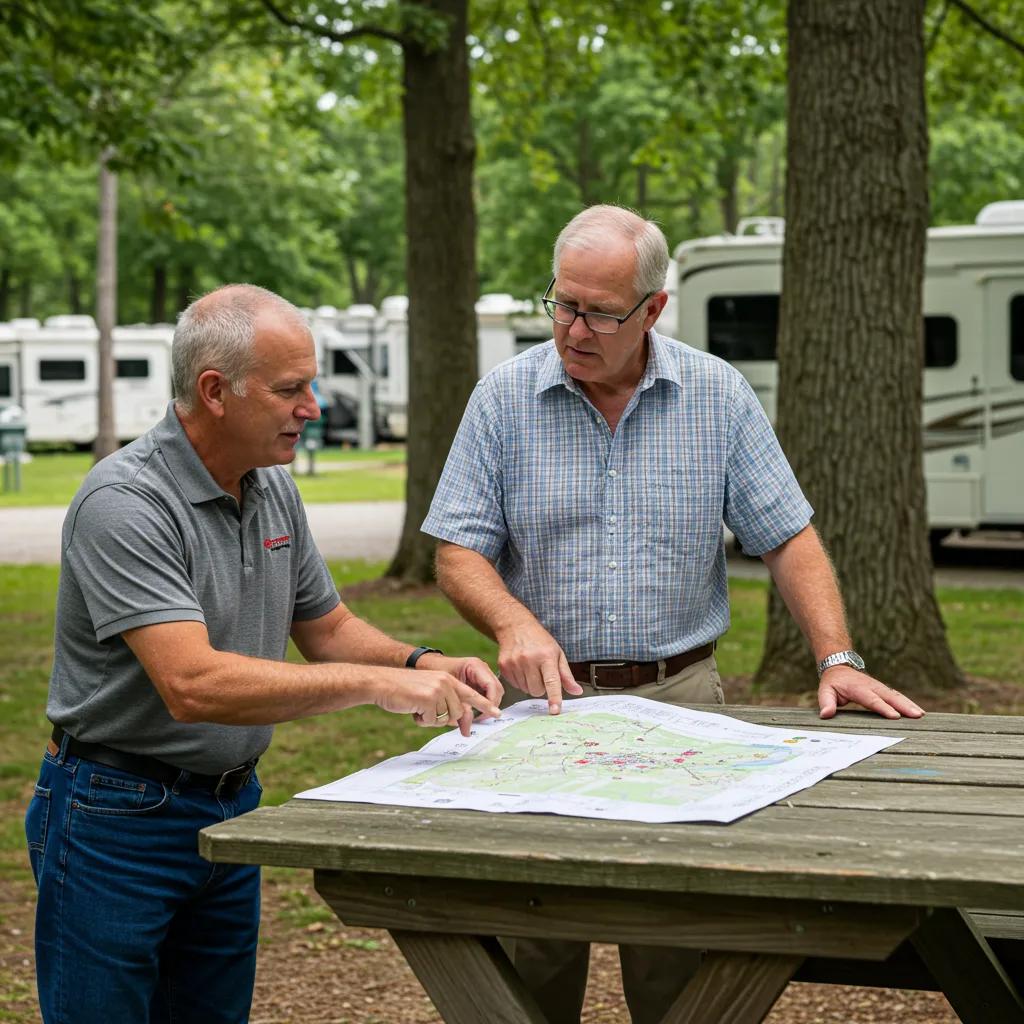
A campground broker is a real estate specialist who lists, markets, and negotiates the sale of campgrounds and RV parks by leveraging industry networks and transaction experience. Brokers work by creating market-ready financial packages, identifying qualified buyers, and managing due diligence and closing logistics so owners can focus on operations. The primary benefit is access to a targeted buyer pool and marketing resources that can increase sale price and reduce time-to-close when managed well. Understanding broker services sets up the next practical step: the specific services most agents provide to sellers.
What Services Do Campground Real Estate Agents Provide?
Campground real estate agents provide a mix of valuation analysis, targeted marketing, and transaction management tailored to outdoor hospitality properties. They prepare financial summaries, comparable sales research, and site-specific marketing packets that highlight revenue drivers and amenities, which helps buyers evaluate risk and upside. Agents also qualify prospective buyers, coordinate site visits, and manage offer terms and negotiations to ensure acceptable contingencies and closing timelines. This specialist support leads naturally into how brokers match RV park attributes to buyer types and priorities.
How Do RV Park Brokers Facilitate Outdoor Hospitality Sales?
RV park brokers specialize in matching park characteristics—site count, infrastructure condition, amenity mix, and documented revenue—with buyer segments such as investors, consolidating operators, or local families seeking stewardship. They use industry relationships to surface buyers who value scale, seasonal cash flow, or redevelopment potential and then craft narratives around amenity-driven revenue. By highlighting siting advantages and maintenance records, brokers position properties for higher offers while advising on realistic timelines. That buyer-targeting focus connects directly to why local market knowledge often matters when selling a campground.
Why Choose a Local Broker for Selling Your Campground?
Local brokers bring a deep understanding of regional demand, permitting processes, and buyer networks, which reduces friction in due diligence and can speed closings. Their knowledge of comparable park sales and occupancy patterns helps set a defensible price that aligns with local financing conditions and buyer expectations. Local representation also simplifies logistics for inspections and fosters trust with community stakeholders, which can matter when stewardship and legacy are important to sellers. Those regional advantages lead into how owners can locate and vet the best brokers near them.
How to Find the Best Campground Brokers Near You?
Finding a top campground broker starts with targeted research and verification: search industry directories, request transaction lists, and seek peer referrals from other campground owners or operators. Effective vetting focuses on relevant transaction history, documented closings in outdoor hospitality, and transparent fee arrangements so sellers know the expected net proceeds. The goal is to assemble a short list of brokers and use consistent questions and references to confirm expertise and cultural fit. Next, we’ll list the top qualities owners should prioritize when evaluating broker candidates.
What Are the Top Qualities to Look for in a Campground Broker?
When vetting campground brokers, prioritize demonstrable transaction experience, industry networks, clear marketing capabilities, and transparent communications. Look for a record of closed sales in similar park sizes and types, evidence of targeted buyer outreach, and sample marketing materials that highlight financial performance and site maps. Also evaluate responsiveness and a clear explanation of fees and expected timelines to avoid surprises during the sale process. These verification points segue into specific ways to confirm a broker’s experience in outdoor hospitality.
How Do You Verify a Broker’s Experience in Outdoor Hospitality?
To verify experience, request a transaction list with property types and outcomes, ask for references from recent sellers, and review anonymized case studies or marketing packets that show how the broker presented financials and site data. Ask tailored questions about buyer types reached, typical marketing timelines, and past challenges in closings to gauge problem-solving ability. Confirm their familiarity with campground valuation metrics and local permitting requirements to ensure they can navigate due diligence. Solid verification naturally leads to where to find reliable reviews and testimonials to support your decision.
Where Can You Find Reviews and Testimonials for Local Brokers?
Reliable sources for broker reviews include industry associations, owner referral networks, and public business profiles that aggregate seller feedback and transaction summaries. Look for detailed testimonials that reference sale outcomes, timeliness, and confidentiality practices rather than generic praise, which provides a clearer signal of capability. Cross-check references and online reviews against the broker’s transaction list to ensure consistency and authenticity in claims. Authentic reviews aid your shortlisting and transition into assessing direct-sale alternatives when confidentiality or legacy priorities are paramount.
What Are the Benefits of Selling Your Campground Directly to an Operator vs. Using a Broker?
Selling directly to an operator typically shortens the timeline, reduces public exposure, and may avoid broker commissions, while listing with a broker can increase buyer competition and potentially yield higher sale prices. Direct operator sales emphasize stewardship, confidential negotiations, and a hands-on transition with fewer intermediaries, making them attractive to owners prioritizing legacy and staff continuity. Brokers, conversely, can expand reach to multiple investor types and create competitive tension that may improve price. To make this comparison clearer, the following table contrasts how brokers and direct buyers typically affect key seller priorities.
Different sale paths influence speed, fees, confidentiality, and legacy outcomes in measurable ways:
How Does Selling Directly to GatherGrounds Resorts Save Time and Fees?
Selling directly to a family-owned operator like GatherGrounds Resorts can streamline decision-making because owners negotiate with the people who will operate the park, eliminating layers of corporate approvals. This direct communication often shortens the timeline between offer and acceptance and can reduce transaction complexity by avoiding public listings. GatherGrounds Resorts emphasizes legacy preservation, continuity of teams, and a focus on parks with 130+ sites in the upper Midwest, which aligns with sellers seeking a stewardship-minded transition. After explaining time and fee advantages, it’s important to consider the broader legacy preservation practices offered by family-owned operators.
What Legacy Preservation Benefits Do Family-Owned Operators Offer?
Family-owned operators often frame acquisitions as stewardship, committing to preserve property identity, traditions, and existing teams where feasible, which supports community continuity and guest experience retention. They typically prioritize measured operational transitions and may engage with local staff and vendors to maintain institutional knowledge and service standards. Owners valuing legacy often seek written commitments about operational philosophy, staff retention efforts, and community engagement to ensure continuity post-sale. Considering confidentiality practices next helps owners weigh privacy implications between selling paths.
How Does Confidentiality Differ Between Brokers and Direct Buyers?
Listing with a broker typically involves marketing materials and public or semi-public listings that can signal the market and invite widespread interest, potentially affecting staff, guests, and local stakeholders. Direct buyer negotiations frequently use non-disclosure agreements, controlled-showing protocols, and private financial exchanges to maintain confidentiality. Sellers should request confidentiality plans from brokers and direct buyers and weigh the tradeoffs of broader market exposure against privacy needs. Understanding confidentiality dynamics prepares owners to choose the sale path that best aligns with their priorities and the required documents to support that choice.
What Is the Typical Campground Selling Process with a Broker?
A broker-led sale usually follows a sequence: prepare financials and marketing materials, set a listing strategy, market to targeted buyers, manage offers and due diligence, and then close the transaction while coordinating financing and legal requirements. Brokers manage buyer qualification and the negotiation of contingency terms to protect sellers and keep timelines on track. This structured approach helps owners understand expectations and required inputs, which leads into the specific documents sellers should prepare for a smooth sale.
What Documents Are Needed to Sell a Campground or RV Park?
Sellers should compile financial statements, recent tax returns, occupancy and revenue schedules, site maps, permit and zoning documentation, and vendor and employment agreements to present a complete picture to buyers. Clear, organized documentation reduces buyer friction during due diligence and supports valuation assertions based on historical performance. Owners should also prepare an equipment and infrastructure inventory and any records of capital improvements to justify condition and capex assumptions. Having these documents ready accelerates the next step: how brokers and buyers actually value campgrounds.
How Is a Campground Valued by Brokers and Buyers?
Campground valuation relies on several factors—revenue, profit margins, occupancy trends, site count, amenity mix, and comparable sales—using income approaches, cap rate analysis, and market comps to estimate value. Different buyer types emphasize different attributes: investors may focus on cap rates and NOI, while operators may value scale and operational synergies. The table below compares common valuation factors and their typical impact on price to provide a clearer picture of buyer and broker emphases.
Below is a concise comparison of valuation factors used by brokers and buyers to assess a campground’s market value:
What Are the Steps from Listing to Closing with a Broker?
A typical broker-managed timeline includes five core phases: preparation (document assembly and pricing), targeted marketing (outreach and confidentiality controls), negotiation (offers and terms), due diligence (inspections and financing), and closing (final documents and transfer). Each phase requires seller cooperation—providing documentation, facilitating site visits, and responding to offer terms—to keep the timeline compact. Sellers should expect variable durations depending on financing, inspections, and buyer type, and plan contingency buffers for permits or lender conditions. For owners preferring a faster, lower-exposure route, an alternative direct-operator acquisition process is often shorter and more confidential.
Short alternative process flow for sellers preferring a direct operator sale:
- Owner inquiry and confidential information exchange under NDA.
- Operator site assessment and preliminary offer based on reviewed financials.
- Focused due diligence with targeted inspections and staff transition planning.
- Final negotiation and closing with stewardship terms to preserve legacy.
How Do Campground Brokers Market Your Property to Buyers?

Brokers use a mix of industry channels, targeted outreach, and professional assets to reach qualified buyers and maximize sale value by showcasing revenue drivers and investment upside. Marketing efforts combine confidential broker lists, industry publications, property teaser packages, and direct outreach to buyer networks to segment buyers by investor type and operational goals. Professional visuals and clear financial presentations increase perceived value and support higher offers. The next section details the specific channels brokers use and how each reaches different buyer segments.
What Channels Do Brokers Use to Reach Qualified Buyers?
Brokers typically use industry-specific buyer lists, direct outreach through broker networks, targeted online listings, and trade publications to reach investors and operators. Each channel targets different buyer profiles: direct outreach finds consolidators or local operators, trade publications attract institutional investors, and online listings broaden visibility to national buyers. Effective campaigns coordinate channels to maintain confidentiality while generating competitive interest among qualified purchasers. Understanding these channels informs how brokers highlight key amenities and location advantages to maximize offers.
How Do Brokers Highlight Amenities and Location to Maximize Value?
Brokers emphasize revenue-driving amenities—such as year-round hookups, cabins or glamping units, recreation facilities, and event spaces—while framing location demand drivers like proximity to parks, lakes, or tourist corridors. Listing copy prioritizes amenities that directly impact occupancy and average daily rate, and positions upgrades as value-add opportunities for buyers. Brokers also present scenarios for revenue optimization to help buyers envision upside, which tends to increase offer levels. Clear presentation of amenities and site plans naturally depends on professional imagery and mapping, which is the focus of the next subsection.
What Role Do Professional Photos and Maps Play in Broker Marketing?
High-quality photos, drone imagery, and clear site maps are essential because they reduce buyer uncertainty, showcase condition, and support premium pricing by highlighting usable acreage and amenity placement. Drone shots convey site layout and contextual location while interior and amenity images communicate guest experience and maintenance standards. Brokers pair imagery with labeled site plans, amenity callouts, and alt-text descriptions to improve both buyer understanding and discoverability. Well-crafted visual assets bridge to market trends by demonstrating how properties align with current buyer preferences in 2025.
What Are Current Market Trends Affecting Campground Sales in 2025?
In 2025 the campground market reflects influences from interest rates, changing occupancy patterns, and evolving buyer preferences for scale and diversified revenue streams. Higher interest rates have tightened some financing but steady demand for outdoor hospitality and diversified amenities continues to attract operators and investors. Buyers are prioritizing documented financials, well-maintained infrastructure, and parks that support extended-stay or glamping revenue to offset funding headwinds. These trends shape valuation expectations and seller preparation, beginning with the interaction of rates and occupancy.
How Are Interest Rates and Occupancy Rates Impacting Campground Valuations?
Interest rates influence buyer financing costs and, by extension, cap rate expectations, which can compress purchase pricing when financing becomes more expensive. Occupancy trends directly feed revenue forecasts; parks that maintain consistent occupancy and ADR present lower risk and sustain higher valuations. Sellers can mitigate rate-related pressure by demonstrating revenue stability, reducing deferred maintenance, and presenting conservative pro forma scenarios. Understanding these dynamics helps sellers prioritize improvements that most directly affect buyer financing and valuation.
What Types of Campgrounds Are Most Attractive to Buyers Today?
Buyers increasingly favor parks with scale (including 130+ site properties), diversified site types (RV, cabins, glamping), documented revenue streams, and modern infrastructure that reduces near-term capex. Parks that offer multiple revenue channels—longer-stay options, premium amenities, or event-driven income—tend to attract a wider buyer set and command stronger offers. Well-documented operations and a clear asset preservation plan also matter to stewardship-minded operators. Those buyer preferences are influenced by broader shifts, such as remote work trends that affect stay patterns.
How Is Remote Work Influencing Extended-Stay and Seasonal Rentals?
Remote work has increased demand for extended-stay stays and season-long rentals, creating opportunities for parks to capture longer-duration guests and higher lifetime value per guest. Owners can adapt by marketing workspace-friendly sites, improving connectivity, and offering packages for longer bookings to attract remote workers. Operational changes—such as flexible billing, enhanced site amenities, and targeted promotions—can increase occupancy stability and make a park more attractive in sale discussions. These operational adaptations feed directly into deciding between a broker-led sale or a direct operator acquisition.
How Can You Choose Between a Broker and a Direct Buyer for Your Campground Sale?
Choosing between a broker and a direct buyer depends on priorities: maximizing sale price, preserving legacy, maintaining confidentiality, or closing quickly. A structured decision framework compares timelines, fees, transparency, and stewardship commitments to match a path to owner goals. Asking the right questions and evaluating real-world timelines helps owners decide the best route for their park. The next subsection provides specific questions owners should ask both brokers and direct buyers to aid selection.
What Questions Should You Ask Brokers and Direct Buyers?
When interviewing brokers, ask about their recent campground transactions, buyer networks, marketing plans, and fee structures; request references and sample marketing materials. When speaking with direct buyers, ask about intended operational changes, staff retention policies, timeline expectations, confidentiality practices, and stewardship commitments. For both parties, inquire about valuation methodology, typical timeline ranges, and contingency practices to compare apples-to-apples. These targeted questions lead into a factual comparison of closing times and transaction transparency.
How Do Closing Times and Transaction Transparency Compare?
Broker-led sales frequently involve longer marketing windows to generate competitive bids, often extending timelines due to buyer financing and broader due diligence; typical broker timelines vary by market but can span several months. Direct operator deals often close more quickly because they rely on fewer intermediaries, focused due diligence, and faster decision cycles when terms align, potentially compressing the timeline to weeks rather than months. Transparency practices differ: brokers may manage staged disclosures to protect confidentiality while direct buyers may offer upfront stewardship commitments but require NDA-protected access to sensitive data. Knowing these timeline differences helps owners set realistic expectations for closing and post-sale transitions.
What Are the Long-Term Impacts on Your Campground’s Legacy?
Long-term legacy outcomes hinge on buyer intentions for brand continuity, staff retention, investment in upkeep, and community relations, which can all influence guest experience for years after sale. Owners valuing legacy should seek written commitments about operational philosophy, staff transition plans, and community engagement to ensure continuity. Stewardship-minded direct buyers and some operators explicitly prioritize preserving property identity, which can sustain goodwill and local relationships. Considering legacy outcomes completes the decision framework and supports an informed choice between a broker and a direct buyer.
How Can You Choose Between a Broker and a Direct Buyer for Your Campground Sale?
A final practical step is to weigh net proceeds against non-financial priorities—speed, confidentiality, and legacy—and then shortlist candidates who meet those priorities. Use the verification checklist earlier, compare projected timelines and fee structures, and request stewardship or transition plans when legacy is important. For owners who prefer a confidential, stewardship-oriented path and operate parks of scale, the direct acquisition of existing campgrounds and RV parks may be an appropriate alternative to traditional brokerage. Choosing the right path requires aligning sale mechanics with personal and community goals so the campground’s next chapter reflects the owner’s intent.
Frequently Asked Questions
What are the key factors to consider when pricing my campground for sale?
When pricing your campground, consider factors such as revenue history, occupancy rates, and the condition of infrastructure. Comparable sales in your area can provide a benchmark for setting a competitive price. Additionally, assess the unique features of your property, such as amenities and location advantages, which can enhance its appeal to potential buyers. Engaging a broker for a professional valuation can also help ensure that your pricing strategy aligns with current market trends and buyer expectations.
How can I prepare my campground for a successful sale?
Preparing your campground for sale involves several steps. Start by organizing financial documents, including profit and loss statements, occupancy rates, and maintenance records. Consider making minor repairs and improvements to enhance curb appeal and functionality. Additionally, gather information on permits and zoning to provide potential buyers with a complete picture. A well-prepared property not only attracts more buyers but can also lead to higher offers and a smoother transaction process.
What should I expect during the due diligence process when selling my campground?
During the due diligence process, potential buyers will thoroughly evaluate your campground’s financials, operational practices, and physical condition. This typically includes inspections of the property, review of financial statements, and verification of permits and zoning compliance. Be prepared to provide access to necessary documents and facilitate site visits. This phase is crucial for buyers to assess risks and validate their investment, so transparency and cooperation can help expedite the process.
How can I ensure confidentiality during the sale of my campground?
To maintain confidentiality during the sale, consider using a non-disclosure agreement (NDA) with potential buyers. This legal document ensures that sensitive information about your campground remains private. Additionally, work with a broker who understands the importance of discretion and can implement controlled marketing strategies to limit exposure. By carefully managing how and to whom you disclose information, you can protect your business interests and maintain staff and guest confidence throughout the sale process.
What are the common pitfalls to avoid when selling a campground?
Common pitfalls when selling a campground include overpricing the property, failing to prepare necessary documentation, and not understanding buyer motivations. Additionally, neglecting to address maintenance issues can deter potential buyers and lower offers. It’s also important to avoid rushing the sale; taking the time to properly market your campground and vet potential buyers can lead to better outcomes. Engaging a knowledgeable broker can help you navigate these challenges and avoid costly mistakes.
What role does marketing play in selling my campground?
Marketing is crucial in attracting qualified buyers and maximizing your campground’s sale price. Effective marketing strategies include creating compelling property listings, utilizing professional photography, and leveraging industry networks to reach targeted buyer segments. A broker can help craft a marketing plan that highlights your campground’s unique features and revenue potential, ensuring it stands out in a competitive market. The right marketing approach can generate interest and lead to multiple offers, ultimately benefiting your sale.
How can I assess the credibility of a campground broker before hiring them?
To assess a campground broker’s credibility, review their transaction history, focusing on recent sales of similar properties. Ask for references from past clients and inquire about their marketing strategies and buyer networks. Additionally, evaluate their communication style and responsiveness during initial interactions. A reputable broker should be transparent about their fees and provide a clear plan for how they will market your campground. Trust your instincts; a good fit will feel collaborative and professional.
Conclusion
Engaging a knowledgeable campground broker or considering a direct sale to an operator can significantly enhance your selling experience, ensuring you achieve the best possible outcome. By understanding the unique benefits of each approach, you can make informed decisions that align with your financial goals and legacy aspirations. Take the next step in your selling journey by exploring our resources or contacting a local expert today. Your campground’s future deserves careful consideration and strategic planning.
“`