
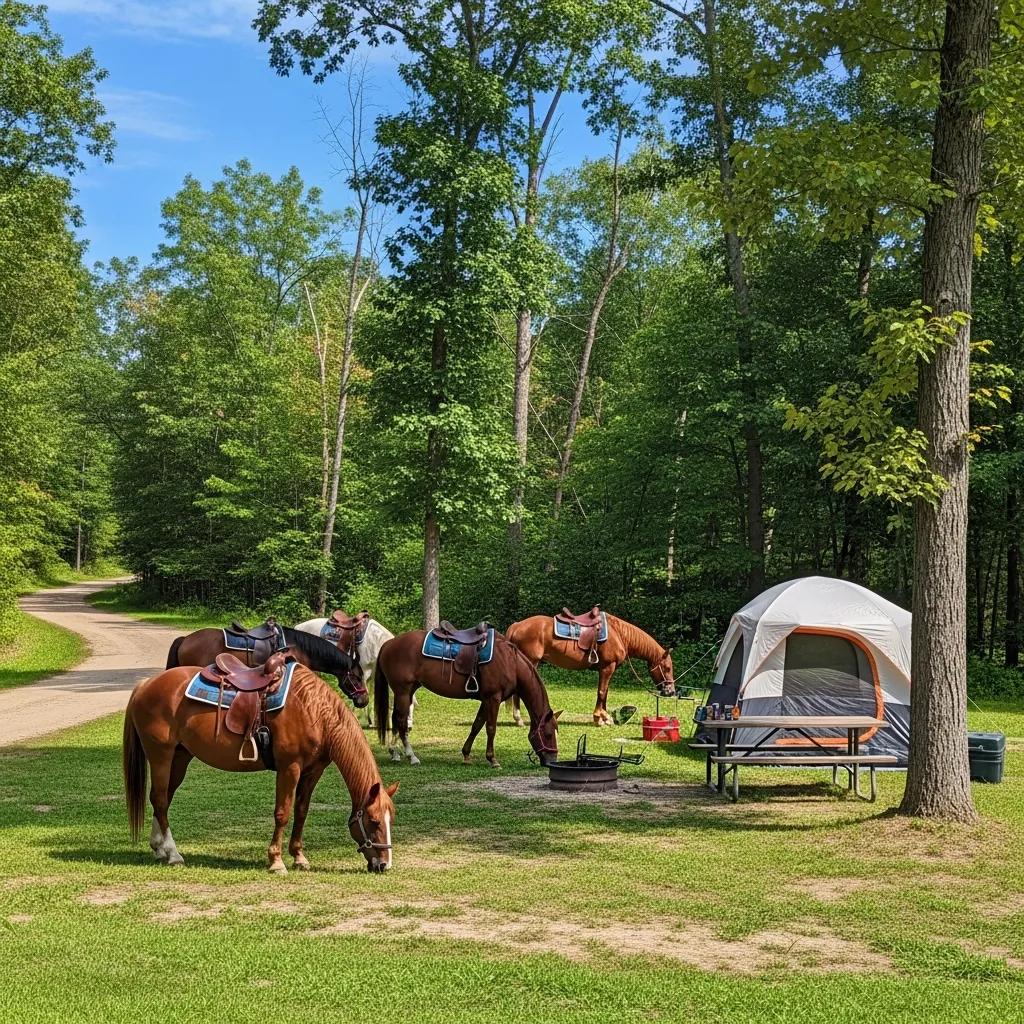
Michigan Equestrian Campgrounds: Your Practical Guide to Horse‑Camping Adventures
Equestrian camping in Michigan pairs trail riding with overnight stays so you and your horse can access diverse landscapes—oak ridgelines, wetlands, and rolling woods—while camping close to well‑located staging areas. This guide walks you through where to camp, which trails work best, how to plan for horse health and trailer logistics, and where state and local rules affect your trip. You’ll find practical comparisons of campgrounds with trailer parking and staging, concise trail facts for day rides or multi‑day plans, and a packing and safety checklist tuned to Michigan conditions. We also highlight a convenient basecamp beside prime trail systems and outline reservation and permit basics for state‑managed riding areas. Keep reading to learn what equestrian camping looks like, which campgrounds offer the best trail access, top trails to explore, how to plan and pack, and where to find official DNR guidance.
What Is Equestrian Camping in Michigan and Why Choose It?
Equestrian camping in Michigan means bringing—or using—horses at a campsite so riding is the focus of your trip. The state’s mix of public recreation areas and private campgrounds gives you trail density, varied terrain, and trailer‑friendly parking that make day rides and looped routes easy to plan. Campground conveniences—tie‑up spots, water access, and paddock or parking setups—pair with nearby trails so you spend more time riding and less time hauling. Equestrian camping is also a good fit for families and mixed‑ability groups: non‑riders can enjoy campground amenities while riders take longer outings, which simplifies multi‑activity planning.
There are several ways equestrian camping is offered depending on the property and your goals. Knowing the differences helps you pick campgrounds that match facility levels and permit rules; that distinction also leads into the riding benefits you’ll get from combining horses with camping.
How Does Horseback Riding Enhance Michigan Camping Experiences?
Riding opens ground that’s harder to cover on foot, letting you see more in a single day—mixed hardwoods, ridgelines, and wetland corridors can all appear on one loop. A typical day might be a short trailer run to a staging area, a two‑ to four‑hour loop through varied terrain, and an easy afternoon back at camp while non‑riders use on‑site amenities. The main benefits are expanded access, efficient mileage, and a family‑friendly pace—especially valuable where trails are interconnected. Below we outline campground types so you can match facilities to your riding and horse‑care needs.
What Types of Equestrian Campgrounds Are Available in Michigan?

Michigan offers several kinds of equestrian campgrounds to suit different priorities: state forest equestrian campgrounds, private equestrian sites, simple trail camps, and multi‑use campgrounds near horse trails. State forest equestrian campgrounds tend to sit close to long trail systems and follow DNR permit or reservation rules. Private equestrian campgrounds often add amenities—tie‑up posts, managed paddocks—but may limit public multi‑day access. Trail camps are minimalist overnight spots for multi‑day riders, while multi‑use campgrounds provide trailer parking and nearby trailheads for mixed groups. Your choice depends on whether you want structured facilities, long‑distance access, event space, or family‑friendly services—and that choice guides reservation and permit planning.
Once you know the campground type that fits your trip, evaluate sites by trailer parking, tie‑up capacity, water access, and distance to trailheads. We compare key features next.
Which Michigan Campgrounds Offer the Best Access to Equestrian Trails?
When picking a campground for equestrian access, prioritize trailer parking, proximity to trailheads, and staging areas that make launching day rides simple. The best sites pair easy trailer access with nearby trail systems, clear signage, and facilities to support horse care—helping you plan efficient, safer rides.
Below is a short, ranked list of recommended campgrounds for southern Michigan riders, based on trail access and staging convenience.
- Campgrounds adjacent to Waterloo State Recreation Area: Top pick for extensive mileage and varied ecosystems—great for multi‑loop day rides.
- Brighton Recreation Area: Good for riders wanting well‑maintained trails close to metro areas.
- Ortonville Recreation Area: Strong choice for trailer staging and family‑friendly day rides with connector trails.
- Private equestrian campgrounds and nearby ranches: Best when you need on‑site tie‑ups and managed horse amenities.
These options show how trailer access and trail density combine to match ride length and horse conditioning. Next is a quick comparison table of representative campgrounds so you can scan differences at a glance.
This comparison highlights the trade‑offs between on‑site equestrian features and trail proximity—pick the balance that keeps daily hauling minimal while meeting your horse‑care needs.
How Does The Oaks Campground Serve as a Gateway to Waterloo State Recreation Area?
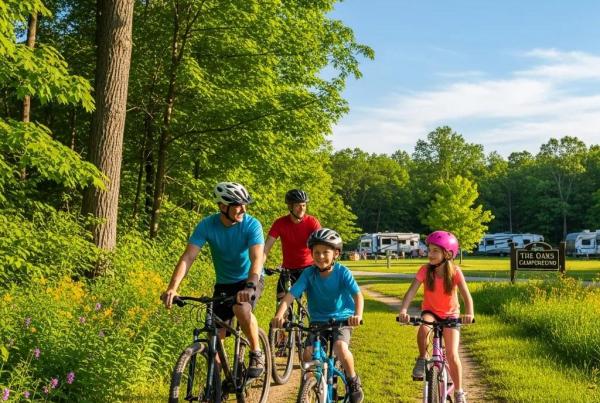
The Oaks Campground by GatherGrounds sits next to Waterloo State Recreation Area and makes a convenient basecamp for riders who want short trailer runs to Waterloo trailheads and staging areas. That proximity cuts morning trailer time and opens more flexible windows for half‑day or full‑day loops—helpful for mixed schedules and horse conditioning. The Oaks is a family‑friendly, 160‑acre property with amenities like golf‑cart trails, a fishing pond, playgrounds, and planned water‑park features, so non‑riding companions have plenty to do while riders are out. For logistics, The Oaks offers trailer parking and easy access to Waterloo’s trail network; see The Oaks Campground reservation page for availability and booking details.
What Are Other Top Horse‑Friendly Campgrounds in Southern Michigan?
Southern Michigan has several other horse‑friendly campgrounds, each with strengths for different riders. Brighton Recreation Area is handy for weekend trips from metro areas and has well‑marked short loops. Ortonville Recreation Area offers trailer staging and connector trails that work well for families and mixed groups. Private equestrian sites and ranches can provide managed tie‑ups and paddocks for longer stays, though services vary. When choosing, focus on trailer‑friendly parking, clear trailhead signage, and water availability, and align reservations with seasonal demand and group size.
Next, we summarize the key equestrian trails nearby and what to expect on each route.
What Are the Key Equestrian Trails to Explore Near Michigan Campgrounds?
Top equestrian routes in southern Michigan include Waterloo State Recreation Area trails, equestrian segments of the Shore‑to‑Shore Trail, and loops in Brighton and Ortonville recreation areas. Each trail differs by length, terrain, and staging options, so match trail choice to horse fitness and your available time. Short loops suit families or less‑conditioned mounts; longer connectors support multi‑loop days for fit horses. The table below summarizes main trail attributes to help planning.
Use this summary to pick routes that fit desired mileage and staging logistics. Below we highlight what makes Waterloo’s trails stand out for horse campers.
What Makes Waterloo State Recreation Area’s Horse Trails Unique?
Waterloo’s horse trails stand out for miles of interconnected loops and a mix of ecosystems—oak‑hickory ridges, prairie pockets, and wetland corridors—that give each ride varied scenery. Clear signage and multiple staging areas make it easier to plan efficient loops, which helps manage hydration and rest on longer outings. Close links to nearby campgrounds, including private properties, let riders cut down on trailer moves and spend more time in the saddle—especially useful for groups balancing trail time with campground activities.
How Can Riders Experience the Shore‑to‑Shore Trail Adventure?
The Shore‑to‑Shore Trail is a long connector with equestrian sections that let ambitious riders link campgrounds over several days. Most riders tackle it in manageable segments, starting and ending at campgrounds or arranging shuttles between trailheads. Key considerations are resupply points, horse conditioning for continuous mileage, and coordinating permitted camping or trail access with local managers and trail rider organizations. Local groups and park staff commonly recommend breaking the route into daily distances and staging at campgrounds with reliable trailer parking to simplify logistics and keep the trip safe and sustainable.
How to Plan Your Michigan Horse Camping Trip for a Safe and Enjoyable Experience?
Planning horse camping in Michigan means covering trailer logistics, campsite setup, horse care, and ride pacing so everyone—horses, riders, and companions—has a good trip. Start by choosing routes that match horse fitness and daylight, confirm trailer and tie‑up facilities at your campsite, and schedule vet checks plus feed and water planning. Pack for Michigan’s variable weather with layered clothing, hoof protection, and a compact equine first‑aid kit. The checklist below lays out essential pre‑trip steps.
Essential pre‑trip planning steps:
- Confirm campsite reservations and trailer parking capacity at your chosen campground.
- Study trail maps and pick ride segments that match horse conditioning and daylight hours.
- Arrange veterinary checks, ensure vaccinations where recommended, and plan feed/water supplies.
- Pack trailer and campsite gear for horse and human comfort, including tie‑up equipment and manure management tools.
Covering these items before you go reduces surprises and leads into a more detailed packing checklist for horse and rider.
What Essentials Should You Pack for Horse Camping in Michigan?

Packing breaks down into horse supplies, rider gear, and campsite items. Prioritize safety, hydration, and quick response to trail incidents. For horses, bring extra feed, water containers or a plan for water sources, hoof boots or adequate shoeing, and a stocked equine first‑aid kit. Riders should pack layered clothing for Michigan weather, navigation tools (GPX or maps), protective riding gear, and a human first‑aid kit. At camp, bring secure tie‑up gear, manure handling tools, and portable fencing or corrals if needed. The table below is a quick, printable checklist.
This overview helps you pack for a safe, prepared trip and leads into horse‑specific health and safety practices to use on the trail.
How to Ensure Horse Health and Safety on Michigan Trails?
Start with pre‑trip conditioning and a vet check, then manage pacing, hydration, and footing while on the trail. A vet screening should confirm soundness, review vaccinations where required, and cover parasite control and travel stress. On the trail, keep a steady pace with planned rest and water breaks, watch for heat stress or lameness, and cool horses down with walking and limb checks after faster work. Carry an equine first‑aid kit and have a plan for emergency vet transport or trailer evacuation—these steps keep rides controlled and safer for both horse and rider.
With planning and packing handled, riders should also follow reservation systems and regulatory rules that govern state equestrian use—covered in the next section.
What Are Michigan DNR Regulations and Resources for Equestrian Campgrounds?
The Michigan DNR publishes rules, maps, and reservation processes for state recreation areas with equestrian trails. Checking DNR resources ensures you follow permit requirements, seasonal restrictions, and trail‑use policies. The DNR specifies where horses are allowed, which trails are equestrian‑designated, and guidance on grazing and manure handling. Knowing and following these rules prevents fines, protects resources, and helps keep trails open for riders. Below are the key actions riders should take before a trip.
Key DNR resource actions to take before a trip:
- Review official DNR trail maps and horse‑use rules for your intended area.
- Verify whether overnight horse camping or multi‑day trail use requires permits or reservations.
- Note seasonal closures or trail conditions that may affect safety and footing.
These steps are your starting point for booking and planning; the following subsections explain reservations and trail etiquette in practical terms.
How Do You Reserve Spots and Obtain Permits for State Forest Horse Camping?
Start by checking the DNR reservation system or the park’s booking process for campsite availability, then confirm trailer and tie‑up facilities at the site. For multi‑day or point‑to‑point rides, verify whether a separate trail‑use permit or campground booking is required and whether trailheads have specific trailer parking rules. Popular weekends fill early, so book within recommended windows and have alternate dates ready. Contact park managers or consult DNR guidance to confirm documentation and permit needs before arrival.
Following reservation steps prevents last‑minute surprises and supports good trail etiquette, which helps sustain access for everyone.
What Are the Trail Etiquette and Rules for Michigan Equestrian Trails?
Trail etiquette centers on safety, resource protection, and courteous multi‑use behavior: yield appropriately, control group size and speed, manage manure, and respect signs and seasonal closures. Common practice is to yield to hikers when safe, and allow faster users to pass in safe pullouts; clear verbal warnings reduce surprises. Manage manure by removing or spreading droppings off heavily used areas, limit group size to reduce erosion, and pack out trash. Observing posted rules and seasonal closures protects the resource and helps keep trails open to riders.
Why Choose The Oaks Campground for Your Michigan Equestrian Camping Base?
The Oaks Campground by GatherGrounds is a practical base for riders headed to Waterloo because its location cuts trailer travel time and simplifies staging for day rides and multi‑day plans. That proximity lets you start earlier and ride later with less road time, reducing stress on horses and giving you more flexible riding windows. The Oaks’ 160‑acre, family‑friendly layout and amenities keep non‑riding companions entertained, making equestrian camping appealing to mixed groups. GatherGrounds Resorts is set to assume ownership and operations at the close of the 2024 season; check The Oaks Campground reservation page for campsite availability and booking details when planning a Waterloo‑centered outing.
The next section lists family‑friendly amenities that pair well with equestrian activities and notes seasonal considerations for trip planners.
What Family‑Friendly Amenities Does The Oaks Campground Offer?
The Oaks offers amenities that complement horse‑camping trips by giving non‑riders things to do and providing spaces for rider recovery after long days. On the 160‑acre property you’ll find a fishing pond, golf‑cart riding trails, playgrounds for kids, and a planned Wibit water park expected in 2024—features that keep families occupied while riders are out. Some amenities are seasonal, so verify opening timelines when booking to match amenity access with your trip dates.
These amenities make The Oaks a solid choice for riders who want a comfortable basecamp and easy access to quality trails.
How Does The Oaks Campground’s Location Benefit Horse Campers?
The Oaks’ proximity to Waterloo State Recreation Area shortens daily trailer transit to trailheads and provides easy access from nearby metro regions for shorter travel windows. That means you can aim for early‑morning or late‑afternoon saddle times without long on‑road trailer trips, which reduces horse stress and lets you plan more flexible riding days. The short distance back to camp makes it easy to return for feed, water, or recovery breaks when weather or trail conditions change. For these logistical reasons, The Oaks functions as a convenient staging hub for riders who want efficient access to Waterloo while keeping a family‑friendly campground base.
Frequently Asked Questions
What should I consider when choosing a campground for equestrian camping in Michigan?
Look for trailer parking, proximity to trailheads, and equestrian facilities like tie‑up areas and water. Also consider amenities for non‑riders and the types of nearby trails. Check reservation policies and permit requirements so your trip runs smoothly. Prioritize what matters most to your group—family‑friendly services or expansive trail access—and choose accordingly.
Are there specific health and safety practices for horses while camping?
Yes. Begin with a pre‑trip vet check and up‑to‑date vaccinations if recommended. On the trail, keep a steady pace, offer regular water breaks, and watch for heat stress or lameness. Carry an equine first‑aid kit and cool horses down after hard work. These routines help keep both horse and rider safe and comfortable.
What are the best times of year for equestrian camping in Michigan?
Late spring through early fall is generally best—May and June for lush trails and moderate temps, and September to October for cooler weather and fall color. Always check seasonal trail conditions and possible closures before you go.
How can I find equestrian trails that match my riding skill level?
Use local park trail maps and resources from equestrian groups. Trails are often rated by difficulty; online forums and local riders can share recent conditions and tips. Match trail choice to your horse’s fitness and your comfort level to keep rides enjoyable and safe.
What should I do if I encounter other trail users while riding?
Follow trail etiquette: yield appropriately, announce yourself, and slow or stop when necessary. Ask for safe passing room and keep your horse under control. Clear communication and courtesy go a long way toward positive interactions with hikers, bikers, and other riders.
What are the key regulations I should be aware of when camping with horses in Michigan?
Check Michigan DNR rules for where horses are allowed, permit requirements for overnight stays, and seasonal restrictions. Follow manure management and trail‑use guidelines to limit environmental impact. Always verify current regulations before your trip.
How can I prepare for variable weather conditions while horse camping?
Pack layered clothing and waterproof gear for yourself and tarps for shelter. Bring hoof protection for muddy trails and an equine first‑aid kit for emergencies. Monitor forecasts and adjust plans if severe weather or poor footing is expected.
Conclusion
Horse camping in Michigan is a great way to combine trail time with a comfortable basecamp. Choose campgrounds that balance trailer access and horse facilities with the trail networks you want to ride, plan logistics and horse care in advance, and follow DNR rules to protect the resource. With the planning tips and campground recommendations here, you’ll be ready to make the most of Michigan’s trails—start planning your next equestrian adventure today.