

The pests you’re most likely to meet at an Ohio campground are mosquitoes, ticks, stinging insects and food-raiding wildlife like raccoons and mice. You can keep most of them away with an EPA-registered repellent, permethrin-treated clothing, a daily tick check and a clean campsite. Campgrounds do their part with trash pickup, mowing and tree care, but most bites happen at your own site, so a few personal habits make the biggest difference. Plan your stay at Ridge Ranch Campground in Newton Falls.
Below is what to expect by season, how to protect your family and pets, how to keep critters out of your food, and why firewood rules matter for Ohio’s trees.
Common campground pests in Ohio and when they peak
| Pest | When it’s worst | Main concern | Best defense |
|---|---|---|---|
| Mosquitoes | Late spring through summer, especially dawn and dusk | Itchy bites; West Nile and La Crosse viruses occur in Ohio | Repellent, long sleeves at dusk, no standing water at your site |
| Ticks | Spring through fall; blacklegged ticks are active whenever it’s above freezing | Lyme disease and other tick-borne illnesses | Permethrin-treated clothing, repellent, daily tick checks |
| Yellowjackets, wasps and hornets | Mid to late summer | Painful stings; allergic reactions | Cover food and drinks, use cups with lids, avoid nests |
| Ants | Warm months | Getting into food | Sealed containers, wipe tables after meals |
| Raccoons and mice | Overnight, all season | Raided coolers and trash; gear damage | Food in the vehicle or hard-sided storage, trash out nightly |

Ticks at Ohio campgrounds
According to Ohio State University entomologists, the American dog tick is the tick Ohioans run into most, and the blacklegged (deer) tick, which can carry Lyme disease, is found in nearly every county. The lone star tick is most common in southern Ohio, and the Asian longhorned tick has been spreading in the southeast and center of the state. The Ohio Department of Health has recorded more than 900 Lyme disease cases in a single year, so tick checks are worth the two minutes.
Ticks wait on tall grass and brush, especially along trails and where mowed lawn meets woods. To keep them off:
- Treat clothing, not skin, with permethrin. Spray pants, socks, shoes and tent fabric ahead of the trip and let them dry, or buy pre-treated clothing.
- Tuck pants into socks on hikes, and wear light colors so ticks are easier to spot.
- Stay in the middle of trails and out of tall grass.
- Check everyone each evening: behind the knees, waistband, armpits, behind the ears and along the hairline. A shower soon after coming in helps too.
- Dry your clothes on high heat for about 10 minutes when you get home to kill any ticks riding along.
How to remove a tick
Use fine-tipped tweezers. Grab the tick as close to the skin as you can and pull straight up with steady pressure. Don’t twist, squeeze its body or use matches or petroleum jelly. Wash the bite and your hands with soap and water. If a rash, fever or feeling unwell follows in the next few weeks, see a doctor and mention the tick bite.
Mosquitoes: when they bite and what works
Mosquitoes breed in still water and are most active around dawn and dusk, right when you’re cooking dinner or sitting by the fire. West Nile virus shows up in Ohio mosquito testing every summer, so it’s worth preventing bites even if most are just itchy.
- Dump standing water at your site: buckets, toys, tarps, flowerpots and anything that collects rain.
- Cover up at dusk with long sleeves and pants.
- Keep screens zipped on tents and RV doors.
- Use a fan on the picnic table or screen room. Mosquitoes are weak fliers, and a steady breeze helps.
- Pick your site with bugs in mind. Open, sunny sites with a breeze generally have fewer mosquitoes than deep shade near still water.

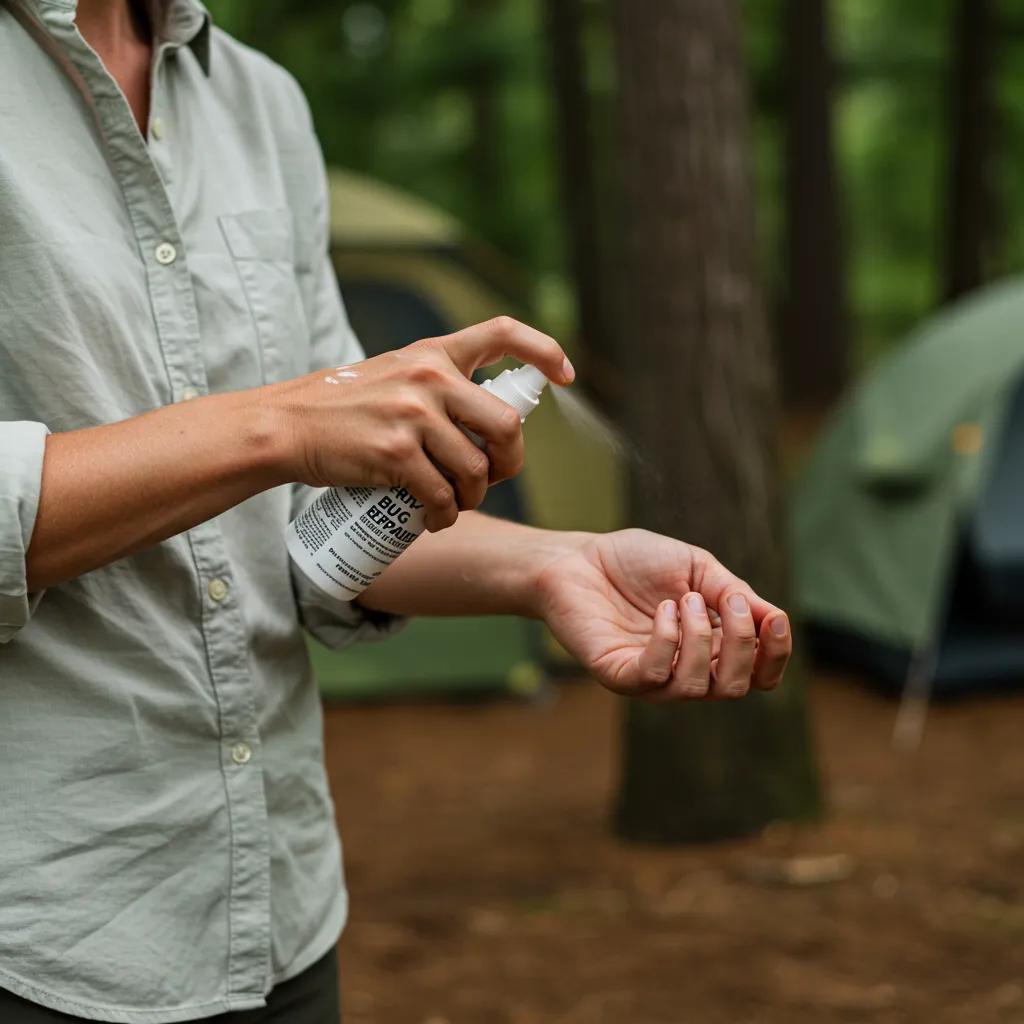
Choosing a bug repellent for camping
The CDC recommends EPA-registered repellents with one of these active ingredients:
| Active ingredient | Notes |
|---|---|
| DEET | The longest track record. Higher concentrations last longer, not stronger. |
| Picaridin | Low odor and doesn’t feel greasy or damage synthetic fabrics. |
| IR3535 | Mild and widely available in family products. |
| Oil of lemon eucalyptus (OLE) or PMD | Plant-based option. Don’t use on children under 3. |
| 2-undecanone | Plant-derived; less common in stores. |
Follow the label. Put sunscreen on first and repellent second, don’t apply repellent under clothing, and for kids, spray it on your hands and then apply it, keeping it away from eyes, mouth and hands. Don’t use repellent on babies under 2 months; use netting over the stroller or carrier instead. Products that aren’t EPA-registered, such as many essential-oil sprays, wristbands and ultrasonic devices, haven’t been evaluated the same way, so don’t count on them.
Bees, wasps and yellowjackets
Yellowjackets get bolder in late summer and go straight for soda, juice and meat. Pour drinks into cups with lids, check cans before you sip, and clear plates soon after eating. If you find a nest near your site, steer clear and tell the campground staff rather than trying to remove it yourself. Anyone with a known sting allergy should carry their prescribed epinephrine on the trip.
Keeping raccoons, mice and ants out of your food
- Store food, coolers and pet food in your vehicle or RV overnight, not on the picnic table.
- Take trash to the campground dumpster before bed.
- Wipe down the table and grill area after meals, and don’t leave dishes soaking outside.
- Keep the tent food-free. Even a granola bar wrapper invites ants and mice.
- Never feed wildlife, however cute.
Protecting your dog
Dogs pick up ticks faster than people do. Keep your dog on its tick and flea preventive (ask your vet which one), run your hands through its coat each evening, especially around the ears, neck and between the toes, and keep it on the leash and out of tall brush.
Firewood and invasive pests
Some of the most damaging pests at a campground never bite anyone. Insects like the emerald ash borer, and the egg masses of the spotted lanternfly, travel on firewood and outdoor gear and can kill healthy trees far from where they started. That’s why many Ohio campgrounds ask you to buy wood locally or bring only certified, heat-treated firewood.
Pest-smart camping at Ridge Ranch
At Ridge Ranch Campground in Newton Falls, protecting the park’s old-growth trees is a priority. Outside firewood is allowed only if it’s USDA-certified, and the camp store sells wood sourced from inspected forests in the county, with delivery to your site. In the first year under new management, the team also removed 42 dead trees for safety.
The park gives you a choice of settings. Some families prefer the open, sunny sites up front near the Kangaroo Jumper and the store, while others want the deep shade of the wooded full-hookup sites (65–131). If bugs bother your family, a sunnier site is worth asking about when you book. Fire rings on every site also give you a smoky spot to sit in the evening.
Dogs are welcome on a 6-foot leash, with an off-leash dog park, but not on the beach, in the lake or in buildings.
Wildlife around the lake at Ridge Ranch
Ridge Ranch’s 17-acre lake draws swans, geese, herons and eagles, and deer graze on the back side of the lake and in the farm fields to the west. Large turtles, including snapping turtles, live along the back shoreline. A land bridge separates the main lake from the spring-fed swimming area, and that, plus all the activity at the beach, keeps them away from swimmers. Enjoy the wildlife from a distance and never feed it.
Habits that keep critters away from your Ridge Ranch site
- Bag your trash and take it to the dumpster before bed, or keep it in your vehicle or RV overnight. Food smells left out bring raccoons, which tear bags open and scatter trash across your site and your neighbors’.
- Kids and their bikes are back at the site by dusk at all GatherGrounds parks. That’s also when mosquitoes pick up, so it’s a good time for long sleeves and repellent at the fire ring.
- Dogs stay on a 6-foot leash outside the dog park, which keeps them out of tall brush where ticks wait. Run your hands through your dog’s coat each evening.
- Late summer yellowjackets love soda and meat. Lidded cups help, and if you spot a nest near your site, tell the camp store staff instead of trying to remove it.
Campground pests FAQ
When are ticks worst in Ohio?
Spring through fall, with a lot of activity in late spring and early summer. Blacklegged ticks can be active any time temperatures are above freezing, so check for ticks even on cool spring and fall trips.
What’s the best bug spray for camping with kids?
An EPA-registered repellent with DEET, picaridin or IR3535, used as the label directs. Oil of lemon eucalyptus and PMD shouldn’t be used on children under 3, and no repellent should go on babies under 2 months.
Do citronella candles keep mosquitoes away?
Only a little, and only right next to the flame. A fan and a registered repellent on skin do much more.
Can I bring my own firewood to an Ohio campground?
It depends on the campground, so check its rules first. Many ask you to buy local wood or bring certified, heat-treated firewood to avoid spreading tree-killing insects.
Are there snapping turtles in the lake at Ridge Ranch?
Yes, along the back shoreline. A land bridge separates the main lake from the swimming area, and the activity at the beach keeps the turtles on the far side, away from swimmers.
Can my dog swim in the lake at Ridge Ranch?
No. Pets aren’t allowed on the beach, in the lake or in buildings, to keep the water clean for swimmers. Dogs can run off leash in the dog park.
Can I bring firewood to Ridge Ranch?
Only if it’s USDA-certified (stamped). The camp store sells local wood from inspected forests in the county and delivers it to your site. The rule protects the park’s old-growth trees from insects carried in on outside wood.
Is there less bug activity in the fall at Ridge Ranch?
Cooler September and October nights usually mean fewer mosquitoes, and the park stays open through October 20 for the fall color across the lake. Keep doing tick checks, though, since ticks stay active whenever it’s above freezing.