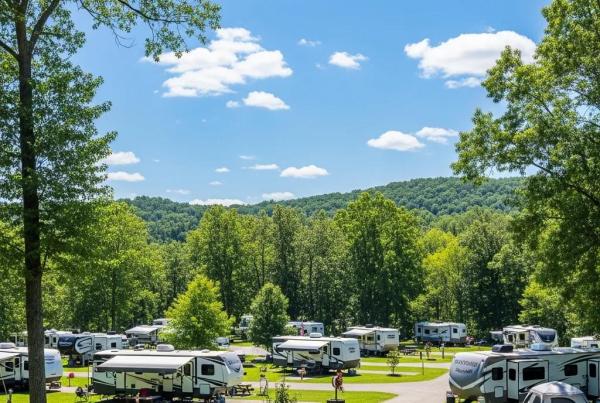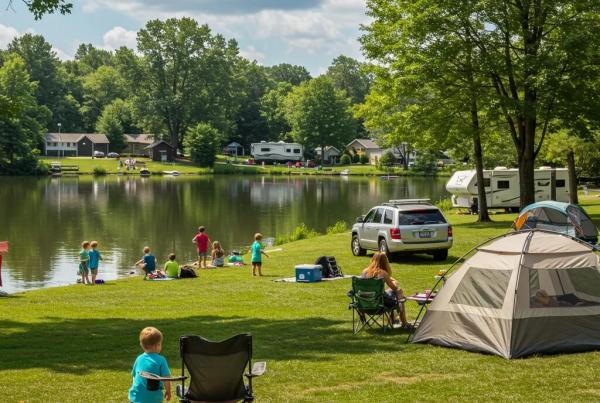

Yes, many campgrounds discount longer stays, but almost always at private campgrounds rather than state parks. The common structures are weekly rates, monthly rates (often 20–30% below the nightly price, with a minimum of about 30 nights) and seasonal sites, where you pay one price to keep your camper on the same site for the whole camping season. Ohio state parks don’t offer monthly or seasonal camping, because stays are capped at 14 days in any 30-day period. Plan your stay at Ridge Ranch Campground in Newton Falls.
Here’s how each type of discount works, what to ask before you commit, and how to tell whether a longer stay actually saves you money.
Types of extended-stay campground discounts
| Option | Typical length | How the discount works | Best for |
|---|---|---|---|
| Weekly rate | 7 nights | A set price for the week, or a free or reduced night | Vacation weeks, work trips |
| Monthly rate | About 30 nights | A percentage off the nightly rate; electric is often metered or billed separately | Traveling RVers, contractors, people between homes |
| Seasonal site | The whole camping season | One season price for a reserved site you can leave your camper on | Families who camp most weekends |
Not every campground offers all three, and terms vary a lot. Many parks exclude their premium sites (lakefront or beachfront, for example) from monthly discounts, and some don’t discount weekly stays at all.

How monthly campground rates work
A monthly rate is the simplest extended-stay discount. You book a minimum number of consecutive nights, usually around 30, and the campground takes a percentage off what those nights would cost one at a time. Before you book, ask:
- Which sites qualify? Premium sites are often excluded.
- How is electric billed? On long stays, many parks meter power and bill what you use instead of including it in the rate.
- What’s the cancellation and early-departure policy? Leaving early usually doesn’t earn a refund on a discounted stay.
- Are extra people, vehicles or visitors charged separately? Those fees add up over a month.
How seasonal sites work
A seasonal site is the biggest extended-stay saving for families who camp a lot. You pay one price for the season, park your camper on a reserved site and come and go as often as you like, usually from spring to fall. In Northeast Ohio the season generally runs from around May 1 into October. Things that change the value of a seasonal site:
- What’s included. Water and sewer may be included or billed. Electric is often sub-metered and billed for actual use.
- Winter storage. Some parks charge to leave your camper over the winter, and some include it. Off-site RV storage can cost $100–$200 a month, so this matters.
- Hookups. Full-hookup sites cost more. Sites with a gray-water drain but no sewer can be cheaper, and only the black tank needs pumping.
- Rules for your site. Ask about decks, sheds, golf carts and camper age limits before you sign.
For a look at seasonal camping across the state, see our guide to seasonal campgrounds in Ohio.

Do longer stays actually save money?
Usually, if you’d really use the nights. A quick way to check:
- Count the nights you’d camp anyway. For a seasonal site, include every weekend and holiday week you’d realistically go.
- Price those nights at the nightly rate, including weekend and holiday pricing and extra-person fees.
- Add the costs a longer stay removes: towing fuel and wear, setup and teardown time, off-site storage, and booking fees.
- Compare that total to the monthly or seasonal price, plus metered electric.
A family that camps most summer weekends plus a holiday week or two usually comes out ahead with a seasonal site, and it never has to fight for a holiday weekend reservation. If you camp three or four weekends a year, nightly stays (a short stay campground booking) are still cheaper and more flexible. For other ways to cut costs, see our Ohio camping discount tips.
Why state parks don’t offer long-stay discounts
Ohio state park campgrounds are public and booked through Reserve Ohio, which limits stays to 14 days in any 30-day period so sites keep turning over. There’s no monthly or seasonal option, and each reservation carries its own reservation fee. If you want a month in one place or a site for the summer, look at private campgrounds. Our guide to public vs. private campgrounds explains the other differences.

Extended stays at Ridge Ranch Campground
Ridge Ranch Campground in Newton Falls, just off I-80 in Trumbull County, offers both monthly and seasonal stays.
Monthly stays
Monthly stays get 25% off the nightly rate on non-beachfront sites, with a 30-night minimum. With nightly RV sites starting in the low-to-mid $40s, that brings the per-night cost down by roughly a quarter. Current nightly pricing is on the rates page. That suits traveling RVers, people working on a project in the Warren–Youngstown area, or anyone between homes. Big rigs do well on sites 22–26, which are gravel pull-throughs with 50-amp service.
Seasonal sites
The Ridge Ranch season runs May 1 to October 20. seasonal rates run from about $2,500 to $4,000 for the season, depending on lot size, location and hookups. The seasonal sites page has current rates, and booking for 2027 is open now. A few things that affect what a season actually costs:
- Free winter storage for returning seasonals and for new seasonals signed for the next season. That saves the cost of off-site storage and spares everyone the rush of seasonal RVs all arriving on May 1.
- Pay only for the power you use. The park runs on private wells and its own sewer plant, so seasonals aren’t charged for water or sewer. Every seasonal site is sub-metered, and electric is billed monthly for the kilowatt-hours you actually use, rather than a flat monthly power fee where light users cover heavy users.
- Gray-water drain sites. Sites 157–173 don’t have sewer but do have a gray-water drain. About 95% of a typical camper’s waste water is gray water, so a seasonal camper on these sites usually needs only about six honey-wagon pump-outs of the black tank per season.
- Pay-per-use Wibit. The inflatable water park isn’t built into seasonal rates. It costs a lot to run each year, and including it would add roughly $500 to every seasonal site, so families who use it pay for it and seasonals who don’t aren’t charged.
- Power upgrades. During the 2026–27 off-season, sites 65–173 are getting a new underground electrical system with 30/50-amp pedestals.
Seasonals can add a reasonably sized deck and a shed up to 99 square feet, and bring electric golf carts (with insurance and a waiver). Campers need to be 15 years old or newer, with an approval process for older units. Seasonal sign-ups aren’t done by email: a team member talks with each family to match them to the right part of the park, whether that’s a lakefront site, a quiet wooded site or a spot near the beach and playground.
Extended-stay discount FAQ
How long do you have to stay to get a monthly campground rate?
Usually about 30 consecutive nights. Some parks use 28. Ridge Ranch takes monthly stays at its regular nightly rates, without a monthly discount.
Is a seasonal campsite cheaper than camping every weekend?
For most families who camp nearly every summer weekend, yes, especially once you count towing, storage and setup. If you camp only a few weekends a year, nightly stays cost less.
Are utilities included in seasonal camping rates?
It depends on the park. Electric is commonly metered and billed separately. At Ridge Ranch, seasonals pay metered electric only, with no water or sewer charges.
Can you stay longer than 14 days at an Ohio state park?
No. Reserve Ohio limits stays to 14 days in any 30-day period, so long stays mean a private campground.