Campgrounds vs. RV Parks in Michigan: Which Is Best for Families?
When families plan an outdoor getaway in Michigan, a common choice comes up: a classic campground or an RV park/resort? This guide helps parents weigh comfort, cost, safety, and activities so you can pick the option that fits your kids’ ages, energy, and family goals. You’ll find clear differences between campgrounds and RV parks, how amenities shape the day-to-day experience, which activities match different age groups, and a simple decision framework for choosing the right site. Practical planning tips cover packing lists, safety basics, and ways to make a trip easier for toddlers through teens. Along the way, local examples like The Oaks Campground by GatherGrounds show how nature and modern conveniences can work together for families near Ann Arbor, Detroit, and Jackson. Read on to compare features, match activities to ages and amenities, and get practical tips for booking a successful Michigan family camping trip.
Key Differences Between Michigan Campgrounds and RV Parks for Families
Campgrounds and RV parks mainly differ in amenity level, site setup, and the kind of family experience they support. Traditional campgrounds lean toward nature immersion with simpler facilities; RV parks and resorts tend to offer full hookups and resort-style conveniences that make days easier. Knowing these trade-offs helps families choose based on kids’ ages, budget, and how rustic you want the trip to feel. Cost drivers include hookups, on-site programming, and proximity to cities; comfort comes from permanent restrooms, playgrounds, and on-site staff who take some work off parents’ plates. For many families, safety and accessibility—level ground for little ones, guarded swim areas, and short walks to facilities—matter just as much as price. So this becomes a question of priorities, not a one-size-fits-all answer.
Here are the top differences families usually consider:
- Comfort & convenience: RV parks typically offer more utilities and creature comforts than primitive campgrounds.
- Nature immersion: Traditional campgrounds usually feel quieter and more rustic—great for hands-on outdoor learning.
- Cost & flexibility: Primitive sites tend to be cheaper; RV resorts charge more for added services and programming.
- Best fit by age: Toddlers and very young kids often do better with closer amenities, while older kids can handle more rustic setups.
These distinctions lead into a closer look at amenities and lodging options that match family needs.
How Amenities and Facilities Differ Between Campgrounds and RV Parks
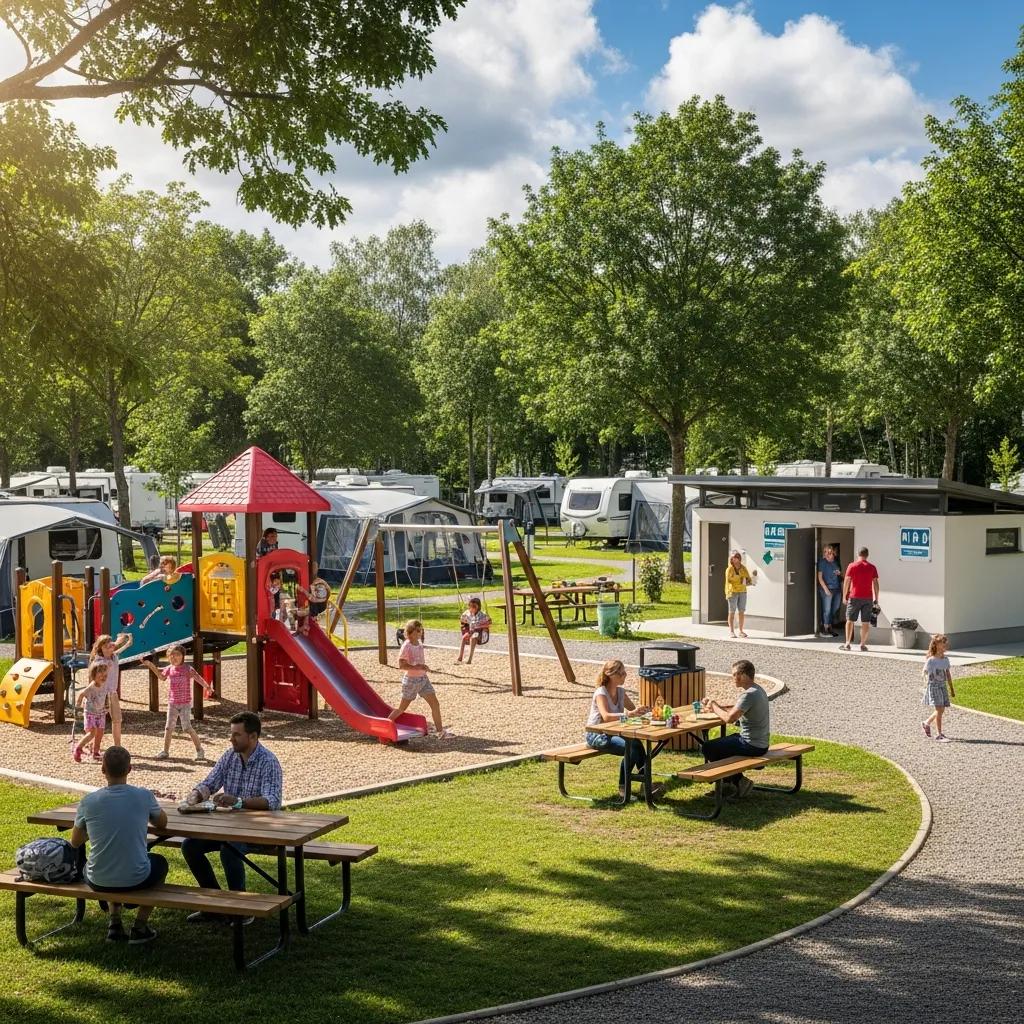
Amenities shape your family’s daily routine and decide how much you need to bring. Basic campgrounds usually offer fire rings, shared restrooms, and trail access—perfect for low-cost, low-service stays. RV parks and family resorts often include full hookups (water, sewer, electric), laundry, on-site stores, dedicated playgrounds, and scheduled activities that remove planning stress. Pay attention to details—restroom cleanliness, access to drinking water, and how far play areas are from campsites—so the site matches your supervision needs and daily rhythm.
Families often prioritize specific facilities because they affect safety and logistics. Full hookups make meal prep and night routines easier with little kids; secure playgrounds let caregivers relax a bit while kids play. Those differences point directly to which accommodation type will suit your family best.
Which Accommodations Work Best for Families in Michigan?
Your accommodation choice—tent site, cabin, RV pad, or resort lodging—sets your comfort level, weather protection, and how much parents must do. Tent camping is usually the most affordable and immersive option, best for families with older children comfortable on uneven ground and willing to walk to facilities. Cabins and RV sites give more weather protection and conveniences like beds, heat, and a kitchenette—handy for toddlers or mobility needs. Hybrid options, like cabins inside a family resort or RV areas with programmed events, balance immersion with convenience.
When picking lodging, weigh cost against comfort, outdoor skills against access to electricity and bathrooms, and convenience versus privacy. Those trade-offs will point you to a practical choice for your trip and help you spot local examples that mix both approaches.
Family-Friendly Activities at Michigan Campgrounds and RV Parks

Michigan campgrounds and RV parks offer lots of activities that support play, learning, and family time—from water play and trails to fishing and weekend events. Primitive campgrounds lean on trail exploration and campfire learning; family resorts add supervised activities like craft hours, lake games, and themed weekends. Match activities to your kids’ developmental stage and safety needs so each day balances high-energy play with rest.
Common family activities and what they usually involve:
- Swimming and water play: Supervised pool or lake time with life jacket rules for young children.
- Fishing: A calm, low-cost activity that teaches patience and local ecology.
- Playgrounds and playfields: Open play areas that build gross-motor skills and social play.
- Nature hikes and interpretive trails: Short, guided routes for little ones and longer hikes for older kids.
- Organized events: Weekend programs like nature crafts or family game nights that create structure.
Plan activities around what the site offers to avoid overcommitting and to keep everyone safe; next, we map common activities to age ranges and needed facilities.
Intro to the activities table: Use the table below to quickly match popular activities to typical age ranges and the amenities you’ll want on-site.
Kid-Friendly Amenities at The Oaks Campground
The Oaks Campground by GatherGrounds in Munith, Michigan is built with families in mind. It pairs full-hookup RV sites with a swimming lake and a stocked fishing pond—each set up for family safety and easy fun. Golf cart trails and playgrounds keep short walking distances for small children, and planned weekend events give families ready-made entertainment. A Wibit water park is also planned for 2026, adding more supervised water-play options for a range of ages.
We use The Oaks as an example to show how specific amenities shape daily family life and to help you evaluate other Michigan options using the same checklist.
How Water Parks, Playgrounds, and Outdoor Adventures Improve Family Camping
Features like water parks and playgrounds turn a campsite into a fuller family vacation by widening activity choices and cutting down on daily planning for caregivers. Water attractions and supervised play areas let kids burn energy and build social skills; trails and outdoor adventures spark curiosity about local nature. Safety matters—look for lifeguards, life jackets, shaded spots, and clear rules before you schedule water-heavy days.
Mixing free play, guided events, and quiet time reduces meltdowns and helps kids sleep better—an important balance when you pick a site with multiple entertainment options.
Choosing the Right Family Camping Experience in Michigan
Start with three questions: How old are the kids? What’s your budget? How much convenience do you want versus how much nature time? Use this short decision framework to turn broad preferences into must-have site features. Map ages to supervision needs, then compare site types—primitive campgrounds, state parks, or family RV resorts—against those needs. This will help you pick a safe, cost-effective spot that still delivers the outdoor experience you want.
Try this quick checklist before you search and book:
- List child ages and any special needs to decide on accessibility and supervision requirements.
- Set a realistic budget that includes nightly fees, equipment rentals, and activity costs.
- Decide on non-negotiable amenities like restrooms, hookups, or organized activities.
- Choose location priorities: close to home, near attractions, or off the beaten path.
Working through these steps narrows choices fast and prepares you for booking and arrival.
Tent Camping vs. RV Resort Stays: Benefits for Families
Tent camping gives hands-on nature time and usually costs less—great for families with older kids who enjoy learning outdoor skills and unplugging. RV resorts bring predictable comforts—beds, bathrooms, climate control—that simplify routines for toddlers or families with limited gear. A middle path—renting a cabin or choosing a resort with both tent and RV areas—can offer immersion plus backup comforts for flexibility.
Use cases: pick tent camping if your family wants experiential learning and has adventurous older kids; choose RV resorts if you need short walks to facilities, power for baby gear, and on-site programming. Those trade-offs will guide your location and budget choices.
How Location, Budget, and Child Age Shape Your Choice
Location, budget, and child age combine to shape what’s practical and enjoyable. Toddlers often do best with short drives and sites close to restrooms; teens might welcome longer drives for remote trails. Budget affects season and day choices—off-peak or midweek stays cut costs without losing the core experience. Practical tips: book early for holidays, choose sites with short walks for young children, and plan shorter daily activities for toddlers to avoid overtired meltdowns.
Those simple planning moves help you build a safe, fun trip that fits your family’s limits.
Why The Oaks Campground Works Well for Michigan Families
The Oaks Campground by GatherGrounds blends the relaxed feel of a campground with RV-park conveniences, making it a strong choice for many Michigan families. Located in Munith, it’s within comfortable driving distance of Detroit, Ann Arbor, and Jackson and offers full-hookup RV sites plus child-friendly recreation to reduce day-to-day friction. With family programming and planned additions, The Oaks aims to make stays low-effort and highly engaging—so parents supervise less and enjoy more. For families looking for both nature connection and practical comforts, The Oaks is a solid hybrid option.
The table below summarizes key amenities, features, and how they help families on-site.
Unique Features and Upcoming Additions at The Oaks
The Oaks focuses on family-friendly infrastructure that balances fun and safety: full-hookup RV sites cut down on daily chores, playgrounds and golf cart trails keep supervision distances short, and the fishing pond plus swimming lake offer varied water experiences. A standout upcoming addition is a Wibit water park planned for 2026—an inflatable water attraction that will add supervised, age-flexible water play. These features aim to increase on-site engagement while keeping activities contained and easier for parents to manage.
These selling points make The Oaks a clear example to use when deciding whether a destination will meet your family’s activity and safety needs.
Booking and Preparing for a Stay at The Oaks Campground
Before you book, gather key details—preferred site type (full-hookup RV, cabin, or tent), number of guests, and any accessibility needs—and confirm reservation and check-in policies. Pack lists should match your lodging: RV sites need power cords and sewer adapters, cabins usually need linens, and tent sites need weather-ready shelter. Use a checklist to avoid last-minute stress. We also recommend arriving in daylight for easier setup and reserving activity windows like fishing or swim times for younger kids to keep transitions smooth.
These steps speed up arrival and help you make the most of on-site amenities safely and efficiently.
Practical Tips for Planning a Family Camping Trip in Michigan
Good family camping combines careful packing, basic safety planning, and a realistic activity schedule that respects kids’ sleep and energy patterns. Start with a categorized packing list (sleeping gear, cooking supplies, child-specific items, safety equipment) and include backups for Michigan’s changeable weather. Safety planning should cover water rules, wildlife awareness, and first-aid readiness; simple family rules about boundaries and check-ins let kids explore while staying safe. Meal planning—easy-to-serve dinners and ready snacks—reduces stress and keeps energy steady on active days.
Simple routines—morning setup, mid-day rest, evening wind-down—help kids adapt quickly and keep days predictable. Those routines make arrival and daily life at camp much easier for everyone.
Packing Checklist for a Comfortable Family Camping Trip
A focused packing list turns a stressful trip into a smooth one. Key categories: sleeping gear (bedding for cabins, sleeping bags for tents, cots for RVs), cooking and food storage (cooler, stove, reusable utensils), child gear (portable high chair, favorite toys, car seats as needed), and safety items (first-aid kit, life jackets, headlamps). Michigan weather swings mean packing layers, rain gear, and sun protection so you’re ready for chilly nights or warm days.
Organize items into clear bins and assign family members tasks to avoid last-minute scrambling and create predictable setup expectations at arrival.
How to Maximize Fun and Keep Kids Safe on Your Michigan Trip
Maximizing fun while staying safe starts with clear family rules and a mix of activities that alternate between high-energy and quiet time. Set water-safety rules—life jackets for young swimmers, adult supervisors, and set swim windows—and review them before anyone enters the water. Follow wildlife-safety and food-storage guidelines to prevent unwanted encounters. Keep a basic emergency plan: a stocked first-aid kit, the location of nearest medical services, and a charged phone for updates.
These practical habits protect your family and help everyone come home with great memories and more outdoor confidence.
Frequently Asked Questions
What should families consider when choosing between tent camping and RV parks?
Think about comfort, convenience, and your kids’ ages. Tent camping is more immersive and usually cheaper—great for older kids who can handle rustic conditions. RV parks offer amenities like full hookups and climate control that simplify life for families with young children. Match the choice to your family’s needs for accessibility and the activities you want to do.
How can families ensure safety while camping in Michigan?
Set clear boundaries and check-in rules, especially near water and wildlife. Pack a first-aid kit and teach kids basic wildlife and food-storage safety. Know the campground’s emergency procedures and where the nearest medical help is. Prioritizing these basics helps families enjoy the outdoors with confidence.
What are some tips for planning meals during a camping trip?
Keep meals simple and easy to prepare—pre-made sandwiches, one-pot dinners, and reliable snacks like fruit and granola bars work well. Pack food in sealed containers to avoid wildlife issues and plan meals around the campsite’s cooking options. Good meal planning reduces stress and keeps everyone satisfied.
What activities are best suited for different age groups while camping?
Match activities to age: toddlers do best with supervised swimming, playground time, and short walks; preschoolers enjoy simple crafts and guided hikes; older kids can handle fishing, longer hikes, and organized games. Tailoring activities helps keep the day balanced and enjoyable for everyone.
How can families prepare for changing weather conditions while camping?
Pack layers, rain gear, and sun protection. Check the forecast before you go and keep your itinerary flexible. Make sure tents and gear are weather-resistant so everyone stays comfortable and dry if conditions change.
What are the benefits of booking a family campground with planned activities?
Planned activities reduce planning for parents and give kids structured ways to play and learn. They cater to different age groups, encourage social interaction, and help balance active time with downtime—making the trip easier and more fun for the whole family.
Conclusion
Choosing between Michigan campgrounds and RV parks comes down to your family’s needs for comfort, safety, and activities. Understanding what each option offers helps you pick a spot that fits your kids’ ages and your family’s priorities. If you want a place that blends nature and convenience, consider The Oaks Campground—where family-focused amenities meet outdoor time. Start planning your family adventure and make the most of Michigan’s great outdoors.