How to Choose the Right Fishing Campground: A Family-Friendly Guide to Michigan Spots
Picking the right fishing campground comes down to matching water access, fish species, safety, and family-friendly amenities to your group’s experience and goals. When those pieces fit, fishing is simpler and more fun for kids and beginners. This guide walks you through how to evaluate campgrounds with families in mind, highlights the features that matter most, and lays out a practical timeline for licensing, gear, and reservations. You’ll learn which waters and species are best for young anglers, what campsite comforts help caregivers, and how RV hookups and nearby attractions affect your stay. Handy checklists and comparison tables make it quick to compare ponds, lakes, and rivers so you can prioritize before you book. For a local example, we point to The Oaks Campground near Munith, Michigan — a family-focused site with an on-property fishing pond and supportive amenities. Use this framework to choose a Michigan campground that balances fun, safety, and success for everyone.
What Are the Key Features of the Best Family Fishing Campgrounds in Michigan?
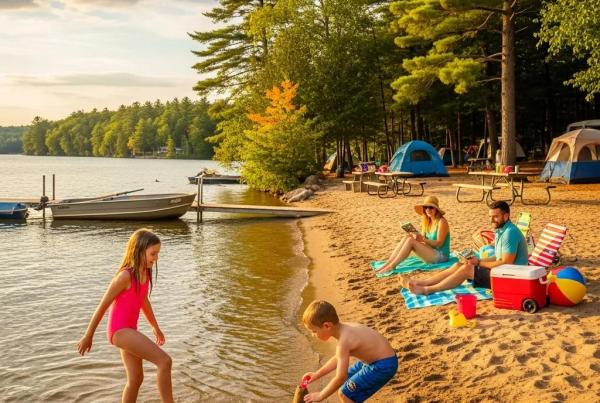
The top family fishing campgrounds combine safe, easy water access with fish populations or stocking that favor quick action, plus onsite comforts that keep non-anglers happy. Those elements lower barriers: gentle shorelines, clear rules, and helpful staff boost catch rates and reduce parent stress, while playgrounds and scheduled activities give kids options when the fish aren’t biting. Start by checking these high-level features to narrow your search, then compare specific sites based on what matters most to your family. Here are five priority features to watch for.
- Water access that’s shallow, safe and reachable from campsites so kids can fish from shore or a supervised dock.
- Fish species and stocking practices that favor panfish or stocked trout for quick action and higher catch rates for beginners.
- Safety and comfort features like restrooms near the water, sheltered seating, and clear life-jacket guidance.
- Recreation options—playgrounds, swimming areas, and weekend events—that complement fishing and keep everyone engaged.
- RV and campsite logistics (full hookups, level sites) and simple access (parking, short walks to the pond) to support anglers with gear.
These five points reveal the trade-offs families should weigh when comparing campgrounds. Below we break down the specific amenities that make a place truly ideal for family fishing.
Which Amenities Make a Campground Ideal for Family Fishing?

Great family fishing spots blend safety, comfort, and kid-focused programming so learning to fish feels natural. Safety features to look for include gently sloped banks, fenced or supervised docks, visible life-ring stations, and clear signage about depth and rules—these lower risk for young anglers. Comfort elements—covered picnic areas, shaded seating, restrooms close to the water, and short, marked paths—make breaks and snack time easy. Kid-centered offerings like instruction sessions, themed weekends, “tackle-for-kids” events, and family-friendly competitions boost engagement and teach basic skills while easing the load on parents. These amenities increase the chances of memorable, successful experiences for children and give families options when the bite slows.
How Does The Oaks Campground Stand Out for Family Fishing Experiences?
The Oaks Campground is a handy local example of a family-focused fishing campground near Munith, Michigan. It features a sizable on-site fishing pond with dock and bank access that’s well-suited to young anglers and supervised sessions. Weekend family programming—crafts, themed events, and friendly contests—pairs with playgrounds and pavilions to keep caregivers comfortable and kids entertained. Its proximity to Waterloo State Recreation Area adds value for families who want to mix fishing with hiking and other outdoor activities. The Oaks also offers full hookup RV sites for guests traveling with trailers or extra gear. Use The Oaks as a reference point when comparing features, and always confirm current availability and specific on-site services before you book.
How to Evaluate Fishing Campground Amenities for an Enjoyable Trip
When evaluating amenities, focus on three pillars: fishing access and facilities, campsite and RV logistics, and family safety/comfort. Start by confirming the type of water access and any restrictions, then check onsite services like bait sales and cleaning stations and review campsite infrastructure that supports gear and trailers. Safety and family comforts should be non-negotiable for trips with children. RV hookups and road access determine whether you can bring boats or trailers easily. Use the checklist and compact comparison table below to assess campgrounds and prioritize the features your family needs most.
When evaluating amenities, check these items:
- Dock type and shoreline condition: gently sloped banks and stable docks make fishing safer for kids.
- Stocking details or notes on fish populations: regularly stocked ponds or clear panfish listings increase success for beginners.
- On-site services: bait/tackle availability, a fish-cleaning station, and staff guidance reduce downtime and improve outcomes.
Below is a compact comparison table to help you assess common amenity types and why they matter before booking.
This table clarifies functional differences among amenities and helps you decide what to prioritize; next we outline the specific fishing facilities to inspect in listings and photos.
What Fishing Facilities Should You Look for?
Seek out facilities that lower the learning curve and support both catch-and-release and handled harvests where allowed. A stable dock and a broad, shallow bank with minimal drop-off give kids room to learn casting and landing fish safely. A marked boat launch and posted rules make watercraft access straightforward for anglers who want larger waters. Stocking information—how often and what species—helps predict success; campgrounds that publish schedules or highlight panfish and bass reduce uncertainty. Red flags include steep banks, no shore access, poor signage about rules, or no on-site angler services—these can complicate family outings. Review photos and facility descriptions before booking to improve the odds of a successful trip.
What RV Camping Amenities Support Anglers in Michigan?

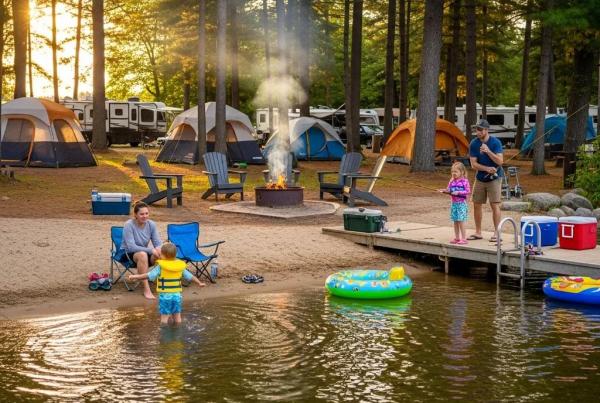
If you’re traveling with an RV and fishing gear, campsite infrastructure makes the difference between smooth logistics and headaches. Prioritize full hookups (water, electric, sewer) if you’ll be staying multiple days and need refrigeration for bait and coolers, and confirm dump station locations. Site layout matters: pull-through or wide sites make launching small boats and storing rods easier, while level pads keep gear and kids safe. Look for secure parking and straightforward roadway access if you’re towing—this speeds arrival and departure. These RV-focused amenities let you spend more time fishing and less time worrying about logistics.
What Are the Essential Considerations When Selecting a Fishing-Friendly Campground?
Picking a fishing-friendly campground means balancing location, target species, seasonal conditions, and regulations so your trip matches skill levels and expectations. Location affects access to other water bodies, emergency services, and extra activities families may want. Species and water type determine gear and tactics. Seasonality sets peak camping windows and best catch times, and local rules affect licenses and harvest limits. Prioritize these broader factors before you drill into amenities to find a campground that fits both recreational and logistical needs. Below are notes on how location and water type shape expectations.
How Do Location and Proximity to Natural Attractions Affect Your Choice?
Being close to state recreation areas or other natural attractions expands activity options and improves emergency access—handy when kids need a break from fishing or you want variety. Nearby recreation areas often bring more trails, extra waterways, and stronger signage or emergency coverage. Drive time matters for weekend trips: shorter drives give kids more fishing time, while longer drives require planning for stops and energy management. Use location as a filter: pick closer campgrounds if relaxed family fishing is your goal, or choose ones near larger parks when you want mixed-activity trips. That choice helps you decide whether to prioritize an on-site pond or regional access.
What Fish Species and Water Body Types Should You Expect at Campgrounds?
Water type shapes species and the learning experience: ponds usually hold panfish like bluegill and pumpkinseed—great for beginners; lakes often host bass, perch, and mixed panfish and can require a boat for best results; rivers change by current and species and can be trickier for kids. Stocked ponds tend to deliver steady action that keeps attention high, while wild populations in lakes and rivers can be seasonal and require more advanced tactics. Match species expectations to your group—choose ponds for short attention spans and quick catches, and pick lakes or rivers when you have more experienced anglers seeking variety. Knowing these differences simplifies gear and bait choices and sets realistic catch expectations.
How to Plan Your Michigan Fishing Camping Trip Successfully
A successful trip starts with the basics: licenses, season choice, packing essentials, and a reservation timeline that accounts for peak demand and weather. Verify fishing license rules and local regulations before you go, pack age-appropriate safety gear and simple tackle, and book early for summer weekends or holidays. Time of day matters—early mornings and evenings often bring the best action in small waters—so build a flexible schedule that balances fishing with other campground activities. Below we cover licensing, seasonal timing, and include a family-focused packing checklist to streamline prep.
Below is a concise packing checklist for family fishing camping trips:
- Life jackets sized for each child and adult — wear them near water.
- Basic rod-and-reel setups, spare line, and simple tackle boxes with bobbers and small hooks for beginners.
- First-aid kit, sunscreen, insect repellent, and waterproof pouches for phones and wallets.
What Are Michigan Fishing Regulations and Licensing Requirements for Campers?
Most anglers in Michigan need a fishing license unless exempt by age or residency. Licenses support conservation and differ for residents and non-residents, with special rules for children and certain permits. Always check current license requirements and carry proof of purchase while fishing to avoid fines. For family trips, confirm age exemptions and whether children need their own license—many programs offer reduced or no-cost options for young anglers, but rules change by year and species. Visit the official Michigan Department of Natural Resources (MDNR) website before your trip to be sure you’re in compliance.
When Are the Best Seasons and Times to Fish at The Oaks Campground?
On small, on-site ponds like The Oaks’, spring and early summer usually offer the most reliable family-friendly action as water temps rise and panfish become active. Late-summer evenings can also be productive when the surface cools. Daily timing matters: dawn and dusk typically bring the best bites and are often more comfortable for kids than midday heat. Peak camping season often overlaps these windows, so book early for popular weekends if you want a site close to the pond and amenities. The Oaks’ full-hookup RV sites and family weekend programming attract visitors in high season, so advance reservations are wise for pond-adjacent spots.
How to Book and Prepare for Your Fishing Campground Experience
Booking and preparation mean picking the right site type, confirming hookups and rules, and building a safety-first gear list so the family can focus on fishing and fun. Before you reserve, review campsite maps, choose pull-through or waterfront sites if you’re towing, and verify which amenities (restrooms, playgrounds, bait) are available on your dates. Pack simple, durable gear for kids and create a short emergency plan with the nearest medical facility and communication steps. The steps and table below help streamline booking and set arrival expectations.
Start your booking with these straightforward steps:
- Check campsite availability for your dates and preferred site type—prioritize pond-adjacent or pull-through sites if needed.
- Confirm hookups and on-site amenities like restrooms, playgrounds, and bait so you can pack appropriately.
- Reserve early and note cancellation policies; pick sites with easy trailer or RV access to simplify arrival.
What Is the Reservation Process at The Oaks Campground?
To book at The Oaks Campground, pick your site type—full hookup RV, waterfront, or standard—then check availability for your dates and confirm pond proximity and family programming. If you travel with a trailer, favor pull-through or level sites and note any campsite rules affecting water use or fishing. The Oaks offers full hookup RV sites and regular family events, so secure your spot early for busy weekends if you want a site near the pond and playground. After booking, pack with the campsite logistics in mind and bring printed or digital reservation proof for a smooth check-in.
What Gear and Safety Tips Should You Know for a Fishing Camping Trip?
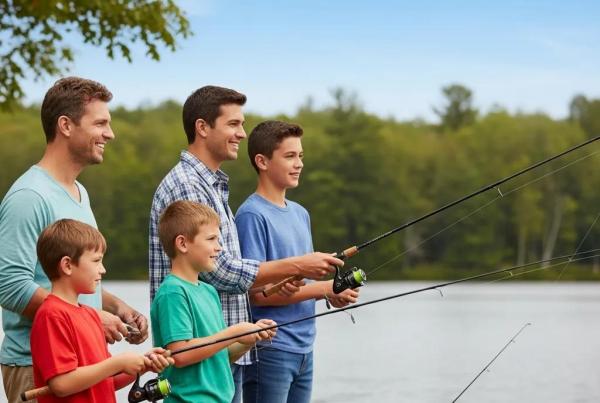
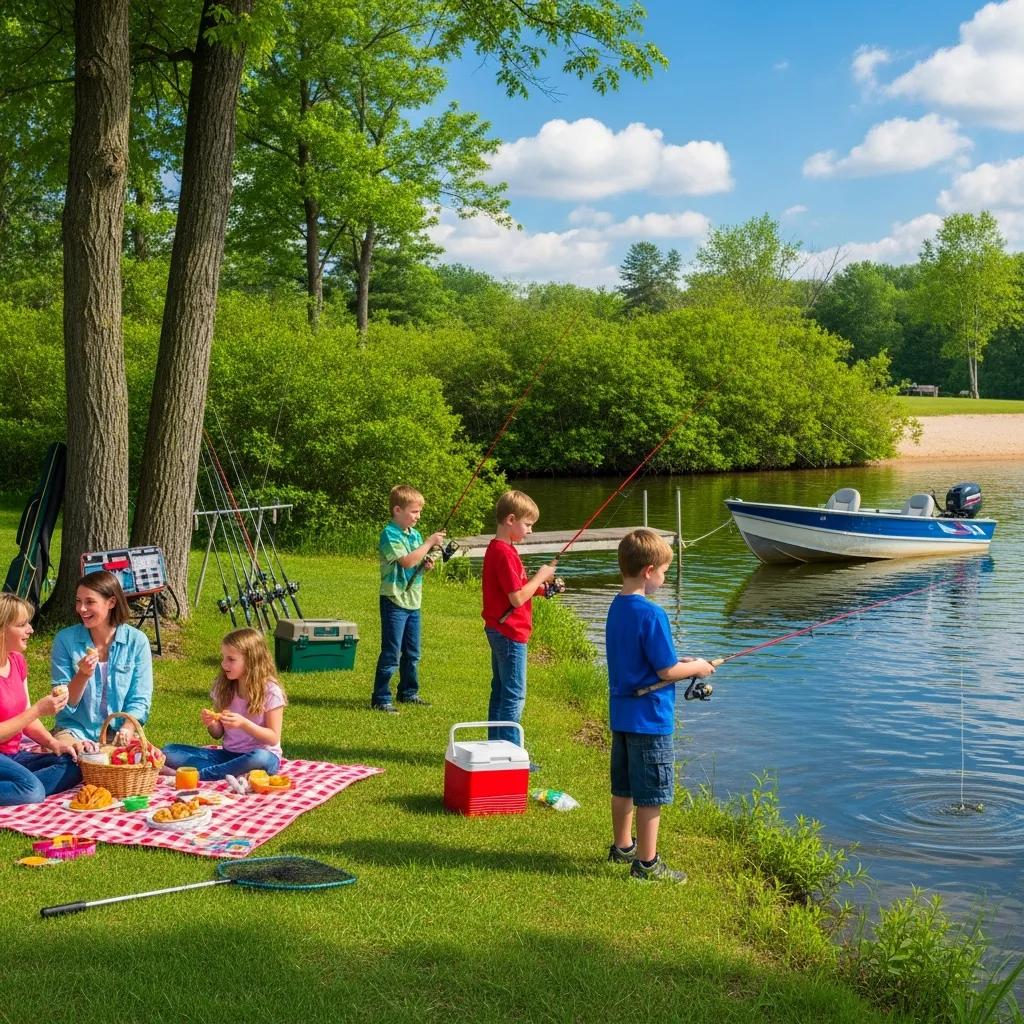
Keep gear simple for family pond fishing: two or three basic rod-and-reel combos, spare line, bobbers, small hooks and sinkers, and a soft net for safely landing fish. Safety is essential: properly fitted life jackets for children, a stocked first-aid kit, sunscreen, and insect repellent. Supervise kids at the water’s edge at all times and teach gentle catch-handling and quick-release techniques if you practice catch-and-release. If harvesting is allowed, store fish on ice in coolers. Pack convenience items—zip-top bags for phones, a small tackle tray, extra towels—and plan short, flexible fishing sessions that match children’s attention spans and peak feeding times.
- Essential Rods and Tackle: Two simple setups with bobbers and small hooks keep learning easy and safe.
- Safety Gear: Life jackets, first aid, and sun/insect protection are mandatory near water.
- Comfort Items: Shade, seating, snacks and drinks keep energy up and patience longer.
Frequently Asked Questions
What should I consider when choosing a fishing campground for beginners?
Prioritize campgrounds with easy access to shallow water and lots of panfish like bluegill or stocked trout. Look for supervised docks, visible safety features, and instructional programs. Also consider family activities so non-anglers have options when fishing slows. Check restroom proximity and life-jacket policies to ensure a comfortable experience for novice anglers.
How can I ensure my children stay safe while fishing at a campground?
Always have children wear properly fitted life jackets near water. Choose locations with gentle shorelines or supervised docks and set clear rules about staying in designated areas. Supervise closely, point out safety equipment like life rings and first-aid kits, and teach kids how to handle rods and hooks safely.
What types of fish can families expect to catch at Michigan campgrounds?
Expect different species depending on water type: ponds usually yield panfish (bluegill, pumpkinseed) that are great for beginners; lakes often have bass and perch; rivers can offer bass and trout depending on the stream. Knowing local populations and seasonal patterns helps set realistic expectations for catch rates.
What are the best times of day to fish at campgrounds?
Early morning and evening are usually the best times, especially in warm months when fish avoid midday heat. Planning trips around dawn or dusk increases your chances of action while keeping kids comfortable.
How can I prepare my family for a successful fishing trip?
Start by securing required fishing licenses and reviewing local regulations. Pack age-appropriate rods, life jackets, and a first-aid kit. Build a flexible schedule that mixes fishing with other activities and bring snacks and drinks to keep energy levels steady. Go over safety rules with kids before you arrive.
What amenities should I look for to enhance my family’s camping experience?
Look for safe water access, nearby restrooms, and shaded seating. Playgrounds, swimming areas, and organized events keep children entertained when fishing is slow. On-site services like bait shops and fish-cleaning stations add convenience and make the trip easier for everyone.
Conclusion
Choosing the right fishing campground in Michigan makes family outings safer, easier, and more fun. Focus on safe water access, predictable fish populations, and family-friendly amenities when you compare sites. With a clear checklist and a little planning—licenses, simple gear, and an early reservation—you can create a trip that works for both novice anglers and caregivers. Ready to start planning? Explore local options like The Oaks Campground and use these tips to craft a worry-free, kid-friendly fishing getaway.