RV Resort Sales Strategies That Drive Success: How to Sell Your Campground for Maximum Profit
Selling an RV resort for maximum profit means more than posting a listing and waiting for offers; it requires precise valuation, targeted marketing, operational preparation, and thoughtful transition planning that protect legacy and revenue. This article explains practical, market-focused strategies owners can use to value their campground accurately, optimize net operating income (NOI), and position their property to attract the right buyers. Owners seeking to sell RV parks or large campgrounds will learn step-by-step processes for pricing, due diligence readiness, amenity investment priorities, and alternative sale structures such as owner financing or direct sale to operators. We map the essential steps from initial inquiry through closing and transition, compare buyer types and fee structures, and highlight seasonal timing and market-trend implications for 2025. Throughout, you’ll find valuation formulas, EAV-style comparison tables, checklists for financial and maintenance preparation, and actionable negotiation points that help you sell your RV park while preserving community and staff continuity.
How Do You Accurately Value Your RV Park for a Successful Sale?
Accurate RV park valuation is the process of converting campground performance and physical attributes into a defensible price by using income-based metrics, sales comparables, and site-level analysis. This works because buyers price risk and future cash flow differently: income approaches measure expected net operating income; sales comparables capture market precedent; replacement cost establishes a floor based on asset rebuild expense. The specific benefit is a transparent price rationale that sellers can justify during negotiations and due diligence. Key value drivers include site count, occupancy trends, amenity mix, utility costs, deferred capex, and location desirability, all of which affect NOI and perceived growth potential. Understanding how these inputs map to value lets owners prioritize improvements that deliver the biggest impact on sale price.
What Are the Key RV Park Valuation Methods Used by Experts?

Valuation for campgrounds commonly uses three approaches: the income (NOI) approach, sales comparables, and replacement cost, each suited to different market conditions and data availability. The income approach capitalizes stabilized NOI into value and is preferred for income-producing properties with track records. Sales comparables help validate market pricing but are limited when few similar transactions exist or when properties differ in amenities. Replacement cost can set a lower bound when revenue data is weak; it quantifies what it would cost to rebuild the asset. Evaluators often blend methods to triangulate a defensible ask price that aligns with buyer expectations.
Table: Valuation Approaches at a Glance
Below is a comparison of common valuation approaches, their inputs, and typical uses for campground sellers.
This table clarifies when each method helps sellers build a credible pricing argument and what tradeoffs to expect when presenting value to buyers.
How Does Net Operating Income Impact Your Campground’s Value?
Net Operating Income (NOI) equals campground revenue minus operating expenses (excluding financing and taxes), and it is the primary driver of income-based valuation for RV parks. Improving NOI—through higher occupancy, better site yields, ancillary revenue (amenities, store sales), and expense management—directly increases value because most buyers apply a capitalization rate to NOI to determine price. For example, a park with $300,000 NOI sold at a 7% cap rate implies a value near $4.29 million (Value = NOI / Cap Rate). Sellers should document site-level revenues, seasonal patterns, and one-off adjustments so buyers can model realistic stabilized NOI during offers and due diligence.
What Role Do Capitalization Rates Play in RV Resort Valuation?
Capitalization rate (cap rate) represents the yield buyers require and converts NOI into an estimated value: Value = NOI / Cap Rate. Cap rates vary by location, property condition, buyer type, and perceived growth risk; lower cap rates produce higher values. Factors that compress cap rates include strong historical occupancy, diverse amenity revenue, low operational risk, and buyer competition. Conversely, deferred maintenance, concentrated revenue streams, or remote locations push cap rates higher. Sellers can influence cap rates by packaging verified historical performance, documented improvement plans, and demonstrating stable demand to secure more favorable pricing.
How Can Site-by-Site Analysis Maximize Your RV Park’s Sale Price?
Site-by-site analysis breaks down revenue and expense at the individual lot level to reveal high-value sites, underpriced units, and opportunities for yield improvement. Collecting per-site occupancy, average daily revenue, utility costs, and amenity proximity identifies premium sites and supports price premiums for clusters or phased upgrades. Presenting buyers with a granular site map and revenue matrix validates revenue claims and uncovers value-add opportunities, such as converting seasonal pads to full-hookup premium sites. This micro-analysis helps justify price and supports targeted capital improvements pre-sale.
What Are the Essential Steps in the RV Park Selling Process?
The campground selling process is a structured sequence from initial inquiry to a completed ownership transition that protects seller value and minimizes business disruption. It begins with confidential discussions to qualify buyer intent, proceeds through valuation and offer negotiation, involves a due diligence period where buyers verify financials and site conditions, and ends with closing logistics and a handoff plan to ensure continuity. Each phase has standard documents and timelines; proactively assembling the right materials and communicating transition plans shortens the sales cycle and reduces renegotiation risk. Preparing to manage buyer information requests and access to the property while still operating the park preserves revenue and guest experience during the sale.
How Does the GatherGrounds Acquisition Process Work from Inquiry to Closing?
GatherGrounds Resorts approaches acquisitions with a conversational, no-pressure process that starts with an initial inquiry to assess fit based on site count, amenities, and seller priorities. After initial qualification, the next stage is a valuation discussion where standardized inputs like NOI, cap rate expectations, and site-by-site data are reviewed to produce a preliminary offer. Due diligence follows for verified records, inspections, and title matters, then closing and transition planning finalize timing and staff continuity. Sellers often appreciate GatherGrounds’ preference for direct communication and legacy-preserving transition terms; owners who wish to initiate a discussion can request an evaluation or exploratory conversation to learn how the acquisition process aligns with their exit goals.
What Legal and Financial Steps Should Sellers Expect?
Sellers should expect legal and financial steps that include title review, tax history and implications, environmental assessments where required, and escrow arrangements to protect both parties. Financial preparation involves reconciling P&L statements, providing tax returns, and compiling site-level revenue records so buyers can validate NOI. Working with experienced counsel and a CPA familiar with recreational property sales reduces surprises and accelerates closing. Anticipate common red flags—unpermitted structures, unresolved environmental notices, or unclear deed restrictions—and address them proactively to maintain negotiating leverage.
How Can You Prepare Your Campground for a Smooth Ownership Transition?
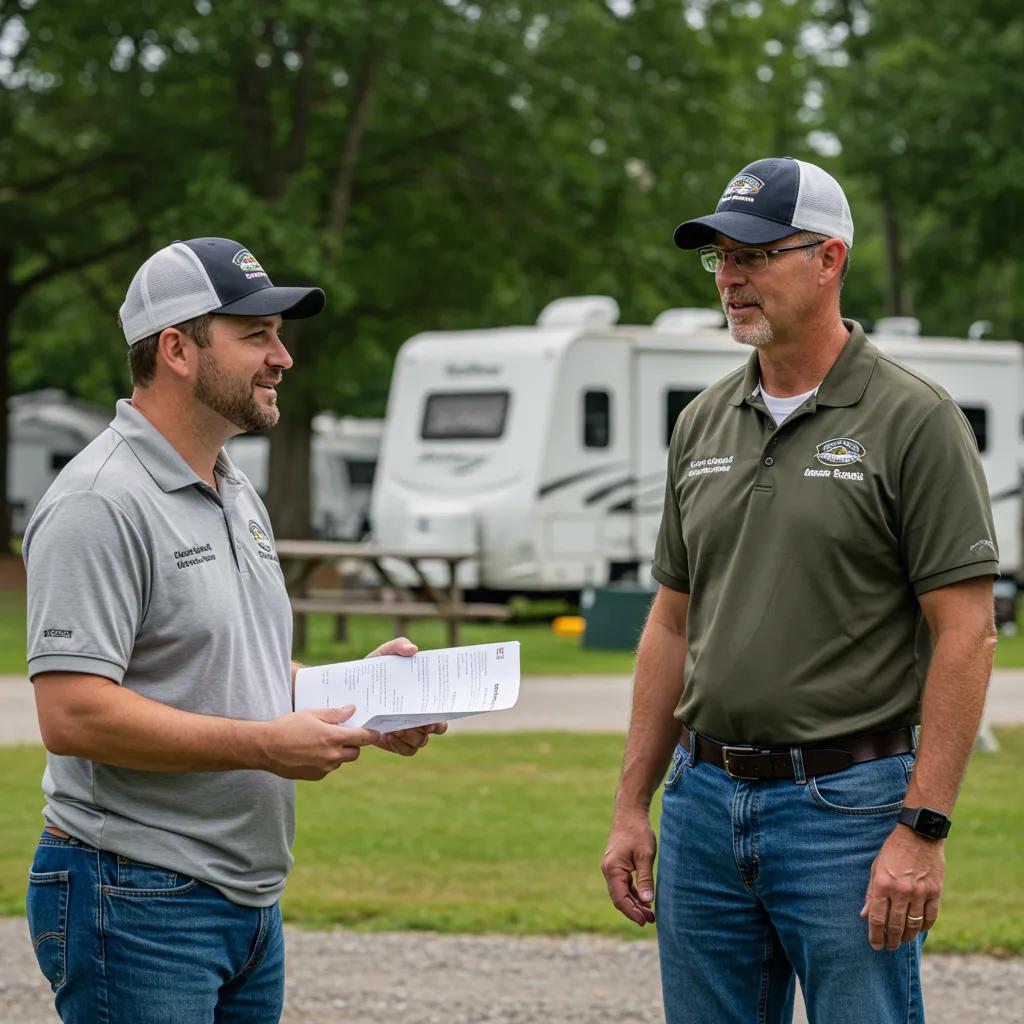
A smooth transition requires documented operational procedures, clear staff communication plans, and early buyer engagement around customer relationships. Create an operational manual with reservation flows, vendor contacts, vendor contract locations, and routine maintenance schedules so new owners can adopt consistent operations quickly. Engage staff with transparent retention offers or transition bonuses where feasible, and prepare community messaging templates to introduce new ownership while preserving legacy commitments. These steps reduce service disruption, maintain guest confidence, and protect post-closing revenue streams.
- Initial inquiry and qualification: Confidential conversation to determine fit and seller goals.
- Valuation and offer: Buyer reviews NOI, comps, and presents a term sheet or LOI.
- Due diligence: Buyer inspects financials, title, environmental, and operations.
- Closing logistics: Escrow, deed transfer, tax planning, and funding.
- Transition: Staff handover, customer communications, and operational support period.
This process list helps owners plan timelines and resource needs; following it reduces surprises and supports a faster, cleaner close.
How Can You Prepare Your Campground to Maximize Its Sale Value?
Maximizing sale value combines clean financials, prioritized amenity investments, operational efficiencies, and completed maintenance that reduce buyer risk and support stronger offers. Organize financial documents to show consistent revenue and transparent expense entries, focus capital on high-return amenities (upgraded hookups, bathhouse improvements, or water attractions), and standardize reservation and payment systems to demonstrate operational scalability. Small, well-documented investments and visible maintenance work often yield outsized increases in buyer confidence and lower perceived risk, which can translate into a lower cap rate and higher sale price.
What Financial Documents Are Needed to Attract Serious Buyers?
Buyers expect a concise package of financial and operational records that lets them model stabilized NOI and assess risk quickly. At minimum provide profit & loss statements for the last 2–3 years, tax returns, occupancy and ADR reports, detailed site-level revenue breakdowns, and a history of capital expenditures. Documenting seasonal adjustments, one-time items, and vendor contracts clarifies recurring income and expenses. Organizing these items into a single, easy-to-navigate data room enhances credibility and shortens due diligence timelines.
Table: Financial Document Checklist (EAV-style)
The table below maps key financial document types to their purpose and an example value or note for buyers.
Providing this package reduces buyer uncertainty and demonstrates operational transparency, which often accelerates offers and supports higher valuations.
How Do Enhancing Amenities Influence Buyer Interest and Price?
Amenities like modern bathhouses, full-hookup sites, attractive water features, and well-appointed communal areas materially influence buyer interest by increasing demand and ancillary revenue opportunities. Buyers evaluate amenities both for direct income (e.g., equipment rentals or concessions) and for occupancy uplift potential, which can justify a lower cap rate. Presenting high-quality photography, documented usage metrics, and maintenance records makes amenities credible selling points. Prioritize projects with clear ROI and fast implementation timelines to improve sale readiness without large capital outlays.
What Operational Efficiency Improvements Boost Campground Appeal?
Operational efficiencies that improve perceived value include adopting modern reservation and payment systems, consolidating vendor contracts, documenting SOPs, and training staff on guest retention practices. These changes reduce operating expense ratios, improve guest experience consistency, and make the property easier for a buyer to manage post-closing. Quantifying the impact—such as reduced labor hours or increased booking conversion—helps buyers model upside into offers. Demonstrating repeatable systems reassures buyers that post-acquisition performance will be stable.
Quick checklist: Maintenance tasks to complete before selling
- Safety-critical repairs: Fix electrical, septic, water, and structural issues.
- Curb appeal improvements: Refresh landscaping, signage, and site markers.
- Utility documentation: Provide recent utility bills and repair records.
- Permits and compliance: Ensure zoning and permit documentation is current.
- Completed capex records: Include invoices and warranty information for recent work.
- Example case highlight: following the steps above, a recent GatherGrounds Resorts acquisition involved documenting site-level revenue and completing targeted bathhouse and hookup upgrades that improved NOI projections and resulted in a mutually agreeable price increase; sellers initiated contact and negotiated a transition plan that preserved staff continuity while accelerating closing. Owners interested in a similar evaluation can request an assessment or exploratory conversation with GatherGrounds Resorts to discuss how preparation steps might increase their sale value.
Why Should You Sell Your RV Resort to a Family-Owned Operator Like GatherGrounds Resorts?
Selling to a family-owned operator like GatherGrounds Resorts can align seller priorities around legacy preservation, direct communication, and reinvestment in the property rather than portfolio optimization. Family-owned buyers often emphasize staff continuity, community relationships, and long-term stewardship, which appeals to owners who value those outcomes alongside financial return. For sellers whose primary concerns include preserving the character of the campground and ensuring smooth operations after closing, family-owned operators present an alternative to institutional buyers or broker-mediated sales.
How Does Selling to a Family-Owned Company Preserve Your Campground’s Legacy?
Family-owned buyers frequently offer stewardship commitments that can be formalized in sale agreements—such as operational pledges, signage retention, or name retention clauses—that help preserve the campground’s legacy. These commitments matter because they translate seller concerns into contractual protections, ensuring that high-value community relationships and property character survive ownership change. Sellers can negotiate specific legacy provisions that address staffing, programming, or physical stewardship to align buyer incentives with long-term property care.
What Are the Benefits of Direct Communication with a Small, Dedicated Team?
Direct communication with a smaller acquisition team reduces intermediaries, shortens decision cycles, and increases the potential for tailored transition solutions. Sellers benefit from faster feedback on offers, clearer negotiations over terms such as owner financing or phased handoffs, and the ability to discuss operational transition in practical detail. This streamlined process typically reduces confusion and helps preserve goodwill with staff and the surrounding community during the sales window.
How Does GatherGrounds Ensure Community and Staff Continuity?
GatherGrounds Resorts emphasizes transition measures such as staff retention incentives, phased management handovers, and community outreach plans to maintain service levels and local relationships. Concrete tactics include offering employment continuity where appropriate, providing training during a transition period, and coordinating messaging to regular guests and local stakeholders. These measures reduce churn, preserve revenue, and support a smoother operational handoff that aligns with seller objectives.
What Makes a Family-Owned Buyer Different from Large Investment Firms or Brokerages?
Family-owned buyers usually prioritize long-term stewardship and community fit over short-term portfolio optimization, which affects transaction structure, timing, and post-closing reinvestment. Institutional buyers often seek standardized processes and faster returns, while family operators can offer more flexible terms, customized transition plans, and an emphasis on property preservation. For sellers who value legacy and staff continuity alongside fair financial returns, family-owned buyers represent an appealing alternative with different risk-return preferences.
- Benefits of selling to a family-owned operator include:
Legacy protection options: Contractual commitments to preserve property character.
Direct negotiation: Faster decision-making and tailored transition terms.
Community continuity: Emphasis on staff retention and local relationships.
What Are the Current RV Resort Market Trends and How Do They Affect Your Sale Timing?
Current market trends in 2025 affect valuation mechanics, buyer appetite, and ideal listing windows for RV resorts and campgrounds. Macroeconomic factors such as interest rates influence buyer financing costs and cap rate expectations, while occupancy trends and RV demand determine revenue projections. Awareness of these dynamics helps owners choose timing that maximizes buyer competition and supports stronger pricing, whether by listing in a high-visibility season or preparing to demonstrate resilience through operational metrics that mitigate market headwinds.
What Are the Latest Industry Statistics for RV Parks and Campgrounds in 2025?
Recent industry analysis shows sustained consumer interest in recreational travel and outdoor lodging, with market size estimates and growth projections reflecting steady demand in many regions. Occupancy patterns remain seasonal in most markets, with peak months driving the bulk of annual revenue. RV shipments and demographic trends continue to shape long-term demand for campgrounds, affecting investor expectations about growth and stabilization timelines. Sellers should interpret statistics in the context of their regional seasonality and site mix when timing a sale.
How Do Interest Rates and Occupancy Trends Impact Campground Sales?
Interest rate levels directly affect buyer borrowing costs and therefore the cap rate buyers apply; higher rates typically raise cap rates and compress purchase prices for a given NOI. Occupancy trends feed into projected NOI, where consistent or growing occupancy supports lower cap rates and higher valuations. Sellers can mitigate rate pressure by emphasizing stable historical performance, demonstrating operational efficiencies, and offering financing alternatives—each of which can make a property more attractive even when macro conditions are tighter.
Who Are the Typical Buyers in Today’s RV Resort Market?
Buyer archetypes include family operators seeking stewardship opportunities, mom-and-pop consolidators pursuing regional portfolios, institutional investors targeting scale and yield, and end-users seeking lifestyle or owner-operator transitions. Each buyer type applies different criteria: institutional investors focus on normalized NOI and scale, while family operators weigh legacy and operational fit. Understanding which buyer aligns with your goals helps tailor marketing materials and negotiation strategy to attract offers that match seller priorities.
When Is the Best Season to Sell Your RV Park for Maximum Profit?
Peak-season listings capitalize on visible occupancy and allow buyers to tour property at representative performance levels, often leading to stronger offers when demand is high. Off-season listings can offer negotiation leverage to sellers who have prepared documentation and can demonstrate stabilized income models, enabling a faster closing with motivated buyers. Plan marketing lead time, data-room preparation, and any capital projects so that peak visibility aligns with completed improvements to maximize buyer interest.
What Are the Alternatives to Traditional Campground Brokerage Services?
Alternatives to standard brokered listings include selling directly to an operator, engaging an in-house or private buyer, and structuring owner-financed deals that expand the pool of potential buyers. Each alternative affects fees, timing, confidentiality, and buyer reach in different ways. Selling directly to an operator can reduce fees and enable customized transition planning, while owner financing can enhance price realization by unlocking buyers who need partial seller carry. Evaluating options against seller priorities—speed, price certainty, legacy preservation—helps determine the best pathway.
How Does Selling Directly to an Operator Differ from Using a Broker?
Selling directly to an operator typically offers sellers more control over confidentiality, reduced intermediary fees, and the ability to negotiate operational transition terms directly with the incoming owner. Brokers provide broader market reach and negotiation expertise but add costs and introduce another layer of communication. Direct sales may limit buyer pool but can speed decisions and preserve legacy commitments, whereas brokers often achieve wider exposure that can drive competitive bidding.
Table: Buyer Type Comparison (EAV-style)
What Are the Advantages of a No-Pressure Conversation with GatherGrounds Resorts?
An exploratory, no-pressure conversation with a family operator yields valuation feedback, alternative exit strategies such as phased transitions or owner financing, and clarity on stewardship priorities without committing to a listing. Sellers gain early intelligence on buyer criteria for parks with 130+ sites and can evaluate whether a direct sale aligns with their timing and legacy goals. This low-commitment dialogue often reveals practical options that formal listings do not surface.
How Can Owner Financing Be Used as a Sales Strategy?
Owner financing structures provide flexibility: common models include a sizable down payment with the seller carrying a note over a fixed term at negotiated interest, possibly with a balloon at maturity. Owner financing can allow sellers to achieve higher overall proceeds, realize tax advantages, and expand the buyer pool to well-qualified buyers who need credit support. Key considerations include credit underwriting, security interests, interest rate alignment, and negotiation on recourse and default remedies to protect seller interests.
Frequently Asked Questions
What are the common mistakes to avoid when selling an RV park?
Common mistakes include inadequate financial documentation, neglecting property maintenance, and failing to understand market conditions. Sellers often underestimate the importance of presenting clean financials, which can lead to lower offers. Additionally, not addressing maintenance issues can deter potential buyers who may perceive the property as a risk. It’s also crucial to stay informed about market trends to time the sale effectively. Engaging a professional for valuation and marketing can help avoid these pitfalls and enhance the selling process.
How can I enhance my RV park’s appeal before selling?
Enhancing your RV park’s appeal can involve several strategies, such as upgrading amenities, improving landscaping, and ensuring all facilities are well-maintained. Consider investing in high-demand features like Wi-Fi, modern bathhouses, or recreational areas. Additionally, creating a welcoming atmosphere with clean, attractive common spaces can significantly boost buyer interest. Documenting these improvements and showcasing them through high-quality photography can further enhance your marketing materials, making your property more attractive to potential buyers.
What should I know about buyer financing options?
Understanding buyer financing options is crucial as it can influence the sale process. Many buyers may seek traditional bank loans, but others might prefer owner financing, which allows sellers to carry a note for part of the purchase price. This can attract a broader range of buyers, including those who may not qualify for conventional loans. Sellers should be prepared to discuss financing terms and implications, as well as how they can structure deals to accommodate various buyer needs while protecting their interests.
How can I ensure a smooth transition for the new owner?
To ensure a smooth transition for the new owner, create a comprehensive operational manual that includes details on daily operations, vendor contacts, and maintenance schedules. Engage with staff early to communicate the transition plan and offer retention incentives where possible. Additionally, prepare a communication strategy for guests and the community to introduce the new ownership. These steps help maintain service continuity, preserve relationships, and ensure that the new owner can operate effectively from day one.
What role does marketing play in selling my RV park?
Marketing plays a vital role in attracting potential buyers and achieving a successful sale. A well-crafted marketing strategy should highlight the unique features and strengths of your RV park, including its location, amenities, and revenue potential. Utilizing online platforms, social media, and targeted advertising can increase visibility and reach a broader audience. Engaging a real estate professional with experience in campground sales can also enhance marketing efforts, ensuring that your property is presented effectively to the right buyers.
How can I assess the right time to sell my RV park?
Assessing the right time to sell your RV park involves analyzing market trends, seasonal occupancy patterns, and economic conditions. Ideally, you want to list your property during peak demand seasons when buyer interest is high, and occupancy rates are strong. Additionally, consider macroeconomic factors such as interest rates and local market conditions that may affect buyer financing and cap rates. Staying informed about industry statistics and trends can help you make a more informed decision about the timing of your sale.
What are the benefits of selling to a family-owned operator?
Selling to a family-owned operator can offer several benefits, including a focus on legacy preservation, community relationships, and personalized communication. Family-owned businesses often prioritize long-term stewardship over short-term profits, which can align with sellers’ goals of maintaining the campground’s character and community ties. Additionally, these operators may provide more flexible terms and a smoother transition process, ensuring that the seller’s vision for the property is respected and upheld after the sale.
How Do I Start the Process to Sell My RV Park?
Begin by assembling key documents—P&L statements, tax returns, occupancy reports, and site-level revenue files—and request a preliminary valuation or buyer feedback to understand realistic price ranges. Maintain confidentiality while sharing essential data with qualified parties and prepare a short executive summary describing property highlights and seller objectives. Early planning and documentation streamline subsequent valuation and due diligence phases.
How Is My Campground’s Worth Determined?
Worth is typically determined by normalized NOI, an applied cap rate reflecting market and property risk, and validation via any available sales comparables; adjustments are made for deferred maintenance or upside potential. The basic formula in the income approach is Value = NOI / Cap Rate, with careful consideration of seasonal variability and site-level revenues.
What Should I Expect During Due Diligence?
Due diligence usually includes financial verification, title and survey review, environmental assessments if warranted, inspection of utilities and improvements, and review of permits and vendor contracts. Sellers should be ready to provide organized documents, grant reasonable site access, and respond to buyer questions promptly. Anticipating common requests reduces negotiation friction and shortens the timeline.
How Long Does the Entire Selling Process Usually Take?
Timelines vary widely but many transactions move from initial inquiry to closing in several months; factors that lengthen the process include complex title issues, environmental remediation needs, or extended seller financing negotiations. Preparing documents, resolving known issues in advance, and choosing buyers with aligned closing timelines accelerates the process.
Can I Sell My Campground While Still Operating It?
Yes—many sellers market a campground while continuing operations, which requires confidentiality protocols for showings, careful revenue accounting, and staff communication plans to preserve guest experience. Sellers should balance marketing visibility with operational stability to avoid revenue disruption and to present credible occupancy and ADR data to buyers.
- Final checklist for owners preparing to sell:
Assemble financials and site-level data to model NOI clearly.
Address critical maintenance and safety issues before listing.
Decide target buyer type (brokered, direct operator, owner-financed) based on priorities.
Prepare operational manuals and transition plans that preserve staff and guest continuity.
Conclusion
Successfully selling your RV resort hinges on understanding valuation methods, optimizing net operating income, and preparing for a seamless transition. By leveraging targeted marketing strategies and maintaining operational efficiencies, you can attract the right buyers while preserving your campground’s legacy. Take the next step towards maximizing your sale value by exploring our resources or reaching out for personalized guidance. Start your journey today to ensure a profitable and smooth ownership transition.