Maximize Your RV Resort Sale Profit: Expert Strategies for Selling Your Campground
Selling your RV resort for the best possible profit means understanding what drives value, making smart improvements before you list, and having a clear plan to get the best offers. This guide will walk you through how things like Net Operating Income (NOI), capitalization rates, and what similar properties have sold for all play a role in determining offer amounts. We’ll also cover practical steps you can take to get your campground ready for the market, helping you get a higher sale price and close faster. You’ll learn about keeping great records, making operational changes that boost NOI, and which capital projects offer the best return. We’ll also compare selling through a broker versus a direct sale and discuss how current market conditions in 2025 might affect buyer behavior and pricing. By following our step-by-step advice, ROI examples, and timelines, you can position your property to achieve its highest realistic value while protecting its legacy and making the sale process smooth.
What Are the Key Factors Influencing RV Resort Valuation?
When it comes to valuing an RV resort, a few key financial and property-specific elements are crucial: your Net Operating Income (NOI), the market’s capitalization rate, and what comparable sales show, adjusted for your specific amenities and site count. These factors work together because buyers use the stabilized NOI and a cap rate to determine value, while comparable sales help confirm or adjust that theoretical value based on recent transactions. Non-financial aspects, like how smoothly the park operates, its reputation in the community, and your stewardship over time, also influence how buyers perceive risk and, consequently, the cap rate they apply. Understanding each of these elements allows you to focus your efforts on actions that will increase NOI or reduce perceived risk, directly leading to better offers.
Here are the key valuation factors to keep in mind:
- Net Operating Income: This is the income stream buyers will capitalize.
- Capitalization Rate: This is the market multiple applied to your NOI.
- Comparable Sales: This is the market evidence that supports price-per-site adjustments.
This foundation sets the stage for understanding how to calculate NOI and how you can present your figures to reflect ongoing earnings, not just one-off events.
How Does Net Operating Income Impact Your Campground’s Sale Price?

Net Operating Income (NOI) is your revenue minus operating expenses, before accounting for financing and taxes. It directly determines your campground’s theoretical sale price when multiplied by the inverse of the cap rate. To prepare for a sale, you should have multi-year P&Ls ready, normalize any discretionary owner benefits, and remove one-time expenses. This ensures your NOI accurately represents sustainable cash flow that buyers can underwrite. For instance, even a modest increase in annual NOI can lead to a significantly higher sale price once cap rates are applied, which is why small operational improvements often yield substantial value. Presenting a clear NOI reduces buyer risk perception and helps narrow valuation gaps during negotiations.
Accurate NOI also supports credible underwriting and speeds up the due diligence process, which can reduce your time-to-close and improve net proceeds by minimizing ongoing carrying costs.
What Are Capitalization Rates and How Do They Affect Valuation?
A capitalization rate is the ratio of NOI to property value, reflecting the buyer’s required return and their perception of the property’s risk. Lower cap rates result in higher valuations for the same NOI. In 2025, typical cap rate ranges for RV parks often fall in the mid-single to low-double digits, depending on the asset’s quality and current financing conditions. Realistically, sellers can expect an approximate 8%–12% spread across different market tiers. Even small shifts in the cap rate can significantly change the value: a $200,000 NOI at an 8% cap translates to a $2.5M value, while at a 10% cap, that value drops to $2.0M. You can influence the applied cap rate by reducing perceived risk through well-documented operations, stable occupancy, and diverse revenue streams.
Understanding how cap rates work helps you evaluate offers and consider creative deal structures to bridge valuation differences with potential buyers.
Which Comparable Sales Metrics Should You Consider for RV Park Valuation?
Comparable sales help validate your theoretical NOI-based valuation by showing what buyers have recently paid for similar properties. The primary metrics to consider are price per site, occupancy-adjusted sales, and amenity-adjusted comparisons. When selecting comps, be sure to adjust for differences in site counts, the presence or absence of high-value amenities, utility capacity, and variations in revenue due to seasonality. Reliable sources for comparable transactions include commercial listings and broker reports. When vetting comps, ensure they are recent and represent properties with similar operational profiles. Presenting a clear set of comps alongside your adjusted NOI provides buyers with multiple corroborating signals and strengthens your negotiating position.
A thorough comp analysis also prepares you for potential buyer objections and helps frame reasonable thresholds for acceptable offers in a transparent manner.
This table clarifies how each comparable metric should be interpreted and used to support an asking price that aligns with market evidence.
How Can You Prepare Your RV Park for Sale to Maximize Profit?
Preparing your park for sale involves ensuring financial transparency, operational reliability, and making targeted improvements that either increase Net Operating Income or reduce the buyer’s perceived risk. You should assemble organized financial records, standardize reporting formats, and address operational issues to demonstrate consistent performance. Doing so will shorten the due diligence period and support stronger offers. Presenting a well-organized, well-documented asset signals lower transactional risk, and prioritizing quick-win NOI improvements can significantly enhance buyer valuation. Below are concrete preparation areas to address before listing or starting confidential buyer conversations.
A focused preparation plan will enable you to choose the best sales route and present your property in the strongest possible light, whether to brokers or direct buyers.
What Financial Records Are Essential for a Successful Campground Sale?
Buyers and underwriters will expect to see multi-year profit and loss statements, detailed breakdowns of revenue by site, occupancy and reservation logs, tax returns, and supporting documentation for expenses like utility bills and payroll. These documents allow buyers to verify revenue streams, normalize income, and distinguish between recurring and one-off costs. A lack of clean records increases perceived risk and can depress offers. Organize your files chronologically, label supporting documentation clearly, and create an executive financial summary that highlights trends and any items requiring explanation. Clear documentation accelerates diligence and reduces negotiation friction by preemptively answering common buyer questions.
Clean financial records also provide the basis for accurate NOI normalization and allow for faster valuation conversations.
How to Organize and Present Your Campground’s Financial Performance?
Format your P&Ls to clearly show revenue by site type (e.g., full hookup, seasonal, transient) and any ancillary income (e.g., store, laundry, events). Also, prepare normalized adjustments for owner perks or non-recurring capital projects. An executive summary page should highlight three-year trends in revenue and expenses, occupancy patterns, and any actionable growth opportunities a buyer could pursue after acquisition. Standardized spreadsheets and annotated backups help underwriters quickly reconcile numbers, and providing a prepared FAQ for financial items reduces back-and-forth communication. Presenting your performance transparently increases buyer confidence and often leads to stronger initial offers.
A professional presentation also supports discussions about seller financing or earn-outs by making future performance expectations clear.
What Operational Efficiencies Increase Your RV Park’s Market Value?
Operational efficiencies that boost NOI include implementing reservation and revenue management systems, establishing preventive maintenance programs to avoid unexpected capital expenditures, and optimizing staffing models to align labor with seasonal demand. Reservation software can increase direct bookings and reduce manual errors, while preventive maintenance lowers capital surprises during due diligence and improves guest satisfaction scores. Cost controls, such as implementing energy-efficient utilities or streamlining vendor contracts, improve margins and are easily documented for buyers. Prioritizing these efficiencies yields consistent cash flow improvements that buyers reward with better valuation multiples.
- Key operational upgrades to consider:
- Implement reservation software to increase direct bookings and accuracy.
- Standardize preventive maintenance to reduce unexpected capital costs.
- Optimize staffing and vendor contracts to improve margins.
What Strategies Boost Your Campground’s Sale Value Before Selling?
Boosting your sale value involves making investments that either increase Net Operating Income, reduce perceived risk, or broaden your buyer pool. High-impact strategies typically involve measurable revenue uplift or those that reduce capital uncertainty for buyers, such as utility upgrades, adopting a reservation system, or introducing premium lodging options. Prioritization should be based on the payback period, operational complexity, and how well the improvements align with buyer preferences in your market.
A clear, ROI-driven prioritization allows you to make cost-effective improvements that buyers will recognize and reward.
Which Amenities Most Effectively Increase RV Park Profitability?
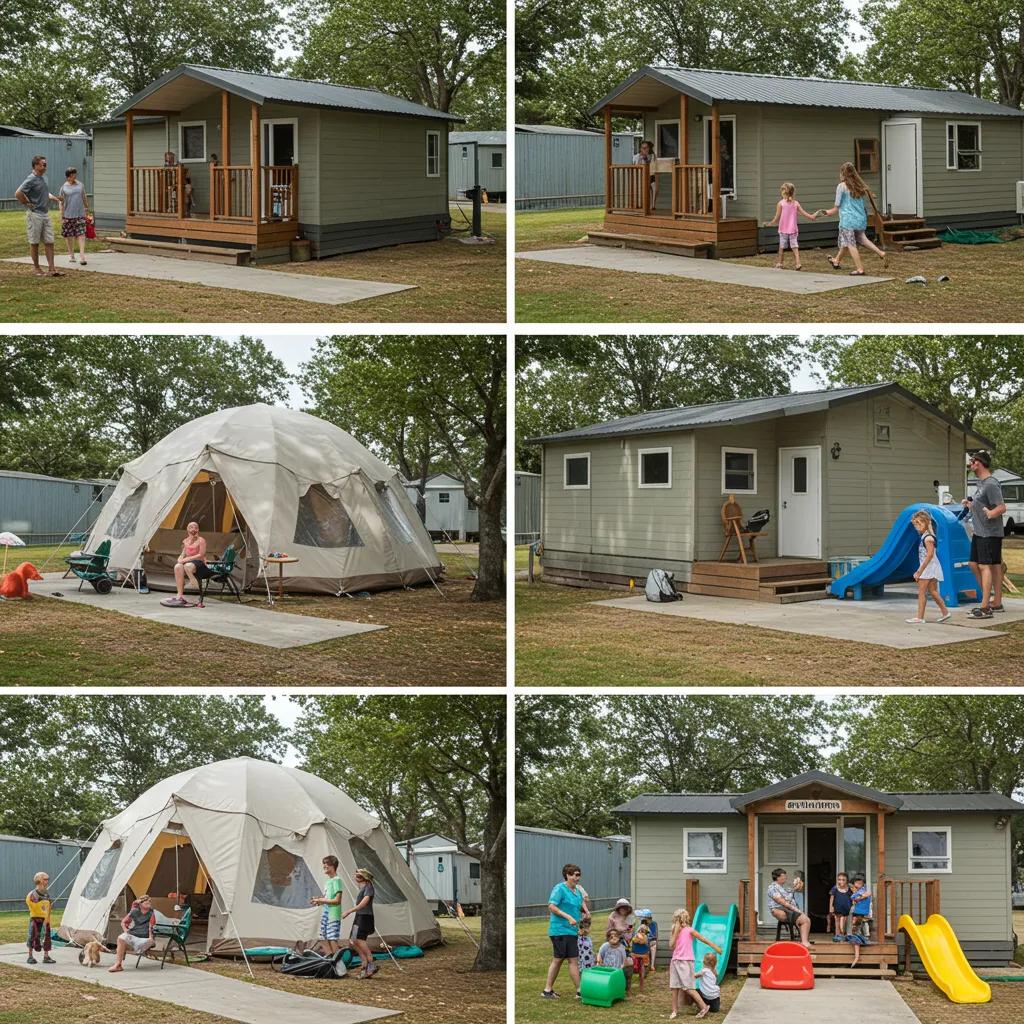
Amenities that commonly justify higher rates include glamping units or tiny homes, upgraded bathhouses, pools or recreation facilities, and event spaces that attract group bookings. These amenities increase your average daily rates and broaden appeal to families or higher-spending segments, while also creating ancillary revenue streams like rental income and event fees. When evaluating amenity investments, calculate the expected incremental revenue and occupancy uplift against the project cost and ongoing maintenance needs. Prioritize amenities that fit your campground’s brand and market demand to maximize both short-term NOI and long-term buyer interest.
Well-chosen amenities therefore enhance both top-line revenue and your property’s competitive positioning.
This ROI-style comparison helps you prioritize investments that most efficiently improve sale value and buyer appeal.
How Does Leveraging Technology Improve Your Campground’s Value?
Technology—including reservation systems, channel managers, dynamic pricing tools, and guest-facing Wi-Fi—reduces friction, increases direct bookings, and supports higher occupancy and ADRs through better yield management. Reservation systems create clear data trails for buyers, improving revenue transparency, while channel management broadens distribution without excessive manual effort. Investing in reliable guest Wi-Fi and digital touchpoints attracts longer-stay and remote-work guests, who often pay premium rates. These technological improvements not only raise short-term revenue but also reduce operating costs, making the property more attractive to buyers.
Technology therefore functions as both a revenue driver and a credibility enhancer during valuation and due diligence.
What Value-Add Investments Can Enhance Long-Term Income Potential?
Long-term value-add projects include upgrading utility infrastructure to support higher rates, reconfiguring site layouts to increase rentable units, and adding diversified lodging types to stabilize revenue across seasons. Utility upgrades remove restrictions that cap nightly rates and reduce maintenance surprises during underwriting, while adding unique lodging options yields higher ADR and cross-sell opportunities. Prioritize projects with clear payback timelines and manageable capital requirements to avoid over-capitalization before sale. A disciplined, ROI-focused improvement plan increases both current NOI and buyer confidence in future income streams.
These investments create durable value that sophisticated buyers recognize and are willing to pay more for.
- Value-add investments prioritized by impact:
- Utility capacity upgrades that allow for higher-rate site classifications.
- Adding unique lodging to diversify revenue and improve ADR.
- Site reconfiguration or expansion to increase rentable inventory.
Why Sell Directly to GatherGrounds Resorts Instead of Using Campground Brokers?
Selling directly to a strategic operator like GatherGrounds can reduce transaction friction, eliminate broker commissions, and deliver a sale outcome that preserves your property’s legacy. GatherGrounds Resorts positions itself as a family-owned acquirer focused on thoughtful transitions and property enhancement. The benefits of a direct sale include potentially faster closings, reduced marketing exposure if confidentiality is a priority, and direct negotiation with the eventual operator rather than an intermediary. Brokers offer broader market reach and can generate competitive bidding, so you should weigh your timeline, desire for legacy preservation, and tolerance for public marketing against potential broker fees. For sellers who value a direct, legacy-oriented approach, engaging with a family buyer like GatherGrounds provides an alternative that can maximize net proceeds and ensure continuity.
Next, we’ll cover the typical acquisition process and its timeline, so you’ll know what to expect when negotiating a direct sale.
What Is the GatherGrounds Acquisition Process for Campground Owners?
The GatherGrounds acquisition process typically begins with a confidential conversation and information exchange, followed by a property assessment, an offer phase, due diligence, and transition planning. During the assessment, GatherGrounds evaluates financials, site counts, amenities, and enhancement potential to determine fair value and propose terms. This process mirrors how buyers calculate adjusted NOI and make offers based on cap rates.
Offers from GatherGrounds are structured to preserve legacy while providing clear next steps for closing and handover. Due diligence timelines are designed to minimize disruption. Sellers who value direct discussions with the buyer often find this transparent process helpful in aligning expectations and accelerating the closing.
This process orientation underscores the value of a direct buyer in reducing transaction complexity and preserving the park’s identity.
How Does Selling Directly Maximize Your RV Resort Sale Profit?
Selling directly can maximize your net sale proceeds by eliminating broker commissions and shortening the time-to-close, which reduces carrying costs and market exposure risk. Direct negotiation also allows you to structure creative terms, such as limited seller financing or transition arrangements, that can bridge valuation gaps and preserve post-sale seller involvement if desired. By negotiating directly with the operator, you gain clarity on post-sale plans for staff retention and guest communication, which can protect intangible value tied to community goodwill. When speed, confidentiality, and legacy preservation are important, a direct sale can be both financially and emotionally advantageous.
You should compare estimated broker fees and time-on-market scenarios to evaluate the true net benefit of a direct sale versus listing with a broker.
What Are the Pros and Cons of Using Traditional Campground Real Estate Brokers?
Traditional brokers offer market reach, competitive bidding, and specialized transaction expertise, but they typically charge commissions and may extend the time-on-market while seeking the highest possible price. Brokers can often generate multiple offers that drive price discovery, which benefits sellers seeking maximum public-market exposure. However, lengthy listings can increase carrying costs and the risk of price erosion.
Deciding between a broker and a direct buyer depends primarily on two criteria: your desired timeline and the importance of legacy preservation. A balanced assessment of these trade-offs will help you choose the route that best aligns with your financial goals and community priorities.
- Broker vs. direct-sale decision checklist:
- Consider your timeline: a need for a quick close favors a direct sale.
- Consider net proceeds: broker commissions reduce net proceeds but may lead to a higher gross price.
- Consider legacy: your ownership transfer desires may favor a family buyer.
What Does GatherGrounds Look for When Acquiring RV Parks and Campgrounds?
GatherGrounds typically targets properties that meet specific scale and operational criteria. Parks with sufficient site counts, stable financials, and a cultural fit with a family-owned approach are most attractive. The company emphasizes thoughtful transitions and investments that preserve a park’s identity while making enhancements that improve the guest experience and long-term revenue. For owners, understanding these buyer preferences clarifies which aspects of your operation to highlight during conversations and what improvements will resonate with a direct buyer. Aligning your property’s presentation with GatherGrounds’ selection criteria can create a smoother path to a fair, legacy-aware sale.
Why Are Campgrounds with 130+ Sites Ideal for GatherGrounds?
Properties with 130+ sites reach an operational scale that supports diversified revenue streams, amenity viability, and better NOI margins due to fixed-cost absorption. Larger parks can justify investments in upgraded bathhouses, glamping, and robust reservation platforms that smaller operations struggle to support financially.
Scale also enables more predictable occupancy and supports operational specialization, both of which reduce risk in underwriting. Consequently, larger parks frequently command better valuation multiples because they offer both higher absolute NOI and greater operational resilience.
Owners of mid-to-large parks should emphasize scale-driven efficiencies when preparing financial presentations and comps.
How Does GatherGrounds Preserve Your Campground’s Legacy and Family Values?
GatherGrounds is committed to preserving the identity of acquired parks through thoughtful transition planning, offering options for seller involvement, and implementing continuity measures for staff and community relationships. This approach reduces community resistance and supports the retention of repeat guests, which maintains revenue stability during ownership transition. Gathering clear narratives about traditions, signature events, and staff roles helps buyers craft a sensitive transition plan that honors the park’s legacy while implementing improvements. Communicating these preservation commitments during sale discussions reassures stakeholders and can protect intangible value in the property.
A compassionate transition plan therefore offers both reputational benefits and supports long-term financial performance.
What Enhancements Does GatherGrounds Invest in to Increase Property Value?
After acquisition, GatherGrounds invests in modern amenities, reservation technology, and infrastructure upgrades that elevate the guest experience while increasing revenue potential. Typical investments include upgraded bathhouses and glamping units to raise ADR, reservation and channel management systems to improve yield, and utility improvements to reduce maintenance surprises and enable higher site classifications. These enhancements are selected based on projected NOI uplift and alignment with the park’s identity. Documenting enhancement opportunities in your sale package demonstrates upside to buyers and can justify a higher valuation.
Highlighting planned enhancements and their expected revenue effects strengthens your negotiating position and shows clear paths to future value.
How Do Market Trends and Economic Factors Affect RV Resort Sale Profit in 2025?
Market dynamics in 2025—including demand that exceeds limited new supply, evolving guest expectations, and financing conditions—directly influence buyer competition, cap-rate expectations, and offer structures. Strong RV ownership trends and increased demand for longer stays have heightened interest in well-run properties. However, higher interest rates in some markets have widened required returns and pressured cap rates. Sellers should therefore present evidence of stable or growing demand, show how their investments capture long-stay guests, and be prepared to discuss financing alternatives or creative terms to bridge valuation gaps. Understanding these macro and micro factors helps owners time the market effectively and present their assets in a way that appeals to available buyer cohorts.
These market influences inform both valuation negotiations and the choice of sales channel, so sellers must integrate trend analysis into their sale planning.
What Is the Current Demand and Supply Situation for RV Parks and Campgrounds?
Demand for RV sites has broadly increased due to higher RV ownership and a preference for outdoor travel, while the supply of new developed sites remains constrained by land, zoning, and infrastructure challenges. This imbalance tends to support higher occupancy and stronger pricing for well-positioned resorts, particularly those with amenities that attract longer-stay guests. Buyers respond to this dynamic by competing for stabilized assets, which can lead to favorable cap-rate outcomes for sellers. Therefore, framing your property’s demand drivers and occupancy resilience is essential when illustrating its value to prospective purchasers.
Documented demand trends and occupancy histories therefore strengthen your case for higher valuation multiples.
How Do Interest Rates and Financing Conditions Influence Buyer Offers?
Interest rates affect buyer borrowing costs and, consequently, influence cap-rate expectations and purchase price. Higher rates typically compress buyer leverage and widen required returns, which can lower offers for the same NOI. Sellers can mitigate rate-driven valuation gaps by offering creative financing options, structuring earn-outs, or highlighting the property’s ability to generate immediate cash flow that offsets higher financing costs. Timing and negotiation strategy become critical when financing conditions are uncertain, as sellers who accommodate flexible deal structures may secure higher net proceeds. Understanding financing sensitivities enables sellers to present terms that bridge expectation gaps.
This table translates macro factors into actionable implications sellers can use to optimize timing and negotiation strategy.
Why Are Long-Term Stays and Guest Expectations Important for Valuation?
Long-term stays increase revenue predictability and raise the average length of stay, which stabilizes cash flow and reduces seasonality risk—attributes that buyers reward with lower cap rates. Modern guest expectations, such as reliable Wi-Fi, comfortable lodging, and on-site conveniences, influence both occupancy and ADR. Therefore, investments that meet these expectations often produce measurable NOI improvements. Demonstrating a customer base that includes remote workers or repeat long-stay guests makes future income projections more credible to acquirers. Documenting guest behavior and aligning amenities with demand strengthens your valuation narrative.
Framing operational changes around long-stay demand helps sellers capture the full market value of those revenue streams.
What Are the Most Common Questions About Selling Your RV Resort for Maximum Profit?
Sellers frequently ask how to value an RV park accurately, which pre-sale actions yield the most impact, and how to structure a transition that protects legacy. Concise, actionable answers help owners make informed decisions. Addressing valuation mechanics, prioritized investments, and transition benefits prepares owners for realistic negotiations and clarifies next steps. Below are succinct answers to the most common seller questions that surface during initial conversations with buyers or brokers.
These Q&A style responses provide owners with quick guidance and point to practical actions to increase sale readiness.
How Do You Value an RV Park Accurately Before Selling?
Accurate valuation centers on adjusted NOI as the primary method, with cap-rate selection reflecting market conditions and comparable transactions validating the resulting range. Sellers should produce normalized income statements, demonstrate trend stability, and present comparable sales that adjust for site count and amenities. Together, these elements provide a defensible value range. Bringing clear underwriting assumptions and sensitivity analysis to buyer discussions speeds agreement on price and terms. Accurate valuation therefore depends on transparent numbers and market-aware cap-rate reasoning.
This approach positions sellers to negotiate from a data-driven, credible standpoint.
What Are Effective Ways to Increase Your RV Park’s Value Before Sale?
Effective pre-sale actions focus on increasing NOI through operational wins, cleaning up financial records, and making targeted capital improvements that buyers recognize as value-adds. Quick wins include implementing reservation software, standardizing maintenance, and fixing deferred items that might appear in due diligence. Medium-term projects include modest amenity upgrades and utility improvements with clear payback profiles. Prioritize actions with short payback periods and transparent revenue effects to avoid over-investing before sale. Executing these steps enhances both NOI and buyer confidence.
A prioritized checklist ensures you deploy capital where it is most likely to increase net sale proceeds.
What Are the Benefits of a Thoughtful Transition When Selling Your Campground?
A thoughtful transition preserves community goodwill, retains experienced staff, and maintains guest loyalty, which reduces revenue disruption and supports post-sale performance—factors buyers value and that can translate into smoother closings and stronger final payments. Thoughtful transitions often include staff retention plans, communication strategies for guests and neighbors, and optional seller roles during an initial handover period. These measures reduce public resistance and protect intangible value tied to park traditions. For owners who want their park’s identity preserved, negotiating transition terms can be a central element of the deal structure.
Transition planning therefore offers both emotional and financial benefits that support a successful sale.
How Can GatherGrounds Help Owners Interested in a Direct Sale?
GatherGrounds Resorts offers a direct-buyer alternative focused on the acquisition and enhancement of campgrounds and RV parks, especially properties with over 130 sites in the Upper Midwest states. Their Campground Acquisition and RV Park Acquisition services emphasize a family-owned approach, thoughtful transition, and preservation of legacy, while investing in modern amenities and infrastructure to increase property value. For owners who prefer a confidential, no-pressure conversation about valuation and sale options, GatherGrounds provides a Campground Acquisition Service that streamlines the process and allows direct dialogue with the eventual operator. Engaging with a direct buyer can reduce broker fees, shorten timelines, and ensure continuity for the park and its community.
- Next steps for owners considering a sale:
- Assemble organized, multi-year financials and site-level revenue reports.
- Identify quick-win operational improvements that increase NOI.
- Decide whether a broker’s market exposure or a direct buyer’s confidentiality and legacy focus best match your goals.
Frequently Asked Questions
What are the benefits of selling my RV resort directly to GatherGrounds Resorts?
Selling directly to GatherGrounds Resorts can provide several advantages, including the elimination of broker commissions, which maximizes your net proceeds. This approach often leads to faster closings and reduced market exposure, preserving the confidentiality of your sale. Additionally, negotiating directly with a family-owned buyer allows for a more personalized transaction, ensuring that your campground’s legacy and community ties are respected and maintained throughout the process.
How can I effectively market my RV resort to potential buyers?
To effectively market your RV resort, focus on highlighting its unique features, amenities, and operational strengths. Create a comprehensive marketing package that includes detailed financial records, occupancy rates, and recent improvements. Utilize online platforms, social media, and industry-specific channels to reach a broader audience. Engaging a professional photographer to capture the beauty of your property can also enhance its appeal. Clear communication of your campground’s value proposition will attract serious buyers.
What role does community reputation play in selling my RV park?
Community reputation is a significant factor in the sale of your RV park, as it influences buyer perception and can affect the property’s valuation. A positive reputation can lead to higher occupancy rates and customer loyalty, making your campground more attractive to potential buyers. Highlighting community engagement, positive guest reviews, and local partnerships during the sales process can enhance your park’s appeal and justify a higher asking price.
How can I prepare for buyer due diligence during the sale process?
Preparing for buyer due diligence involves organizing all relevant financial documents, operational records, and maintenance logs. Ensure that your financial statements are accurate and reflect normalized income. Be ready to provide information on occupancy rates, guest demographics, and any recent improvements made to the property. Anticipating common buyer questions and having clear, concise answers will facilitate a smoother due diligence process and build buyer confidence in your campground’s value.
What are some common pitfalls to avoid when selling an RV resort?
Common pitfalls when selling an RV resort include inadequate financial documentation, overpricing the property, and failing to address operational inefficiencies. Sellers should avoid emotional attachments that cloud judgment and ensure that all records are transparent and well-organized. Additionally, neglecting to highlight the property’s strengths or failing to prepare for buyer inquiries can hinder negotiations. Engaging with professionals who understand the market can help navigate these challenges effectively.
How can I assess the right time to sell my RV park?
Assessing the right time to sell your RV park involves analyzing market conditions, interest rates, and your personal circumstances. Look for signs of strong demand in the RV market, such as increased occupancy rates and favorable buyer competition. Additionally, consider your financial goals and whether you are ready for a transition. Consulting with real estate professionals can provide insights into market trends and help you determine the optimal timing for your sale.
Conclusion
Maximizing the sale profit of your RV resort hinges on understanding key valuation factors, enhancing operational efficiencies, and preparing your property for market. By focusing on Net Operating Income, capitalization rates, and strategic improvements, sellers can attract competitive offers while preserving their legacy. Engaging with a direct buyer like GatherGrounds can streamline the process and ensure a thoughtful transition that honors your campground’s identity. Take the next step by exploring our services and see how we can help you achieve your selling goals.