

Discover Nearby Campgrounds with Trails — Family Adventures, Easy Hikes & Bike Rides
Finding a campground with hiking and biking trails nearby turns a simple weekend away into a string of family-friendly outdoor moments. Campgrounds with trails mix short play loops, connector paths, and safe route options so parents and kids can explore together — from birding and short bike rides to nature scavenger hunts. This guide shows how to evaluate campgrounds with hiking and biking trails, offers family-ready itineraries in Michigan, and highlights why campgrounds next to state parks are especially useful. You’ll get clear selection criteria for trail types and surfaces, travel tips from nearby metros, practical RV considerations, and ways trail programming brings families closer. Read on for curated comparisons, quick-reference tables, and actionable checklists to help you pick the best campground-with-trails for your next memory-making trip.
Which Campgrounds with Hiking and Biking Trails Are Best for Families?
Great family campgrounds with trails combine varied trail types, clear safety for kids, and easy access from nearby cities. Look for places with trailheads, short loop circuits, and connector paths that work for quick walks or longer rides — so everyone in the family can find something that fits their skill level. Prioritize trail surface (paved vs. singletrack), loop length and structure, on-site amenities that cut travel time to activities, and links to larger trail networks or state parks. Use the quick checklist below before you book.
- Trail surface and family suitability: Seek paved or well-maintained loop trails under three miles for kids.
- Proximity to services: Pick campgrounds with on-site amenities so outings don’t require long drives.
- Connectivity: Favor sites that tie into larger trail systems or state parks for day-trip variety.
These filters help you narrow choices fast and set up a simple comparison of local options for reservations and on-the-ground logistics.
Campground trail types and quick comparison
That quick comparison shows how different campground types meet family needs: resort-style private campgrounds concentrate amenities and short loops, while nearby state recreation areas offer long networks for day trips. The section below explains how The Oaks Campground puts these design choices into practice and how reservations and on-site programming shape trip plans.
How Does The Oaks Campground Create Unique Trail Experiences?
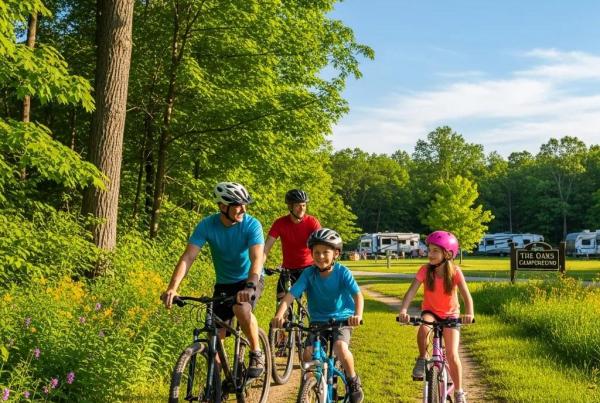
The Oaks Campground by GatherGrounds blends on-property loops with immediate access to preserved landscapes, a useful combo for families who want convenience and variety. Its golf cart riding trails cover roughly 120 acres of the 160-acre property, offering short family rides, safe beginner loops, and easy connections between features like the fishing pond and the swimming lake. Because the property borders Waterloo State Recreation Area, guests can mix short on-site outings with longer hikes or bike rides into more rugged terrain without moving camp. That blend of contained family-friendly loops and gateway access to larger trails gives mixed-age groups both quick play options and full-day exploration choices.
These trail choices naturally lead to planning how to reach named nearby trails and arranging family-friendly outings from camp.
Which Family-Friendly Hiking and Biking Trails Can You Reach from The Oaks Campground?
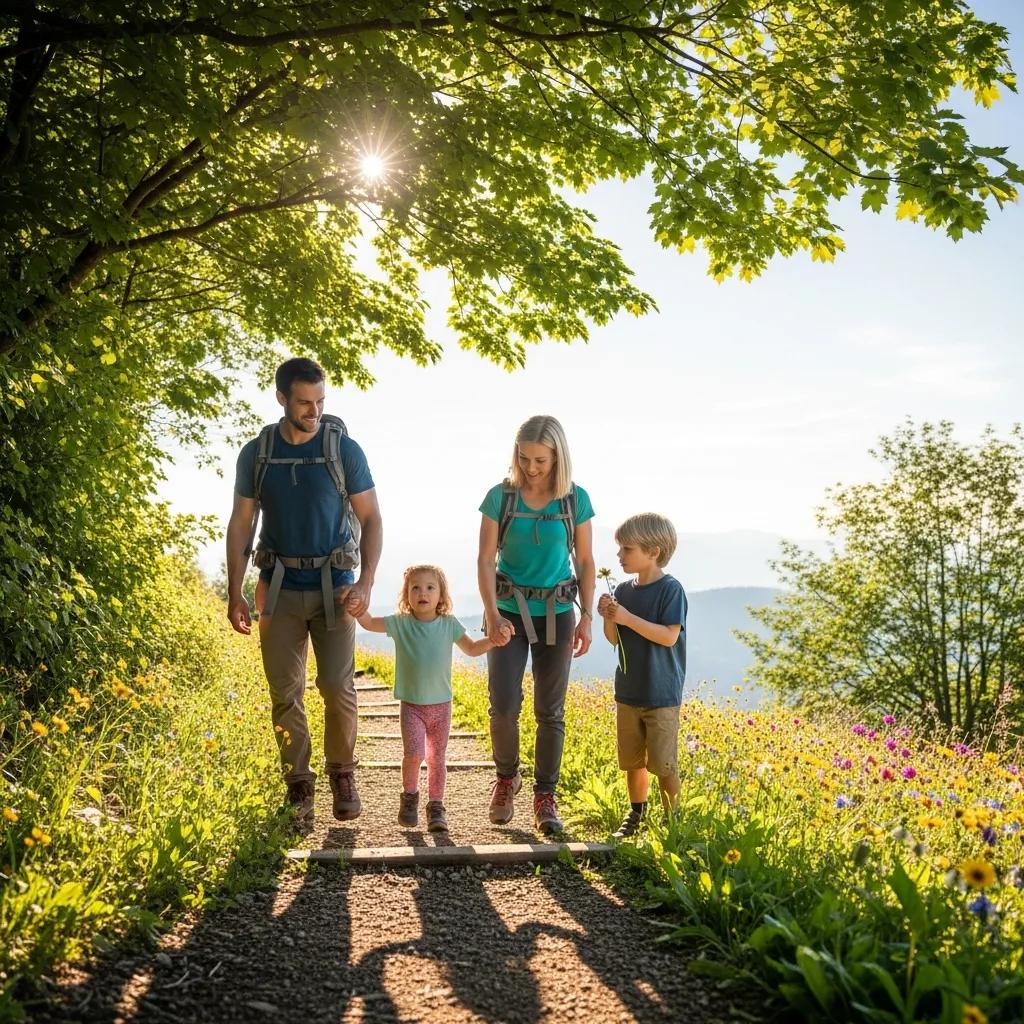
Families staying at The Oaks can choose from stroller- and kid-friendly loops on the property to multi-use connector paths that tie into state recreation networks. Close-in options are ideal for toddlers and little kids, while connector routes and nearby trailheads let older kids and adults step up the distance and challenge. When you plan a day, factor in trail surface and difficulty: choose paved or well-graded dirt loops for young children, save singletrack or mixed surfaces for more experienced riders, and pack water plus a basic first-aid kit for longer outings.
- Short family loops: Gentle terrain and brief distances — perfect for early walkers.
- Connector paths: Moderate routes that link on-site trails to larger networks.
- Mixed-use trails: Better for families with older kids who handle varied surfaces.
Match each day’s activity to the ages and abilities in your group, and plan smooth transitions between on-site play and state-park exploration.
How Can You Explore Family Campgrounds with Trails in Michigan?
Exploring family campgrounds with trails in Michigan works best with a regional plan that balances travel time, season, and activity variety. Michigan’s seasons each offer perks: spring and fall bring cooler hiking and active birding, while summer opens swimming and water play — but you may want earlier starts to beat the midday heat. From Detroit or Ann Arbor, try a weekend plan: arrive and take a short on-site loop day one, do a longer state-park day trip day two, then enjoy a relaxed nature walk before you leave. Pick campgrounds that minimize drives to trailheads so families spend more time outside and less time in the car.
- Weekend itinerary example: Arrive mid-afternoon, short loop and fishing, full-day hike in the adjacent state area, morning bird walk before checkout.
- Travel time tips: Keep daily drives under 60–90 minutes for younger children to reduce fatigue.
- Seasonal packing list: Layered clothing, rain protection, sunscreen, binoculars, and trail snacks.
Local campgrounds can serve as both amenity-rich bases and gateways to bigger state networks for multi-day exploration. For a specific option, The Oaks Campground by GatherGrounds in Munith, Michigan sits on a 160-acre property with approximately 120 acres of golf cart riding trails and borders Waterloo State Recreation Area, giving guests quick access to extended hiking and biking networks. Reservations are recommended for weekends and special events — check The Oaks Campground reservation page or the campground’s official info for availability.
Which Hiking Trails Near Munith and Ann Arbor Work Well for Families?
The Munith–Ann Arbor area mixes short shaded loops and longer multi-use trails that work for a range of family abilities. Family-friendly hikes are usually looped, under three miles, with gentle elevation and clear signage. Trails that pass lakes or viewpoints help keep kids interested, and routes with frequent turnaround points let family members choose shorter or longer options without extra logistics. When mapping from your campground, pick trailheads with parking and restrooms to make comings and goings with kids easier.
- Kid-friendly route characteristics: Loops under three miles, shaded canopy, frequent points of interest.
- Logistics checklist: Confirm parking, restroom availability, and proximity to picnic areas.
- Trail pacing tip: Build in frequent rest stops and simple nature-based tasks to keep kids engaged.
Using a campground as your base helps shape daily plans around the group’s energy and curiosity and makes room for themed outings like birding or waterfall hunts for younger explorers.
Where Are the Best Biking Routes Near Detroit and Nearby Cities?
Biking from Detroit and surrounding metros ranges from paved multi-use paths to off-road singletrack for mountain riders. For families, paved connectors and rail-trail conversions are usually the safest choice — they’re predictable and friendly for trailers and training wheels. Dirt multi-use routes suit older kids who want more challenge. When planning rides from camp, pick segments with mile markers and low vehicle exposure, and favor looped options or connectors so you don’t force a long out-and-back on small riders. Helmets, hydration breaks, and realistic distance goals keep rides fun for everyone.
- Paved family segments: Low skill barrier and good for trailers and training wheels.
- Off-road options: Best for older kids with basic bike-handling skills.
- Route planning: Choose looped routes or connectors that return to camp without complex logistics.
These strategies help families fold moderate rides into a camping schedule that balances activity with relaxed on-site time.
Why Do State Park Campgrounds with Trails Appeal to Outdoor Fans?

State park campgrounds stand out because they plug campers straight into large, protected trail networks and offer supportive amenities like visitor centers, interpretive programs, and mapped trail systems. Staying next to a state park gives you two big benefits: direct access to a wider variety of trails and preserved landscapes that boost wildlife viewing and varied terrain. For outdoor lovers, that adjacency makes day-long excursions easier and lets families build skills across trail types — from flat lakeside paths to rolling multi-use circuits. Three key advantages make these campgrounds especially valuable.
- Larger trail networks: More mileage and route choices for multi-day exploration.
- Diverse trail types: From paved family paths to singletrack and remote hikes.
- Supportive amenities: Visitor centers and maps that simplify planning and safety.
Those strengths make state-park–adjacent campgrounds a smart pick for families who want both convenience and range in their outdoor options.
How Does Waterloo State Recreation Area Complement The Oaks Campground Trails?
Waterloo State Recreation Area expands recreational options beyond a campground’s on-site loops. With thousands of acres, Waterloo offers long multi-use corridors, varied habitats for birding, and extra trailheads reachable by a short drive or connector path. For families at nearby campgrounds, that adjacency means you can mix quick on-property activities with full-day adventures in preserved landscapes. Practical tips: confirm which trailheads allow day-user parking, plan distances with return logistics in mind, and use maps to combine on-site loops with Waterloo connectors for varied daily mileage.
Families get the best of both worlds by pairing safe, short loop rides at camp with longer exploratory hikes or bike rides into Waterloo’s broader trail system.
What Kinds of Hiking and Biking Trails Are Common in Nearby State Parks?
State parks near Munith and Ann Arbor typically feature lakeside loops, woodland connectors, multi-use corridors, and interpretive nature trails — trail types that suit families and enthusiasts alike. Each style has a purpose: lakeside loops for easy wildlife viewing, woodland connectors for shaded exploration, and multi-use corridors for longer bike outings. When you choose a trail for a day trip, prioritize surface type and wayfinding so the route matches your group’s skill and interest. The table below summarizes common state-park trail types and why families pick them.
This quick guide helps campers choose trails that match trip goals — whether that’s quiet birding, a lively family bike ride, or an easy interpretive walk.
Why Choose RV Camping Near Trails for a Memorable Family Trip?
RV camping near trails pairs the comforts of a mobile base with instant access to outdoor recreation. Families can switch between relaxed campsite routines and active trail days without disassembling camp each time. Having familiar sleeping, cooking, and storage on site lets you focus on the trail: short loops for kids, moderate hikes for adults, and bike rides for everyone — with a comfortable retreat close by. Key considerations for RV travelers include site access and layout, how close sites are to trailheads, and on-site features that cut transit time to activities. The mobility and amenities of an RV make it easy to blend trail-based adventure with creature comforts.
- Comfort + mobility: Sleep, store, and cook at camp while you explore nearby trails.
- Ease of planning: Short drives to trailheads expand options without moving camp.
- Family pacing: Return to camp easily for naps or meals between activities.
Below is a concise amenity summary for RV travelers considering a campground like The Oaks and what to check before booking.
What Amenities Support RV Camping at The Oaks Campground?
The Oaks Campground by GatherGrounds offers on-site amenities that support family RV stays and make trail access simple. Notable features include a multi-acre network of golf cart riding trails across roughly 120 acres of the property, a fishing pond, and a swimming lake — all offering quick recreation without leaving camp. The property runs scheduled family weekend events and plans to add a Wibit water park in 2025, which will expand on-site fun. We recommend checking availability and reserving an RV site early for weekends and special events to secure a spot near trail access and amenity areas.
That amenity snapshot helps RV travelers confirm The Oaks supports trail-centered itineraries and family activities while offering the comforts of RV camping.
How Do Golf Cart Riding Trails Add to RV Camping Adventures?
Golf cart riding trails create short, safe loops inside a campground that connect campsites, playgrounds, and amenity areas without hopping in a car. For RV families, they make it easy to zip between camp and play areas, let children enjoy supervised rides, and provide low-impact access to places like the swimming lake or fishing pond. Keep safety and etiquette top of mind: moderate speeds, yielding to pedestrians, and using defined crossings help keep the environment family-friendly. In practice, golf cart trails shorten walks, reduce tired little legs, and add a fun on-site activity that complements longer hikes into nearby state parks.
- Short family rides: Gentle circuits that entertain younger riders.
- Practical transit: Faster, low-effort trips between site and amenities.
- Safety rules: Moderate speeds and yielding behavior preserve a family-friendly environment.
These features show how low-speed cart networks boost the flexibility and enjoyment of an RV stay.
How Do Family Campgrounds with Trails Build Fun and Connection?
Trails inside family campgrounds become more than routes — they’re stages for shared discovery. Guided walks, scavenger hunts, and birding outings create shared goals and moments of wonder for all ages, while looped trails allow families to set their own pace. Programming that pairs trails with interpretive elements — like guided nature talks or family ride events — sparks curiosity and helps children form lasting positive memories of time outdoors. Below are simple ways campgrounds turn trails into meaningful family experiences.
- Scavenger hunts: Short, engaging tasks that sharpen observation skills.
- Guided family rides or walks: Structured outings that build confidence and skill.
- Bird-watching sessions: Quiet observation that teaches patience and ID basics.
These activities turn trails into a framework for learning and play, extending a camping trip into memory-making time together.
What Family Events and Activities Does The Oaks Campground Offer?
The Oaks schedules family-friendly weekend events that connect directly to the trail network and on-site amenities, creating chances for group hikes, guided family rides on the golf cart trails, and organized lakeside activities. Seasonal programming focuses on outdoor discovery with activities for a range of ages and abilities, encouraging families to explore together. If you want to join event weekends, reserve early, align your itinerary with planned activities, and leave room in your schedule to participate in guided outings or open-play sessions that enhance the trail experience.
Common events include short guided hikes, family ride meetups on the golf cart trails, and lakeside programs that use the campground’s water features to round out a weekend.
How Can Families Enjoy Bird Watching and Scenic Trails Together?
Bird watching and scenic walks are affordable, high-engagement activities that scale to different attention spans. Start on a short loop that passes edge habitats, mixed woods, and open meadows to see more species in one trip. Bring compact binoculars, a pocket guide or ID app, and a small checklist that makes spotting birds a game for kids. Early morning or late afternoon visits often bring the best activity, and mixing quiet observation with short interpretive stops keeps children involved without overwhelming them.
- Birding checklist: Pack binoculars, a simple species list, and pencils for recording finds.
- Time-of-day tip: Arrive early for the most active bird periods.
- Engagement strategy: Use short, theme-based tasks to sustain attention across ages.
These simple approaches make birding and scenic walks easy family rituals that deepen curiosity and connection to place.
Frequently Asked Questions
What should I consider when choosing a campground with trails for my family?
Look at trail surface and difficulty, proximity to amenities, and the mix of trail types available. Favor paved or well-maintained trails that suit children, and check for facilities like restrooms and picnic spots. See whether the campground links to larger trail systems or state parks to add variety and day-trip options.
Are there specific safety tips for hiking and biking with children?
Yes. Make sure kids wear helmets for biking and appropriate footwear for hiking. Pick trails that match their skill level and schedule frequent breaks. Carry a first-aid kit, enough water, and snacks. Set a meeting point in case anyone gets separated and teach basic trail etiquette, like yielding to others and staying on marked paths.
How can I make the most of a camping trip with young children?
Plan a flexible itinerary with a mix of short hikes, hands-on nature activities, and downtime. Use scavenger hunts or simple crafts to keep them engaged. Choose campgrounds with family amenities like playgrounds or swimming areas, and keep the pace relaxed so kids can explore and be curious.
What types of trails are best for beginner hikers and bikers?
Beginner routes are short, well-marked, and gently graded. Paved or well-maintained dirt paths are ideal for young children and novice riders. Looped trails are especially helpful because they let you choose shorter or longer options without retracing your steps. Trails with landmarks like lakes or viewpoints help maintain interest.
How can I prepare for changing weather conditions while camping?
Pack layered clothing, waterproof outerwear, and sun protection. Check the forecast before you leave and bring items that can be added or removed as temperatures change. Include rain gear, extra blankets, and a reliable shelter to stay comfortable if the weather shifts suddenly.
What are some fun activities to do at campgrounds besides hiking and biking?
Try fishing, swimming, and yard games like frisbee or soccer. Evening campfires for stories and s’mores, stargazing, and guided campground programs (nature walks, crafts, wildlife talks) all create memorable experiences and help families connect.
How can I find campgrounds with trails that are suitable for my family’s needs?
Start with online campground directories and review sites, using filters for amenities, trail types, and family-friendly features. Contact local visitor centers or outdoor groups for recommendations, and read reviews from other families for practical tips on what to expect.
Conclusion
Choosing a campground with trails adds intention and variety to family getaways, creating safe, accessible chances to explore together. Places like The Oaks Campground offer a handy mix of on-site amenities and nearby trail networks so families can balance short, easy outings with longer adventures. Focus on campgrounds that serve different skill levels and offer engaging activities, and your weekend trips can quickly become favorite family traditions. Start planning your next outdoor escape by checking our recommended campgrounds and their trail offerings.