How Campground Agents Maximize RV Park Sales for Top Dollar
Campground agents excel at translating your park’s operational strengths into clear value drivers, marketing those attributes to the right buyers, and negotiating terms that boost your sale proceeds while minimizing your risk. This guide breaks down what campground agents do, why their proven processes—valuation, targeted marketing, buyer qualification, and negotiation—lead to higher net returns, and how you can leverage these same tactics for your RV park sale. Many owners feel uncertain about pricing, documentation, or finding the right buyer; this guide offers actionable steps to determine value, organize records, choose your sale path, and ensure your property’s legacy continues. You’ll discover 2025 market signals that favor well-prepared sellers, precise valuation methods like NOI and cap rates with real-world examples, a step-by-step selling checklist agents follow, and key improvements that deliver measurable ROI. After setting the market stage, we’ll show agents in action, compare sale routes including family-owned buyers and institutional acquirers, and answer your most pressing seller questions so you can plan a confident exit.
Why Is Now the Best Time to Sell Your RV Park or Campground?
Now is an ideal moment to sell because 2025 demand drivers—growing camping participation, resilient RV shipments, and an anticipated wave of ownership transitions—have intensified buyer competition and strengthened pricing power for attractive assets. Increased participation broadens the buyer pool and bolsters comparable sales data, which significantly benefits parks with strong amenities and consistent occupancy. Sellers who meticulously document seasonality, revenue per available site, and capital improvements can capitalize on these market tailwinds through competitive bidding. The following sections detail the specific market trends, how participation translates into pricing advantages, and the projected ownership turnover that creates urgency for well-timed listings.
H3: What Are the Current RV Park Market Trends in 2025?

Current RV park market trends in 2025 reveal a sustained appetite for outdoor hospitality assets, fueled by steady RV shipments and stable leisure travel patterns. These trends support higher valuations for parks boasting modern amenities and year-round appeal. Both institutional and private buyers are actively seeking opportunities where operating data and NOI are transparent, driving a premium for parks that clearly report occupancy and ADR (average daily rate). For sellers, this translates to cleaner financials and documented guest trends converting market demand into stronger offers. Understanding these trends empowers sellers to highlight the metrics buyers prioritize during due diligence.
H3: How Does Increased Camping Participation Affect Your Sale?
Increased camping participation amplifies buyer interest by expanding the pool of strategic and owner-operator buyers who value proven revenue streams and repeat visitation. As new households embrace camping, comparables for high-amenity parks often show stronger growth in revenue per site, enabling sellers to justify premium pricing for upgrades like bathhouse renovations or enhanced connectivity. Agents leverage participation trends by tailoring marketing to buyer types most likely to invest in growth potential, thereby improving both price and term quality. Framing participation as a growth lever helps sellers negotiate better deals and structure contingencies around seasonality.
H3: What Percentage of Campgrounds Are Changing Ownership Soon?
Industry projections suggest a significant portion of parks—commonly estimated at around a quarter over a five-year period—may change hands as older owners retire and capital reallocates. This creates an elevated supply pipeline that attracts buyers and intensifies competition among sellers. This turnover rate impacts negotiation leverage: sellers listing into a crowded market should emphasize unique, defensible features and recent capital improvements to maintain pricing power. Conversely, sellers who time their listings when buyer competition is strongest can leverage competitive processes to secure premium terms. Recognizing the ownership change cycle informs optimal marketing timing and how to package your offering for top-dollar results.
How Do Campground Agents Help Maximize Your RV Park Sale Price?
Campground agents maximize sale price by delivering three integrated capabilities: accurate valuation based on NOI and comps, targeted marketing to qualified buyer segments, and skilled negotiation that balances price, terms, and transition protections. Agents transform operational metrics—site count, occupancy curves, and amenity mix—into investor-focused narratives that support valuation assumptions and attract competitive bids. They also meticulously screen buyers to verify proof-of-funds and financing feasibility, saving you time and preserving deal momentum. Below are the primary tactical levers agents deploy to boost your net sale proceeds and reduce transaction risk.
Campground agents employ several repeatable tactics to enhance sale outcomes:
- Valuation Precision: Agents normalize NOI, adjust for one-time expenses, and apply realistic cap rate ranges to establish a credible asking price.
- Targeted Buyer Lists: Agents segment outreach to family-owned buyers, institutional investors, and owner-operators, tailoring the approach based on park characteristics.
- Negotiation Structuring: Agents manage competing offers, recommend appropriate escrow protections, and negotiate closing timelines that safeguard your proceeds.
Together, these tactics form a cohesive process where accurate valuations attract better offers, targeted marketing yields qualified buyers, and skilled negotiation converts interest into net proceeds while preserving your campground’s legacy and operational continuity.
H3: What Unique Benefits Do Family-Owned Agents Like GatherGrounds Offer?
Family-owned buyers and agents like GatherGrounds Resorts often emphasize legacy preservation, personalized deal structuring, and direct owner communication. This approach can deliver significant non-financial value, particularly appealing to sellers prioritizing continuity and cultural alignment. This family-owned ethos typically allows for more flexible transition terms—such as phased handovers or staff retention agreements—that can significantly reduce seller anxiety about post-sale outcomes. For sellers seeking respectful stewardship of their campground’s identity, a family-owned buyer can combine operational continuity with a straightforward negotiation style. Understanding these buyer motivations helps sellers choose the right sale pathway based on both monetary and legacy objectives.
H3: How Do Agents Preserve Your Campground’s Legacy During Sale?
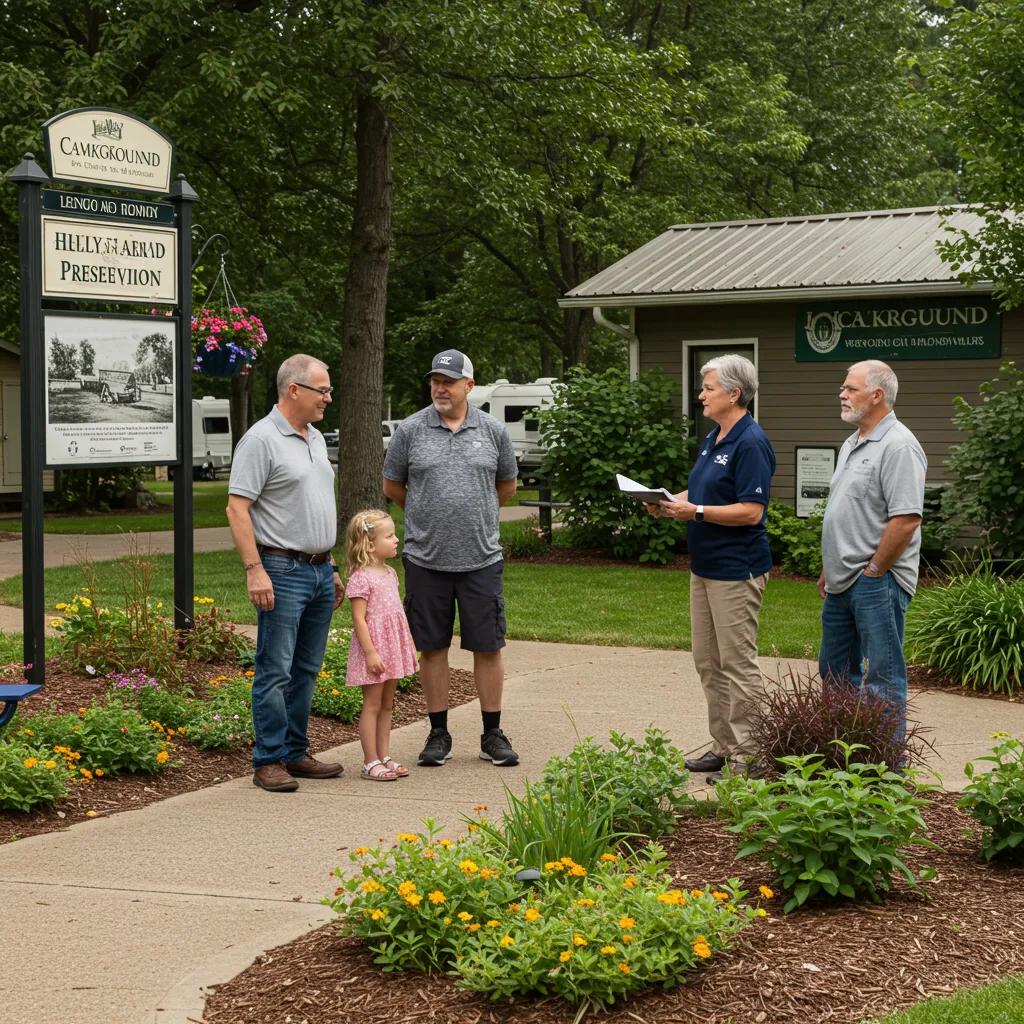
Agents and buyers utilize explicit contractual and operational tactics to preserve a campground’s legacy. This includes continuity clauses for branding, phased staff retention plans, and supplier transition agreements designed to maintain service quality for guests. Protective language within purchase agreements—such as commitments to maintain name usage for a defined period or to honor existing event relationships—can be negotiated alongside price to align cultural outcomes with financial terms. Practical transition services, like on-site training and vendor introductions, help the incoming operator maintain guest experience while minimizing disruption. These legacy-preserving measures increase buyer buy-in for terms that value continuity as a key component of overall deal consideration.
H3: Why Is Direct Communication With Owners Important in Sales?
Direct owner-to-buyer communication accelerates trust-building, clarifies operational nuances, and resolves deal friction more rapidly than multi-layered, intermediated conversations, which often prolong diligence. When owners and prospective buyers exchange firsthand insights about property quirks, revenue seasonality, and community relationships, buyers gain confidence in the assumptions underpinning their valuation. Agents facilitate these conversations to ensure accuracy while safeguarding confidentiality and negotiating positions. Faster, clearer conversations typically shorten due diligence timelines and increase the likelihood of offers that accurately reflect the property’s true operating potential.
What Are the Key RV Park Valuation Methods Campground Agents Use?
Campground agents primarily rely on net operating income (NOI) capitalization, comparable sales, and replacement cost analysis to value parks, selecting the method that best suits the asset’s income stability, market comparables, and unique physical features. NOI-based valuation converts recurring operating performance into a market value using a cap rate, while sales comps anchor value to recent trades of similar parks. Replacement cost can provide a floor value for specialized or undeveloped sites. Combining these approaches offers sellers a defensible price range and helps structure offers that reflect both cash-flow and replacement economics.
NOI explains earnings-driven value and is calculated as revenues minus operating expenses; agents use this to estimate sale price via a cap rate. To illustrate how NOI converts to value, see the EAV table below demonstrating common valuation methods and their primary attributes.
H3: How Does Net Operating Income Determine Your Park’s Worth?
Net operating income (NOI) is the core income metric for RV park valuation. It’s calculated as total revenue minus operating expenses, excluding debt service and capital expenditures, representing cash available to investors. Agents use NOI to demonstrate recurring earnings power and then apply an appropriate cap rate to estimate market value, aligning investor expectations around yield. For example, a park with $250,000 NOI at an 8% cap rate implies a valuation near $3,125,000, showing how small NOI improvements can materially increase value. Clearly documenting revenue streams—site fees, ancillary sales, and seasonal events—directly enhances the reliability of NOI-based valuations.
H3: What Role Do Cap Rates Play in RV Park Valuation?
Cap rates translate NOI into value by expressing the investor’s required rate of return. Lower cap rates indicate higher valuations for the same NOI, and vice versa, reflecting market demand and perceived risk. Market forces such as interest rates, buyer competition, and asset liquidity drive cap rate ranges. For many outdoor hospitality assets in 2025, illustrative cap rates often fall within a middle single-digit to low double-digit range, depending on location and stability. Agents explain cap-rate sensitivity to sellers so they can understand how operational improvements or lease adjustments influence the sale price. Grasping cap-rate mechanics allows sellers to prioritize value-enhancing actions before listing.
H3: How Can You Prepare Financials to Improve Valuation Accuracy?
Improving valuation accuracy requires organized, consistent financial documentation: multi-year profit & loss statements, occupancy and ADR reports, deferred maintenance lists, and vendor contracts that confirm operating assumptions. Agents request standardized data to normalize one-off expenses and identify true operating margins, which reduces buyer conservatism during underwriting. Presenting reconciled bank statements, clear payroll records, and seasonality schedules often shortens due diligence and prevents downward adjustments. Sellers who proactively prepare these items typically receive stronger, cleaner offers and faster closings.
What Is the Step-by-Step Process Campground Agents Follow to Sell Your RV Park?
Campground agents follow a structured, repeatable process from initial evaluation through closing and transition, designed to maximize price and minimize transaction risk by aligning marketing, buyer screening, and negotiation strategies. The process begins with a property assessment and financial normalization, moves into targeted outreach and controlled-showing campaigns, and concludes with negotiation, due diligence, and post-closing transition support. Below is a concise step list agents use as a roadmap for selling an RV park.
- Initial Evaluation and Valuation: Agents conduct site visits, review financials, and produce a market-based valuation to set realistic expectations.
- Preparation and Packaging: Sellers compile P&Ls, occupancy reports, and asset lists while agents create marketing materials and confidentiality packages.
- Targeted Marketing: Agents distribute the offering to segmented buyer lists—including family-owned buyers and institutional investors—to solicit interest.
- Buyer Qualification: Agents verify proof-of-funds and financing to ensure only serious buyers progress to site visits.
- Competitive Bid Process: Multiple offers are solicited where possible to create leverage and improve terms.
- Due Diligence and Negotiation: Agents coordinate inspections, financial validation, and finalize contractual terms, including transition protections.
- Closing and Transition: Closing logistics are managed and transition plans executed, including staff handovers and vendor introductions.
This ordered process reduces surprises, preserves momentum, and helps sellers capture the full market value available for their park.
H3: How Do Agents Initiate the Sale and Evaluate Your Property?
Agents begin by requesting core documents—recent P&Ls, occupancy reports, site maps, and capital expenditure histories—and by conducting an on-site review to assess physical condition and guest experience. During the site visit, agents evaluate amenity condition, site layout, utility capacity, and potential for revenue enhancements, which informs market positioning and listing materials. Normalizing financials for one-time items and owner-specific expenses establishes a credible NOI for underwriting. Clear initial preparation accelerates buyer interest and positions the property for competitive bidding.
H3: What Negotiation Strategies Maximize Sale Price?
Effective negotiation strategies include packaging offers to encourage competitive bids, structuring escrow holdbacks for identified repairs instead of price reductions, and balancing price with favorable terms such as shorter inspection periods or flexible closing dates. Agents recommend leveraging multiple offer dates to create urgency while preserving walk-away rights, and they advise sellers on concession management to retain net proceeds. By emphasizing price-and-term tradeoffs, agents help sellers extract superior net outcomes rather than settling for immediate but low-quality offers. These tactics rely on data-driven positioning and coordinated buyer outreach to be most effective.
H3: How Is Closing Managed for a Smooth Ownership Transition?
Closing management encompasses document preparation, lien searches, coordinated signings, and execution of agreed transition services like staff training and vendor introductions, ensuring an orderly turnover for guests and suppliers. Agents typically produce a closing checklist, confirm title and survey matters, and sequence funds transfer and asset handover to minimize disruption. Post-closing, defined consulting periods or phased operational handoffs help preserve guest experience and revenue continuity. A well-managed closing and transition lowers post-sale risk and supports the seller’s reputation and legacy.
How Can You Prepare Your Campground to Attract Top Buyers?
Sellers attract top buyers by prioritizing high-impact maintenance, organizing financial and operational records clearly, and producing appealing marketing assets such as professional photography and video tours. Agents help sellers prioritize actions that increase perceived and calculated value, emphasizing improvements with measurable ROI and documentation that reduces buyer friction during diligence. The following subsections and table provide upgrade priorities, a records checklist, and marketing tactics that together increase the probability of strong, clean offers.
H3: What Maintenance and Amenity Upgrades Yield the Best ROI?
Targeted upgrades that commonly yield strong seller-side ROI include bathhouse renovations, site resurfacing and leveling, enhanced utility hookups, and improved connectivity/Wi-Fi—all changes that directly improve guest satisfaction and allow for higher ADRs or occupancy. Agents and buyers respond favorably to capital investments that are visible to guests and that reduce deferred maintenance liabilities, thereby increasing the stabilized NOI used in valuation. Minor cosmetic improvements and reliable infrastructure repairs often produce disproportionate valuation uplift compared to cost. Focused upgrades that enhance revenue per site create clearer valuation upside for prospective buyers.
Before the table, here is a quick list of priority upgrades sellers should consider:
- Bathhouse and restroom renovations: Improve guest satisfaction and justify higher rates.
- Site-level improvements (pad leveling, graveling): Increase usable nights and reduce maintenance.
- Utility and hookup upgrades: Attract longer-stay and higher-paying guests.
- Connectivity and Wi-Fi investments: Enhance marketability to modern campers.
H3: How Should You Organize Financial and Operational Records?
Organize records into clearly labeled folders: multi-year profit & loss statements, occupancy and ADR reports by month, vendor and supplier contracts, maintenance logs, and staffing schedules to reflect true operating capacity. Presenting reconciled, month-by-month seasonality data and guest-review metrics reduces buyer uncertainty and prevents conservative underwriting adjustments. Agents recommend creating a concise due-diligence package that highlights recurring revenue, expense normalization, and any capital projects completed in the past three years. Clean records shorten due diligence and often translate into higher, cleaner offers.
H3: What Marketing Strategies Do Agents Use to Showcase Your Park?
Agents employ a mix of professional photography, immersive video tours, and targeted outreach to buyer lists—segmented by buyer type such as family-owned buyers, institutional investors, or owner-operators—to highlight revenue drivers and physical features. Digital distribution includes confidential offering memoranda sent to vetted prospects and syndication to specialized investor networks, while controlled site visits preserve confidentiality and attract qualified bidders. Agents time marketing around peak seasons when possible to demonstrate occupancy trends and guest experience. A polished marketing campaign increases buyer confidence and broadens the competitive field.
How Do Campground Brokerage Services Compare to Selling Directly to Private Buyers?
Choosing between brokerage services, family-owned buyers, institutional investors, or cash buyers involves trade-offs among price, timeline, certainty, and legacy preservation. Agents help sellers weigh these options and select the best path for their goals. Brokerages offer broad buyer reach and marketing expertise for a fee; family-owned buyers may provide cultural fit and smoother transitions; institutional investors often pay a premium for scale but demand stricter terms; and cash buyers offer speed with potential price discounts. The table below compares buyer types across timeline, pros, and cons to help sellers make informed decisions.
H3: What Are the Advantages of Using a Campground Brokerage?
Brokerages offer advantages including access to extensive buyer networks, professional marketing materials, and transaction management expertise that can surface higher offers and simplify complex closings. They help create competitive tension through confidential marketing and manage buyer qualification to protect seller leverage. The trade-off is commission cost and potentially longer timelines as the marketing process progresses, but many sellers find the net gain from broader exposure offsets fees. Selecting a brokerage should be based on their campground experience and demonstrated ability to reach the buyer types aligned with your asset.
H3: How Does Selling to a Family-Owned Buyer Differ From Institutional Investors?
Selling to a family-owned buyer typically emphasizes cultural fit, operational continuity, and flexible transition arrangements, whereas institutional investors prioritize standardized underwriting, scale efficiencies, and strict financial covenants. Sellers prioritizing legacy and staff retention may accept modest price concessions for customizable transition terms and hands-on buyer involvement. Conversely, institutional buyers may offer higher prices but enforce tighter due diligence and post-closing change mandates. Weighing these trade-offs helps sellers align sale structure with personal goals and community considerations.
H3: When Is Selling Directly to Cash Buyers a Good Option?
Selling directly to cash buyers is attractive when sellers prioritize speed and certainty—such as in distress situations, quick relocations, or when avoiding listing costs—but cash offers often reflect a discount for liquidity and reduced diligence. To evaluate fairness, sellers should require proof of funds and consider having an agent or advisor benchmark cash offers against market comparables and NOI-based valuations. Cash transactions can close quickly and reduce deal execution risk, making them appropriate when timing outweighs maximum dollar outcomes.
H3: What Are the Most Common Seller Questions About Working With Campground Agents?
Sellers frequently ask about timelines, fees, and post-sale involvement. Clear, data-backed answers reduce anxiety and set realistic expectations for the transaction. Agents provide typical ranges for marketing-to-close timelines, explain commission structures and negotiable fee elements, and outline common transition roles sellers may be asked to perform. The next subsections cover these core concerns so sellers can plan resources and timelines accurately.
H3: How Long Does the RV Park Selling Process Usually Take?
The selling process typically ranges from a few months for pre-qualified cash transactions to nine months or more for marketed listings that require financing, with timing influenced by document readiness, seasonality, and buyer qualification. Fast sales are possible when sellers have organized financials, clean title, and pre-identified buyers, while incomplete records or significant deferred maintenance extend due diligence. Agents accelerate sales by pre-qualifying buyers, creating organized due-diligence rooms, and timing marketing to showcase peak operational months. Understanding these timelines helps sellers set realistic expectations.
H3: What Fees and Commissions Should Sellers Expect?
Fee structures vary, but sellers should anticipate standard brokerage commissions tied to sale price, potential marketing expenses, and closing costs; some elements are negotiable based on service scope and deal complexity. Agents can present fee scenarios and demonstrate how a higher initial selling price from effective marketing often offsets commission costs, resulting in better net proceeds. Sellers should request clear fee disclosures and sample net-proceeds calculations to compare offers. Transparent fee conversations reduce surprises and align incentives between seller and agent.
H3: How Involved Will I Be After the Sale Closes?
Post-sale involvement ranges from minimal (handover of keys and records) to several weeks or months of consulting or operational training, depending on negotiated transition terms. Sellers can structure their involvement as short-term training, a phased handover, or limited consulting engagements. Agents help negotiate clear handover schedules and define responsibilities for staff, vendors, and communications with guests. Sellers who prefer limited involvement can request defined exit timelines in the purchase agreement. For owners desiring a respectful legacy handoff, family-owned buyers often accommodate extended transition arrangements.
For sellers who want a confidential, no-pressure conversation about options, GatherGrounds Resorts is available to discuss acquisition priorities and transition approaches that preserve campground identity while delivering a smooth sale process. This brief, helpful outreach option is intended to inform sellers about family-owned buyer benefits without obligation.
H4: What Are the Average Cap Rates for RV Parks in 2025?
Average cap rates for RV parks in 2025 vary by market quality and income stability, but sellers should expect ranges that reflect both location and operating consistency. Higher-stability assets command lower cap rates, while riskier or seasonal properties sit at higher rates. Agents contextualize cap-rate ranges with local market comparables and recent transactions to determine the most defensible rate for underwriting. Sellers who improve NOI reliability effectively compress cap rates and increase value. Understanding the local cap-rate dynamics is essential for informed pricing.
H4: How Do Millennials and Gen Z Influence RV Park Sales?
Younger campers from Millennial and Gen Z cohorts are driving demand for experiences, connectivity, and amenities that support longer stays. Their preferences increase the value of parks that offer strong Wi-Fi, outdoor programming, and social spaces. Agents highlight these demographic trends in marketing packages to demonstrate growth potential to buyers and justify investments in targeted amenities. Parks that adapt to younger camper preferences often see improved occupancy mix and repeat visitation, which buyers value in underwriting.
H4: What Are the Projected RV Park Market Values Through 2035?
Projected market values through 2035 depend on macroeconomic variables, evolving consumer preferences, and long-term infrastructure investment, with growth hinging on sustained camping participation and operational modernization. Agents use scenario planning to illustrate conservative, base, and aggressive value trajectories based on NOI growth and anticipated cap-rate movements. Sellers benefit by aligning capital improvements to the scenarios most likely for their property, thereby positioning the park for favorable valuation outcomes in future sale windows.
Frequently Asked Questions
What Factors Should I Consider When Choosing a Campground Agent?
When selecting a campground agent, consider their experience in the RV park market, their track record of successful sales, and their understanding of your specific property type. Look for agents who offer a comprehensive marketing strategy, including targeted outreach to potential buyers. Additionally, assess their negotiation skills and how they plan to preserve your campground’s legacy during the sale. Personal rapport and communication style are also important, as a good working relationship can facilitate a smoother transaction process.
How Can I Assess the Value of My RV Park Before Selling?
To assess the value of your RV park, start by gathering financial documents such as profit and loss statements, occupancy rates, and details on capital improvements. Utilize valuation methods like net operating income (NOI) and comparable sales to establish a price range. Consulting with a campground agent can provide insights into current market trends and help normalize your financials for a more accurate valuation. This preparation will also enhance your credibility with potential buyers.
What Are the Risks of Selling My RV Park Without an Agent?
Selling your RV park without an agent can expose you to several risks, including inadequate market exposure, mispricing, and potential legal issues. Without professional guidance, you may struggle to navigate the complexities of buyer negotiations and due diligence processes. Additionally, you might miss out on maximizing your sale price due to a lack of strategic marketing and buyer qualification. An agent can help mitigate these risks by leveraging their expertise and network to ensure a smoother transaction.
What Should I Expect During the Due Diligence Process?
During the due diligence process, potential buyers will thoroughly review your campground’s financials, operational records, and physical condition. Expect requests for documents such as profit and loss statements, occupancy reports, and maintenance logs. Buyers may also conduct site inspections and interviews with staff. This phase is critical for buyers to validate their assumptions and assess the property’s value. Being well-prepared with organized documentation can help expedite this process and enhance buyer confidence.
How Can I Enhance My Campground’s Appeal to Buyers?
To enhance your campground’s appeal, focus on high-impact maintenance and amenity upgrades that improve guest satisfaction, such as renovating bathhouses or upgrading utility hookups. Organize your financial and operational records clearly to demonstrate stability and potential for growth. Additionally, invest in professional marketing materials, including high-quality photography and virtual tours, to showcase your park’s unique features. Highlighting these aspects can attract serious buyers and justify a higher sale price.
What Are the Common Mistakes Sellers Make When Listing Their RV Park?
Common mistakes sellers make include overpricing the property, failing to prepare financial documents, and neglecting necessary repairs or upgrades. Some sellers also underestimate the importance of marketing and may not reach the right audience. Additionally, not being transparent about operational challenges can lead to trust issues during negotiations. Working with a knowledgeable campground agent can help you avoid these pitfalls by providing guidance on pricing, preparation, and effective marketing strategies.
Conclusion
Maximizing the sale price of your RV park is achievable through the expertise of campground agents who provide precise valuations, targeted marketing, and skilled negotiation. By understanding current market trends and preparing your property effectively, you can attract serious buyers and secure favorable terms. Embrace the opportunity to enhance your campground’s legacy while achieving your financial goals. Contact GatherGrounds Resorts today to explore how we can assist you in navigating this rewarding process.