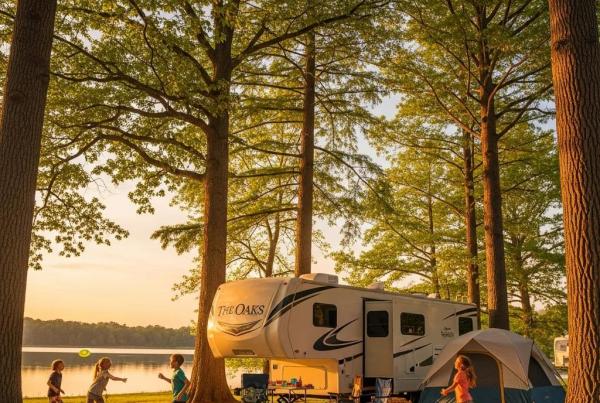

Long term camping in Michigan usually means one of two things: a seasonal site, where your RV stays parked on the same spot from May through October, or a monthly stay of 30 nights or more at a nightly campground. True year-round campgrounds you can live at are rare in Michigan, because the state licenses campgrounds as recreation, not housing, and most parks, including ours, close for the winter. The Oaks Campground in Munith offers both of the realistic options: discounted monthly stays and seasonal sites on a 155-acre property next to Waterloo Recreation Area, with a season that runs May 1 to October 20.
Here’s how each kind of long stay works, what Michigan’s rules allow, what it costs in broad terms, and how to pick a park you’ll be happy at for months rather than a weekend.
What counts as long term camping in Michigan?
| Type of stay | How it works | Where it’s offered |
|---|---|---|
| Monthly stay | Book 30 nights or more at a nightly rate with a monthly discount. Your RV stays on the site for the whole booking. | The Oaks only (25% off nightly, non-beachfront sites) |
| Seasonal site | Rent one site for the entire season (May 1 to Oct 20). The RV stays put all summer and can be stored on the site free over winter. | The Oaks and Walnut Hills |
| Membership model | Stay up to about two weeks at a time, then move the RV to a storage lot. Common at membership campgrounds. | Not offered at our parks |
| Year-round living | Living in an RV at a campground 12 months a year. | Limited in Michigan; not offered at our parks |
A campground employee drew the line between the first two and the membership model this way: “The seasonal site customers can leave their RV on the site for the whole summer. All they have to do is grab their family and their food for the weekend and head to the campground in their car.”
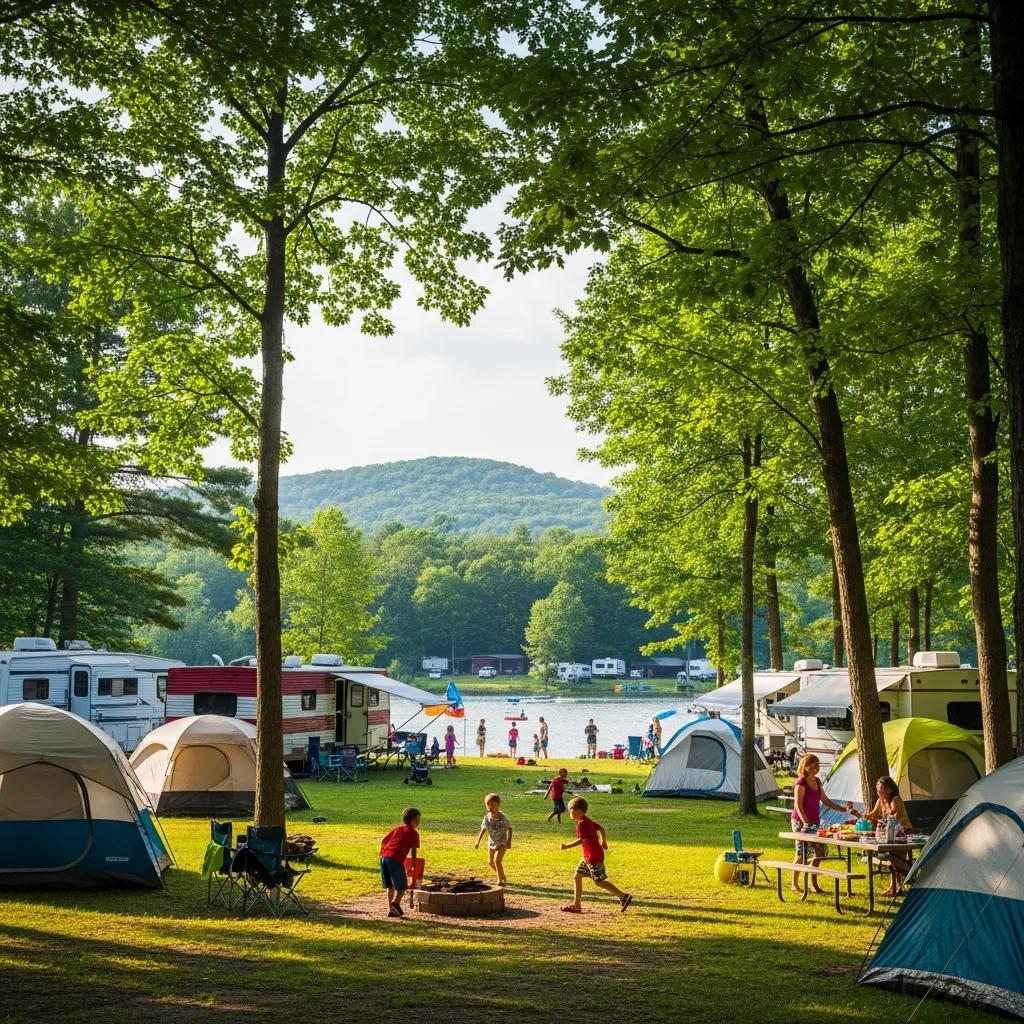
Are there year round campgrounds in Michigan you can live at?
A few private parks stay open through the winter, mostly for RVers who winterize carefully and accept frozen water lines, but neither Walnut Hills nor The Oaks is one of them. Our season is May 1 to October 20 at all three GatherGrounds parks, and we don’t offer year-round sites.
The bigger reason year-round campground living is uncommon here is regulatory. Michigan licenses campgrounds through EGLE as places for vacationing rather than housing, and its rules are written to keep them that way. In practice that means:
- Sheds are capped at 99 square feet (a 12×8 shed is fine; a 10×10 is not).
- No mailboxes at campsites.
- No rooms or additions built onto the side of a camper, under both state law and fire code.
- Decks are allowed up to the camper’s footprint, but can’t be attached to the RV, which has to be able to pull off the site in an emergency.
State parks are set up for shorter visits. During peak season (May 15 to September 15) a Michigan state park campground stay is capped at 15 nights, with a five-night break before returning to the same park, which keeps public campgrounds open to everyone. If you want to settle in for the summer, a private seasonal site is the option built for it.
Monthly stays at The Oaks: long term RV parking with a discount
The Oaks is the only GatherGrounds park that offers a monthly discount. The terms, from The Oaks rates page: 25% off the nightly rate on non-beachfront sites with a 30-night minimum. Nightly rates are dynamic, so the exact figure depends on dates and site, but May, early June, late August, September and October are the lowest-priced stretches, which makes a monthly stay in those months the cheapest way to camp here for a long time.
What you get on a monthly site at The Oaks:
- Power (50 amp on short-term sites), water and a gray-water drain. There are no sewer hookups at The Oaks; 50 amp is available on short-term sites. The gray tank drains at the site; the black tank is emptied by the honey-wagon service, which most long-stay campers need about six times a season.
- Big sites. Nothing at The Oaks is smaller than about 35 by 65 feet, and the largest run 55 by 120. For a month, the extra room for an awning, a screen room and a second vehicle matters.
- Laundry on site. More than one bathroom building has washers and dryers, which is the amenity long-stay campers ask about first.
- A camp store stocked with forgotten essentials, RV upkeep supplies, firewood, ice and scooped ice cream.
Full details are in our monthly rates guide for The Oaks. If you need 50-amp full hookups for a long stay, Walnut Hills has 80 of them, but it doesn’t offer a monthly discount, so book a seasonal site there instead.

Seasonal sites: the closest thing to a permanent campsite
If you search “permanent camping sites” or “permanent RV site” in Michigan, what you’ll actually find is seasonal camping. You rent the same site for the whole season, your RV stays on it, and if you renew it stays through the winter too. At our parks:
- Season: May 1 through October 20, with a metered monthly power bill on top of the site fee. You pay for the electricity you use, not a flat average.
- Free winter storage on your site for returning seasonals and new seasonals who sign for the coming year, so you never tow the RV home.
- Payments: a deposit by October 1 holds your site, then six payments from November 1 to April 1, all through an online billing portal with autopay. About half of our seasonals simply pay in full in the fall.
- Rates: The Oaks runs $2,500 to $3,300 for the 2027 season, with waterfront and larger sites at the top. Walnut Hills runs $3,000 to $5,500, with most available sites in the $3,000 to $4,000 range because the premium sites go first.
- Hookups: all Oaks seasonal sites are water, electric and gray-water drain. Walnut Hills has a mix of full-sewer and gray-water sites, with 50-amp available.
- Site standards: campers 15 years old or newer (older units can be submitted for review; restored classics are welcome), kept clean and in good repair, with lawns mowed, so every row looks cared-for. You can borrow a mower from the store, trade mowing weekends with your neighbors as many people do, or sign up for the staff lawn program at $65 a month for the season.
For the full picture, see our guides to seasonal campsites in Michigan, seasonal site fees and seasonal vs nightly camping.
Who stays long term, and what a summer looks like
Most seasonals come out on weekends, but a good number stay for weeks at a time. Teachers are the classic case: one parent and the kids spend the summer at the campground while the other commutes to work from the site. Grandparents are the other big group at The Oaks. They take a seasonal site so the grandkids have a reason to visit, and the beach, Aquaglide, fishing dock and trails give them one. Our team describes a typical path for a camping family as tent camping first, then RV weekends, then a seasonal site, and long-stay campers are simply further down that road.
Weekdays are quiet. Weekends bring the food trucks, the pavilion bands and DJ nights, and the themed weekends. Seasonals use the park exactly like weekend guests do; they just skip the setup and teardown.
How to choose a campground for a long term stay
A park that’s fun for a weekend can wear thin over a month. Check these before you commit:
- Power and hookups. Know whether you need 50 amp (two air conditioners, a residential fridge) or whether 30 amp will do. Ask how gray and black water are handled if there’s no sewer.
- Laundry and a stocked store. Both save a drive into town every few days.
- Site size and shade. At The Oaks, sites 46 to 61 are the largest and have no rear neighbors; sites 22 to 109 sit in the quiet old-growth section away from the amenities.
- Quiet hours and a gate. Quiet hours (11 PM to 8 AM here), site upkeep standards and a gate that admits only registered guests make a long stay restful, and mean your kids actually sleep. Our team says these are the things that let parents “let their kids run over to the fishing lake ahead of them.”
- Things to do without driving. At The Oaks that’s 120 acres of trails for hiking, mountain biking and golf carts, a swim lake with a sand beach, a stocked fishing lake and a weekend event schedule, with Waterloo Recreation Area, the Haehnle Sanctuary viewing area and the Portage Lake public boat launch (nine minutes away) just outside the gate. Seasonals with boats get free boat storage.
- Who’s on the agreement. At our parks someone named on the camping agreement is on site whenever the site is in use, and two family members can often be listed. Ask about visitor registration, too, since Michigan limits headcount per site and per campground.
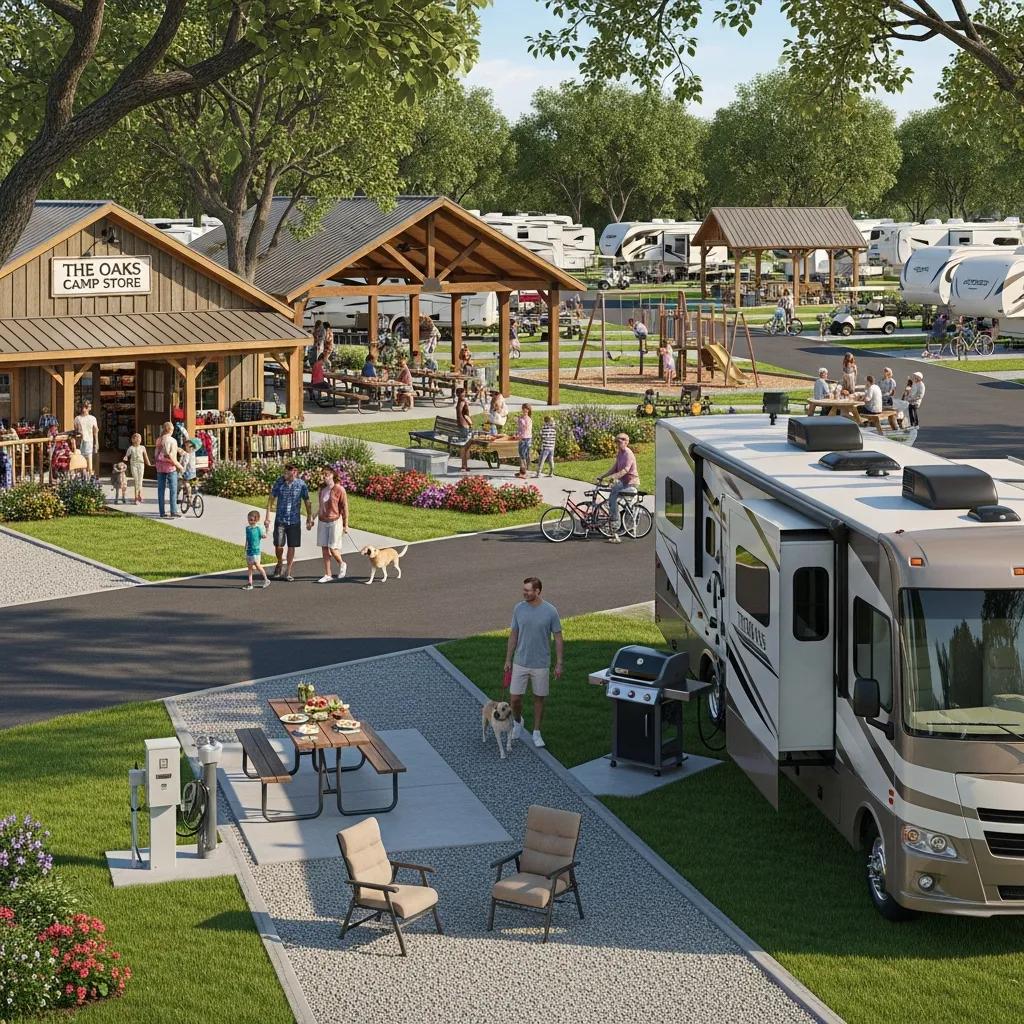
Frequently asked questions
Can I live at a campground in Michigan?
Not year-round at most parks, including ours. Michigan regulates campgrounds as recreation rather than housing, so expect a defined season, shed and deck limits and no mail service. A seasonal site from May 1 to October 20 is the longest continuous stay we offer.
What is the cheapest way to camp long term in Michigan?
Per night, a seasonal site is the lowest cost over a full season. For a single month, The Oaks’ monthly discount (25% off nightly, 30-night minimum) during the off-peak months of May, September or October is the best value.
Do I have to move my RV when I’m not there?
No. On a seasonal site the RV stays all season and, if you renew, through the winter at no charge. On a monthly stay it stays for the length of the booking.
Which park is better for a long stay, The Oaks or Walnut Hills?
The Oaks for monthly stays, lower seasonal rates, laundry and trails. Walnut Hills for 50-amp full hookups, the Shiawassee River and the Wibit water park. Call either park to talk through sites; our team likes to match each long-stay guest to the right part of the park in a conversation.