
Why Michigan Campgrounds with Horse Trails Make Great Bases for Your Next Trail Ride
Michigan mixes varied trails, memorable scenery, and easy-to-use equestrian campgrounds, making it a smart choice for horseback vacations and family-friendly horse camping. This guide walks through why the state stands out for riders, what to expect at horse-friendly campgrounds, how to reach trails around Munith and Waterloo State Recreation Area, and practical planning and safety steps to keep trips smooth. Riders value well-maintained trails, clear permit rules, and comfortable campsites — and Michigan delivers through state parks, large public forests, and private ranches. You’ll get an overview of trail mileage and terrain, a comparison of campground types, a step-by-step approach for staging rides from Munith-area campgrounds, and a concise checklist for gear, permits, and emergencies. We also highlight a family-focused basecamp option in southeast Michigan so you can balance riding with kid-friendly downtime. By the end, you’ll know how to pick the right horse-friendly campground in Michigan, prepare horses and riders for trail conditions, and plan safe, enjoyable rides for multi-generational groups.
What Makes Michigan a Top Destination for Equestrian Camping?
Michigan stands out because it pairs significant designated horse trails with varied terrain—from shorelines to hardwood forests—and a regulatory landscape that supports permitted horseback use in many recreation areas. Riders can enjoy long loop rides, multi-day routes, and a riding season that generally runs spring through fall. The state’s trail systems include both multi-use paths and equestrian-specific connectors that accommodate different skill levels and trip styles, so Michigan works for short day rides, overnight packing trips, or family weekends. Knowing these statewide strengths helps you choose locations that match the difficulty, scenery, and service access you prefer.
Those strengths translate into practical advantages: extensive trail mileage, scenic variety, and campground facilities that cut down logistical friction for families and riding groups.
Michigan’s trail mileage and scenic variety are major reasons riders come here:
- Extensive Trail Mileage: Michigan offers over 1,000 miles of state-designated and forest trails suitable for horseback riding, allowing for long loops and multi-day itineraries.
- Varied Terrain: Trails range from rolling hardwoods and sandy flats to lakeside corridors and open meadows, giving riders a diverse visual and footing experience.
- Seasonal Riding Windows: Spring through fall tends to deliver the most reliable trail conditions; late spring and early fall are especially pleasant for cooler temperatures and changing foliage.
These statewide assets make campgrounds that provide staging areas, trailer parking, and close trail access especially valuable; the next section looks at how state parks and other campground types meet those needs.
How Extensive Are Michigan’s Horseback Riding Trails?
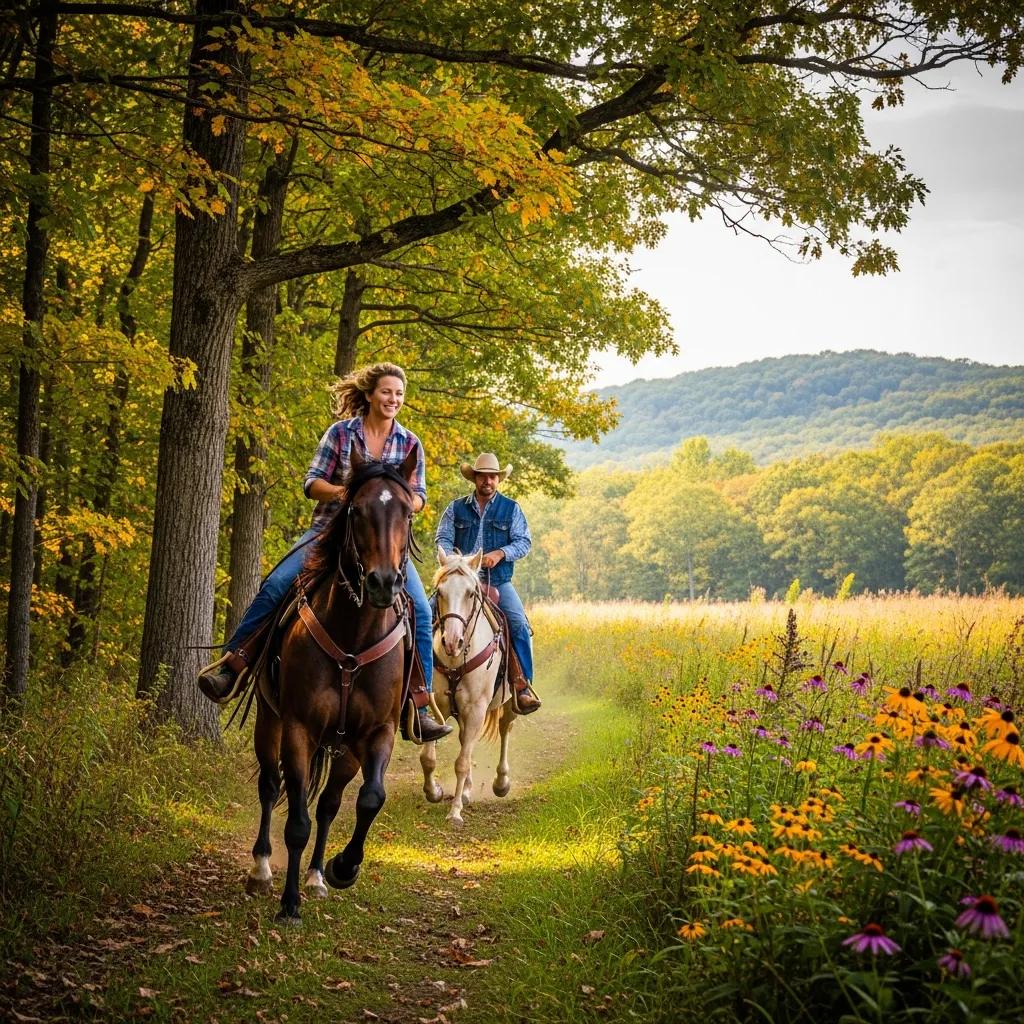
Michigan’s horseback riding network covers a mix of public and private lands, from short loops for day outings to longer corridors suited to overnight travel. State-managed equestrian routes and forest trails together offer riders access to more than 1,000 miles of rideable paths across both peninsulas. You can plan short circular rides that return to the same staging area or string together sections for overnight packing trips. Footing varies — soft sand, open fields, wooded singletrack, and gentle hills — and many parks have improved signage and maintenance to help with navigation and safety.
Trail difficulty spans a wide range, so match your route to your horse’s conditioning and your group’s experience. Knowing the surface types and elevation changes in advance helps you plan shoeing, pace, and gear for the ride.
Why Do Equestrians Prefer Michigan State Parks for Camping?
Many riders favor Michigan state parks because they typically offer established trail networks, designated equestrian campgrounds or staging areas, and clear permit and reservation systems that make planning straightforward. State-managed areas often focus on trail upkeep, signage, and controlled use to protect natural resources while allowing responsible horseback access. Clear rules about manure disposal, tethering, and seasonal closures reduce uncertainty for visitors and make multi-activity family trips easier to manage. Plus, state parks are often closer to towns and services, which helps with vet access, feed runs, and last-minute supplies compared with remote backcountry options.
Comparing state parks with private ranches and municipal routes helps you choose the setting that best fits your objective — whether a rugged multi-day trip or a relaxed family weekend with easy trail access and creature comforts.
Which Are the Best Horse Friendly Campgrounds in Michigan?
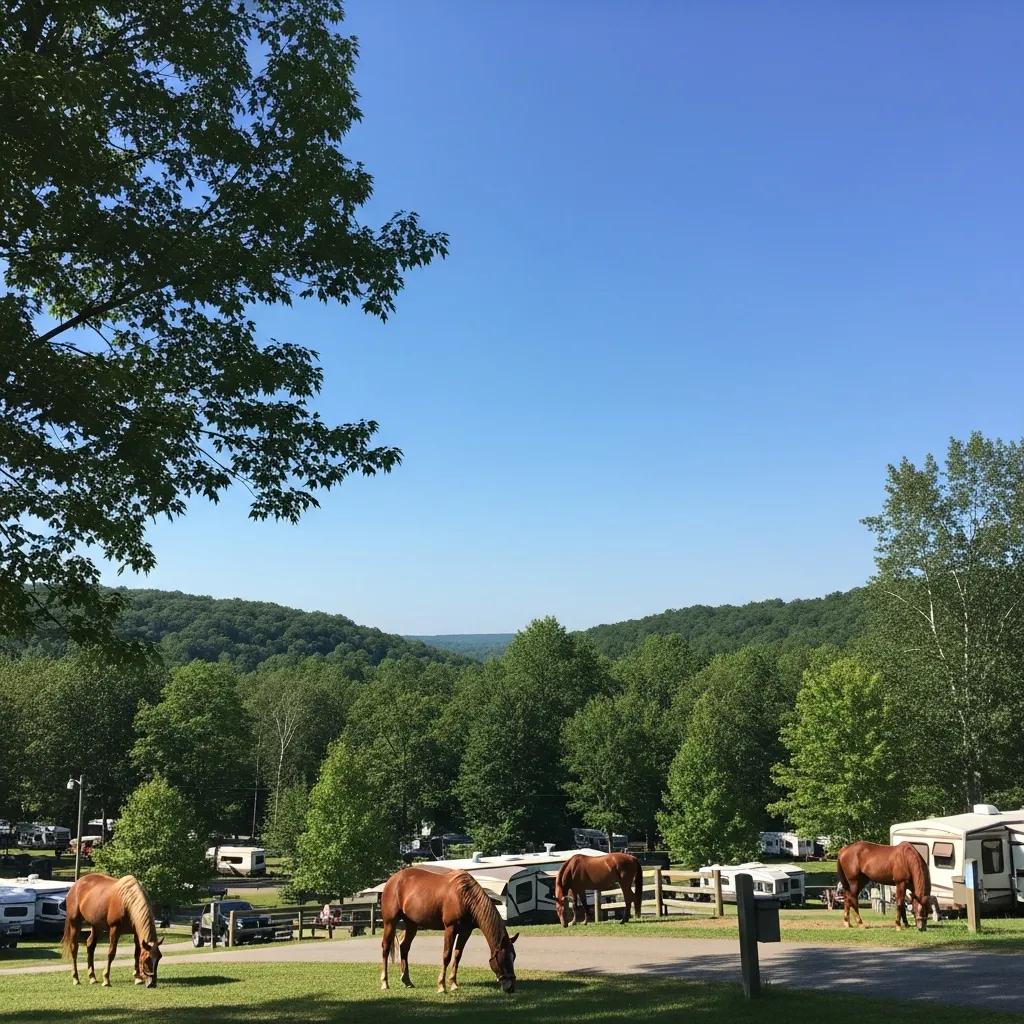
The best horse-friendly campground depends on the experience you want: state park equestrian campgrounds for trail access and consistent rules, private ranch campgrounds for corrals and specialized services, or family-focused RV parks that welcome horses and offer hookups. When evaluating sites, key criteria include corrals or safe tethering options, access to potable water for horses, trailer unloading and parking, trailhead proximity, and family amenities for non-riders. Rating campgrounds by these attributes helps riders prioritize safety, comfort, and logistics for both horses and people.
Use the quick comparison below to narrow your options before you dig into specific listings.
This table shows how common campground types map to equestrian priorities and sets expectations when comparing sites or making reservations.
What Amenities Should You Expect at Michigan Equestrian Campgrounds?
Look for essentials like trailer-friendly unloading zones, designated rig parking, potable water for horses, and options for corrals or secure tethering. Useful extras include manure disposal areas, nearby vet and farrier contacts, access to feed or tack stores, and clear trailhead signage. Sites with full hookups and level pads make rig setup easier, while campsite layouts that buffer horse areas from foot traffic reduce stress for horses and campers. Checking available amenities before arrival saves time and makes the trip more comfortable for both riders and families.
Understanding these amenities helps you prioritize staging convenience, horse care, or family comfort when selecting a basecamp.
How Does The Oaks Campground Compare as a Family-Friendly Horse Camping Base?
The Oaks Campground is a family-focused option in southeast Michigan that combines comfortable campsite amenities with direct adjacency to Waterloo State Recreation Area’s riding trails. The Oaks offers full hookup sites, a swimming lake, a fishing pond, playgrounds, and golf cart trails — features that keep non-riding family members occupied while horses are settled or after a day on the trail. Its location next to Waterloo State Recreation Area makes it an efficient staging point for riders who want short drives to trailheads and easy returns to family activities. GatherGrounds Resorts is scheduled to assume ownership at the close of the 2024 season, which will bring a local management focus.
That combination of trail adjacency and family amenities makes The Oaks a smart basecamp for multi-generational groups that need both riding access and safe, engaging options for children and non-riders.
How Can You Explore Equestrian Trails Near Munith, Michigan?
Exploring trails near Munith starts with logistics: know your trailheads, confirm trailer parking and unloading capacity, and pick loop rides that match horse fitness and group skill level. Riders staging from Munith-area campgrounds should identify primary trailheads, check parking for rigs, and review seasonal notices for closures. Practical staging looks like arriving early to unload, letting horses cool after transport before saddling, and carrying a paper map or GPS waypoint for your loop. Coordinate family needs—return times, supervision at campground amenities, and communication plans—to keep everyone safe and engaged.
Those staging steps set you up for successful rides; the next section describes what to expect on Waterloo State Recreation Area trails and how to match them to your goals.
Below is a concise table linking The Oaks’ features to practical trail access benefits so you can quickly see staging advantages.
What Are the Features of Waterloo State Recreation Area’s Horseback Riding Trails?
Waterloo State Recreation Area offers wooded singletrack, open meadow connectors, and lakeside corridors that combine into varied rides suitable for day trips and longer circuits. The area includes marked trails with multiple access points and trail markers to help riders navigate loops of different lengths and difficulties. Scenic highlights include small lakes, wetlands, and hardwood stands that boost wildlife viewing and variety. Trail maintenance and seasonal grooming change by location, so check current notices and expect mixed footing from soft sand to compacted soil on busier sections.
Knowing the trail types and signage will help you pick routes and pack the right equipment, leading to safer, more enjoyable rides from nearby campgrounds.
How Does Staying at The Oaks Campground Enhance Your Trail Riding Experience?
Staying at The Oaks shortens travel time to Waterloo State Recreation Area, offers comfortable campsite facilities for rig setup, and provides family-friendly recreation for downtime. Riders can stage morning or afternoon loops with minimal driving, return to full hookups for horse care, and use onsite activities to occupy kids while riders prep or recover. The campground’s layout eases logistics and speeds post-ride recovery for both horses and people. When booking, check site dimensions and campsite types to ensure a proper pad for your rig.
Those staging conveniences make The Oaks a practical choice for riders who want trail proximity and dependable campsite comfort during a multi-day equestrian trip.
What Should You Know When Planning a Horseback Riding Camping Trip in Michigan?
Planning a horse camping trip in Michigan means securing permits and reservations when required, packing appropriate gear for horses and riders, and matching trailer logistics to campsite access and trailhead parking. Many state parks require reservations for equestrian sites or operate within specific equestrian seasons; private campgrounds will list their own policies, so check rules and lead times. Trailer planning should cover site pad size, parking orientation, and whether corrals or tethering are allowed. A clear checklist reduces surprises and keeps the trip safe and enjoyable for everyone.
The next sections offer a gear checklist and step-by-step reservation guidance to turn these planning points into clear actions.
Below is a practical planning checklist that explains each item, why it matters, and how to prepare.
What Essential Gear Do Horse and Rider Need for Michigan Trails?
For horses: suitable shoes or hoof boots for mixed terrain, secure ties or portable corrals, water buckets, and fly protection during warm months. For riders: a certified helmet, layered clothing for variable weather, and reliable navigation tools. A horse first-aid kit and basic tack repair supplies can handle common issues like torn stitching or minor cuts. Carry a paper map or downloaded trail maps and a charged communication device, since cell service can be spotty in larger areas. Matching your gear to expected footing and weather reduces stress and lowers injury risk.
Having this equipment ready ensures both horse and rider are prepared for Michigan’s changing terrain and conditions, making rides safer and post-ride recovery easier.
How Do You Make Reservations and Obtain Permits for Equestrian Camping?
Start by checking state park reservation portals for designated equestrian sites and any required permits, then confirm policies with private campgrounds before booking. Lead times grow during peak spring and fall weekends, so reserve several weeks or months ahead when possible. When choosing a family-friendly equestrian campground, verify site dimensions for your trailer, confirm hookups if needed, and ask about corrals or tethering rules. If you want easy access to Waterloo State Recreation Area, consider campgrounds adjacent to park trailheads to cut daily travel time.
Following these steps reduces scheduling conflicts and ensures both horses and family members have the access they need during your Michigan trip.
What Safety Tips Are Important for Horseback Riding in Michigan Campgrounds?
Safety starts with pre-ride checks, clear group communication, and readiness for environmental hazards like sudden weather, uneven footing, or wildlife. Before each ride, inspect tack and confirm horse soundness, brief the group on the planned route and turn-back times, and carry emergency contacts for local vets and transport. In camp, use designated unloading zones and follow manure and tethering rules to reduce hazards near family areas. These routines protect horses, riders, and other campers and help preserve trails and campground access for everyone.
Consistent safety habits increase resilience and let families mix riding with camping activities with less worry.
How Can You Ensure a Safe Trail Riding Experience in Michigan?
Do a pre-ride tack and horse check, confirm saddle fit, bridle integrity, and hoof condition, and share the route and emergency plan with all riders. Ride with at least one other person when possible, tell someone at camp your expected return time, and bring an emergency kit with basic medical supplies, duct tape, and a multi-tool for quick fixes. Be ready to change plans for weather or trail conditions, and avoid overworking horses on unfamiliar footing. Know local emergency contacts and have a plan for rapid transport to veterinary care if needed.
These protocols shorten response time to incidents and create a dependable routine for both everyday rides and unexpected situations, improving group safety.
What Family-Friendly Safety Measures Does The Oaks Campground Offer?

The Oaks Campground includes family-focused amenities — full hookup sites, a swimming lake, playgrounds, a fishing pond, and golf cart trails — that help families relax and stay engaged while riders are on the trail, reducing unsupervised wandering near rigs and staging areas. These features let caregivers supervise children in designated recreation zones while horses are being saddled or walked, which improves overall campsite safety. The campground’s layout and activities create clear separation between play areas and horse operations, lowering the chance of conflicts. Visitors should still follow posted rules and use designated horse-handling areas.
Using these family-friendly features helps keep play areas away from horse staging and parking zones, supporting a calmer, more organized camping experience.
How Can You Maximize Your Family-Friendly Horse Camping Experience in Southeast Michigan?
Balance riding with campground activities: plan ride schedules around kid-friendly options, stagger ride times so caregivers can rotate supervision, and pick routes that match your group’s abilities. Mix short loops with longer rides so family members can join when they want and non-riders have easy access to lakes, fishing spots, or playgrounds. Bring snacks, shade solutions, and quiet activities for off-ride time, and choose sites with full hookups and level pads to simplify evenings. These tactics create a manageable rhythm that supports both quality riding time and relaxed family downtime.
Pair thoughtful scheduling with campsite amenities to help multi-generational groups enjoy equestrian trips without sacrificing safety, comfort, or entertainment for children and non-riding guests.
What Family Amenities Does The Oaks Campground Provide After a Day of Riding?
The Oaks’ amenities — a swimming lake, fishing pond, playgrounds, golf cart trails, and full hookup sites — give families several low-effort ways to unwind after a day on the trails while keeping kids nearby and entertained. Swimming and fishing are relaxing group activities; playgrounds and golf cart trails offer more active options close to the campsite. Full hookups support comfortable evenings and reliable power for cooking, lighting, and climate control, which makes it simpler to look after horses and family needs at the same time. Concentrating recreation and services inside the campground reduces the logistical load of multi-day horse trips.
Using these features thoughtfully helps riders recover while families enjoy structured activities, which leads to happier groups and smoother campsite routines.
Are There Youth Horsemanship Camps or Events Near The Oaks Campground?
For youth horsemanship programs and local events, check regional equestrian groups and nearby stables for seasonal listings — organizations like the Michigan Horse Council and local riding centers often publish camp and clinic schedules. Many youth programs run on spring and summer calendars and vary by facility, curriculum, and age. Families looking for organized instruction should contact local stables and equestrian groups to ask about camps, clinics, and volunteer opportunities. The Oaks can serve as convenient lodging and staging for families attending nearby horsemanship events, offering easy access and comfortable overnight facilities.
Plan around published schedules and reserve campground space early so families can combine lessons or events with trail riding and onsite recreation at a single basecamp.
If you’re ready to plan a southeast Michigan equestrian getaway, consider a family-oriented basecamp next to Waterloo State Recreation Area — it simplifies staging, shortens travel times, and provides comfortable onsite amenities that support both horseback activities and family recreation. Reserving a suitable campground makes multi-day rides more manageable and gives everyone a welcoming home base.
Frequently Asked Questions
What types of horses are best suited for Michigan’s trails?
Choose horses built for endurance and varied footing—breeds like Quarter Horses, Appaloosas, and Thoroughbreds often handle mixed terrain well, from sandy stretches to wooded singletrack. More important than breed is conditioning: make sure your horse is trained for the distance and surface you plan to ride, and give them time to acclimate to local trail conditions.
Are there any specific regulations for horseback riding in Michigan state parks?
Yes. Michigan state parks set rules to protect riders and natural resources: stay on designated trails, follow posted signage, and observe manure disposal and tethering rules. Some parks require equestrian permits or reservations during peak seasons. Always check the specific park’s regulations before you go to avoid fines and ensure a smooth visit.
What should I pack for a horseback riding camping trip in Michigan?
Pack essentials for both horse and rider. For horses: proper shoes or boots, water buckets, fly protection, and secure ties or a portable corral. For riders: a certified helmet, layered clothing for changeable weather, navigation tools, and a first-aid kit. Also bring food, cooking supplies, and entertainment for downtime. A checklist keeps you from forgetting crucial items and makes the trip more enjoyable.
How can I find local equestrian events or clinics near my campground?
Look to regional equestrian organizations, local stables, and the Michigan Horse Council for event listings. Many facilities post seasonal schedules for camps, clinics, and competitions. Local social media groups and community boards are also useful. Planning ahead lets you combine lessons or events with your camping trip.
What are the best practices for trail etiquette while horseback riding?
Good trail etiquette keeps everyone safe: yield to hikers and bikers, keep a respectful distance from other riders, avoid sudden movements that could spook horses, stay on designated trails, and clean up after your horse. Communicate with your group about trail conditions and obstacles. Courtesy and clear communication make the trails better for everyone.
How can families ensure a smooth camping experience with children and horses?
Plan a balanced schedule that includes riding and kid-friendly activities. Choose campgrounds with safe play areas and amenities. Stagger ride times so a caregiver can supervise children while others ride. Pack engaging downtime activities and make sure everyone understands safety rules around horses. These steps keep the trip fun and orderly for riders and non-riders alike.
What are the benefits of using a campground like The Oaks for family equestrian trips?
The Oaks offers easy access to trails and a range of family amenities. Full hookup sites, a swimming lake, and playgrounds provide comfort and entertainment for non-riders, while the campground layout helps keep play areas separate from horse staging zones. That mix of convenience and recreation makes it a strong choice for families who want both riding and relaxation.
Conclusion
Choosing Michigan campgrounds with horse trails gives you scenic variety, extensive trail networks, and family-friendly amenities that make horseback trips easier and more enjoyable. Pick a campground that matches your priorities—trail access, horse care, or family comfort—to ensure easier logistics and better experiences for everyone. With a little planning you can create a multi-day itinerary that balances great riding with relaxed family time. Start exploring recommended campgrounds and plan your next Michigan riding getaway today.