
Find the Best Seasonal Campgrounds in Michigan: A Practical Guide to Seasonal RV Sites and Family Camping
Seasonal camping in Michigan means renting the same campsite for the season—usually spring through fall—so families and RV owners have a familiar, home-like base for outdoor time. This guide walks through what seasonal camping is, why Michigan’s lakes, woods, and easy access to metro areas make it a great fit, and how to compare seasonal RV sites on hookups, fees, pet rules, and family amenities. If you’ve felt stuck comparing hookup options, hidden costs, or the pros and cons of state parks versus private resorts, this article gives a straightforward decision framework, checklists, and side-by-side comparisons to help. You’ll get clear steps for choosing a site type, the amenities that matter most for long stays, budgeting tips for seasonal fees, and ways to find pet- and family-friendly options near popular recreation areas. The Oaks Campground by GatherGrounds appears throughout as a nearby private-campground example for family-focused seasonal stays in southeast Michigan. Keep reading for actionable selection criteria, sample comparisons, and tips to reserve the right seasonal site.
What Is Seasonal Camping and Why Choose It in Michigan?
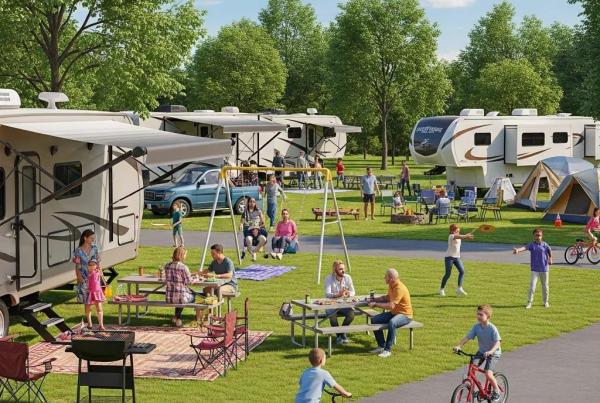
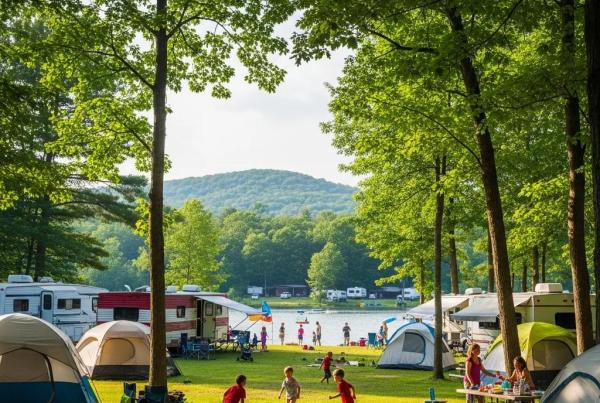
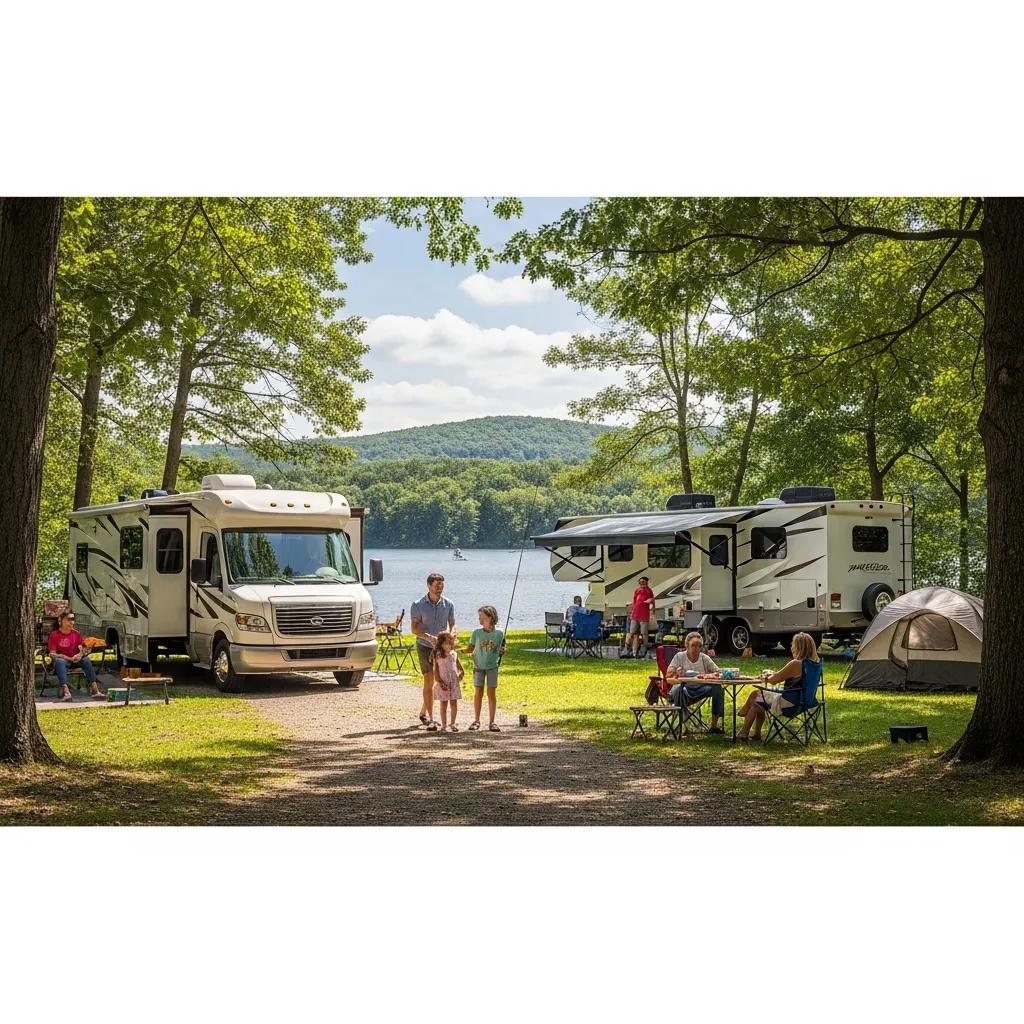
Seasonal camping is a long-term site rental that guarantees the same campsite for an entire season. It removes repeated setup and teardown, gives families a consistent base for local recreation, and lets campers personalize their space with outdoor furniture, storage, and parking. Michigan’s camping season—roughly late spring through early fall—lines up with pleasant weather, lake access, and open trails, making it ideal for regular weekend trips, community events, and family traditions. Choosing seasonal camping also means predictable site availability and easier access to nearby attractions, which simplifies planning and encourages repeat visits year after year.
Seasonal stays also help build community: campers form steady social circles, join campground events, and share volunteer duties. Those regular connections reduce isolation and boost safety for families and older campers alike. Recognizing these social benefits clarifies why many people choose seasonal camping for long-term outdoor living.
What Are the Benefits of Seasonal Camping for Families and RV Owners?
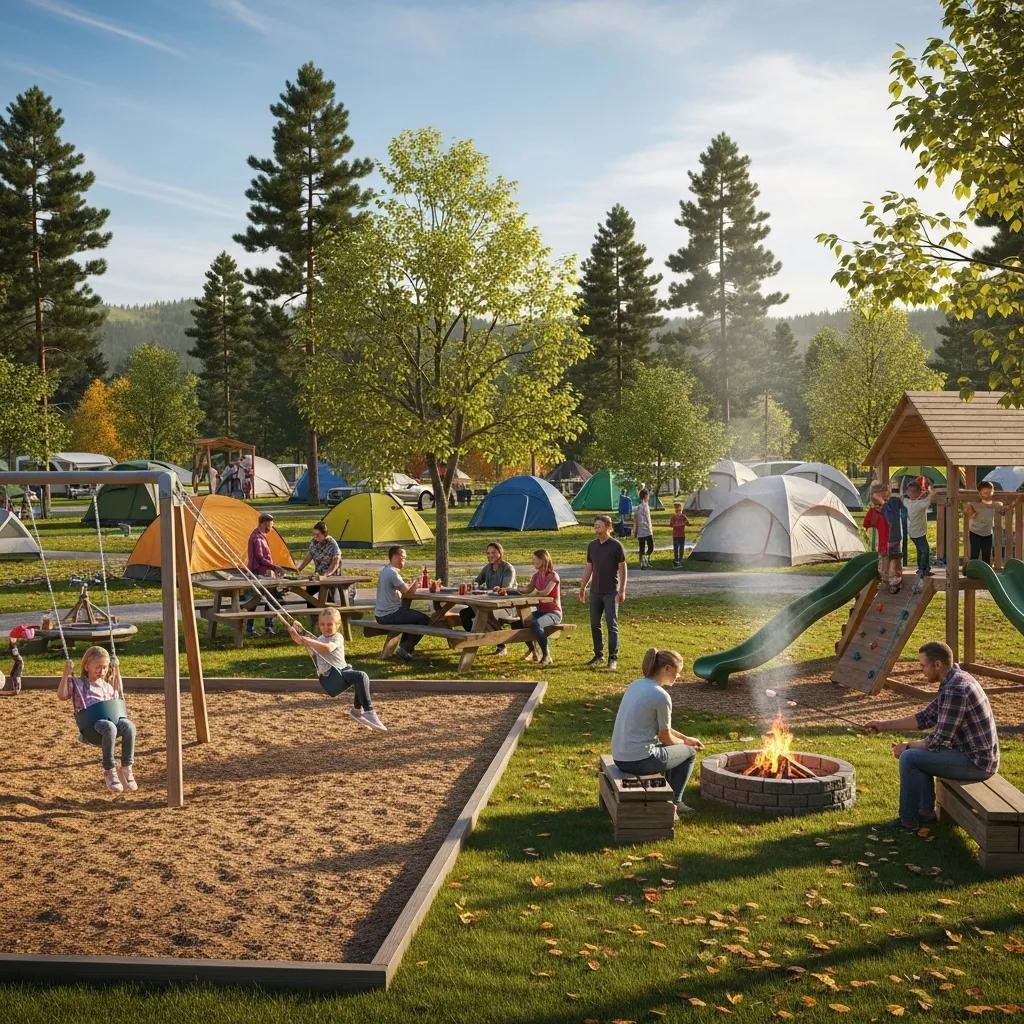
Seasonal camping brings practical gains for families and RV owners: convenience, predictable costs, and access to on-site services that feel like home. Families save time by storing gear on-site and taking frequent weekend trips without tearing down, while RV owners get steadier hookups and less wear from repeated connections. Many seasonal parks offer community programming and shared facilities—playgrounds, laundry, camp stores—that simplify childcare and everyday tasks during extended stays. For retirees or long-term RVers, a seasonal site provides neighborhood stability, storage options, and local services that support longer residencies.
- Stability and convenience: a single site removes scheduling and setup headaches.
- Cost predictability: one seasonal fee makes budgeting easier.
- Community and programming: recurring events build social ties and on-site support.
Those practical benefits show how seasonal camping improves daily life at the campsite and sets the stage for how these communities work in Michigan.
How Does Seasonal Camping Provide Stability and Community in Michigan?
Seasonal campgrounds often act like small neighborhoods. Regular events, volunteer groups, and informal networks create a dependable calendar—weekend gatherings, potlucks, and kids’ programs—that make sites feel like more than a place to park. Campground staff commonly coordinate family programming, and seasonal neighbors help one another with security, maintenance, and childcare swaps. That social infrastructure reduces the friction of extended outdoor living and builds intergenerational connections, which benefits both families and older campers.
Because private seasonal parks can design amenities and programs for long-term guests, many people choose private resorts when community and services are important. That preference leads into the practical criteria to use when choosing a seasonal RV site in Michigan.
How to Select the Best Seasonal RV Sites in Michigan
Picking the right seasonal RV site means matching site type, hookups, orientation, and campground rules to your rig, family needs, and lifestyle. Start by checking hookup types (full vs. partial), pad size and surface, sewer access, and utilities like higher-capacity electric and internet. Think about site orientation (sun vs. shade), distance to playgrounds and restrooms, slope and drainage, and room for tow vehicles or storage—these affect livability and maintenance. Bring a short checklist when you tour sites and ask managers about permit rules, guest policies, and the seasonal event calendar to make sure the campground’s culture fits your expectations.
A focused site-selection checklist helps keep tours efficient:
- Confirm Hookups: Verify water, amperage, and sewer connections for your RV.
- Assess Pad & Access: Check pad size, levelness, and drive access for towing and parking.
- Evaluate Location: Note distance to amenities, playgrounds, shade, and privacy.
- Review Rules & Fees: Clarify guest policies, subletting rules, and maintenance duties.
These steps lead naturally to a comparison of common RV site types so you can match features to your needs.
Different seasonal RV site types come with different utilities and suit different camper profiles.
This table shows how features line up with needs: full hookups support near-continuous living while rustic sites fit lower-cost, low-infrastructure stays.
Use these comparisons while touring and ask managers about utility capacity and seasonal servicing. Knowing hookup types helps you balance cost and convenience when you evaluate amenities next.
What Types of RV Sites and Hookups Are Available for Long-Term Camping?
Seasonal sites generally fall into full hookup, partial hookup, and rustic categories, each with trade-offs between comfort and cost. Full hookups include water, sewer, and electric (30A or 50A), supporting appliances and reducing daily chores—good for families and full-time RVers. Partial hookups usually combine water and electric with shared sewer or pump-outs, a middle ground for part-timers. Rustic or non-hookup sites are lower cost and suit tent campers or those who prefer a more natural experience.
When you tour, confirm amperage, gray-water drainage, and whether cable or internet is available—those details affect livability. Understanding hookup differences helps you pick the right mix of comfort, cost, and campsite character.
How to Evaluate Amenities and Site Features for Seasonal RV Camping?
Prioritize amenities that shape daily life: laundry, restrooms, playgrounds, secure storage, trash service, and reliable water and electric. Check access—road condition, parking, and guest parking rules—and safety features such as lighting and on-site staff. Ask managers about snow removal, septic service, internet providers, and rules for exterior structures; these operational details show how a campground supports long-term residents. Score each campground on location, hookups, amenities, and rules to compare objectively.
- Questions to ask managers:
How are sewer services handled for seasonal sites?
What internet or cable options exist on-site?
Are there restrictions on structures or storage units?
A simple scorecard based on those features makes touring more efficient and leads into examples of family-focused campgrounds that pair amenities with programming.
After the technical checklist, local private campgrounds show how site types and amenities meet family needs. One nearby example is The Oaks Campground by GatherGrounds in Munith, Michigan, which offers a mix of seasonal and short-term RV options and highlights features like a large fishing pond, extensive riding trails, playgrounds, pavilions, and a camp store. The Oaks also emphasizes family programming and has plans for a Wibit water park and a swimming lake slated for the 2025 season—an example of how amenity investments can shape seasonal living choices.
Which Michigan Family Campgrounds Offer the Best Seasonal Options and Activities?
Family-focused seasonal campgrounds differ in how much programming and which amenities they offer; the best pick depends on the depth and consistency of activities. Look for parks that list structured weekend events, on-site pools or water play, sports courts, and natural features like fishing ponds and trails that support ongoing exploration. Families tend to be happiest where programming is consistent across the season—regular events keep kids engaged and cut down on driving to outside attractions.
Features that support long-term family engagement include supervised playgrounds, scheduled kids’ crafts and sports, and flexible pavilions for gatherings—things that build routines and seasonal traditions. Know which amenities are on-site versus nearby so you can choose a campground that matches your daily habits. The table below contrasts typical on-site availability with nearby alternatives to help decide.
What Family-Friendly Amenities and Events Enhance Seasonal Camping Experiences?

High-value family amenities include safe, age-appropriate playgrounds, supervised kids’ programs, on-site water features, and multi-use pavilions for gatherings. Regular events—movie nights, crafts, and sports tournaments—give kids predictable activities and parents social time, which increases return visits. Ask about supervision and safety: lifeguards at swimming areas and staff-to-child ratios for organized programs matter. A camp store and laundry on-site also remove daily friction and help make a campground feel like a seasonal community.
These amenity priorities are important when comparing private campgrounds to state parks: private operators can build programming specifically for long-term family life, which ties into how water parks and trails add value.
How Do Water Parks, Playgrounds, and Trails Add Value to Seasonal Campgrounds?
Water parks, playgrounds, and trail networks boost both demand and seasonal retention because they give families daily entertainment options that keep them on-site. Well-kept play areas encourage frequent use, while trails and golf-cart-friendly routes expand safe exploration and make the property feel larger. A planned Wibit water park or a large fishing pond can significantly raise a campground’s appeal by delivering experiences families won’t easily find elsewhere. When weighing amenity value against cost, consider upkeep: poorly maintained features hurt enjoyment more than their absence.
Thinking about amenity ROI helps you decide whether higher seasonal fees for robust programming are worth it—an important consideration for budget planning.
How Much Does Seasonal Camping Cost in Michigan and What Is Included?
Seasonal camping costs in Michigan depend on site type, location, and amenities. Billing usually includes a seasonal flat fee, possible utility surcharges, and optional add-ons like storage or cable/internet. Full-hookup lakefront or premium sites cost more than rustic interior sites. Expect an initial deposit, with the balance due before the season starts; some campgrounds offer multi-year discounts or referral credits. Watch for hidden costs—septic pump-outs, guest passes, extra vehicle fees, and mandatory amenity assessments—so always confirm what’s included in writing before signing a seasonal agreement.
What Are Typical Seasonal Site Fees and Utility Inclusions?
Seasonal fees usually cover the right to occupy a named campsite for the season and often include basics like water, electricity, and trash removal; sewer service may be included or billed separately depending on the park. Cable and high-speed internet are sometimes extra, and parking or storage can carry additional charges. Key negotiation points include payment schedule and whether site maintenance (gravel, tree trimming) is covered. Always get a written breakdown of what’s included and any potential extra fees.
How Does the Seasonal Camping Application and Booking Process Work?
Booking a seasonal site usually starts with an inquiry and a site tour, then an application that may ask for references or proof of RV insurance, a deposit to hold the site, and a signed seasonal agreement that spells out rules and payment terms. Timing matters: many popular parks open seasonal reservations in late winter or early spring and keep waitlists for desirable sites, so early contact is helpful. Be prepared to provide vehicle and RV specs and clarify cancellation and refund policies. If you’re unsure, request the campground’s seasonal rates and reservation policies in writing and make sure any verbal promises appear in the agreement.
For a nearby private-campground example, The Oaks Campground by GatherGrounds in Munith, Michigan highlights seasonal sites, family programming, 160 acres for exploration, a fishing pond, 120 acres of riding trails, playgrounds, pavilions, a camp store, and planned weekend activities—with a Wibit water park and swimming lake planned for the 2025 season. That example shows how amenity depth factors into seasonal pricing.
Are There Pet-Friendly Seasonal Campgrounds in Michigan?
Yes—many seasonal campgrounds welcome pets but have rules to keep the community safe and clean. Typical policies include leash rules, limits on the number of pets per site, vaccination records, and restrictions on certain breeds or roaming. Look for pet-friendly features like fenced dog runs, nearby walking trails, waste stations, and shaded relief spots. Always confirm pet policies with management—ask about guest-pet rules, quiet hours, and any pet deposits or fees so there are no surprises.
Good pet amenities make seasonal stays easier for owners and pets by offering safe exercise spaces and lowering daily hassles. Below are common pet policies and amenities to expect.
What Pet Policies and Amenities Should Seasonal Campers Expect?
Seasonal campgrounds usually require up-to-date vaccinations, proof of licensing where applicable, and adherence to leash and waste-disposal rules; some properties enforce size or breed limits. Helpful on-site pet features include dog runs, fenced areas, supervised water access, and waste stations—these reduce conflict and complaints. Campground etiquette for pet owners includes keeping animals under control in common areas, cleaning up promptly, and supervising pets near children and pools. Asking specific questions about pet rules and available amenities helps avoid problems and ensures a smoother stay.
Where Are Nearby Pet-Friendly Trails and Facilities for Campers with Pets?
When choosing a seasonal campground, check proximity to pet-friendly trails, state recreation areas, and local parks for off-site exercise. Wooded paths and lakeshore trails often give more variety and longer walks than on-site loops. Use campground staff recommendations to find leash-friendly trails and dog-friendly beaches and verify local rules before you go. Closer off-site facilities cut down on driving and make daily routines easier—especially helpful for families and long-term stays. Local trail access can be a deciding factor in whether a campground meets your pet’s needs.
How Do Michigan State Parks Compare to Private Seasonal Campgrounds?
State parks and private seasonal campgrounds each offer trade-offs in amenities, cost, reservations, and overall experience. State parks tend to provide natural settings and lower nightly fees but limited long-term infrastructure and less family programming. Private seasonal campgrounds typically offer more services—on-site stores, playgrounds, pools, events, and trail networks—at a higher seasonal cost and with private reservation procedures that may include waitlists and written agreements. The right choice depends on priorities: if you want solitude and lower day-to-day costs, state parks may be best; if you want convenience, programming, and community, private campgrounds often win out.
What Are the Differences in Amenities, Costs, and Reservation Processes?
State parks usually offer basic amenities—bathhouses, trailheads, and natural beaches—through centralized reservation systems and typically don’t focus on long-term seasonal agreements. Private seasonal campgrounds handle reservations directly, offer tiered site categories, provide more on-site services, and commonly require formal agreements and deposits. The cost trade-off reflects amenity level: private sites with full hookups, pools, and programming cost more but can reduce off-site travel and provide strong community benefits. Consider whether you value solitude and lower nightly fees or daily convenience and family programming.
Why Choose Private Campgrounds Like The Oaks Campground in Munith, Michigan?
Private campgrounds like The Oaks Campground by GatherGrounds show the advantages of private operations: family-focused programming, wide acreage for exploration, on-site recreation such as a fishing pond and playgrounds, and planned investments like a Wibit water park and swimming lake for 2025. The Oaks highlights 160 acres for exploration and 120 acres of riding trails suitable for golf cart use, plus pavilions, a camp store, and weekend activities—amenities that lower the friction of long-term stays and boost family retention. To check seasonal availability or reservations at The Oaks Campground by GatherGrounds, contact their reservations team and reference their Munith location at 7800 Cutler Road, Munith, Michigan 49259.
- Private campgrounds deliver curated programming and on-site services that support long-term family living.
- State parks provide natural settings and lower nightly costs but fewer long-term amenities.
- Decision tip: choose private parks for daily convenience and programming; choose state parks for solitude and lower day-to-day costs.
Use these practical distinctions to guide your decision and pick the seasonal site that best fits your family’s needs and budget.
Frequently Asked Questions
What should I consider when choosing a seasonal campground for my family?
Focus on location, amenities, and community activities. Look for family-friendly features like playgrounds, organized events, and safe recreation areas, and check proximity to local attractions such as lakes and trails. Review rules, fees, and pet policies to make sure they match your family’s needs. A site visit is the best way to feel the atmosphere and judge whether the campground is a good fit.
Are there specific seasonal camping events or activities for families in Michigan?
Yes—many seasonal parks run family-oriented events: weekend potlucks, kids’ crafts, movie nights, and sports tournaments. Some host themed weekends, holiday celebrations, and staff-led nature walks. Joining these activities enhances the camping experience and helps families connect with other campers, making seasonal stays more rewarding.
How can I ensure my seasonal camping experience is safe for my family?
Choose a campground with solid reviews and clear safety policies. Learn the rules for children and pets, and confirm that playgrounds and swimming areas are supervised where appropriate. Keep a first aid kit on hand and teach your family basic safety—fire safety, wildlife awareness, and water rules. Attend campground meetings and stay connected with staff for safety updates and community guidance.
What are the best times to book a seasonal campsite in Michigan?
Late winter to early spring is the best time to book seasonal sites—many parks open reservations then and popular spots fill quickly. Early inquiries improve your chances of getting the site you want; some campgrounds offer early-booking discounts or multi-year deals. Watch campground websites and social media for reservation announcements and promotions.
What types of seasonal camping accommodations are available for families?
Options include full hookup RV sites, partial hookup sites, and rustic tent areas. Full hookups provide water, sewer, and electricity and are best for families seeking comfort. Partial hookups offer basic utilities, and rustic sites suit those after a simpler, more natural experience. Some parks also rent cabins or cottages for families who prefer a structured space.
How do I find pet-friendly seasonal campgrounds in Michigan?
Search campground directories and websites for pet policies, and look for parks with dog parks, walking trails, and waste stations. Call management to confirm leash rules, breed restrictions, and any pet fees. Reading reviews from other pet owners can also reveal how pet-friendly a campground truly is.
What are the typical seasonal camping fees and what do they include?
Seasonal fees vary by site, location, and amenities—ranges run from about $500 for rustic spots to $7,500+ for premium lakefront locations. Most fees cover the right to use the site for the season and include basics like water and electricity; extra fees may apply for sewer, internet, or storage. Always get a detailed breakdown of fees and inclusions before you sign anything.
Conclusion
Seasonal camping in Michigan offers families a dependable mix of stability, community, and convenience for long-term outdoor recreation. By comparing site types, amenities, and local programming you can make choices that improve your seasonal experience. Consider private parks like The Oaks Campground if you value family programming and on-site services—then plan ahead, visit sites, and reserve early to find the perfect seasonal spot for lasting memories.