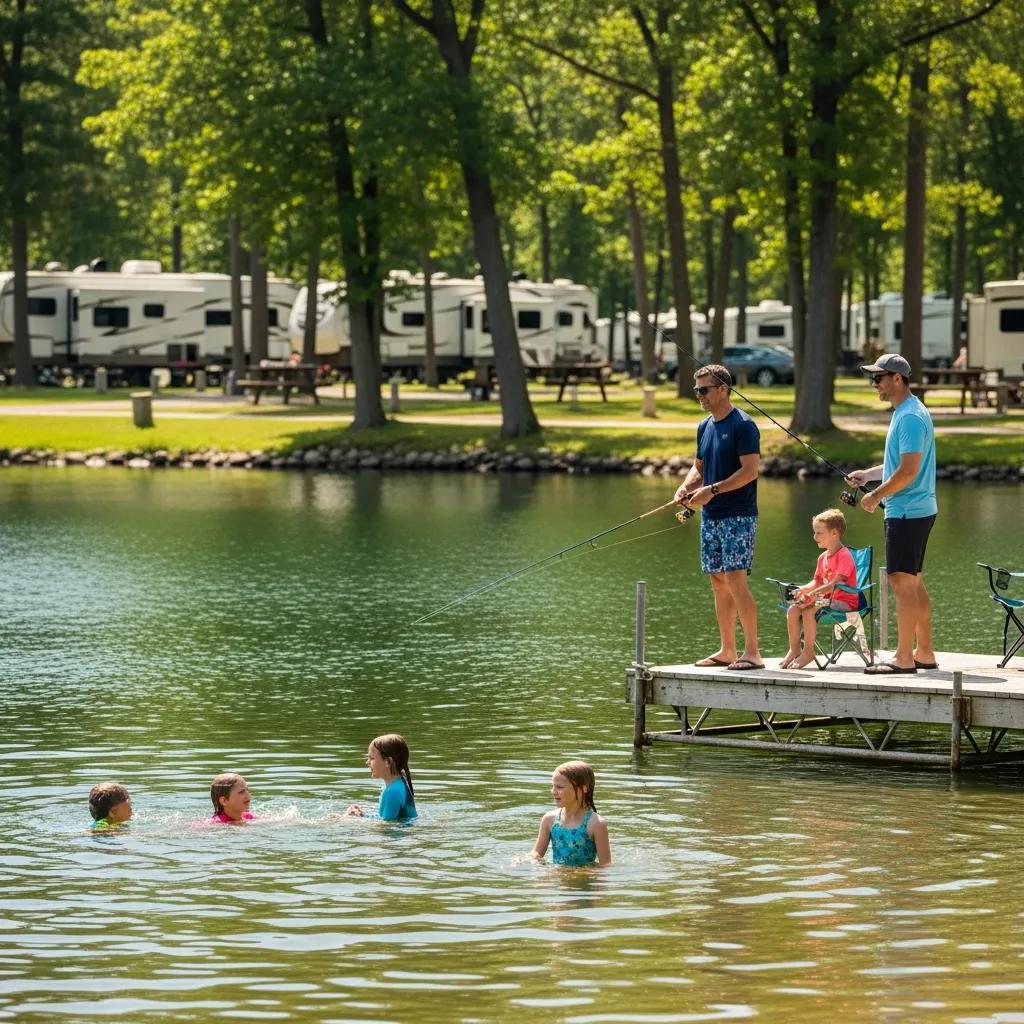
Find Michigan Campgrounds Built for Family Fishing and Swimming
If you’re hunting for Michigan campgrounds that combine safe swimming with good fishing, you’ll find plenty of lakefront and riverfront choices that balance kid-friendly swim areas and easy angling access. This guide walks you through how to judge campgrounds that offer both water activities and family-focused amenities, points out options for RV and tent campers, and shares practical booking and seasonal tips for planning trips in 2025. Many families want straightforward criteria so kids can splash safely and anglers can reach productive spots without long treks or owning a boat — this article gives you that decision framework. You’ll learn what features matter most, how to compare lakefront campgrounds, where RV parks give true waterfront access, and which nearby sites around Ann Arbor are best for day trips and weekend escapes. We include checklists and comparison notes to speed decisions and use a nearby example — The Oaks Campground — to show how a real property can meet these criteria while keeping our recommendations broad.
Which Michigan Campgrounds Give the Best Combo of Fishing and Swimming?
The best campgrounds for both fishing and swimming pair clean, clearly marked swim areas with easy fishing access and helpful onsite amenities that keep days smooth for families. Look for active water-quality checks, structures like piers or boat launches that broaden angling options, and family-oriented touches — shallow beaches, nearby restrooms, and shade — that cut down on hassle. Evaluating these features helps you pick sites that reliably deliver both activities through the season. Below is a straightforward way to spot top options, followed by a real-world example showing these standards in action.
For many families, a smaller private campground that manages swim zones and maintains stocked ponds can be a better fit than busy state parks. The Oaks Campground is a local example—waterfront access, clear reservation options, and a family-focused layout. Breaking campground features into a simple checklist makes it easier to compare properties like this when planning your trip.
What Features Make a Campground Great for Fishing and Swimming?

A strong fishing-and-swimming campground pairs safe swim infrastructure, multiple fishing access points, and conveniences that support both beginners and experienced anglers. Together these features create predictable, low-stress days: marked swim beaches reduce risk for little ones, docks and launches expand fishing options, and accessibility elements — gentle beach entries, nearby restrooms, clear depth signs — make the site easier to use. Knowing these components helps you read photos and reviews with purpose when choosing where to go.
Use this practical checklist when judging a campground’s water recreation setup:
- Clear, marked swim areas with gradual entry and safety signage so parents can supervise confidently.
- Multiple fishing access points — shoreline spots, piers, or a boat launch — to support different angling styles.
- Onsite conveniences like restrooms, changing rooms, and shaded seating to shorten breaks off the water.
- Water-quality monitoring or posted advisories and rules that show active management of swim and fish zones.
These criteria directly translate to better days on the lake: less safety worry, more fishing options, and simpler logistics for families. Keep them in mind when narrowing your campground choices.
How to Choose Campgrounds with Family-Friendly Water Activities in Michigan Lakes?
Picking a family-friendly campground on a Michigan lake means matching safety, convenience, and activity variety to your group’s ages and priorities. Start by confirming lifeguard coverage or clearly marked swim zones for younger children, then check for nearby restrooms and shaded picnic spots to keep long days comfortable. Match lake type to your plans — shallow, sandy beaches are perfect for toddlers; deeper, structured lakes are better for bass and trout anglers. Finally, look up rules about flotation devices, pets, and fishing licenses so nothing catches you by surprise. A little prep keeps your day at the lake smooth.
Try this short decision checklist to align a campground with your family’s needs:
- Confirm lifeguard coverage or explicitly marked swim zones if you’ll have young kids.
- Choose campgrounds with restrooms and changing facilities a short walk from swim beaches.
- Match lake type to activities: shallow sandy entries for young children, deeper lakes with structure for anglers.
- Verify nearby services — bait, tackle, or boat rentals — if you’ll need gear.
Use the checklist above to find campgrounds that balance safe swimming with solid fishing opportunities. The next section offers curated family-friendly options around Michigan lakes to put these tips into practice.
What Are the Best Family Campgrounds Near Michigan Lakes for Fishing and Swimming?
Family campgrounds on Michigan lakes should deliver secure swim beaches, multiple fishing access points, and kid-friendly features that simplify planning for parents. Look for calm, monitored swim zones, easy shorelines for panfish and bass, and nearby services like bait shops or launch assistance. When comparing lakeside spots, favor campgrounds that advertise kid-safe swim areas, list fishing access points, and share seasonal notes on peak times and reservations. The quick comparison below helps families scan options and spot camps that meet both safety and fishing needs.
This comparison highlights management and amenity differences so families can quickly narrow choices based on safety and fishing access. The following sections explain how to check swim safety and what fishing experiences to expect at these campgrounds.
Which Campgrounds Provide Safe Swimming Areas for Kids?
Campgrounds that prioritize child safety offer clearly marked shallow beaches, regular monitoring, and rules that keep boats away from swim zones. Parents should check lifeguard schedules, look for depth markers, and confirm physical separations like buoys or ropes that separate swim areas from boating lanes. Close restrooms and changing facilities make supervision easier and reduce risk. Recent photos and guest reviews often reveal whether staff enforce these safeguards and how quickly they respond to safety concerns — useful clues when booking.
Before you go, check park announcements and guest reviews for lifeguard presence, water quality advisories, or seasonal restrictions that could affect swimming. Confirming those details ahead of time helps keep kids safe and the day fun.
What Fishing Opportunities Are Available at These Family Campgrounds?
Family campgrounds around Michigan lakes typically offer a mix of shore fishing, pier access, and boat launches — enough for quick panfish trips with kids and longer outings for adult anglers. Expect species like panfish, largemouth bass, and stocked trout in many lakes; some larger lakes also hold walleye and northern pike. Many campgrounds run family fishing programs or maintain stocked ponds to boost kids’ success. Helpful amenities include small-boat or kayak rentals, on-site bait sales, and ADA-accessible piers that broaden access for everyone.
Remember Michigan’s fishing license rules and catch limits — they vary by species and waterbody — so plan ahead to stay compliant and avoid surprises. Next up: where RV campers can find parks that combine these water amenities with full RV services.
Where Can You Find Michigan RV Parks with Fishing and Swimming Amenities?

RV parks that support fishing and swimming pair waterfront access with RV-specific infrastructure — full hookups, level pads, and dump stations — so families can stay longer without hassle. These parks often provide boat launches, swim beaches, and rental services so you don’t have to tow everything. When comparing RV parks, note the waterfront type: lakefront loops offer immediate shore access while riverfront sites can be calmer for anglers but may limit swim areas. The table below helps RV campers compare common setups and booking tips.
This overview clarifies how RV parks mix waterfront recreation with essential services. The following subsections list common facilities and practical booking advice for RV campers.
What Facilities Do Michigan RV Parks Offer for Water Activities?
Many RV parks include boat launches, docks, bait and tackle points, and designated swim beaches so you can fish and swim without extra travel. Larger parks often rent kayaks, canoes, and small boats, which is handy if you don’t want to tow gear. Other useful features include fish-cleaning stations, equipment storage, and shaded picnic areas near swim zones — all things that make multi-day stays more comfortable and less work.
Knowing which facilities a park offers helps you decide whether to bring your own gear or rely on rentals. The next section covers concrete booking steps to secure the best waterfront spots.
How to Book RV Sites Near Popular Fishing and Swimming Spots?
When booking an RV spot near water, confirm site length, hookup types, and how close the site is to the water so your rig fits and you get the access you want. Reserve early — waterfront sites often fill months ahead for summer — and check cancellation policies and peak-season rules to avoid fees. Consider weekday or shoulder-season stays for quieter shorelines, ask for a site map to pick a spot near launches or beaches, and confirm ramp access and boat trailer parking to avoid arrival-day headaches.
These steps cut surprises and increase your time on the water. Next we’ll focus on campgrounds near Ann Arbor for short trips and weekend getaways.
Which Campgrounds Near Ann Arbor Provide Excellent Fishing and Swimming Options?
Campgrounds a short drive from Ann Arbor that offer both fishing and swimming are usually on inland lakes or calm river stretches with family swim beaches and nearby angling spots. These local choices are great for day trips and weekends because they keep driving time low while still offering reliable water recreation and basic campground services. When picking a nearby site, look for clear day-use rules, plenty of parking, and maps that show swim and launch locations. Below we highlight common local features and a convenient example for visitors who want quick access to water.
For Ann Arbor visitors wanting a nearby option, The Oaks Campground is a practical example — waterfront access, reservation-friendly, and set up for short stays as well as longer ones. Mentioning this site gives a helpful local choice without narrowing the statewide recommendations. The next sections list top nearby features and cover accessibility for day trips and weekends.
What Are the Top Water Activity Campgrounds Close to Ann Arbor?
Top nearby campgrounds prioritize quick access to swim beaches, fishing spots, and family amenities like playgrounds and picnic shelters so you can get a satisfying outing without much travel. They tend to have shallow sandy entries for children, short walks from campsites to the water, and varied shoreline access that reduces the need for boats. Most lakefront options are under two hours’ drive, making same-day trips doable for many families. Watch seasonal peak windows to avoid crowds and check reservation rules so you can secure preferred sites.
Short drive times and local availability make these campgrounds a smart choice for busy families. The next section explains how accessible these parks are for day trips and weekend stays.
How Accessible Are These Campgrounds for Day Trips and Weekend Stays?
Accessibility for short visits depends on parking, day-use rules, and campsite proximity to the water. Campgrounds that set aside day-parking, post clear arrival instructions, and publish hours reduce confusion. For weekend stays, confirm early check-in or late-arrival policies and how staff handle busy turnover days in peak season. Also note distance to groceries, fuel, and medical services — small details that make quick trips less stressful. A little planning before you leave maximizes swim and fishing time.
Good accessibility planning keeps short trips low-stress and fun, tying back to broader suggestions for Michigan spots with varied water activities.
What Are the Top Michigan Camping Spots Featuring Water Activities Like Fishing and Swimming?
Michigan’s top camping spots for water activities range from big lakes with public beaches to quiet inland ponds and river loops, so families and anglers can pick the pace they want. Many of these destinations add services like guided fishing trips, boat and kayak rentals, and seasonal programs for kids that teach water skills and basic angling. Understanding seasonal patterns and program schedules helps you choose the best time to visit for fishing success or safe swimming. Below are common value-adds these campgrounds offer and a short planning note for reservations.
Adding rentals and programming makes water recreation possible even when you don’t bring gear, which widens appeal for families and novice anglers. Referring to a nearby, reservation-friendly option like The Oaks Campground gives readers an actionable choice while keeping the focus statewide. The next sections describe typical enhancements and seasonal factors in more detail.
How Do These Campgrounds Enhance the Outdoor Experience with Water Recreation?
Campgrounds boost water experiences with guided fishing outings, equipment rentals, youth programs, and water-safety instruction that make fishing and swimming approachable. Guided trips share local know-how about where fish are biting, rentals let you use kayaks or small boats without towing, and kids’ activities teach basic casting and safety. Onsite services like bait sales and fish-cleaning stations also simplify the angling process so families can focus on the fun.
These extras often make or break a campground for families looking for low-effort water days. Seasonal patterns determine when many of these offerings are available.
What Seasonal Considerations Affect Fishing and Swimming Availability?
Seasonality shapes water temperature, fish behavior, and park services across Michigan. Late spring through early fall is the main window for safe swimming and steady fishing. Spring brings spawning patterns and cooler water, summer usually offers warmer water and lifeguard coverage but more crowds, and shoulder seasons can be quieter yet colder and with limited services. Always check for local advisories about algal blooms, posted swim restrictions, and ice-safety warnings in colder months to avoid hazardous conditions.
Timing your trip with seasonal patterns improves chances for desired activities and safer outings, wrapping up the practical guidance this guide provides for choosing Michigan campgrounds that offer both fishing and swimming.
Key planning checklist for Michigan water recreation:
- Check seasonal water conditions before booking to match activity preferences.
- Confirm on-site services like rentals and bait availability so you don’t overpack.
- Reserve early for summer weekends to secure waterfront sites and preferred hookups.
- Verify safety measures such as lifeguard hours and posted water advisories.
Frequently Asked Questions
What should I consider when planning a fishing and swimming trip to Michigan campgrounds?
Start with safety: lifeguard presence and clearly marked swim zones. Next, check the types of water activities available — shoreline spots, piers, boat launches, and rental services — and confirm family-friendly amenities like restrooms and shaded picnic areas. Finally, review seasonal conditions, since water temperature and fish activity change through the year and affect both swimming safety and fishing success.
Are there specific fishing licenses required for camping in Michigan?
Yes. Anglers 17 and older need a valid Michigan fishing license. Licenses are available online and at many retailers, with options for daily or annual passes. Check rules for the specific waterbody you’ll fish — some areas have special catch limits or species rules — and be sure your license is current before you cast.
What types of fish can I expect to catch at Michigan campgrounds?
Expect a variety: common catches include panfish, largemouth bass, and trout in stocked or natural lakes. Larger lakes can also offer walleye and northern pike. Many family campgrounds maintain stocked ponds to help kids have early success. Check local fishing reports for the best times and techniques for each species.
How can I ensure my children are safe while swimming at campgrounds?
Choose campgrounds with marked swim areas and lifeguard coverage when possible. Look for shallow entry points, clear depth signage, and physical separations between swim zones and boat lanes. Always supervise children closely, set clear swim boundaries, and check recent water-quality reports or advisories before visiting. Know the campground’s emergency procedures in case something goes wrong.
What amenities should I look for in a family-friendly campground?
Look for clean restrooms, changing facilities, shaded picnic areas, and clear swim zones. Fishing piers, boat launches, playgrounds, rental services, and organized family programs add convenience and entertainment. Prioritizing these amenities reduces stress and helps ensure a fun trip for parents and kids alike.
How do seasonal changes affect camping experiences in Michigan?
Seasonal shifts make a big difference. Late spring through early fall is best for swimming and fishing — water’s warmer and services are more likely to be available. Summer brings the most visitors, while shoulder seasons are quieter but colder and may have limited services. Always check local advisories for algal blooms or ice warnings that could affect safety and access.
Conclusion
Picking the right Michigan campground for fishing and swimming makes a big difference in how much fun your family has. Prioritize features like lifeguard coverage, marked swim areas, and family-friendly amenities to keep days low-stress and high-enjoyment. Use the checklists here to compare options, and consider nearby, reservation-ready choices like The Oaks Campground when you want a practical local option. Ready to plan your next waterfront weekend? Start with the features that matter most to your family and book early for peak season.