Finding RV Resort Brokers in Your Area: A Guide for Campground Owners
Locating qualified RV resort brokers in your area begins with understanding what a specialist does, why their process is crucial, and which search strategies lead to trustworthy results. This guide walks you through finding campground brokers, assessing their qualifications, and exploring available alternatives so you can choose the best exit strategy. Many campground owners search phrases like “find campground brokers in my area” or “RV park brokers near me” when planning a sale. Understanding broker roles, fees, and timelines will significantly reduce uncertainty. You’ll discover where to look (online directories, marketplaces, and regional networks), how to vet experience and commissions, and practical steps to prepare your financials and property materials for sale. The article also compares broker-assisted sales with selling directly to an operator and provides checklists, comparison tables, and contact templates to streamline your outreach. Read on to follow a structured pathway from initial research to your first meeting with a broker, and consider operators and direct buyers as practical alternatives when appropriate.
What Is an RV Resort Broker and How Do They Help Campground Owners?
An RV resort broker is a commercial real estate specialist who connects campground owners with qualified buyers, manages valuation and marketing, and negotiates transaction terms to maximize sale outcomes. They act as intermediaries, allowing owners to avoid direct buyer outreach, reduce exposure risk, and leverage the broker’s buyer networks to secure competitive offers. The broker’s work yields benefits such as coordinated due diligence, curated marketing packages, and negotiated closing logistics that can shorten the time to offer and reduce seller workload. Understanding a broker’s role clarifies when hiring an agent makes sense versus pursuing a direct sale, and it sets clear expectations for fees, timelines, and seller involvement.
Who Are RV Park Brokers and Campground Brokers?
RV park brokers and campground brokers are specific types of commercial real estate agents who specialize in hospitality real estate, focusing exclusively on outdoor hospitality assets like RV parks, campgrounds, and glamping properties. Some brokers operate nationally, offering broad buyer pools, while boutique or regional brokerages provide local market insight and targeted buyer relationships; the choice depends on your property’s scale and location. Sellers should prioritize brokers with documented campground transactions and proven regional networks because local pricing dynamics and buyer preferences often determine the final sale value. This distinction naturally leads into the specific services brokers provide and how those services align with seller needs.
What Services Do RV Resort Real Estate Agents Provide?
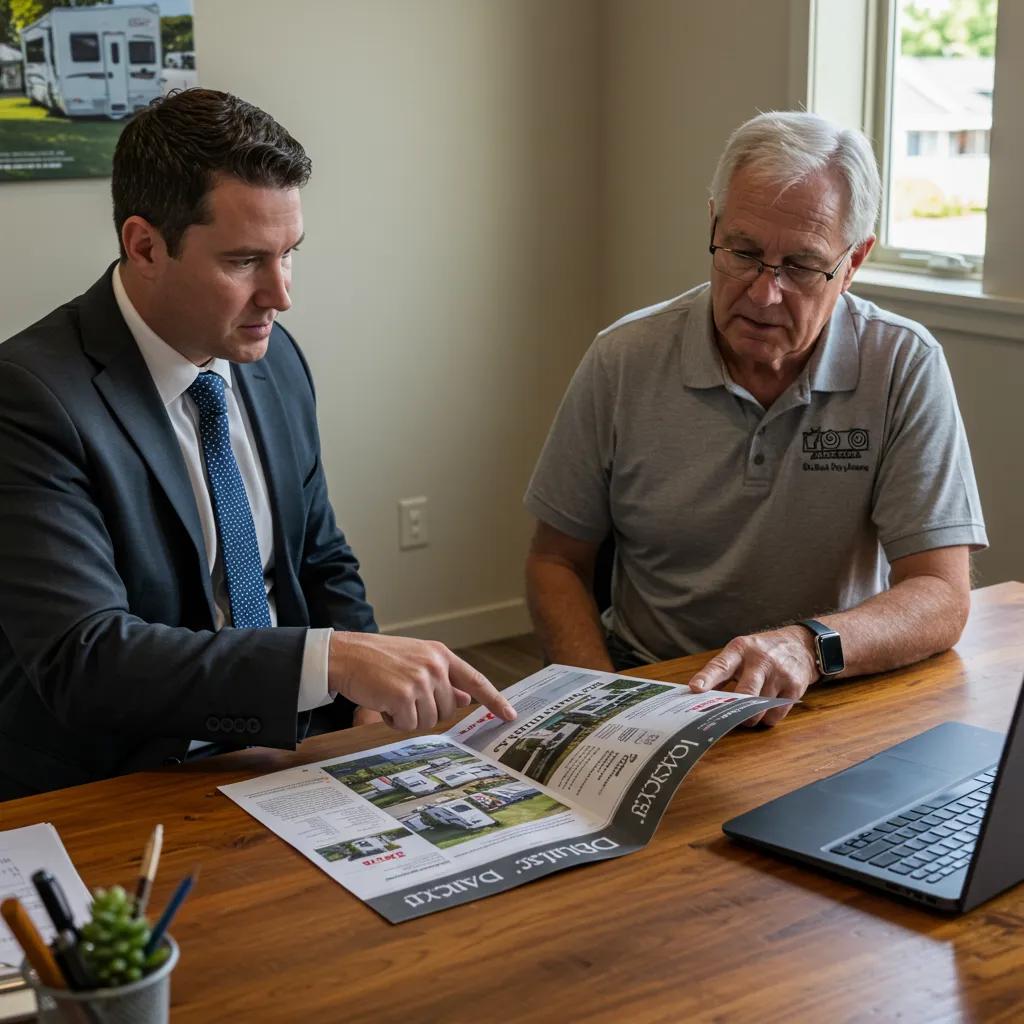
Brokers provide a consistent set of services that facilitate sale readiness and buyer matching, including valuation, marketing, buyer vetting, negotiation, and closing coordination. These services produce tangible deliverables such as market comparables, marketing brochures, qualified buyer lists, and transaction management during due diligence and closing. Sellers benefit from broker-managed confidentiality protocols that protect operations while the property is marketed, and from brokers’ ability to present financials and amenity data in buyer-ready formats. Understanding these services helps owners decide which tasks to delegate and which to retain during a sale.
Brokers typically offer these core services:
- Valuation & Comps: Provide comparable sales analysis and a recommended price range.
- Marketing & Listings: Create property packages, photos, and targeted marketing outreach.
- Buyer Screening & Negotiation: Vet buyers for financing/experience and negotiate terms.
These services form the foundation of how brokers facilitate transactions and set the stage for the next phase: the broker-led sales process.
How Do Brokers Facilitate the Sale of Campgrounds and RV Parks?
Brokers facilitate campground sales through a stepwise process: initial consultation and valuation, targeted marketing and buyer outreach, offer management, due diligence support, and closing coordination. The mechanism begins with a valuation that identifies key drivers of value—net operating income (NOI), occupancy, amenities—so owners understand how the price will be positioned. During marketing, brokers leverage the property’s key attributes—site maps, amenities list, and financial statements—to communicate asset value to buyers. As offers arrive, brokers negotiate contingencies and guide due diligence to preserve confidentiality and maintain momentum toward a clean close. Knowing this workflow helps owners prepare required documents and timelines before engaging a broker.
This section details the operational and marketing strategies that contribute to a campground’s profitability, a key factor in its valuation.
Campground Business Plan: Operations, Marketing, and Profitability
This paper examines the past few years of the campground operations and provides a marketing and operational plan that will achieve increase sustainability through greater annual profits. A competitor analysis indicated that the cu
Tsek Hot Spring Campground Business Plan, 2015
Where to Find Reliable RV Resort Brokers Near You?
Locating reliable RV resort brokers begins with targeted searches that combine directory research, marketplace listings, and local reputation checks to produce a shortlist of qualified candidates. Effective discovery uses multiple sources—industry directories, commercial real estate marketplaces, local business listings, and referrals—to triangulate experience and recent transaction history. Combining sources reduces the risk of relying on a single signal and increases the likelihood of finding brokers with campground-specific expertise. This multi-channel search informs the next step: how to interpret listings and reviews so you can prioritize credible brokers for outreach.
Which Online Directories and Marketplaces List RV Park Brokers?
Online directories and commercial marketplaces aggregate broker profiles, active listings, and past transaction data, offering a searchable starting point for owners who want to “find campground brokers in my area.” Use directory metadata—number of listings, transaction descriptions, and specialty tags—to identify brokers focused on RV parks and campgrounds. Treat marketplace listings as signals of activity but cross-check claimed transactions before shortlisting to verify relevance and recency. This approach prepares you to combine listings with local checks and referrals for a well-rounded broker search.
Best search practices on marketplaces:
- Use Niche Keywords: Search with terms like “campground broker” and “RV park sales”.
- Filter by Region: Narrow results to your state or the upper Midwest if regional nuance matters.
- Check Listing History: Review past sales and active listings for relevant property sizes.
How to Use Local Business Listings and Reviews to Locate Brokers?
Local business listings and Google Business Profile entries act as credibility checkpoints that reveal client reviews, business descriptions, and referenceable transactions; they function as regional trust signals. When evaluating reviews, look for patterns—consistent praise for communication, successful closings, and campground-specific experience—and watch for red flags like vague references to commercial sales without evidence. Verify claimed transactions by requesting references or public records citations; a broker who provides specifics demonstrates transparency and a solid track record. After checking local listings, expand your candidate pool by exploring regional broker networks that serve your area.
What Regional Broker Networks Serve the Upper Midwest and Surrounding Areas?
Regional broker networks and state-level commercial real estate associations often list members with localized experience in the upper Midwest, supplying knowledge of seasonal demand, regulatory context, and interstate buyer pools. Regional specialists understand how local tourism patterns and state regulations affect valuation and can identify buyers who value Midwest campgrounds. Use state association directories and regional industry events as search vectors and ask brokers for Midwest-specific comparables to confirm competence. Confirming regional track record helps you decide whether to pursue a local broker or a national marketplace strategy.
How to Evaluate and Choose the Right RV Resort Broker for Your Campground?

Evaluating broker candidates requires a structured checklist that includes transaction history, regional specialization, fee structures, and contract terms, enabling objective comparison and selection. The mechanism here is evidence-based vetting: request recent comparable sales, ask for references, and compare written proposals to assess marketing plans and anticipated timelines. Choosing the right broker benefits sellers by aligning marketing reach, buyer pool, and negotiation strategy with the owner’s goals—whether maximizing price, timing a retirement exit, or preserving legacy. With these evaluation steps in hand, owners can proceed to comparison of fees and negotiation tactics.
What Qualifications and Specializations Should You Look For?
Look for brokers with demonstrable campground transaction experience, an established regional buyer network, and industry involvement that indicates specialization rather than a generalist commercial practice. Specific qualifications include multiple closed campground deals, references from former sellers, and a clear marketing plan tailored to outdoor hospitality assets. Verify these qualifications through references, listing archives, and written case studies to avoid over-reliance on unverified claims. Assessing specialization this way naturally leads to comparing fee structures and contract terms.
How to Compare Broker Fees, Commissions, and Contract Terms?
Compare typical commission ranges, engagement types, and negotiable contract clauses to understand cost and flexibility; common commission models include percentage-of-sale commissions, tiered incentives, and limited-scope engagements. When evaluating offers, focus on exclusivity duration, marketing fee responsibilities, and termination clauses that affect your control and commission exposure. Negotiate items such as escrow triggers, co-broker splits, and marketing budget caps to manage costs while maintaining service quality.
Before the table, note: this table gives typical examples and should be used as a starting point for negotiation with shortlisted brokers.
This comparison highlights negotiable areas that can reduce net cost to sellers and sets up the next step: specific interview questions to ask brokers.
What Questions Should You Ask Potential RV Resort Brokers?
Prepare a categorized list of interview questions that probes experience, process, marketing, and references so you can compare brokers on objective criteria. Ask for recent comparable sales, the size and type of buyer pool they maintain, proposed marketing timelines, and typical due diligence timelines. Good answers will include specific examples, written proposals, and references who can confirm outcomes and process. Use these answers to rate brokers against your priorities—price maximization, confidentiality, speed, or legacy considerations—before deciding whether to list or explore direct-sale alternatives.
Owners may also consider direct buyers at this stage. GatherGrounds Resorts‘ direct acquisition of campgrounds and RV parks presents an alternative for sellers seeking a no-commission route and a buyer focused on preserving property legacy. GatherGrounds favors campgrounds with more than 130 sites in the upper Midwest and emphasizes a thoughtful transition, allowing owners to bypass broker fees and complex listing processes when eligible.
What Are the Benefits and Drawbacks of Using RV Resort Brokers vs. Direct Buyers?
Comparing broker-assisted sales with direct sales clarifies trade-offs across fees, timeline, confidentiality, and legacy control so owners can match the route to their priorities. Brokers offer market exposure and competitive bidding that can increase sale price, while direct buyers deliver streamlined deal processes and potential commission savings. The mechanism of comparison is evaluating attributes—fees, timeline, confidentiality, buyer qualifications—so owners can choose the path that balances net proceeds, speed, and seller involvement.
Brokers offer market exposure and competitive bidding that can increase sale price, while direct buyers deliver streamlined deal processes and potential commission savings.
The mechanism of comparison is evaluating attributes—fees, timeline, confidentiality, buyer qualifications—so owners can choose the path that balances net proceeds, speed, and seller involvement. The concise comparison table below distills key differences to inform decision-making.
Intro to table: This table compares brokered sales and direct acquisitions across core seller concerns.
How Does Selling Through a Broker Differ from Selling Directly to Companies Like GatherGrounds Resorts?
Selling through a broker typically prioritizes market exposure and competitive bidding, which can maximize price but adds marketing time and commission costs, while selling directly to an operator like GatherGrounds Resorts emphasizes a streamlined purchase process and may bypass broker fees. Direct buyers often qualify transactions quickly and can offer transition plans that preserve a campground’s legacy, especially when they seek properties meeting specific size and regional criteria. Sellers should weigh potential net proceeds against the value of a “thoughtful transition” and reduced complexity when evaluating direct offers. Understanding these differences helps owners align sale method with personal and financial objectives.
What Are the Typical Broker Fees and How Can You Save on Commissions?
Typical broker fees fall in a percentage range of the sale price, and sellers can pursue negotiation strategies such as reduced commissions for larger properties, limited exclusivity arrangements, or performance-based tiers to lower cost. Consider alternative structures like flat-fee valuations or engagement for only certain services (valuation and marketing) to manage expenses while retaining key broker benefits. Sellers can also seek multiple proposals and compare scope rather than just rates to ensure they pay for measurable value. Negotiation focused on transparency and specific deliverables often yields the best balance of cost and service.
How Does the Selling Process Vary Between Brokers and Direct Buyers?
A brokered sale often follows a marketing period, multiple showings, competitive offers, and extended due diligence, while a direct sale can be faster with an expedited offer, focused inspections, and a shorter closing window. Brokered timelines typically span several months from listing to close due to marketing and buyer financing contingencies; direct sales may close in weeks if buyer funding is ready and both parties agree. Due diligence depth is similar but more targeted in direct sales, since direct buyers often perform operator-focused assessments rather than wide-market sensitivity analysis. Knowing timeline expectations helps owners plan their exit and operational handover.
After weighing these trade-offs, owners who prefer a simplified sale process may explore direct buyer options that prioritize legacy and operational continuity.
How to Prepare Your Campground for Sale When Working with RV Resort Brokers?
Preparing a campground for sale means assembling prioritized financials, operational documents, and amenity presentation materials so brokers can market the asset effectively and buyers can complete due diligence. The mechanism is document readiness: presenting well-organized tax returns, operating statements, site maps, and amenity descriptions improves buyer confidence and shortens verification. Sellers who structure their records reduce contingencies and can often negotiate better terms, because key details like detailed maintenance logs and CapEx records demonstrate stewardship. The table below maps key documents to purpose and required detail.
Intro to table: Use this document checklist to prioritize what brokers will request during valuation and marketing.
What Financial Documents and Valuation Information Do Brokers Require?
Brokers typically require at least two years of tax returns, profit-and-loss statements, occupancy and rate history, and supporting documentation for major capital expenditures to build a defensible valuation. The reason is that accurate valuation depends on NOI, historical trends, and known future expenses, which buyers and appraisers use to calculate multiples and cap rates. Provide reconciled financial statements with explanatory notes to clarify anomalies and to protect confidentiality by redacting sensitive personal information when initial marketing uses summary data. Assembling these items early shortens the negotiation phase.
How to Highlight Amenities and Features That Increase Broker Interest?
Highlight high-impact amenities—such as pull-through RV sites, modern hookups, recreational facilities, and unique location assets—in your marketing materials, and pair them with metrics like occupancy lift and premium rates they command. Use professional photos, succinct amenity lists, and maps to ensure buyers quickly grasp property strengths; combine visual assets with occupancy and revenue metrics to quantify value. Brokers convert these assets into buyer interest by emphasizing features that align with investor or operator strategies. Clear presentation of amenities naturally leads into due diligence expectations that buyers will pursue.
Amenities that typically increase buyer interest:
- Premium Hookups: 50A/30A service and reliable utilities that improve nightly rates.
- On-site Recreation: Pools, playgrounds, or event spaces that extend seasonality.
- Site Variety: Mix of pull-through and back-in sites that broaden guest appeal.
These presentation tactics reduce friction and make due diligence smoother for both brokers and buyers.
What Are Common Due Diligence Steps in Broker-Facilitated Sales?
Common due diligence steps include title and zoning review, environmental assessments, verification of revenue records, physical inspections, and operational audits to confirm regulatory compliance. Buyers will request documentation that maps to these checks—title reports, septic/utility records, environmental reports, and copies of permits—to verify the property’s condition and permitted uses. Proactively addressing potential issues, such as unresolved permits or deferred maintenance, mitigates delays and preserves negotiating leverage. Preparing for these investigations speeds the closing process and supports stronger offers.
What Are Common Questions Campground Owners Ask About RV Resort Brokers?
Campground owners commonly ask whether specialized realtors exist, what price ranges to expect, and what constitutes a good ROI; clear answers reduce confusion and provide actionable benchmarks for planning a sale. The mechanism is answering ownership-focused PAAs: define specialist roles, give ranges with caveats, and explain ROI calculations that buyers use. These answers help owners set realistic expectations and design a sales strategy that targets their objectives—maximizing price, ensuring legacy, or exiting quickly.
Is There Such a Thing as a Realtor Specializing in RV Parks?
Yes; a realtor specializing in RV parks is a niche commercial agent with documented campground transactions and industry contacts, though such specialists are less common than general commercial brokers. Identify specialists by asking for a list of recent campground closings, sample marketing materials for similar properties, and references from former sellers. Specialization matters because niche brokers understand campground-specific valuation drivers such as transient vs. long-term revenue, seasonal demand, and amenity premiuming. Recognizing the presence of specialists helps owners choose the broker best matched to their property type.
How Much Do RV Parks Typically Sell For Through Brokers?
Sale prices vary widely based on location, NOI, occupancy, and amenities; brokers price properties using NOI multiples or cap rates, and market conditions in the upper Midwest can materially affect trades. Typical valuation approaches include applying a multiple to stabilized NOI or using cap-rate assumptions to derive sale price; these methods are sensitive to demonstrated revenue, operating costs, and growth potential. Provide realistic ranges with caveats and request broker-provided comparables to understand local benchmarks. With these valuation frameworks, owners can better interpret offers.
What Is a Good ROI for an RV Park Sale?
Investor expectations for ROI commonly fall into cap-rate or cash-on-cash targets; a “good” ROI depends on risk, location, and amenities, with buyers focused on sustained NOI and growth prospects. To estimate attractiveness, calculate stabilized NOI, apply a market cap rate, and compare the implied return to investor benchmarks—investors then judge whether the asset fits their required yield. Presenting clear NOI projections and documented occupancy trends increases buyer confidence and supports a favorable valuation. Understanding ROI expectations informs pricing and negotiation strategy.
How to Contact and Engage with RV Resort Brokers in Your Area?
Contacting and engaging brokers effectively requires a concise outreach package that summarizes key property facts, clarifies objectives, and requests written proposals to compare approaches objectively. The mechanism is prioritized communication: present core data (location, site count, occupancy, revenue) up front to filter appropriate broker interest and to receive relevant proposals. Preparing this information and requesting proposals with comparables accelerates broker selection and helps you schedule productive consultations that move the sale forward. The following H3s provide templates and meeting expectations to make first contacts efficient.
What Information Should You Provide When Reaching Out to Brokers?
When contacting brokers, provide an essential property summary: number of sites, average annual occupancy, recent annual revenue, and a brief list of high-value amenities so brokers can assess fit and respond with a relevant proposal. Include which documents you can provide for review—tax returns, P&L statements, site maps—and whether you prefer confidential outreach or broader marketing. A short, factual outreach script reduces back-and-forth and positions you to get written comparables and proposed marketing plans. Preparing this summary leads into how to schedule valuations and obtain competing proposals.
Outreach essentials to include:
- Property Snapshot: Site count, average occupancy, nightly rate ranges.
- Financial Summary: Most recent annual revenue and major expense categories.
- Marketing Preference: Confidential sale vs. public listing and timeline.
These items help brokers produce focused proposals for comparison.
How to Schedule Consultations and Property Evaluations?
Request written proposals and comparables from brokers and schedule remote or onsite evaluations depending on property complexity and your timeline, using the proposals to compare scope, estimated timelines, and fees. For simpler properties or initial vetting, remote evaluations with document review may suffice; complex or larger properties often benefit from onsite visits to fully assess amenities and operational condition. Ask brokers to provide a timeline for marketing, typical buyer types they will target, and sample marketing materials to inform your decision. Clear proposals make side-by-side comparisons straightforward.
What to Expect During Your First Meeting with an RV Resort Broker?
Your first broker meeting will typically cover a review of financials, a preliminary valuation discussion, a proposed marketing plan, and requests for further documentation and references; expect the broker to ask operational questions about staffing, seasonality, and maintenance. The broker should also describe confidentiality measures, buyer vetting processes, and timeline estimates so you understand the engagement steps. Ask for a written proposal and comparable sales following the meeting to evaluate against other brokers. If you prefer not to list publicly, this conversation is the time to discuss direct-sale alternatives.
In addition to broker outreach, owners who prefer a private, no-commission alternative may contact reputable direct buyers. GatherGrounds Resorts’ direct acquisition of campgrounds and RV parks is one such option; GatherGrounds prioritizes properties with more than 130 sites in the upper Midwest and stresses a family-owned approach that preserves property legacy and offers a thoughtful transition. Owners interested in that route can reference GatherGrounds Resorts’ Sell Your Campground page for details on eligibility and the direct-acquisition process.
Frequently Asked Questions
What should I consider when preparing my campground for sale?
When preparing your campground for sale, focus on organizing financial documents, operational records, and marketing materials. Essential documents include tax returns, profit-and-loss statements, occupancy rates, and a detailed list of amenities. Presenting these materials clearly can enhance buyer confidence and streamline the due diligence process. Additionally, consider making any necessary repairs or improvements to increase the property’s appeal. A well-prepared campground not only attracts more buyers but can also lead to better offers and a smoother transaction.
How can I ensure confidentiality during the sale process?
To maintain confidentiality during the sale of your campground, work with a broker who has established confidentiality protocols. This includes using non-disclosure agreements (NDAs) with potential buyers and limiting the distribution of sensitive information until serious interest is confirmed. Additionally, consider marketing the property discreetly, avoiding public listings that could attract unwanted attention. A broker experienced in handling confidential sales can help navigate these concerns while still reaching qualified buyers.
What are the key differences between selling through a broker and a direct buyer?
Selling through a broker typically involves a more extended process with multiple showings and competitive bidding, which can maximize the sale price but also incur commission fees. In contrast, selling to a direct buyer often results in a quicker transaction with fewer complexities and no broker fees. However, direct buyers may not always offer the highest price. Understanding these differences helps sellers align their selling strategy with their financial goals and personal preferences.
How do I assess the market value of my campground?
To assess the market value of your campground, start by analyzing comparable sales in your area, focusing on properties with similar features and performance metrics. Consider factors such as net operating income (NOI), occupancy rates, and amenities. Engaging a qualified broker for a professional valuation can provide insights into current market conditions and help you set a competitive asking price. Additionally, reviewing historical performance data and future growth potential can further refine your valuation strategy.
What are the common pitfalls to avoid when working with RV resort brokers?
Common pitfalls when working with RV resort brokers include failing to thoroughly vet their experience and track record, not clearly communicating your goals, and overlooking the fine print in contracts. Ensure you ask for references and recent sales data to confirm their expertise. Additionally, be upfront about your expectations regarding pricing, timelines, and confidentiality. Finally, carefully review all agreements to avoid unexpected fees or unfavorable terms that could impact your sale.
How can I effectively communicate my expectations to a broker?
To effectively communicate your expectations to a broker, prepare a clear outline of your goals, including desired sale price, timeline, and any specific conditions you have. During initial meetings, discuss your priorities openly and ask the broker how they plan to meet those objectives. Providing detailed information about your campground, including financial performance and unique features, will help the broker tailor their marketing strategy to align with your expectations. Regular check-ins throughout the process can also ensure alignment and address any concerns promptly.
Conclusion
Finding the right RV resort broker can significantly streamline the sale process, ensuring you receive optimal value for your campground. By leveraging their expertise, you can navigate the complexities of the market while minimizing stress and maximizing your return on investment. Take the next step in your selling journey by reaching out to qualified brokers or exploring direct buyer options that align with your goals. Start your search today to secure the best outcome for your property.