
Seasonal RV Camping vs. Tent Camping: A Michigan Camper’s Guide
Choosing between seasonal RV camping and traditional tent camping shapes how you spend time, money, and weekends in Michigan’s outdoors. This guide explains what seasonal RV camping is, compares it to tent camping, and highlights the practical differences families, weekenders, and full-season residents care about most. You’ll find clear features of seasonal sites, a straightforward cost and comfort comparison, and a simple decision framework to see which option fits your routine. We also show how a local property—The Oaks Campground—sets up amenities and community for seasonal guests. Finally, we walk through reservation steps, typical fees, and timing tips so you can decide and act if seasonal camping looks right for you. Relevant searches like seasonal camping Michigan, seasonal RV sites near Ann Arbor, and long term RV park amenities Michigan are woven into practical advice throughout.
What Is Seasonal RV Camping and How It Differs from Tent Camping
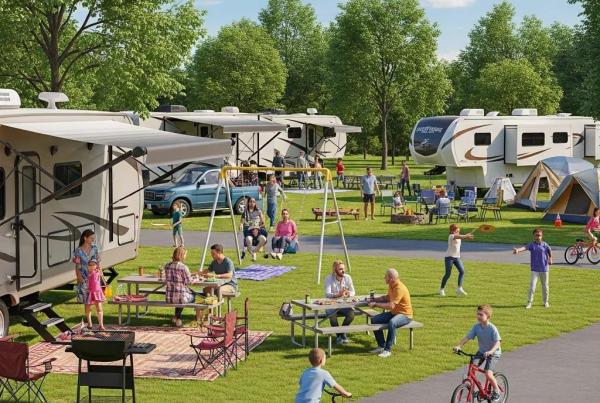
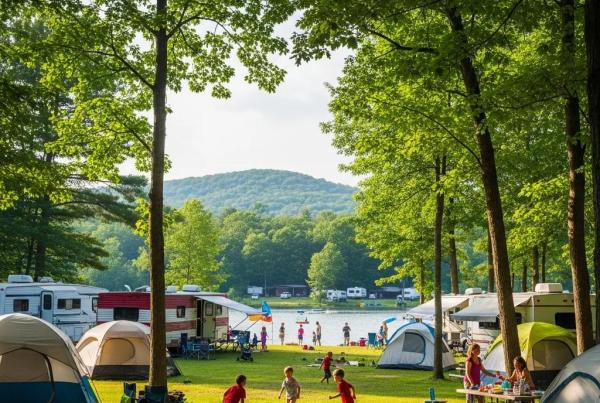
Seasonal RV camping means you occupy the same RV site for the season—usually spring through fall—so your site becomes a semi-permanent base. Parks that offer seasonal sites focus on convenience: full hookups, storage, and a steady circle of neighbors, which cuts down on the weekly setup and teardown. Traditional tent camping is built for shorter trips and closer contact with nature: you pitch, you break down, and you move on. Knowing these core differences helps you weigh permanence and convenience against mobility and simplicity for your Michigan plans.
What Makes a Seasonal RV Site Different?
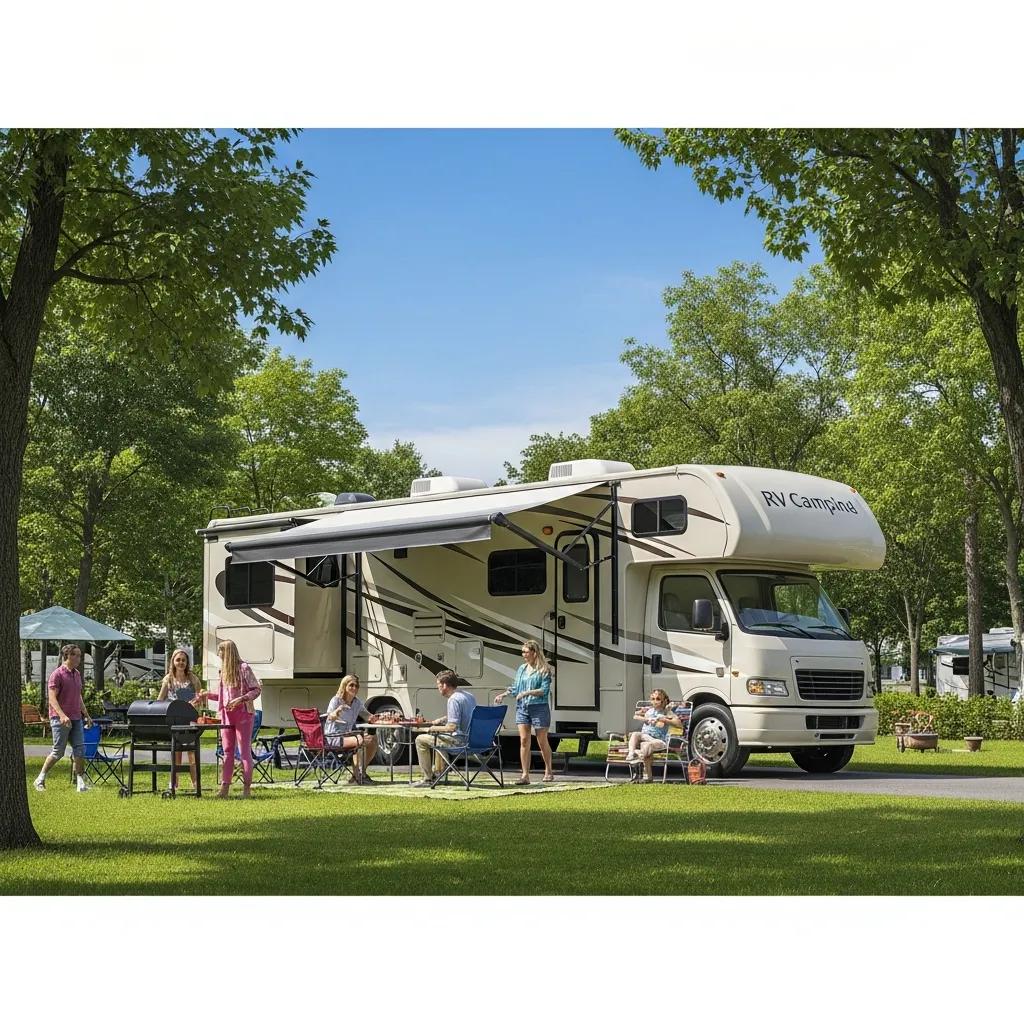
Seasonal RV sites are designed for long-term use. Expect full hookups (electric, water, sewer), level pads, dedicated storage areas, and regular access to on-site amenities that make the site feel like a second home. Because you don’t pack up every weekend, seasonal sites save time and make routines—meals, laundry, playtime—easier. That combination of comfort and predictability is valuable for families, retirees, and anyone who camps frequently in the same area.
What to Expect from Traditional Tent Camping
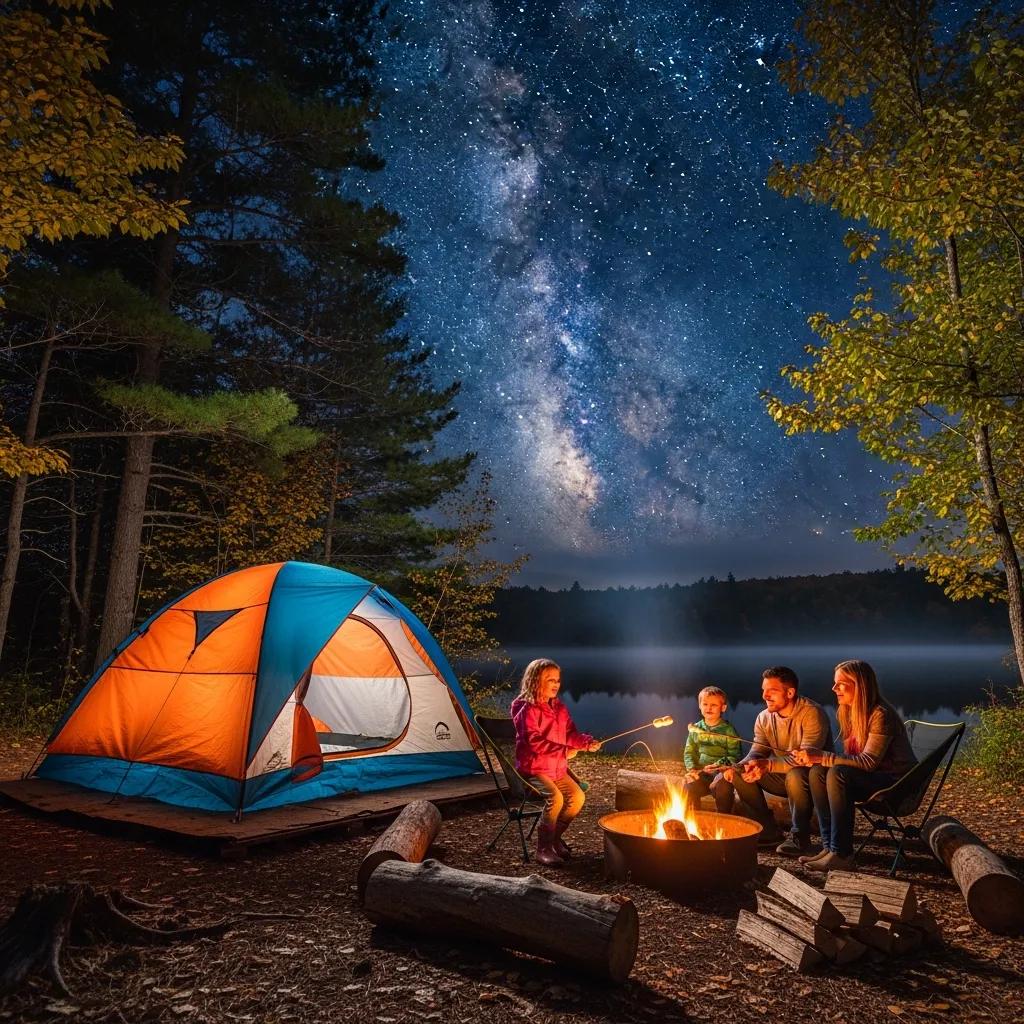
Tent camping centers on short stays, flexibility, and a closer feel for the natural setting. Each trip starts with pitching shelter and ends with teardown. Tent campers trade private hookups and indoor plumbing for portability, lighter gear, and the freedom to move between campgrounds on a whim. Shared facilities—bathhouses, water stations, and community fire pits—are common and can be social, but they also mean you pack and plan more each night. Tent camping is for people who prioritize immersion and flexibility over the creature comforts of a seasonal site.
Main Differences: Comfort, Cost, Flexibility, Community
Seasonal RV camping and tent camping differ across comfort, cost, flexibility, and community—factors that determine the right choice for each camper. Seasonal sites deliver consistent infrastructure and easy access to amenities; tent camping offers a low-cost, portable experience. Below is a quick comparison to help you scan the main tradeoffs.
Key dimensions that separate seasonal RV sites and tent camping are convenience, cost, and mobility.
Comfort and Convenience: How They Compare
Comfort and convenience are the most visible differences. Seasonal RV sites give you indoor plumbing, a dedicated kitchen area, and climate control—features that extend the camping season and simplify everyday life. That consistency helps families and frequent weekenders keep routines without repeated setup. Tent camping focuses on a simpler, more hands-on experience and closer contact with nature. The choice often hinges on whether you want the time savings and comforts of a fixed site or the lightweight freedom of tent travel.
Cost and Flexibility: What to Consider
Costs depend on how often you camp and what you own. Seasonal sites require an upfront seasonal fee and ongoing utilities; tent camping is mostly per-night fees plus gear. For many campers the break-even point arrives after several weekend stays, when repeated nightly fees add up. Flexibility is the other side of the coin: seasonal campers give up mobility for stability, while tent campers can hop between locations easily. Look at your typical number of weekends, family size, and storage needs to see which option is more economical and enjoyable for you.
The main cost items to evaluate are:
- Recurring site fees: Seasonal contracts versus nightly rates.
- Utilities and services: Electricity, water, sewer, and included amenities.
- Equipment and maintenance: RV upkeep versus tent gear replacement.
If you camp repeatedly in the same region, a seasonal RV site often brings better value and convenience than repeated short-term stays.
Why Choose a Seasonal Site at The Oaks Campground?
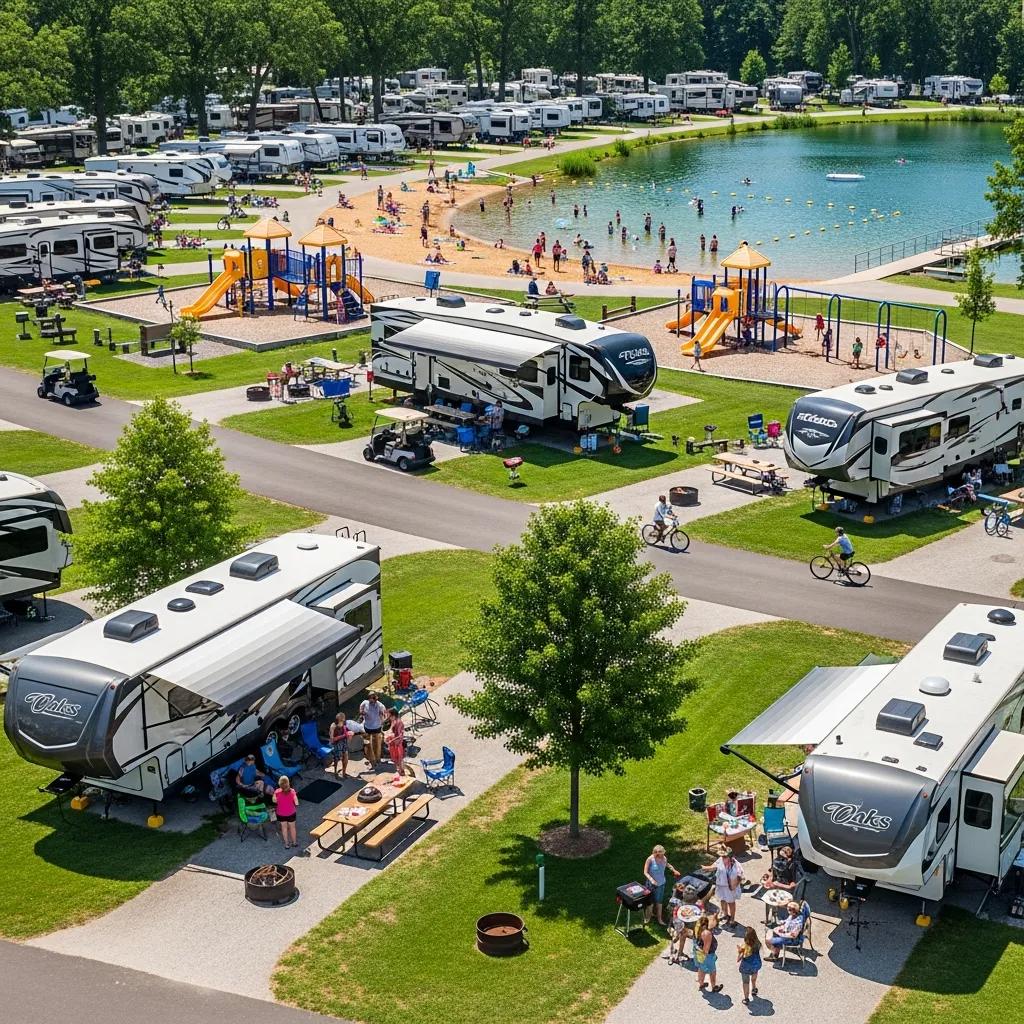
Seasonal RV camping at a well-appointed Michigan park adds convenience, community, and easy access to recreation that make a season-long site worth it for many families. The Oaks Campground by GatherGrounds offers seasonal sites and amenities designed for longer stays and family-friendly days. Keeping an RV on-site reduces logistics for repeat visits and puts fishing, trails, and weekend programs within walking or golf-cart distance. Below are the community and amenity benefits seasonal campers at The Oaks typically enjoy.
Core conveniences and community benefits of seasonal RV camping include:
- Reduced setup: Less frequent packing and teardown saves time each trip.
- On-site storage and parking: Easier logistics for families with gear.
- Regular social events: Neighbors and campground activities build connections.
Those steady routines and social ties are often the biggest non-monetary return for seasonal campers. For Michigan residents, The Oaks Campground positions seasonal sites as a practical option for people who want nearby outdoor access plus community.
How Seasonal Sites Build Convenience and Community
Seasonal sites cut friction from the camping rhythm: less packing, a consistent home base, and more relaxed weekends. That stability naturally builds community—neighbors meet more often, weekend programs turn into familiar traditions, and families develop regular schedules for activities. Campgrounds that welcome seasonal residents usually run coordinated events and encourage neighborhood-style interaction, so the park starts to feel like a close-knit outdoor community rather than a series of one-off visits.
Amenities and Activities That Boost Seasonal Life at The Oaks
A campground focused on seasonal guests expands daily-living options and keeps recreation on-site. At The Oaks Campground you’ll find a swimming lake, a large fishing pond, 120 acres of golf cart trails, playgrounds, pavilions, and weekend events geared toward families. The property also plans to add a Wibit water park, bringing a new on-site water-play feature. These amenities mean less driving for fun and make weekday and weekend days at your site more enjoyable—especially for families and frequent visitors.
Amenities and what they add to your stay:
- Full hookups: Make daily life easy and reliable.
- Fishing pond & swimming lake: Everyday recreation close by.
- Golf cart trails: Quick, easy travel around the grounds.
- Playgrounds and pavilions: Spaces for family time and events.
Together, these features make seasonal occupancy both convenient and activity-rich, increasing the value of a long-term site.
How Seasonal Costs Stack Up Against Traditional Camping in Michigan
To compare costs, break down what seasonal fees cover versus the cumulative expense of frequent short-term stays, then model your expected use to find a break-even point. Seasonal rates often bundle site access, some utilities, and community perks into one fee. Short-term camping charges nightly and adds up if you visit repeatedly. The table below outlines common inclusions for seasonal sites, transient RV sites, and tent sites so you can see where savings appear as visits pile up.
This comparison shows how bundled inclusions affect your effective per-night cost when you camp often.
Seasonal Site Cost Breakdown at The Oaks Campground
A typical seasonal site cost includes a base seasonal fee, utility charges or caps, a refundable or non-refundable deposit, and possible extras like storage or vehicle passes. Exact amounts vary by park and year, so always confirm current rates and line-item details with management. At The Oaks Campground, seasonal listings commonly include full hookups and access to ponds, trails, playgrounds, and weekend events; for exact pricing, check the campground’s reservations or seasonal rates information. Use this breakdown to prepare questions and compare offers from nearby parks.
How Seasonal Rates Deliver Value vs. Short-Term Stays
Seasonal rates deliver value mainly through amortization: the more nights you use, the lower the effective per-night cost versus repeated short-term stays. Non-monetary gains—time saved from setup, on-site storage, and community access—also matter and often tip the balance for families and frequent weekenders. In many cases, someone who camps several weekends a month can recover a seasonal fee within one season. Occasional campers will likely find nightly rates cheaper. When you calculate value, include both dollars and the convenience you place on time and routine.
Items to include in your per-night cost calculation:
- Total seasonal fee divided by expected nights
- Estimated utility charges and service fees
- Value of time saved and convenience for frequent use
These elements help you judge whether a seasonal site gives better overall value for your pattern of use.
Is a Seasonal Site at The Oaks the Right Fit for You?
Choosing seasonal RV camping depends on how often you camp, whether you want community, your storage needs, and how much mobility you’re willing to trade for convenience. The Oaks Campground’s mix of amenities and location makes it a strong option for people planning many weekend visits or extended stays. Below is a short checklist and a few profiles to help you match your lifestyle to the camping style that fits best. Consider both hard costs and the lifestyle benefits—like familiar neighbors and consistent routines—when you decide.
Profiles that often fit seasonal RV living:
- Frequent weekenders: Camp most weekends and save time on setup.
- Families with kids: On-site play areas, ponds, and trails make regular outings easy.
- Retirees & part-time residents: Seasonal sites offer social rhythm and low-logistics living.
See where you fit among these profiles, then weigh the practical considerations to decide if seasonal life matches your preferences.
Who Gains the Most from Seasonal RV Camping in Michigan?
Frequent campers, families who want a steady base of activities, and people who value convenience and community usually gain the most from seasonal sites. Frequent campers turn repeated nightly fees into a predictable seasonal cost and enjoy less packing. Families get daily entertainment close by, and retirees often appreciate the social routines seasonal parks create. If any of these descriptions match you, a seasonal site will likely enhance your camping experience.
What Drawbacks and Considerations Should You Know?
Seasonal RV camping has tradeoffs: it limits mobility, requires a longer financial commitment, and comes with campground rules that affect what you can do on a site. Before you sign, check policies on site changes, subletting, and off-season storage so you don’t face surprises. Neighbor issues and campground governance are real but manageable—talk to management and current seasonal campers, budget for deposits and utilities, and confirm transfer or cancellation rules. Clear expectations up front help make seasonal living work.
Common concerns and ways to handle them:
- Reduced mobility: Plan travel windows and storage ahead of time.
- Community rules: Read campground policies before committing.
- Long-term cost commitment: Run break-even scenarios before you sign.
Thinking through these points balances the benefits and prepares you to choose wisely.
How to Reserve a Seasonal Site at The Oaks Campground
Reserving a seasonal RV site usually follows the same steps: check availability, pick a site, complete paperwork and deposit, then arrange move-in logistics. At The Oaks Campground by GatherGrounds, expect to review site maps, amenity inclusions, and seasonal terms before finalizing a reservation. The step-by-step checklist below increases your chances of securing a preferred site and clarifies typical administrative steps. Ask about waiting lists and recommended timing for best availability.
Reservation workflow:
- Inquiry: Contact campground management to check seasonal site availability.
- Site selection: Review the site map and amenities, then pick a preferred spot.
- Paperwork & deposit: Sign the seasonal agreement and provide any deposit to hold the site.
- Move-in scheduling: Confirm season start date, site rules, and arrival logistics.
This outline covers the typical flow—ask management about any park-specific steps or additional paperwork before move-in.
Step-by-Step Reservation Process for Seasonal Sites
Start by asking about seasonal site availability and end with a confirmed move-in date after paperwork and payment. Identify the site features you care about—distance to amenities, pad size, and utility capacity—then request a site map and photos. After selecting a site, complete a seasonal agreement that spells out fees, deposits, and rules; submit your deposit to reserve the spot. Finally, schedule move-in and confirm any orientation or check-in requirements. These steps reduce surprises and make the process straightforward.
What to Expect for Season Length, Deposits, and Availability
Season length usually follows local camping seasons and weather; deposits and refund policies vary by park, so confirm terms before committing. Popular sites fill fast, so early inquiries and waitlist requests help. Ask about typical season start and end dates, deposit amounts and refund rules, and whether off-season storage or winterization services are available. Booking well before peak planning months gives you the best shot at preferred seasonal sites.
Timing and availability tips:
- Inquire early: Desirable seasonal sites go quickly—contact management well before the season.
- Ask about waitlists: If your first choice is taken, get on the list.
- Clarify deposit terms: Confirm refundability and deadlines before you pay.
Following these steps helps you navigate reservations confidently and set expectations for the season ahead.
Frequently Asked Questions
What Should First-Time Seasonal RV Campers Know Before Booking?
First-time seasonal RV campers should think through how often they’ll use a site, what amenities matter, and what they can afford. Research parks that offer seasonal spots—like The Oaks Campground—and learn their rules, deposit and utility policies, and any limits on site changes. Talking to current seasonal campers is one of the best ways to learn what daily life is really like and what to expect.
How Can Families Get the Most from Seasonal Campgrounds?
Families get more from seasonal camping by joining campground activities and using on-site amenities—playgrounds, lakes, and trails keep kids busy without long drives. Establish simple routines for chores and play, and take part in community events to meet neighbors. Those small habits turn a seasonal site into a comfortable, fun home base for the season.
What Environmental Practices Should Seasonal Campers Follow?
Seasonal campers should minimize their footprint: follow Leave No Trace principles, dispose of waste properly, and respect local wildlife. Use eco-friendly products where possible and conserve water and electricity. Ask the campground about recycling and waste policies and follow any guidelines they provide to help protect the local ecosystem.
Are There Specific Rules for Seasonal RV Camping in Michigan?
Yes—rules for seasonal RV camping vary by campground and may cover site changes, noise, and common-area use. Campgrounds also follow state regulations for things like waste disposal and fire safety. Review park policies and Michigan rules before committing so you understand expectations and legal requirements.
How Do I Choose Between Different Campgrounds?
Compare campgrounds by location, amenities, and community feel. Think about proximity to activities you enjoy—hiking, fishing, local events—and whether the park’s amenities match your family’s needs. Consider visiting in person to get a sense of the atmosphere; some parks feel very family-oriented, others lean toward a quieter adult crowd.
How Can I Stay Connected While Camping Seasonally?
Many campgrounds offer Wi‑Fi; you can also use mobile hotspots or cellular data plans for reliable connectivity. That said, plan windows to unplug and enjoy the outdoors—balancing connection with time outside typically makes for a better seasonal experience and deeper connections with neighbors.
Conclusion
Your choice between seasonal RV camping and tent camping will shape how you enjoy Michigan’s outdoors, your comfort level, and your social life at the campground. Seasonal sites—like those at The Oaks Campground—offer steady amenities and a community that makes frequent camping simpler and more predictable. Use the comparisons and checklists here to match your lifestyle and budget, then explore options so you can find the seasonal site that fits your needs.