Maximize Your Campground’s Value: Selling Your RV Park for Top Dollar
Campground owners aiming to get the best sale price need to navigate operational, financial, and marketing decisions that directly influence buyer interest and the final offer. This guide walks you through valuing your campground using Net Operating Income (NOI) and capitalization (cap) rates, preparing clear financial records, and identifying the best marketing channels to connect with qualified buyers. You’ll discover practical steps to highlight your property’s amenities, implement targeted outreach, and decide between working with brokers or selling directly to an owner-operator—all designed to help you maximize your sale proceeds and preserve your legacy. We cover valuation basics, marketing tactics, a neutral look at brokers versus direct sales, a seller-focused process for selling to an owner-operator, 2025 market trends impacting pricing, and a checklist for value-boosting improvements. Whether you’re selling a family-run campground or an RV park, you’ll find real-world examples, comparison tables, and a step-by-step approach that links solid valuation with effective marketing and transition planning.
How Do I Determine the Value of My Campground or RV Park?
Valuing a campground starts with calculating its Net Operating Income (NOI), converting that NOI into a market value using an appropriate capitalization rate, and then comparing it with sales comps and cost-based indicators to arrive at a realistic asking price. This method works because NOI reflects the recurring cash flow available to investors, cap rates indicate market risk and return expectations, and comparable sales show buyer demand for similar properties. For sellers, this approach provides a solid, buyer-friendly valuation that supports negotiations and marketing efforts. Below, we explain NOI, cap rates, key value drivers, and document preparation in terms sellers can easily understand.
What Is Net Operating Income and How Does It Affect Campground Valuation?

Net Operating Income (NOI) is the annual profit a campground generates after deducting operating expenses but before accounting for financing and taxes. It’s the primary metric investors use to value hospitality real estate. To calculate NOI, sum all your campground’s revenue streams—site fees, cabin rentals, amenity fees, retail sales—and subtract operating expenses like utilities, payroll, maintenance, insurance, and property management. For instance, if a property reports $900,000 in gross revenue and $360,000 in operating expenses, the NOI is $540,000. This figure then becomes the basis for applying a cap rate. Accurate NOI is crucial because buyers multiply it by their target cap rate’s inverse to estimate value. Therefore, boosting recurring revenue or reducing controllable expenses directly increases your market value. Understanding NOI also helps you identify which operational changes will yield the biggest valuation increase, which we’ll explore next.
How Are Capitalization Rates Used to Value Campgrounds?
A capitalization rate, or cap rate, shows the relationship between a property’s NOI and its market value: Value = NOI ÷ Cap Rate. Cap rates reflect market expectations—lower cap rates suggest higher valuations for the same NOI, while higher cap rates indicate lower valuations. In the current 2025 market, typical cap rate ranges for many RV parks and campgrounds fall between 8–10%. However, premium, well-located, amenity-rich properties might trade closer to 6–7%. Factors that contribute to lower cap rates include strong occupancy trends, stable cash flows, high-quality infrastructure, and desirable locations. Riskier or seasonal assets may command higher cap rates. Sellers can influence perceived risk—and thus achievable cap rates—by presenting clear financials, demonstrating consistent occupancy, and highlighting revenue diversification.
Which Amenities and Location Factors Influence Campground Value?
Amenities and location features significantly impact buyer demand and the cap rate applied to your NOI, with certain elements having a disproportionately large effect on valuation and marketability. High-impact amenities include waterfront access, quality cabins or glamping units, pools or water parks, and on-site retail or food and beverage options that diversify income. Medium-impact features include upgraded utilities, Wi-Fi, and event spaces that boost revenue during shoulder seasons. Location factors like proximity to regional attractions, easy highway access, and local demand seasonality influence occupancy and yield. Buyers also consider site count and density—properties with 130+ sites often attract institutional or specialist buyers capable of operating at scale, increasing buyer competition and potential valuation. Identifying and documenting these value drivers is essential before marketing your property.
How Should I Prepare Financial Documentation for Selling My Campground?
Organized, transparent financial documentation reduces perceived risk and speeds up the due diligence process, leading to better offers and quicker closings. Sellers should prepare multi-year Profit & Loss (P&L) statements, tax returns for the same period, detailed occupancy and ADR (average daily rate) records by site type, a capital expenditures log, maintenance records, and copies of permits or lease agreements. Normalize your financials to account for one-time expenses, owner perks, or discretionary items, and present adjusted NOI/EBITDA to reflect ongoing operations. Clear documentation builds buyer confidence and provides the numbers buyers and brokers use to calculate NOI and apply cap rates, setting the stage for effective marketing and negotiation.
Different valuation methods offer complementary insights into market value and help validate a target price based on NOI, comparable sales, and replacement cost.
What Are the Most Effective Marketing Strategies to Sell My Campground?
Marketing a campground effectively involves a blend of targeted financial disclosure, compelling visual storytelling, and selecting channels that reach both investor buyers and owner-operators. The strategy works by aligning your property’s strengths—cash flow, amenities, legacy appeal—with the most likely buyer segments through the right channels. Strong marketing increases buyer competition, supports premium pricing, and reduces time on market. Below, we detail how to showcase features, choose marketing channels, leverage social media and local outreach, and the critical role of professional visuals.
How Can I Showcase My Campground’s Unique Features to Attract Buyers?
Showcasing your unique features requires an asset marketing packet that tells your property’s revenue and experiential story. Include your current P&L with normalized NOI, a detailed amenity inventory, site maps, occupancy trends, guest demographics, and high-resolution images that capture the guest experience. Emphasize recurring revenues and upsell opportunities like rental cabins, equipment rentals, event bookings, and food & beverage services. Present key metrics such as repeat-guest rates and peak-season occupancy. Use buyer-focused language—site capacity, rentable unit mix, peak ADR, and shoulder-season performance—to translate guest appeal into investor metrics. A well-crafted packet transforms curiosity into qualified inquiries by connecting experiential strengths with predictable cash flows.
What Role Do Online Listings and Campground Brokers Play in Marketing?
Both online marketplaces and brokers serve distinct purposes: online marketplaces broaden exposure at a reasonable cost, while camp-specific brokers offer targeted reach, negotiation expertise, and confidentiality management. Brokers add value for owners who need market connections and strategic pricing advice, especially when targeting institutional or out-of-region buyers; their fees are justified by broader reach and effective deal management. Direct listings and owner-led sales reduce fees and allow for direct negotiation, often appealing to sellers who prioritize control and lower transaction costs. Hybrid approaches—using a broker for outreach while maintaining selective direct contacts—can combine advantages when timing and seller priorities align. The right choice depends on your goals: maximizing price and reach versus prioritizing speed and legacy preservation.
Before comparing channels, consider how each option measures up in terms of cost, reach, and seller control in this concise comparison.
How Can I Use Social Media and Local Advertising to Reach Potential Buyers?
Social media and local advertising can reach buyer segments that value operational continuity or regional familiarity, such as owner-operators and nearby investors. These methods work by promoting your campground’s story and connecting directly with community stakeholders. Use LinkedIn posts targeted to hospitality investors, industry groups, and RV-park operator forums to reach professionals. Utilize Facebook groups or regional tourism pages to find local buyers and operators. Craft messaging that highlights key metrics (site count, peak occupancy, NOI) and legacy aspects to attract owner-operators. Combine paid geotargeted ads with organic outreach to local chambers of commerce and tourism boards to identify buyers who value location and continuity, then direct interested parties to your asset packet for detailed review.
Why Is Professional Photography and Visual Content Important for Campground Sales?
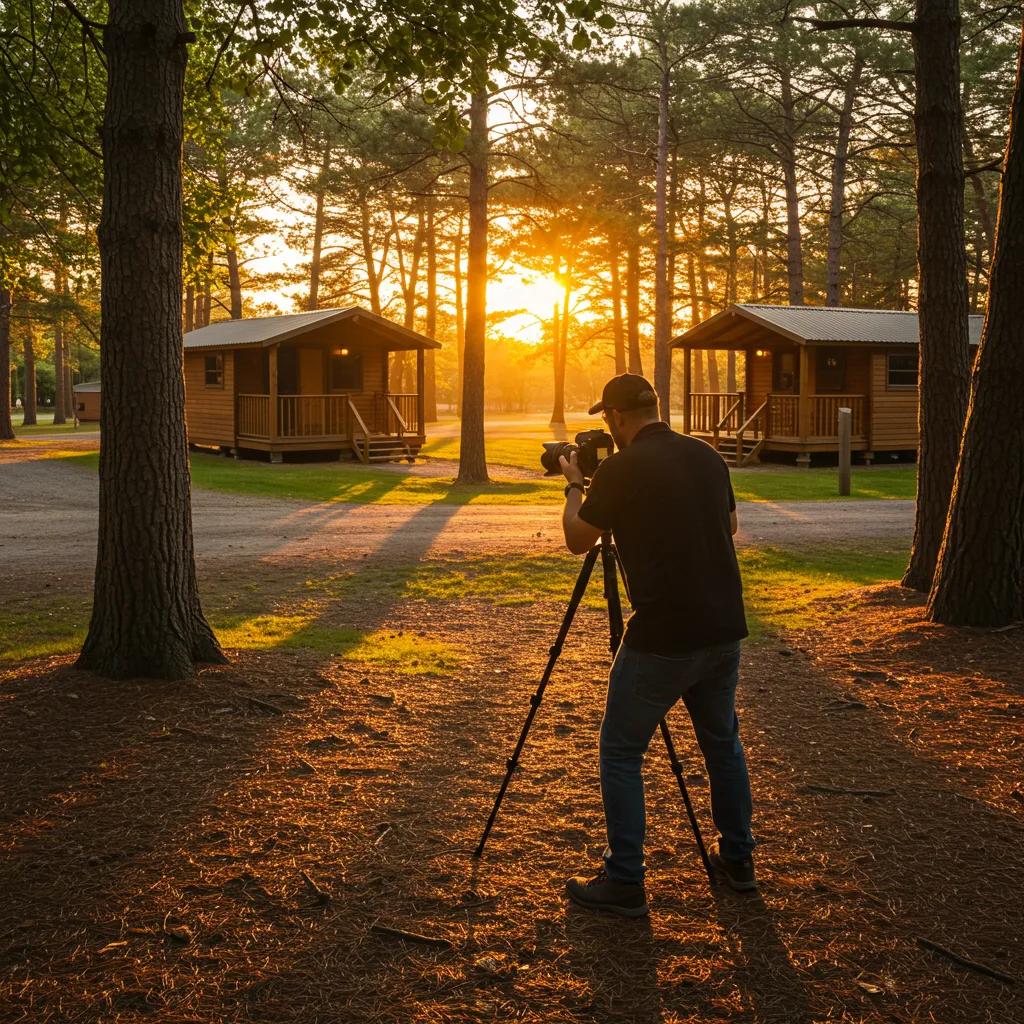
Professional photography and video transform passive interest into serious inquiries by conveying experiential value, amenities, and site layouts that numbers alone cannot capture. High-quality hero shots, drone aerials showcasing site density and access, close-ups of amenities, and short guest-experience videos help buyers visualize operations and potential. A shoot checklist should include golden-hour exterior shots, interior cabin images, amenity action shots, and site maps annotated with revenue points. Investing in visuals improves listing click-through rates and buyer confidence, often yielding a measurable ROI by expanding the pool of qualified bidders. With compelling visuals, sellers can effectively support the valuation claims derived from NOI and cap rate analysis, as discussed earlier.
How Does Selling Directly to GatherGrounds Resorts Differ from Using Campground Brokers?
Selling directly to GatherGrounds Resorts means negotiating with a family-owned buyer committed to legacy preservation, thoughtful transitions, and direct owner-to-owner communication. This approach differs from brokered sales primarily in decision speed, negotiation transparency, and a transition focus that prioritizes staff retention and the property’s traditions. Sellers opting for a direct sale often value a lower-fee, simpler process and assurances about the property’s future operations, whereas brokers typically offer broader market exposure and may achieve higher competitive bids. The sections below detail the benefits, transition mechanics, and a neutral pros/cons comparison to help owners choose the best channel.
What Are the Benefits of a Direct Sale to a Family-Owned Buyer?
A direct sale to a family-owned buyer offers continuity of culture, streamlined decision-making, and often a more empathetic approach to staff and guest transitions. These benefits are particularly valuable for owners prioritizing legacy preservation. Family-owned buyers can respond more quickly and negotiate directly with sellers without needing multi-layer corporate approvals, reducing friction and shortening timelines. Such buyers frequently commit to honoring traditions, retaining key staff, and investing in property improvements to enhance long-term guest experiences. For owners whose primary goals include caring for staff and maintaining community reputation, direct buyers can provide non-monetary value that influences buyer selection beyond just the price.
How Does the Thoughtful Transition Process Work with GatherGrounds Resorts?
GatherGrounds Resorts employs a phased transition process that begins with collaborative planning, staff engagement, and the preservation of key guest-facing traditions, all while modernizing amenities and infrastructure. The process typically includes an initial operational handover period for knowledge transfer with on-site staff, followed by targeted investments to upgrade utilities or amenities that enhance guest experience and revenue. Engaging with local stakeholders—vendors, town officials, and repeat guests—helps maintain goodwill and ensures a smooth operational shift. Sellers gain reassurance from a transition plan that balances continuity with planned improvements designed to sustain or increase future revenues.
What Are the Pros and Cons of Selling Through a Broker vs. Direct Buyer?
Choosing between a broker and a direct buyer involves trade-offs regarding fees, reach, confidentiality, and transition certainty. Sellers should evaluate their priorities and timelines before selecting a path. Brokers typically provide broad exposure, professional marketing, and negotiation support that can drive competitive bids, but they may charge significant commissions and require more time. Direct buyers, such as family-owned operators, offer simpler negotiation, potentially faster closings, and greater influence over post-sale stewardship, but may provide less market-driven price discovery. Sellers must weigh whether maximizing sale price, preserving legacy, or minimizing transaction complexity is their top objective when selecting a sales method.
- Retirement + maximum price objective: consider a broker to access a wide buyer pool.
- Legacy preservation priority: consider a direct sale to a family-owned operator.
- Need for speed and certainty: a direct buyer may offer a faster timeline with fewer contingencies.
What Is the Step-by-Step Process to Sell My Campground to GatherGrounds Resorts?
Selling to GatherGrounds Resorts follows a clear seller journey: initial confidential inquiry, preliminary valuation and offers, due diligence, negotiated agreement, closing, and a planned post-acquisition transition focused on legacy preservation. This process works because it aligns valuation best practices (NOI and cap rates) with hands-on transition planning that protects staff and guest experience. The following subsections outline how to initiate contact, the expected due diligence, offer negotiation, and what happens during closing and transition.
How Do I Initiate Contact and Start the Selling Conversation?
Begin with a concise, confidential outreach that includes the property name, site count, a high-level annual revenue and expense snapshot, and your reason for selling. This establishes context for a preliminary valuation conversation. Indicate your confidentiality preferences and willingness to sign a mutual non-disclosure agreement to protect operational details during early discussions. Expect an initial call focused on verifying size, major revenue streams, and any known capital needs. Following this, a buyer will request core documents for a preliminary review. Preparing these materials in advance speeds up the evaluation and positions you for a timely, informed conversation.
What Due Diligence and Valuation Steps Are Involved?
Due diligence typically involves reviewing financial statements, tax returns, occupancy and ADR data, leases and vendor contracts, permits, environmental records, and conducting a site visit to confirm operations and infrastructure condition. The buyer will normalize financials to calculate NOI and apply an appropriate cap rate based on asset quality and market conditions, while also considering comps and replacement cost where relevant. Timelines vary, but sellers should anticipate an initial 30–60 day diligence window for most items and allow additional time for any site remediation or permit clarifications. Clear, well-organized documentation shortens this phase and reduces contingencies.
How Are Offers Made and Negotiated with GatherGrounds?
Offers will generally include the purchase price, earnest money, proposed closing timeline, and any key contingencies. Negotiations typically focus on price, timeline, and transition commitments. GatherGrounds Resorts positions itself as a direct buyer aiming for respectful negotiation, balancing fair offers with commitments to legacy preservation and operational continuity. Sellers should prioritize clarity on non-price terms—staff retention, honoring traditions, and post-sale roles—alongside financing certainty and closing dates. Transparent financials and a clear transition plan increase the likelihood of favorable offer terms and smoother negotiations.
What Happens During Closing and Post-Acquisition Transition?
Closing formalizes the ownership transfer with executed purchase documents, settlement of prorations, and transfer of permits and leases where applicable. Immediate post-closing actions focus on communication and operational continuity. A typical 30–90 day transition plan includes staff onboarding by the new operator, customer communication to reassure repeat guests, and prioritized infrastructure or amenity investments. Sellers can expect a phased handover where the buyer assumes management responsibilities while honoring agreed legacy commitments and improvement plans aimed at sustaining or increasing revenue. Clear post-closing communication preserves reputation and supports a stable revenue trajectory during the ownership change.
What Are the Current Market Trends Affecting Campground Sales in 2025?
As of 2025, macro factors such as higher interest rates, shifting occupancy patterns, and consistent demand for premium amenities are reshaping buyer expectations and cap rates for campgrounds and RV parks. These trends are significant because they influence financing availability, buyer return requirements, and the valuation multiples applied to NOI. Sellers who understand these dynamics can time their sales effectively, prioritize improvements that drive revenue, and present financials that justify premium positioning. The subsections below explore interest rate impacts, amenity demand, industry revenue indicators, and cap rate benchmarks for 2025.
How Are Higher Interest Rates and Occupancy Changes Impacting Sales?
Higher interest rates increase borrowing costs, which tends to raise cap rates as buyers demand higher returns to offset financing risk. This can potentially put downward pressure on prices if NOI doesn’t keep pace. Occupancy changes—whether seasonal shifts or long-term trend shifts—alter revenue predictability and, consequently, buyer risk assessments. Stable or improving occupancy can counteract the pressure from rising rates. For sellers, timing and structuring offers with creative financing or seller concessions can bridge valuation gaps in tighter markets. Understanding how financing and occupancy interact allows sellers to present adjusted cash-flow scenarios that appeal to buyers facing financing constraints.
Why Is There Growing Demand for Luxury Amenities in Campgrounds?
Consumers increasingly favor elevated outdoor hospitality experiences—glamping, luxury cabins, pools, and curated activities—which expand revenue per guest and extend shoulder-season occupancy. These luxury amenities command higher ADRs and diversify income beyond basic site fees, making properties more resilient to seasonality and more attractive to buyers seeking premium assets. Prioritizing revenue-generating amenities before a sale can improve NOI and support a lower cap rate in valuation, creating a direct path from targeted investments to a higher sale price. Sellers should evaluate which amenity upgrades will deliver measurable revenue uplift relative to their cost and timing.
How Does Industry Revenue Growth and RV Shipments Influence Market Demand?
Industry revenue growth and RV shipment trends serve as leading indicators of long-term demand for campground stays. Rising RV shipments signal fresh demand as new RV owners seek destinations, and multi-year revenue growth demonstrates a resilient consumer base. Sellers can cite industry metrics to support revenue forecasts and long-term value propositions, which helps attract growth-focused buyers. Demonstrating how your property aligns with broader demand trends—through occupancy gains, diversified offerings, or proximity to RV-friendly attractions—makes a stronger case for premium valuation. These demand signals help buyers project future NOI, which in turn supports valuation.
What Are Typical Cap Rates and Valuation Benchmarks for RV Parks?
In 2025, the general cap rate range for many RV parks and campgrounds is around 8–10%. Premium assets—those boasting strong occupancy, diversified revenue streams, and superior infrastructure—trade closer to 6–7%. Benchmarks vary by region, asset scale, and operational quality, so sellers should compile supporting data—NOI, occupancy trends, and comps—to justify premium placement. Presenting normalized NOI, documented demand drivers, and a prioritized capital plan helps shift buyer perception from a standard to a premium asset, which can compress cap rates and increase sale price. Accurate benchmarking enables sellers to set realistic expectations and negotiate from a position of data-backed strength.
How Can I Maximize the Sale Price of My Campground Through Marketing and Preparation?
Maximizing sale price involves a combination of targeted improvements that increase NOI, pristine financial reporting, and storytelling that highlights legacy and operational continuity for buyer-operators. This approach works because improvements that demonstrably raise recurring revenue or reduce operating expenses directly boost NOI, while transparent reporting reduces perceived risk and supports premium cap-rate placement. Below, we rank high-impact improvements, explain financial reporting best practices, and discuss legacy messaging as a value lever.
What Improvements and Upgrades Add the Most Value to Campgrounds?
Prioritize infrastructure and revenue-driving amenities: upgrading sewer and electrical systems, adding rentable cabins or glamping units, and installing high-impact amenities like pools or small water parks typically yield the best ROI for buyers who value reliable cash flow. Cosmetic upgrades improve curb appeal but often deliver lower valuation uplift compared to infrastructure that supports higher occupancy and ADR. Timing is crucial—major structural improvements should be completed well before marketing, while cosmetic refreshes can be staged for listing presentation. Sellers should focus on projects that increase NOI or reduce variability in operating costs to maximize buyer valuation.
How Does Clear Financial Reporting Enhance Buyer Confidence?
Transparent, well-organized financials reduce perceived risk, shorten due diligence, and can lead to increased offers because buyers can model future cash flows with greater certainty. Present normalized EBITDA/NOI statements that exclude owner-specific benefits, reconcile seasonal variances, and provide site-level revenue breakdowns (site types, cabins, add-ons). Use consistent metrics—site count, occupancy, ADR, repeat-guest percentage—to frame performance and make it easy for buyers to apply cap rates. The clarity of your reporting directly affects how buyers price risk, often translating to tighter offers and faster closings when documentation is reliable.
Why Is Preserving Family Legacy Important in Marketing My Campground?
Legacy preservation resonates strongly with buyer-operators who value continuity, community goodwill, and staff retention—attributes that can justify paying a premium for cultural fit and stability. Marketing that acknowledges the seller’s stewardship, highlights community ties, and outlines transition assurances attracts buyers seeking to operate the property with respect for its history. Integrating legacy messaging into the asset packet balances emotional and financial arguments, positioning the property as both a revenue opportunity and a trusted local institution. Sellers who clearly communicate their legacy priorities often find better alignment with owner-operators willing to maintain and invest in the property post-sale.
Frequently Asked Questions
What are the key factors to consider when choosing a marketing channel for my campground sale?
When selecting a marketing channel for your campground sale, consider factors such as cost, reach, and seller control. Online marketplaces offer broad exposure at a lower cost, while brokers provide specialized reach and negotiation support but may charge higher fees. Direct outreach allows for greater control and targeted buyer relationships. Assess your goals—whether maximizing price, ensuring a quick sale, or preserving legacy—to determine which channel aligns best with your objectives and resources.
How can I effectively communicate my campground’s legacy to potential buyers?
To communicate your campground’s legacy effectively, incorporate storytelling into your marketing materials. Highlight the history of the property, its community ties, and any traditions that resonate with guests. Use testimonials from repeat visitors and emphasize the importance of staff retention and continuity in operations. By framing your campground as a cherished local institution, you can attract buyers who value legacy preservation and are willing to pay a premium for it.
What common mistakes should I avoid when preparing to sell my campground?
Common mistakes to avoid include neglecting financial documentation, underestimating the importance of property presentation, and failing to understand market conditions. Ensure your financials are organized and transparent to build buyer confidence. Invest in professional photography to showcase your campground’s features effectively. Additionally, stay informed about current market trends and cap rates to set a realistic asking price. Avoid rushing the process; thorough preparation can significantly impact your sale outcome.
How can I assess the effectiveness of my campground’s marketing strategy?
To assess the effectiveness of your marketing strategy, track key performance indicators (KPIs) such as inquiry rates, website traffic, and conversion rates from interested buyers to offers. Analyze which channels generate the most qualified leads and adjust your strategy accordingly. Gathering feedback from potential buyers can also provide insights into what aspects of your marketing resonate most. Regularly reviewing and refining your approach will help optimize your efforts and improve results.
What role does community engagement play in selling my campground?
Community engagement plays a crucial role in selling your campground by fostering goodwill and attracting local buyers. Building relationships with local stakeholders, such as tourism boards and community organizations, can enhance your property’s visibility and reputation. Engaging with the community through events or partnerships can also highlight your campground’s value as a local asset. Buyers often appreciate properties with strong community ties, as they indicate stability and potential for continued success.
How can I prepare for potential buyer questions during the sale process?
Preparing for potential buyer questions involves anticipating their concerns and having clear, concise answers ready. Common inquiries may include details about financial performance, occupancy rates, and future growth potential. Familiarize yourself with your campground’s financials, operational history, and market trends to provide informed responses. Additionally, be ready to discuss your transition plans and how you intend to maintain the property’s legacy. Transparency and preparedness can build trust and facilitate smoother negotiations.
What should I include in my asset marketing packet to attract buyers?
Your asset marketing packet should include a comprehensive overview of your campground, featuring a current Profit & Loss statement, normalized NOI, detailed amenity inventory, site maps, and occupancy trends. High-resolution images that showcase guest experiences and property features are essential. Additionally, include metrics like repeat-guest rates and peak-season occupancy to highlight revenue potential. A well-structured packet that tells a compelling story can convert interest into serious inquiries from qualified buyers.
How Long Does It Typically Take to Sell a Campground or RV Park?
The typical time to sale varies widely depending on market conditions, asset complexity, and the chosen sales channel. A well-prepared asset marketed through a broker might take 6–12 months, while a direct sale to a committed buyer can close in 2–6 months. Factors that can speed up or slow down the sale include financing availability, the quality of financials, necessary repairs or permits, and buyer competition. Thorough preparation—clean financials, prioritized improvements, and a compelling asset packet—shortens market time and increases offer competitiveness. Sellers should plan timelines that account for due diligence, potential contingencies, and a realistic closing window.
Can I Sell My Campground Without Using a Broker?
Yes—selling FSBO (For Sale By Owner) is feasible but requires marketing expertise, buyer outreach capabilities, negotiation skills, and the capacity to manage confidentiality and due diligence logistics. It can save on commission fees but adds to the seller’s workload. The advantages include greater control over the process and potentially lower transaction costs; the disadvantages include narrower buyer reach and the need to manage complex negotiations and legalities. When considering FSBO, evaluate whether you have industry contacts, sufficient time to manage showings and due diligence, and comfort handling contract terms. If not, a broker or hybrid approach might offer superior net proceeds after fees. Sellers should weigh these trade-offs based on their priorities: maximizing price, speed, confidentiality, or legacy outcomes.
How Do I Choose the Right Buyer for My Campground?
Choose a buyer based on criteria beyond just price—consider their operational plans, financing certainty, cultural fit, and proposed transition commitments to ensure the property’s long-term success and protect staff and guest relationships. Use a simple buyer scorecard with categories like Offer Strength, Financing Certainty, Operational Experience, Legacy Fit, and Transition Plan, rating each on a numeric scale to compare proposals objectively. Prioritizing buyers with demonstrated operational capability and clear transition plans reduces post-sale risk and preserves goodwill, which may be as important as the headline price for many family-owned sellers. A structured evaluation helps sellers align the sale outcome with their goals.
What Should I Expect During the Transition After Selling?
- Pre-sale preparation: finalize documents, prioritize improvements, and craft the asset packet.
- Marketing and negotiation: select channels, evaluate offers using a scorecard, and negotiate terms.
- Due diligence and closing: facilitate inspections and transfer documentation while maintaining clear communication.
- 30/60/90-day transition: implement operational handover and initial improvement plans.
These steps outline a practical roadmap for sellers aiming for a smooth sale and a value-maximizing outcome. Throughout the process, sellers who combine rigorous NOI-based valuation, targeted marketing, and careful buyer selection achieve stronger results and preserve legacy—whether they sell via broker or directly to an owner-operator.
GatherGrounds Resorts offers a Campground Acquisition Service as a direct buyer option that emphasizes family-owned stewardship, legacy preservation, thoughtful transitions, and investment in property improvements. If you value a direct, owner-to-owner negotiation and a transition plan focused on staff retention and amenity upgrades, the Campground Acquisition Service represents one approach among several available to sellers.
Conclusion
Maximizing your campground’s sale value involves understanding key valuation metrics like NOI and cap rates, alongside effective marketing strategies that highlight your property’s unique features. By preparing transparent financial documentation and showcasing high-impact amenities, you can attract the right buyers and negotiate from a position of strength. Consider exploring our Campground Acquisition Service for a direct, owner-to-owner negotiation that prioritizes legacy preservation and thoughtful transitions. Take the next step towards a successful sale by reaching out to us today.